The buying principle
Share your garment type, fabric construction, composition, target weight, colour references and expected order quantity with Alkumas. Include your destination market and any testing requirements.
Before you choose a sample
A fabric swatch can show colour, texture and handle, but the finished garment brings together more decisions: pattern, seams, trims, decoration and care. Sampling should test those decisions in a clear sequence so each approval answers a useful question.
For wholesale fabric buyers, the objective is to keep the fabric supplier, garment maker and brand working from the same reference. Define who owns each approval, what evidence is required and what happens if a material or process changes.
Begin with one controlled fabric specification
Give the material a unique reference and record construction, composition, finished GSM, usable width, colour and finish. Link the physical swatch to that reference. Include the intended garment, care process and any agreed performance requirements.
Keep revisions visible. If a sample uses a substitute yarn, finish or colour, label the difference rather than allowing it to become an undocumented production reference. Ask what the sample is intended to prove and which questions remain open before spending time on the next stage.
Build a representative sewing trial
Use the intended body fabric, trims and seam details wherever practical. The trial should let the garment maker evaluate feeding, seam appearance, seam extension and any visible damage. Cotton Incorporated’s technical bulletin on sewing cotton knits explains why fabric construction, needle, thread and stitch selection need to be considered together.
Record the settings and components that produced the approved result. If a problem appears, ask the technical team to investigate the fabric-and-sewing combination rather than making a broad assumption that the fabric or machine alone is at fault. Coats’ sewing guidance highlights multiple potential causes of issues such as skipped stitches and irregular stitching.
Review appearance and fit after care
Assess the sample before and after the agreed laundering or garment-treatment procedure. Check dimensions, seam appearance, neckline shape, matching trims and the relationship between the garment’s panels. Include the planned print or embroidery when it could affect the final appearance.
A fabric test and a garment test answer related but different questions. AATCC lists separate methods for fabric dimensional change, garment dimensional change and apparel appearance after laundering. Its standards directory is a starting point for selecting the appropriate procedure with the testing provider, not a substitute for agreeing acceptance criteria.
Set an order-specific quality plan
Translate “good quality” into named checks. Depending on the product, discuss fabric weight and width, shade, dimensional change, surface appearance, strength, pilling or colourfastness. Ask the technical team which methods and limits suit the garment and destination requirements.
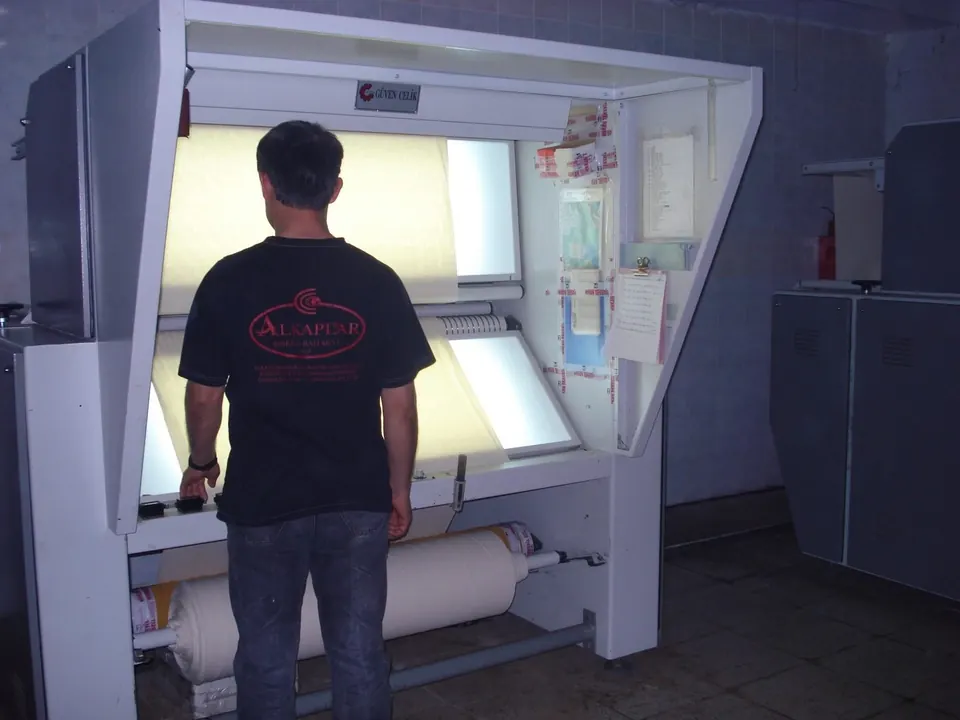
Decide how production lots and rolls will be identified, what is inspected, how findings are recorded and who can release or hold material. Agree any sampling plan with the parties involved. Avoid presenting one inspection level or acceptance threshold as suitable for every order.
Keep a clear approval record
Before release, assemble a compact pack containing the current specification, approved physical references, relevant test reports and dated decisions. Include the garment sample where the buyer’s approval requires it. Record exceptions explicitly so an unresolved concern is not mistaken for acceptance.
Use a final review with practical questions:
- Does the sample represent the intended bulk material and processes?
- Are colour, fabric and garment approvals clearly distinguished?
- Have required tests been completed under the agreed conditions?
- Are changes, deviations and corrective actions documented?
- Who is authorised to approve production or shipment?
Retain these records for repeat orders. The purpose is not extra paperwork for its own sake, but a shared account of what was approved and why. When the next order starts, the team can compare against a known reference instead of reconstructing decisions from disconnected photographs and messages.
Keep with your brief
Your checklist
- Does the sample represent the intended bulk material and processes?
- Are colour, fabric and garment approvals clearly distinguished?
- Have required tests been completed under the agreed conditions?
- Are changes, deviations and corrective actions documented?
- Who is authorised to approve production or shipment?
Further technical reading
General buying guidance. Confirm article-specific specifications, tests and commercial terms with the mill. These references inform the technical background; they are not product certifications.