



Begin with the garment, not a yarn slogan
A sourcing conversation often starts with a request for soft cotton fabric. That is a useful intention, but it leaves the development team guessing about the garment. A loose promotional T-shirt, a close-fitting everyday top and a structured polo need different sample discussions. Start by describing the silhouette, intended wearer, contact with the skin and expected care. Add a reference garment if available. Explain what you like about it and what should change. This gives the fabric manufacturer a problem to solve rather than a collection of attractive adjectives.
AL KUMAŞ manufactures knitted dyed fabrics. The garment examples in the studio are end-use development ideas; they are not a finished-garment supply offer. Keep the fabric enquiry and the garment-making brief connected, while identifying who is responsible for each stage.
Separate composition from the experience you want
The existing local catalogue lists SJ-101 as compact combed cotton single jersey and SJ-102 as a cotton-elastane single jersey. Those descriptions identify different starting routes. They do not prove that either article will deliver the fit, surface or wash behaviour of your reference garment. Ask for the current specification and a representative finished sample before making that judgement. If your design depends on a particular yarn characteristic, make it a recorded requirement and ask the mill to confirm availability rather than inferring it from a photograph.
Prepare two columns in your brief. In the first, record requirements that can be specified: article identity, composition, finished mass, usable width and colour reference. In the second, describe the intended experience: a dry or smooth hand, a relaxed or close silhouette, a visible texture or a clean printing surface. Bring the second column to the sample review. It helps the team discuss trade-offs without confusing preference with a measured result.
Watch the process with a buyer’s question
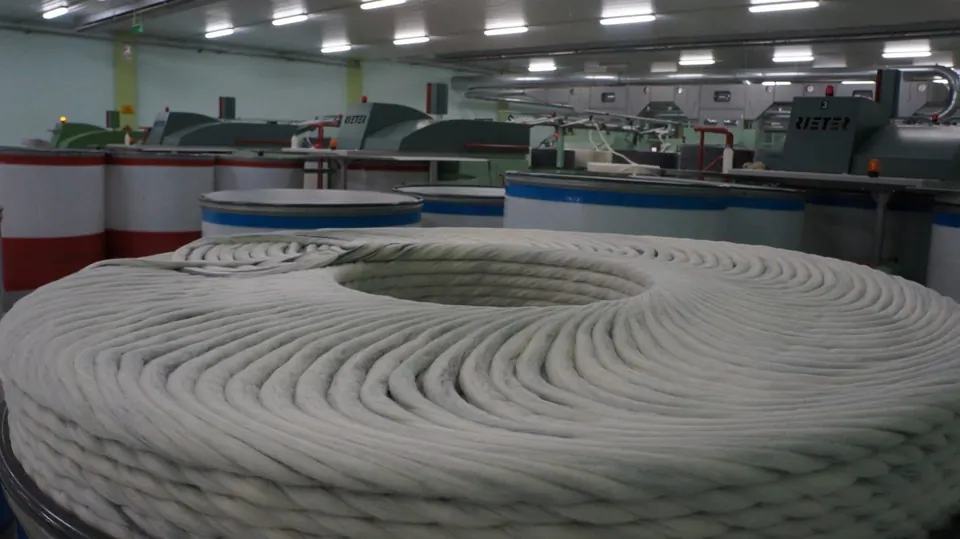
The accompanying yarn-cone archive clip gives context for the material that feeds fabric production. Watch it to frame questions about identification and continuity, not to infer a yarn count, spinning method or production capacity. A moving image cannot verify those details. For terminology, the CottonWorks knit-basics reference linked below explains the relationship between yarn and knitted loop structures; the purchasing workflow here is an editorial recommendation.
For a repeat programme, ask which identifiers should accompany the approved fabric sample and future orders. Discuss how a change in the underlying material would be communicated. A buyer developing a year-round T-shirt may prefer a carefully documented repeat sample over a broader shortlist that has no clear revision history. This is a planning decision, not evidence that a supplier promises identical future lots.
Build a sample comparison that teaches you something
Request samples against a short question list. For example, compare how two proposed routes hang on the same basic pattern, how the neckline sits and whether the chosen surface supports the intended decoration trial. Keep labels attached throughout cutting and sewing. If you change the pattern, finish and article together, the result will be difficult to interpret. Change one decision at a time where practical, then record why the team preferred the final version.
Close the enquiry with quantities by colour, destination, requested sampling dates and any documentation that your customer needs. Ask what remains provisional. Store the approved sample, the specification revision and the written commercial response together. This small discipline makes a yarn discussion useful to purchasing, design and garment production without turning an untested material description into a performance promise.
Sources and scope
Guidance is for development planning. Confirm current article specifications, tests, availability and commercial terms with the mill. Archive footage is not evidence of a particular order, capacity or certification.
Next: Read the knit structure before you choose the silhouette ↗