




Translate a soft-hand request into an appearance brief
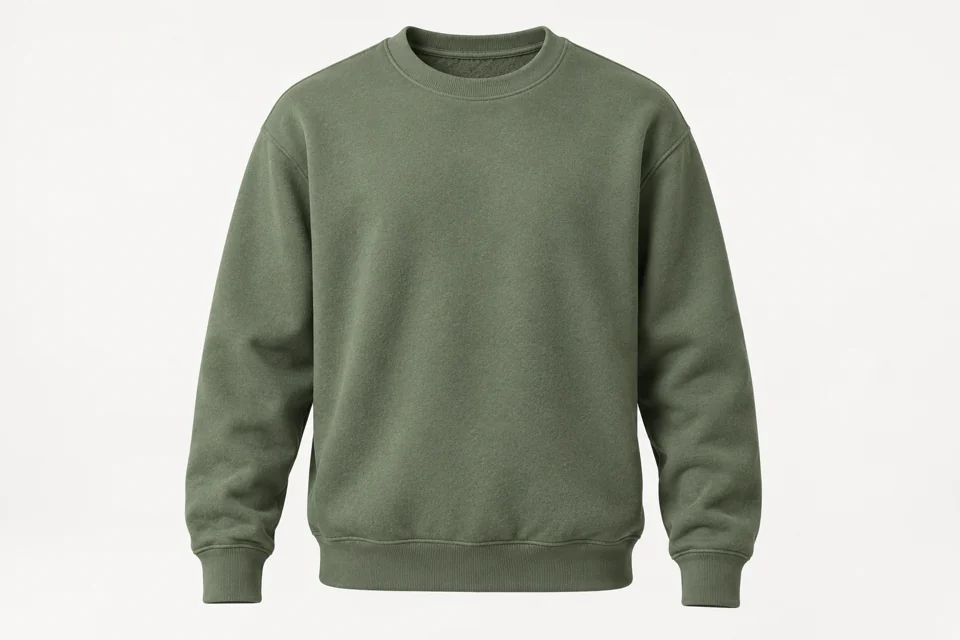
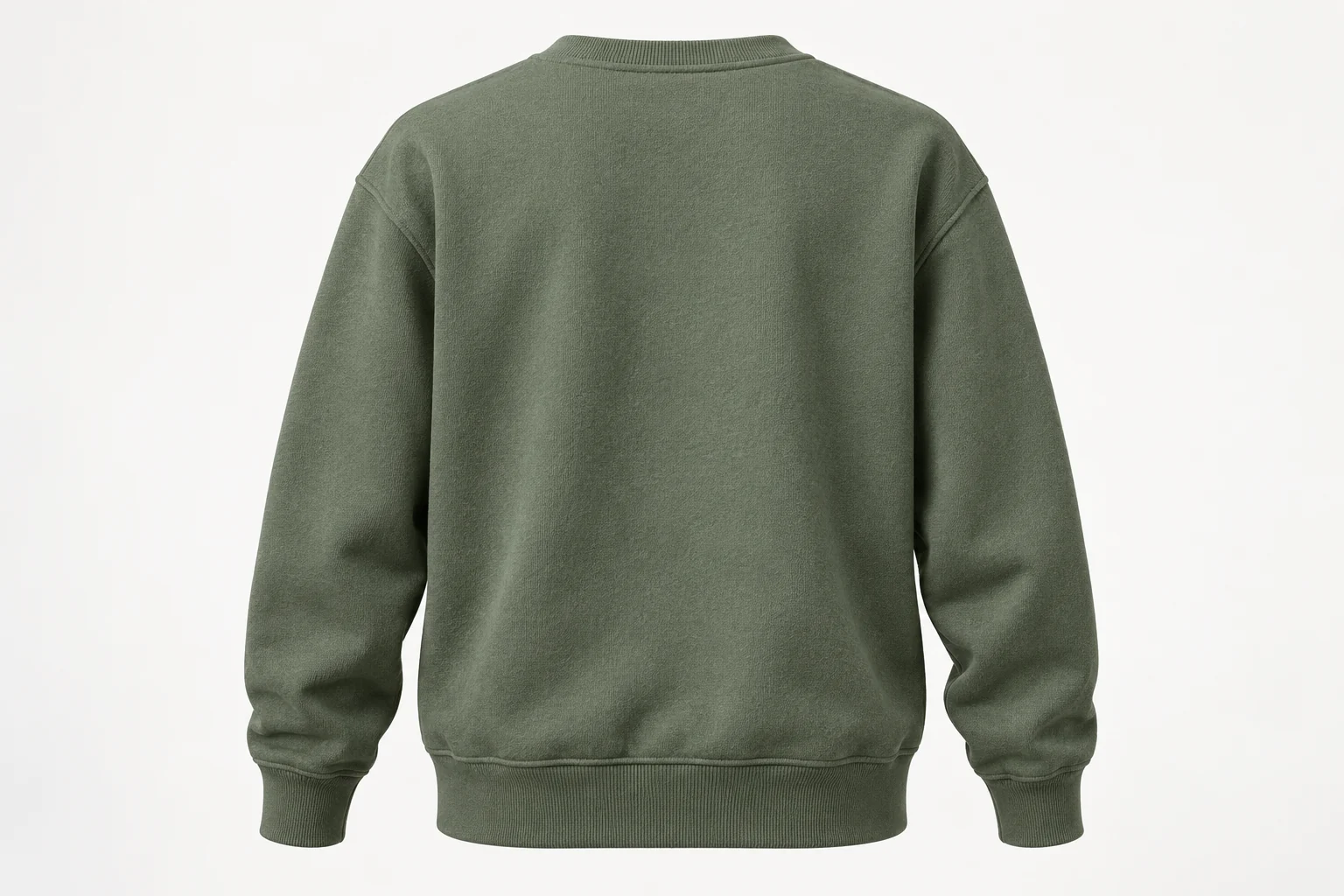
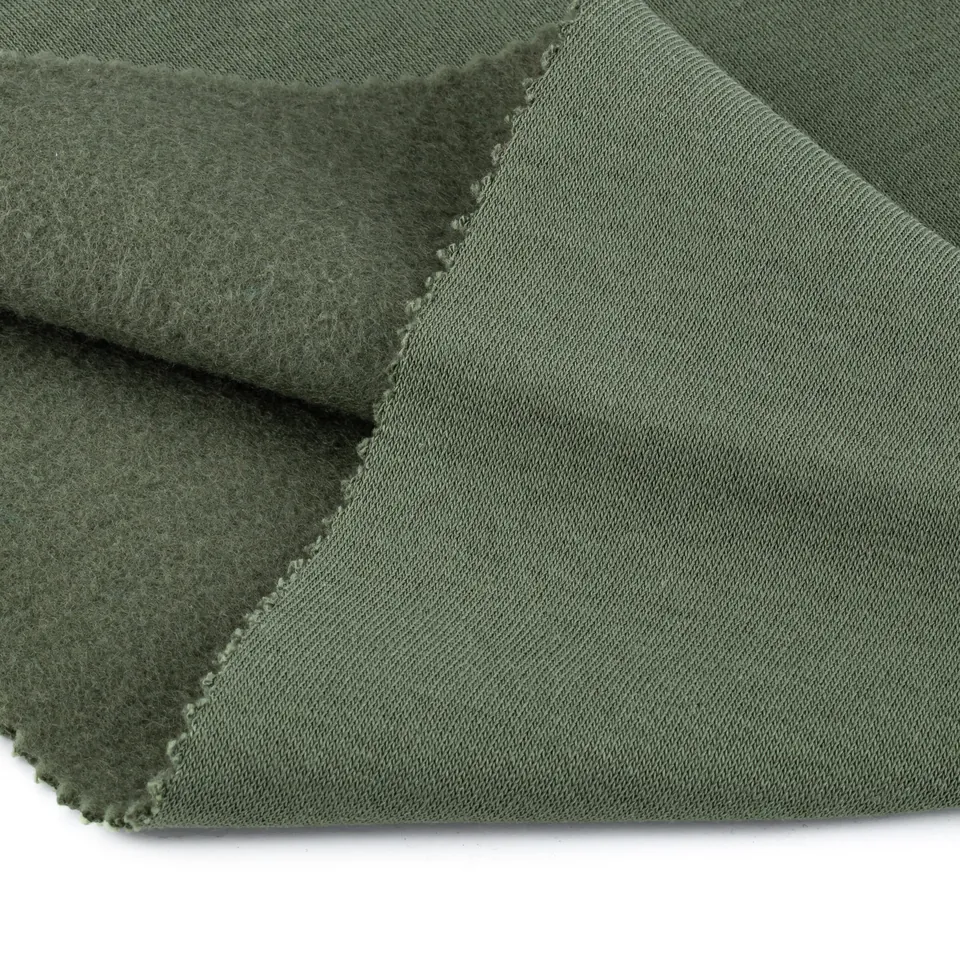
An enquiry saying super-soft brushed sweatshirt fabric leaves the supplier to guess which surface effect the buyer wants. Send labelled face-and-reverse reference samples or clearly identified sample requests, and explain how the inside will be used or displayed. State the intended adult garment silhouette and underlayer. If the main concern is reverse appearance after care, say so explicitly rather than substituting an unsupported warmth or durability claim. The supplier needs to understand which real decision the development work should resolve before proposing a material route.
Name the two catalogue routes without overstating them
FT-603 lists three-thread brushed fleece, sixty-five percent cotton and thirty-five percent polyester, with brushed anti-pilling finishing at 320, 345, 370, 395 and 420 grams per square metre. FT-602 is the three-thread unbrushed compacted comparison, seventy percent cotton and thirty percent polyester, at 300, 325, 350, 375 and 400 grams per square metre. Identify the proposed weight and ask the supplier to confirm the current offer. The anti-pilling label records a finish designation, not a test result or a promise of permanent surface appearance.
Request an identifiable finished sample
Ask which material reference represents the actual offered finished state, including the accepted reverse and handle. CottonWorks describes mechanical finishing processes that modify textile surfaces; the sample request should therefore concern the finished material, not an unspecified intermediate cutting. Request sample identity and any available lot or finish reference without assuming traceability details that have not been provided. Explain the amount needed for the garment and seam trials, with the maker confirming that requirement. Ask availability and charges rather than presuming an unlimited free sampling service.
CottonWorks: Mechanical Finishing — Mechanical finishing can modify textile surfaces. The request for an identifiable finished reference and available lot information is original sourcing guidance, not a statement about the factory's exact process or traceability capabilities.
Assign the inside-appearance and assembly reviews
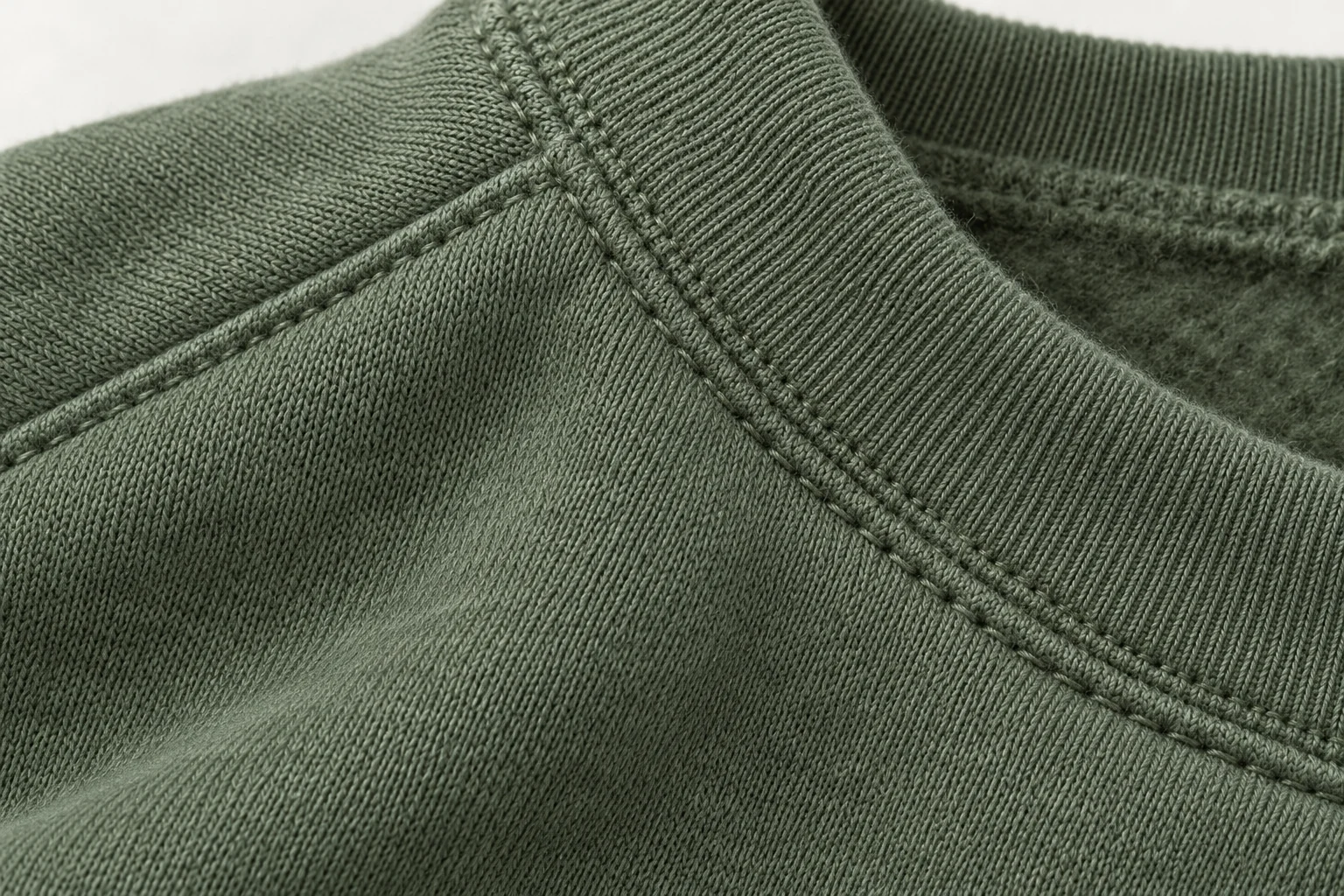
Identify who evaluates the body cutting, who sews the prototype and who approves the reverse and completed garment after the agreed care work. Ask the maker to demonstrate the actual neck, cuff and underarm layer arrangements. Where a different inside layer, band or decorative backing is proposed, include its owner and specification. A body mill quotation does not automatically cover those components or their assembly. Keep responsibilities visible so an acceptable raw cutting does not become an accidental approval of a sweatshirt that nobody has assessed as a complete material system.
Build demand from the approved direction and component plan
Provide estimated quantities by article, chosen weight and colour, with clear units and a distinction between development demand and proposed bulk. Request actual usable width and supply format for the marker planner. If technical review establishes a direction requirement for appearance, attach it to the cutting brief; do not assume every brushed article requires the same layout. Include self-fabric components and separate bands in the consumption scope. Ask the supplier for current commercial minimums and price basis for that actual breakdown, leaving forecasts labelled as forecasts.
Ask for evidence that matches the intended marketing statement
If the collection needs a specific durability or appearance claim, name the question and request the relevant article evidence. CottonWorks explains that satisfactory durability performance should be agreed for the product and end use. Arrange appropriate technical assessment where evidence is missing rather than asking the salesperson for an unqualified promise. Do not infer warmth ratings, anti-pilling grades, restricted-substance compliance or safety certification from the brushing label. Keep the material description, buyer target and verified result as separate fields in the development record.
CottonWorks: Garment Durability — Satisfactory durability performance should be agreed for the actual product and end use. No pilling grade, warmth rating, compliance conclusion or article-specific test result is provided by the general source.
Connect the offer to the retained surface standard
Before ordering, reconcile the offered article, weight, finish, width, quantity basis and commercial terms against the accepted face-and-reverse sample and garment construction. Identify how any proposed replacement will be reviewed, including a change in finish or an offered lot with a visibly different inside. Request timing and destination terms directly for the programme, without treating a desired date as confirmation. Retain the physical appearance reference alongside the quotation and relevant technical evidence. Repeat orders then refer to an identifiable supplied standard rather than an ambiguous request for the same softness again.
Technical background and scope
This is a structured editorial draft. Garment-specific development advice is paired with existing catalogue records; compatibility must be established by sampling. AL KUMAŞ supplies fabric. Cutting, sewing and finished-garment production are separate unless explicitly agreed.