



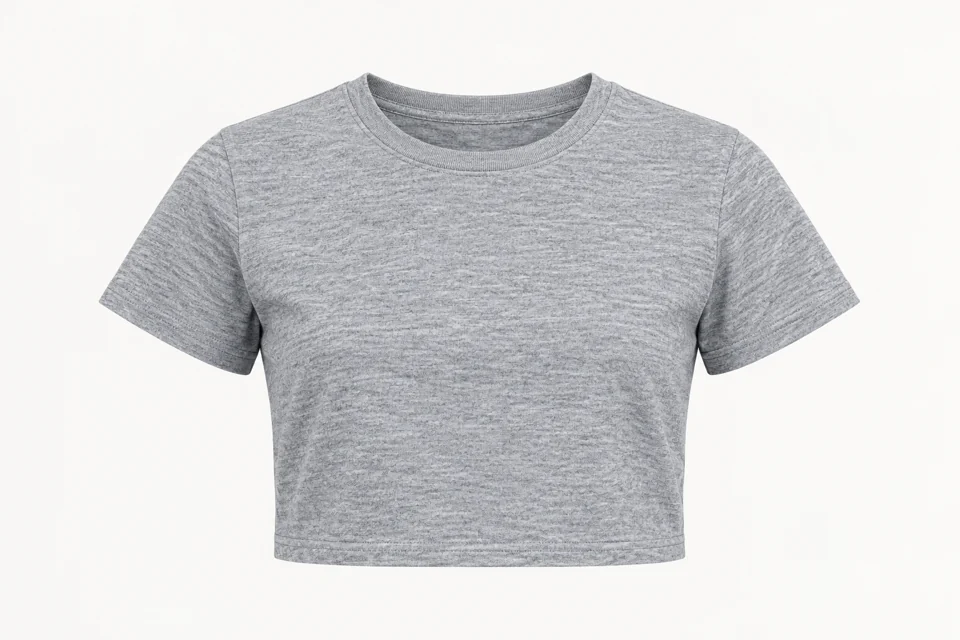
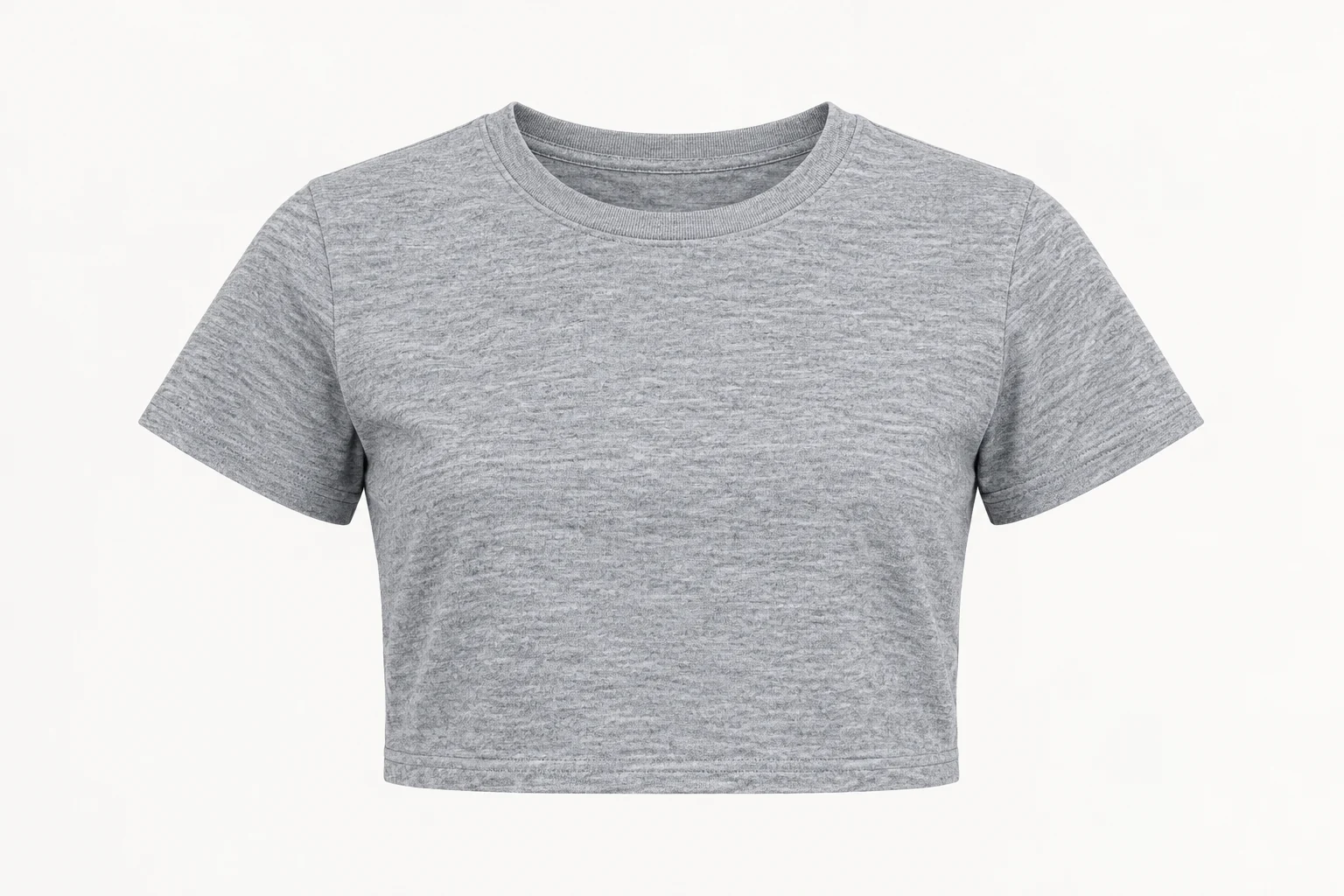
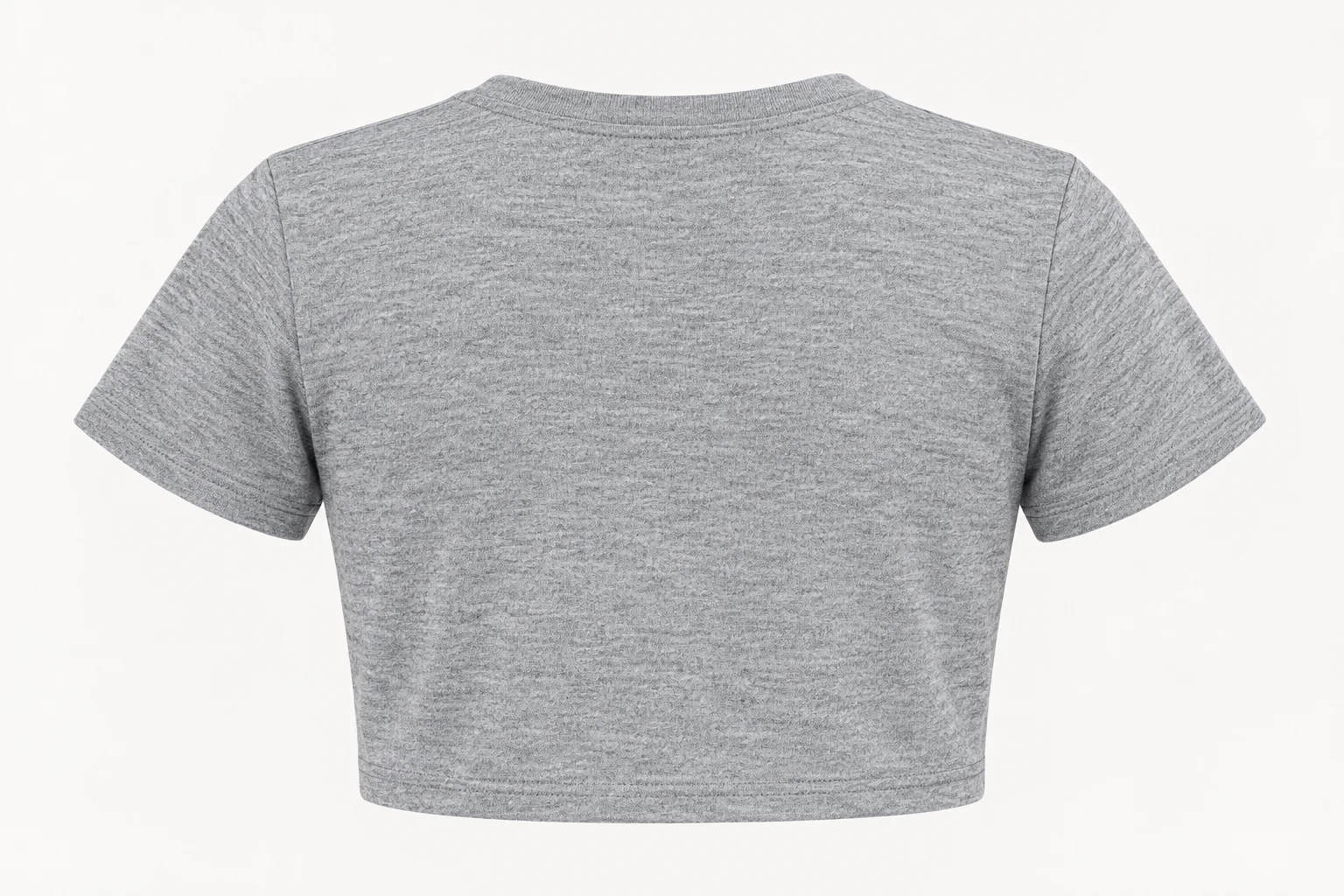
Compose the artwork inside the accepted short-body field
A cropped T-shirt offers less vertical front area than a longer basic, while its neckline and sleeve positions may remain quite different from a scaled-down garment. Present the actual approved silhouette to the designer and decorator before choosing the image size. Decide whether the graphic should occupy most of the short front, remain deliberately compact or interact with the lower edge. An artwork file that worked on a full-length shirt does not establish the cropped result. The visual approval needs the real lower boundary and intended worn position.
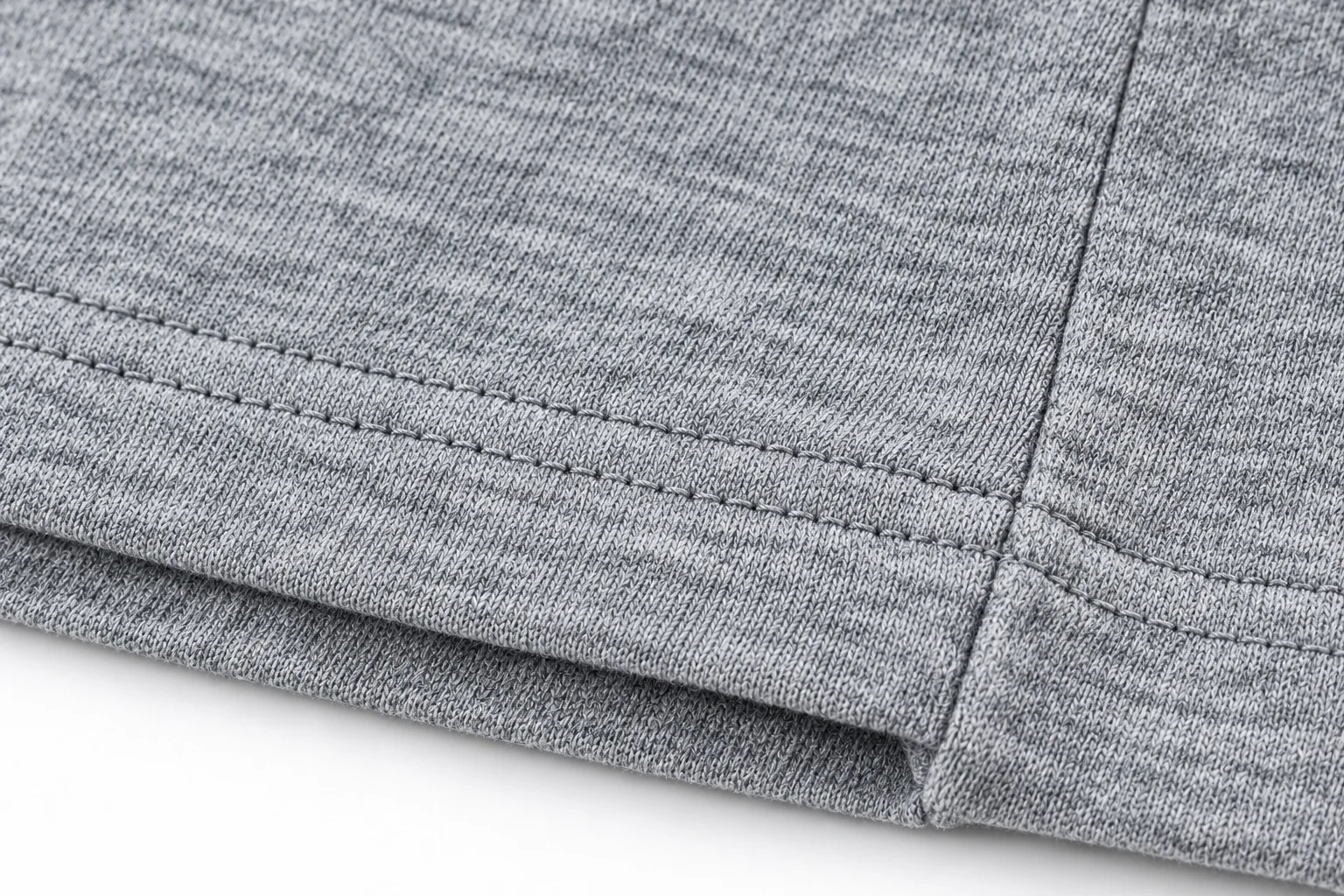
Show the finished hem and its fold region on the artwork drawing
Mark the finished lower edge and the relevant construction region identified by the maker. If the design requires an image to remain wholly visible, keep that requirement explicit rather than assuming the decorator knows which parts may enter the hem. For a deliberate border or cut-off motif, agree what interruption is intended. A change from a shallow to a deeper hem can affect the artwork relationship even when finished body length stays constant. Ask the maker and decorator to review the actual drawing before carrying an earlier placement approval into the revised construction.
Plan graded lengths as artwork decisions
Review representative sizes with the planned graphic boundary, especially if the collection uses more than one crop length. Decide whether placement is governed by the neckline, lower edge or another specified landmark; those instructions can produce different results. An editorial example is a phrase intended to sit just above the hem: preserving that relationship may move it relative to the chest when the pattern length changes. The designer should choose the priority, while the maker and decorator assess feasibility. Do not promise a single placement distance that resolves every size and length combination.
Assess colour and graphic visibility with the styling reference
View the sewn crop in the agreed neutral and arm-raised positions, using the lower-garment context relevant to the design. Observe whether the artwork remains visible as intended and whether folds or movement alter its relationship with the waist. These are visual development decisions, not a guarantee about every styling choice or wearer. Keep the base colour reference separate from the placement discussion so a layout problem is not sent back as an unexplained shade correction. A digital presentation helps describe the concept but cannot settle the appearance of the physical colourway.
Qualify decoration on the proposed finished material
CottonWorks’ printing overview describes how substrate characteristics influence the choice of process and the resulting appearance. Request a relevant sample on the actual offered SJ-101 or SJ-102 version and confirm the proposed decorator's process and preparation needs. A finish label does not confirm printing capability or the behaviour of a large filled graphic near the lower edge. Assess the sewn sample as well as any colour cutting, noting local handle and appearance against the design brief. Keep required care or fastness evidence separate from the first visual acceptance rather than promising a durable decorated crop from an attractive photograph.
CottonWorks: Cotton Textile Printing Basics — Substrate characteristics influence print-process choice and appearance. This supports a relevant actual-material trial, not a guaranteed graphic process, hem clearance or decorated-garment performance for the offered fabric.
Catalogue starting points
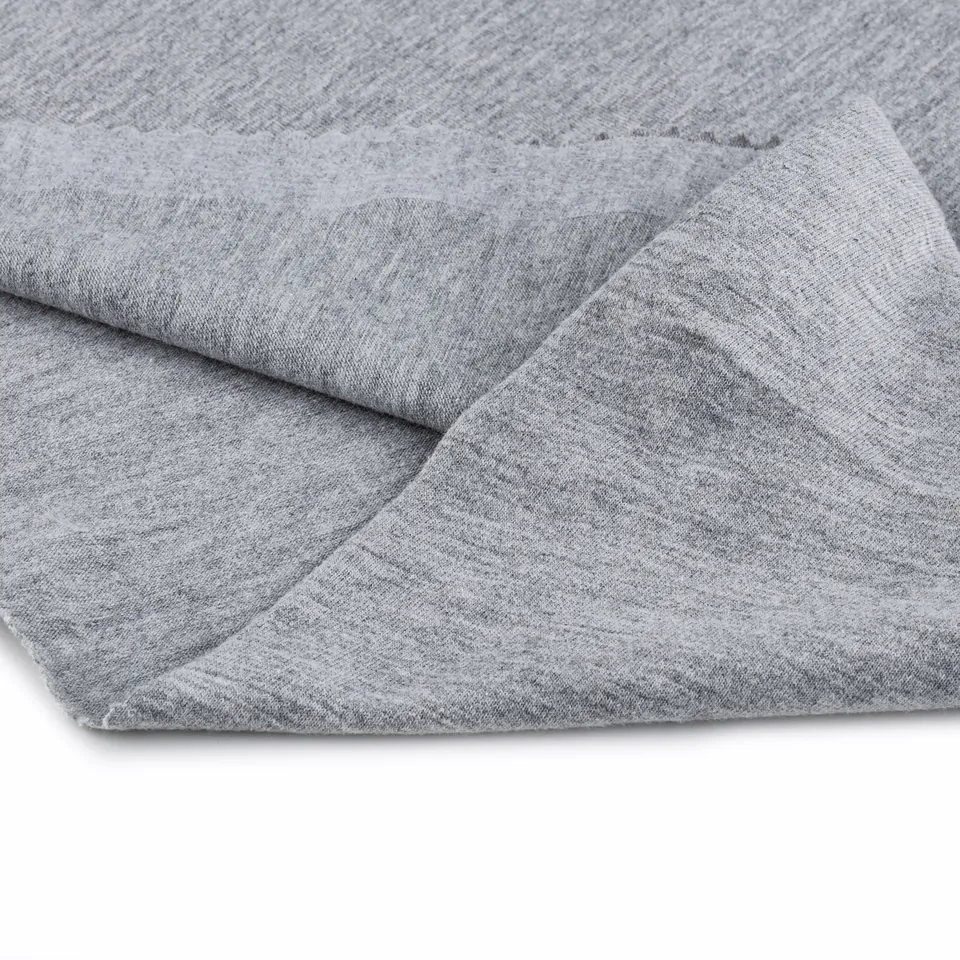
SJ-101's local description is 100% compact combed cotton single jersey, 130, 140, 150, 160, 170 g/m² and Enzyme + silicone. SJ-102's description is 95% cotton 5% elastane single jersey, 170, 180, 190, 200, 210 g/m² and Enzyme + compacted. Neither entry approves a graphic, hem-edge application or decorated cropped garment. Identify the sample's offered weight and finish in the colourway record. A material change should trigger a stated decision about which shade, decoration and sewn-placement approvals need to be repeated.
Release a lower-edge-aware visual package
Retain the governing colour reference, artwork revision, graded placement policy, accepted hem construction and relevant sewn views together. State which crop lengths and sizes the decision covers. If the body is shortened after approval, revisit the actual composition rather than trimming the old artwork presentation and assuming equivalence. Identify any outstanding technical assessment without obscuring the accepted visual decisions. This gives the production team a graphic plan that respects the garment's defining short front and lower boundary, instead of borrowing instructions intended for a different T-shirt.
Technical background and scope
This is a structured editorial draft. Garment-specific development advice is paired with existing catalogue records; compatibility must be established by sampling. AL KUMAŞ supplies fabric. Cutting, sewing and finished-garment production are separate unless explicitly agreed.