



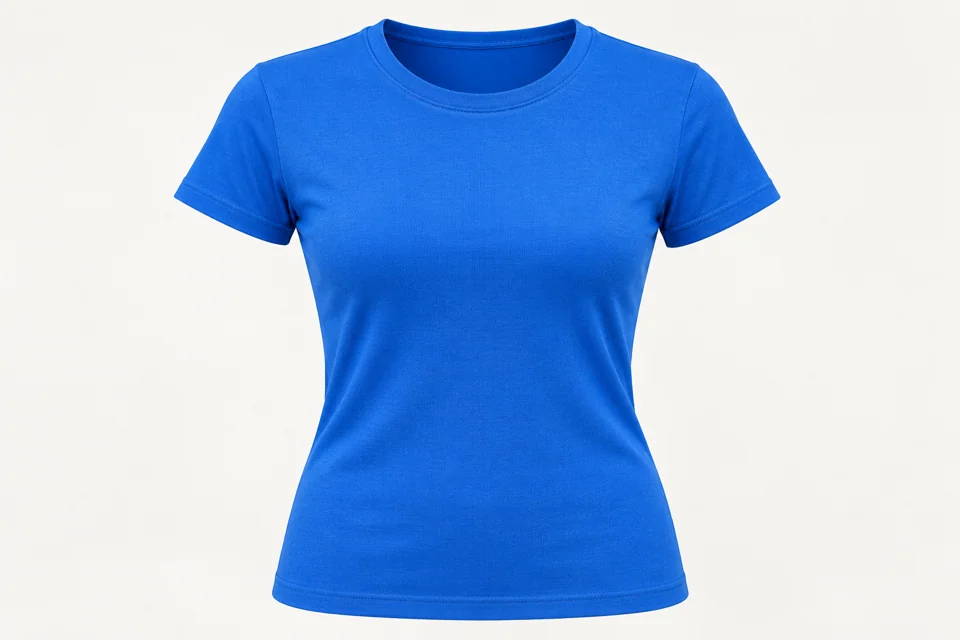
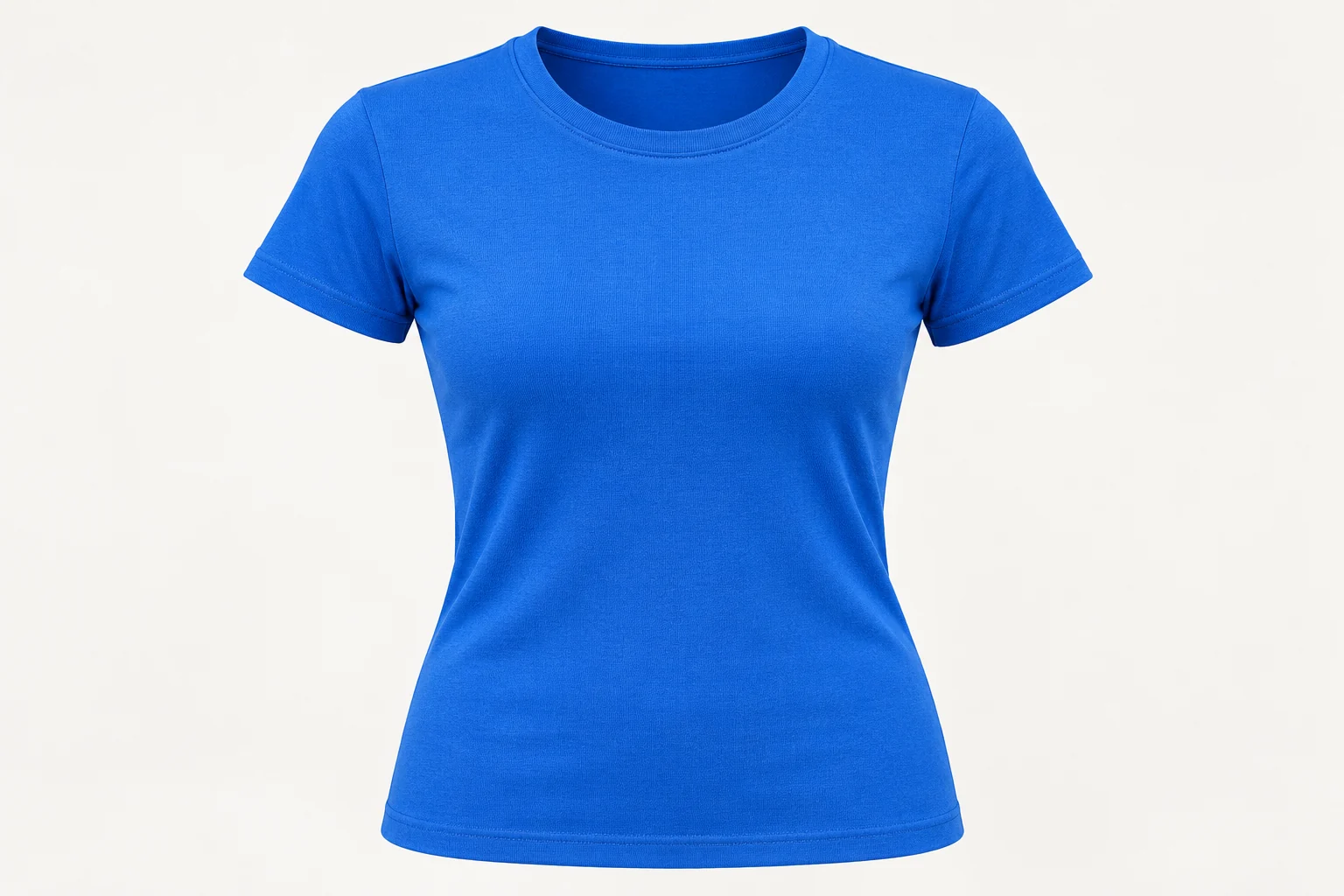
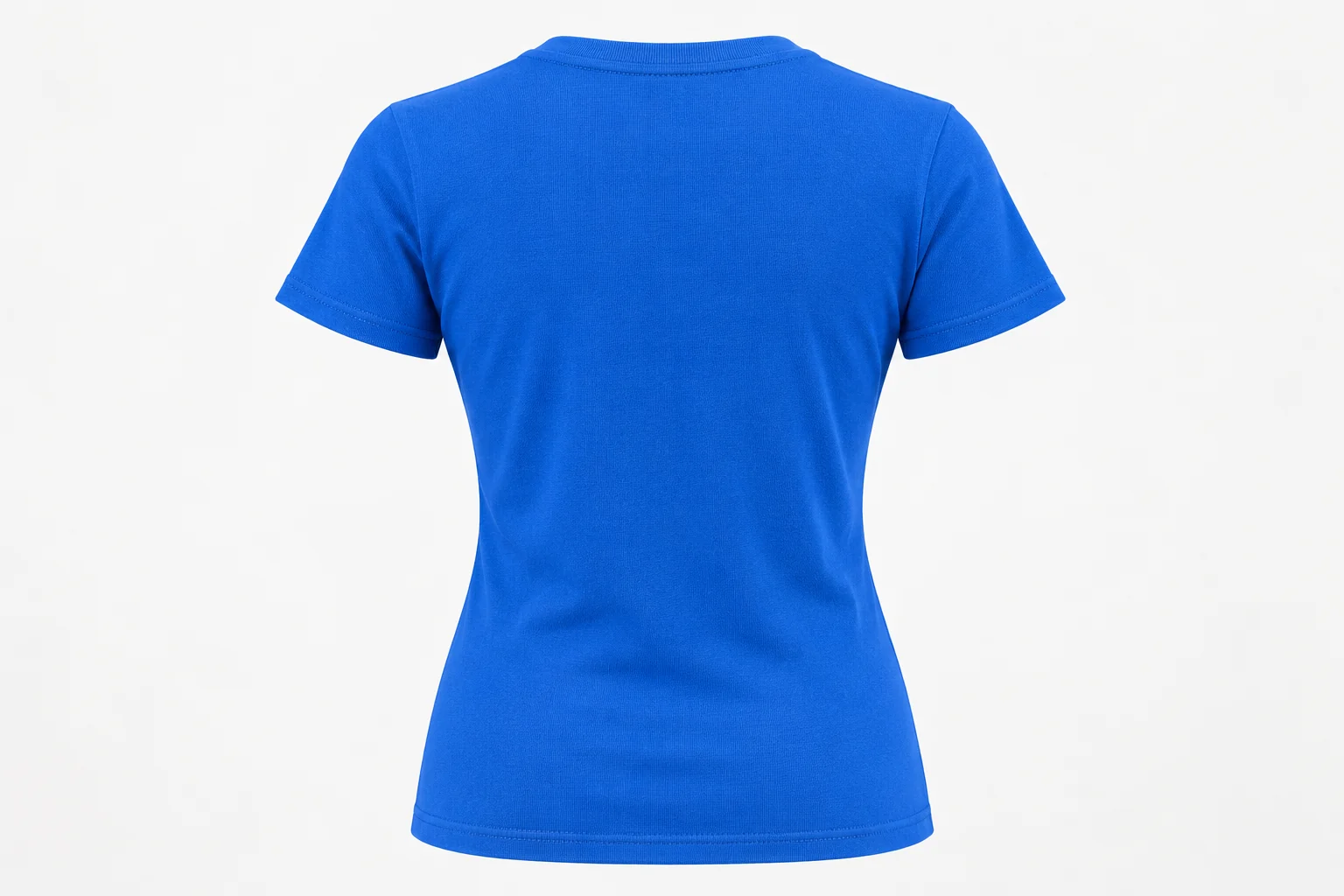
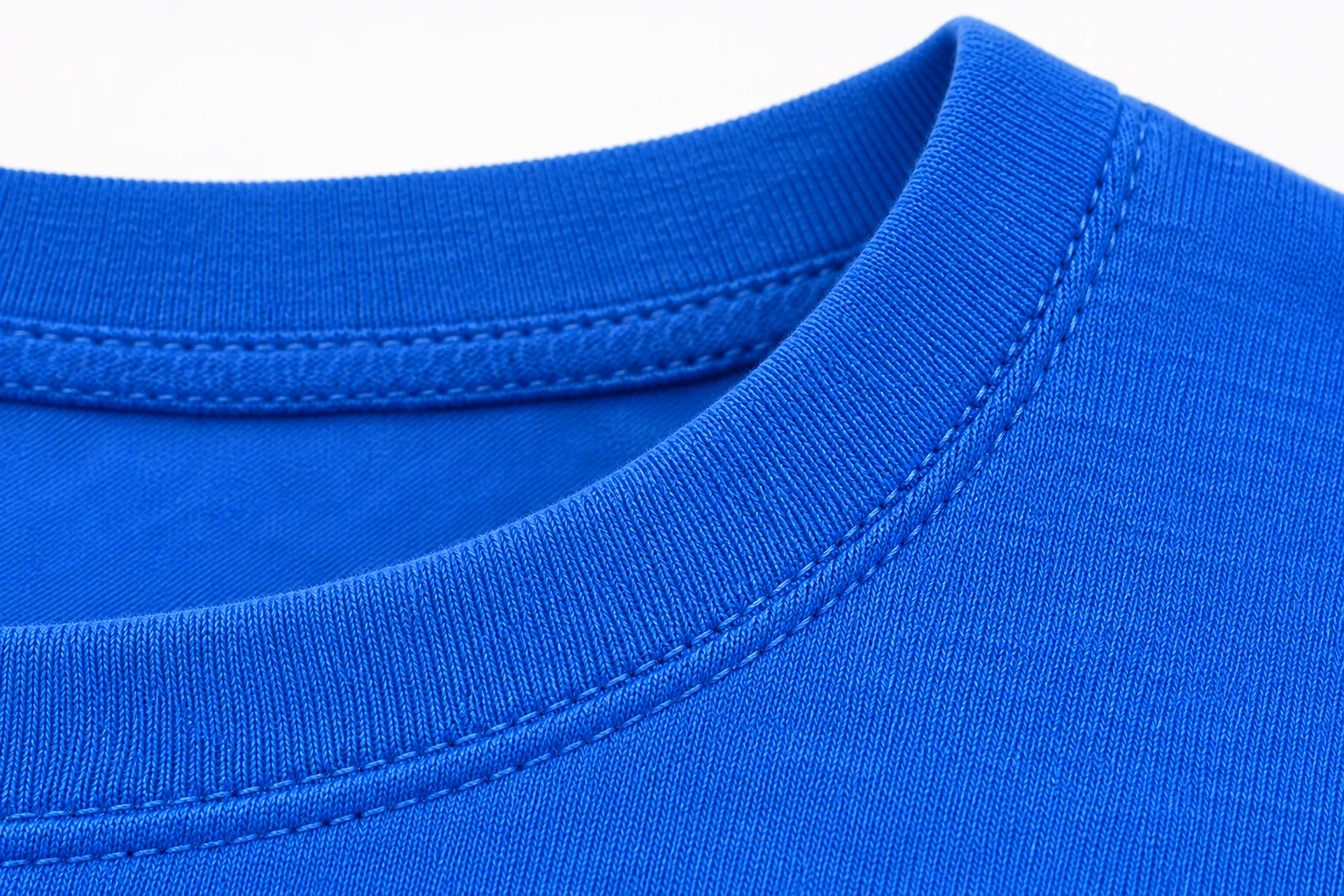
Review the graphic on the fitted body rather than a loose mock-up
A fitted T-shirt carries its colour and decoration on panels that may be extended in the intended wear position. Decide which regions the design should emphasise and provide the actual pattern and fit reference to the decorator. A flat artwork view does not show how a chest image appears around the body, or how its relationship with the armhole changes during movement. Keep visual approval tied to the accepted fitted silhouette. If the pattern is still being reduced or widened, identify that uncertainty before treating a placement drawing as final.
Separate base-shade appearance from coverage
Approve the governing physical colour reference on the actual offered material, then assess the fitted garment under agreed viewing conditions. A lighter or darker appearance in use may need investigation rather than an immediate instruction to change the dye shade. Ask the technical and colour teams to distinguish the base material, extension and viewing context. Coverage and colour matching are related visual observations but remain different approval questions. A cutting accepted relaxed should not silently become proof that the same colourway meets the buyer's intended coverage in every size and pose.
Define artwork behaviour across the worn region
Show the graphic boundary on the front pattern and explain whether its proportions need to look a particular way when worn. For an editorial illustration, a round emblem may appear differently across a closely fitted chest than it does in the digital file. That observation needs a real trial; it is not a reason to invent a universal artwork distortion adjustment. Ask the decorator and pattern team how they propose to evaluate the actual design, and record whether a change affects artwork, placement, material or fit before commissioning another sample.
Develop the decoration on each proposed substrate
CottonWorks notes that fibre, yarn and fabric characteristics affect printing choices and appearance. The SJ-102 and SJ-104 routes cannot therefore share a decoration approval solely because both contain five percent elastane. Send the actual offered material and finish to the proposed decorator, asking which process and preparation can be assessed. Neither catalogue entry confirms a custom printing service or guarantees that a decorated region accommodates the chosen fit. Compare the trial's appearance and local handle against the agreed brief before advancing the material-and-graphic combination.
CottonWorks: Cotton Textile Printing Basics — Fibre, yarn and fabric characteristics affect printing choices and appearance, supporting an actual-substrate trial. No mill decoration capability, stretched-print performance or universal artwork correction is asserted.
Examine the graphic after movement without overclaiming a test
Observe a documented movement sequence and the return to a neutral position, looking at the graphic and adjacent unprinted material. Note any visible change as an observation under those conditions rather than calling it a certified stretch, recovery or durability result. Ask the technical team which further evidence is required for the intended product claim. If the image crosses a fitted sleeve or side seam, inspect that junction in the sewn sample too. Colour approval alone cannot settle the combined effect of decoration, extension and garment assembly.
Catalogue starting points
For the body comparison, SJ-102 is 95% cotton 5% elastane single jersey at 170, 180, 190, 200, 210 g/m² with Enzyme + compacted. SJ-104 is 95% modal 5% elastane single jersey at 150, 160, 170, 180, 190 g/m² with Bio-polish + soft hand. These labels contain no approved graphic or fitted-garment colour-performance report. Identify the offered sample version on the decoration record. A change of substrate or finish requires an explicit decision about the relevance of earlier colour and print approvals.
Issue a colourway record with the fit assumptions attached
Retain the base reference, artwork revision, placement drawing, accepted pattern and sewn trial identity together. State which sizes and viewing conditions supported the visual decision. Keep any care or fastness assessment separately documented and name outstanding evidence. If the body dimensions change before production, compare the new worn appearance with the accepted reference rather than reusing a loose prototype photograph. This helps the buying team preserve its visual intent without promising that a good-looking sample proves every colour, graphic and performance outcome throughout the fitted-shirt range.
Technical background and scope
This is a structured editorial draft. Garment-specific development advice is paired with existing catalogue records; compatibility must be established by sampling. AL KUMAŞ supplies fabric. Cutting, sewing and finished-garment production are separate unless explicitly agreed.