



State exactly what you want to buy
Begin the graphic T-shirt enquiry by identifying the supply scope: printed fabric to cut and sew, a material candidate for a separate decorator, or a further service you need a supplier to confirm. Do not let the phrase graphic T-shirt order imply that AL KUMAŞ supplies a finished garment. Attach a brief showing the intended graphic result and identify which party owns garment manufacture. This gives the fabric team a request it can answer while exposing any missing decoration or assembly responsibility before the buyer starts comparing incomplete prices.
Describe the existing design or proposed artwork precisely
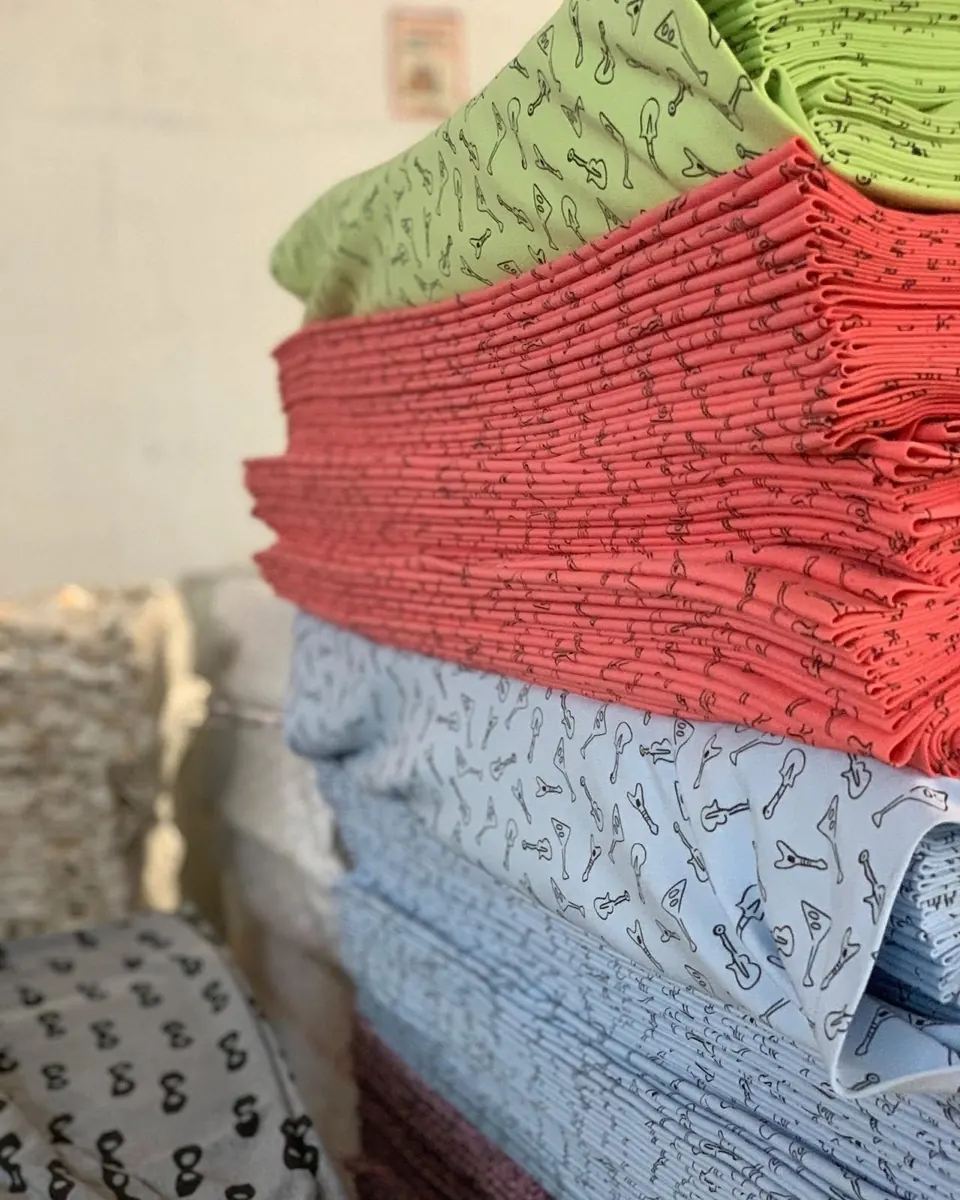
If enquiring about a PR-111 design, identify the actual catalogue or sample reference and ask which colourway and material version are offered. If requesting a custom graphic, supply the available artwork information and ask whether the relevant development is possible rather than assuming a custom service. State the desired motif scale, colour references and placement policy. Explain whether the design tolerates variation from garment to garment. A photograph of a retail shirt can communicate the idea, but it is not a production-ready repeat, separated artwork file or agreed cutting instruction.
Verify that the artwork can be used before development
Ask the brand's responsible person to confirm that supplied logos, illustrations and photographs can be used for the proposed commercial programme. Keep that internal confirmation with the artwork revision instead of asking a printer to infer rights from a file attachment. This is practical project control, not a legal opinion or a guarantee about any image. If permission is unclear, resolve it before incurring print-development costs. A visually suitable reference found online should remain a reference until the buyer has a legitimate design or the necessary authorisation for its intended use.
Separate fabric quantity from placement and decoration services
Provide a forecast by colourway and material route with explicit units. Where the design uses controlled motif placement, share the garment size ratio and ask the cutter to establish consumption with the actual repeat. Request separate identification of any quoted sample, artwork, set-up or decoration charges so the comparison is understandable. Ask who supplies strike-offs, sample yardage and the sewn prototype, and who approves each. CottonWorks distinguishes development samples and garment fitting stages; a useful enquiry assigns those stages rather than assuming one attractive cutting settles the whole programme.
CottonWorks: Designing Knit Textiles — Development sample, sample-yardage and garment-fitting stages are distinct. Allocating these responsibilities and requesting separately identified charges are original project recommendations, not supplier commercial terms.
Ask for the missing print-specific offer details
Request the offered usable printed width, actual pattern or repeat information, finish and any layout restrictions relevant to the cutter. Ask the commercial team for confirmation of minimums, price basis, payment terms and requested delivery arrangements for this particular design and quantity. Include the destination and required milestones, distinguishing a desired date from an accepted commitment. If current availability is uncertain, ask directly. A printed-fabric listing does not prove that the shown design is in stock, available in every weight or ready for immediate shipment.
Catalogue starting points
Reference PR-111 as 100% combed cotton printed single jersey with 140, 150, 160, 170, 180 g/m² options and the Reactive print + fixation label. For a different body-substrate discussion, SJ-101 is 100% compact combed cotton single jersey at 130, 140, 150, 160, 170 g/m² with Enzyme + silicone. Request a precise offered version for either route. These entries do not confirm a custom artwork service, garment decoration method or measured print performance, and the two supply proposals should not be compared as though their decoration scope were already identical.
Request a reply that exposes substitutions and open approvals
End with a clear first action, such as confirmation of an identified printed-material sample or a response on the feasibility of the proposed substrate-and-artwork route. Ask the supplier to name any alternative weight, design, finish or service scope rather than silently substituting it. Keep commercial acceptance separate from the designer's visual approval and any technical evidence still required. When the programme changes, issue the revised artwork and brief together. This helps the buyer progress toward a complete offer without confusing the existence of a fabric catalogue record with an approved, fully specified graphic garment.
Technical background and scope
This is a structured editorial draft. Garment-specific development advice is paired with existing catalogue records; compatibility must be established by sampling. AL KUMAŞ supplies fabric. Cutting, sewing and finished-garment production are separate unless explicitly agreed.