



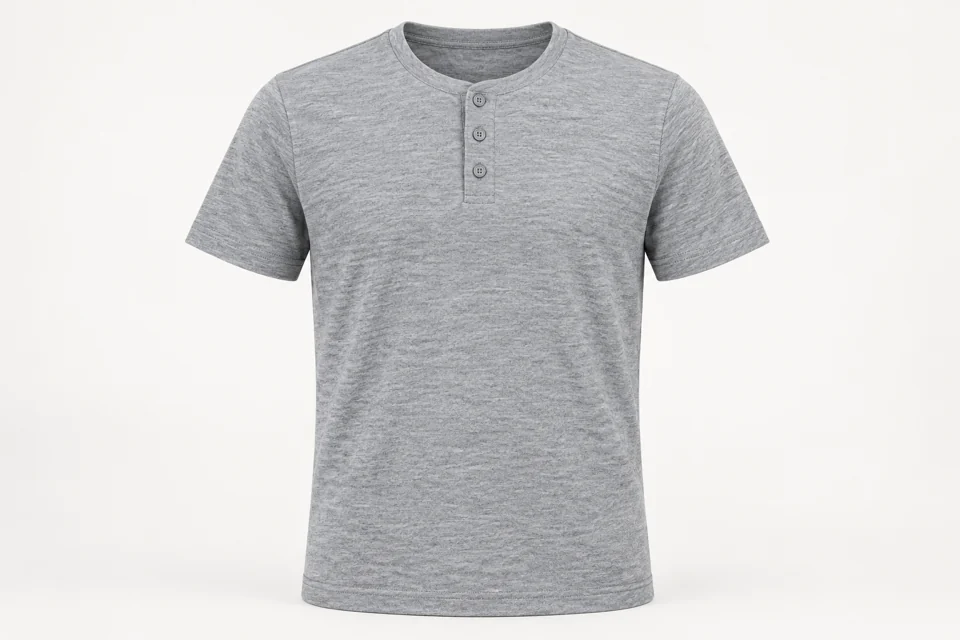
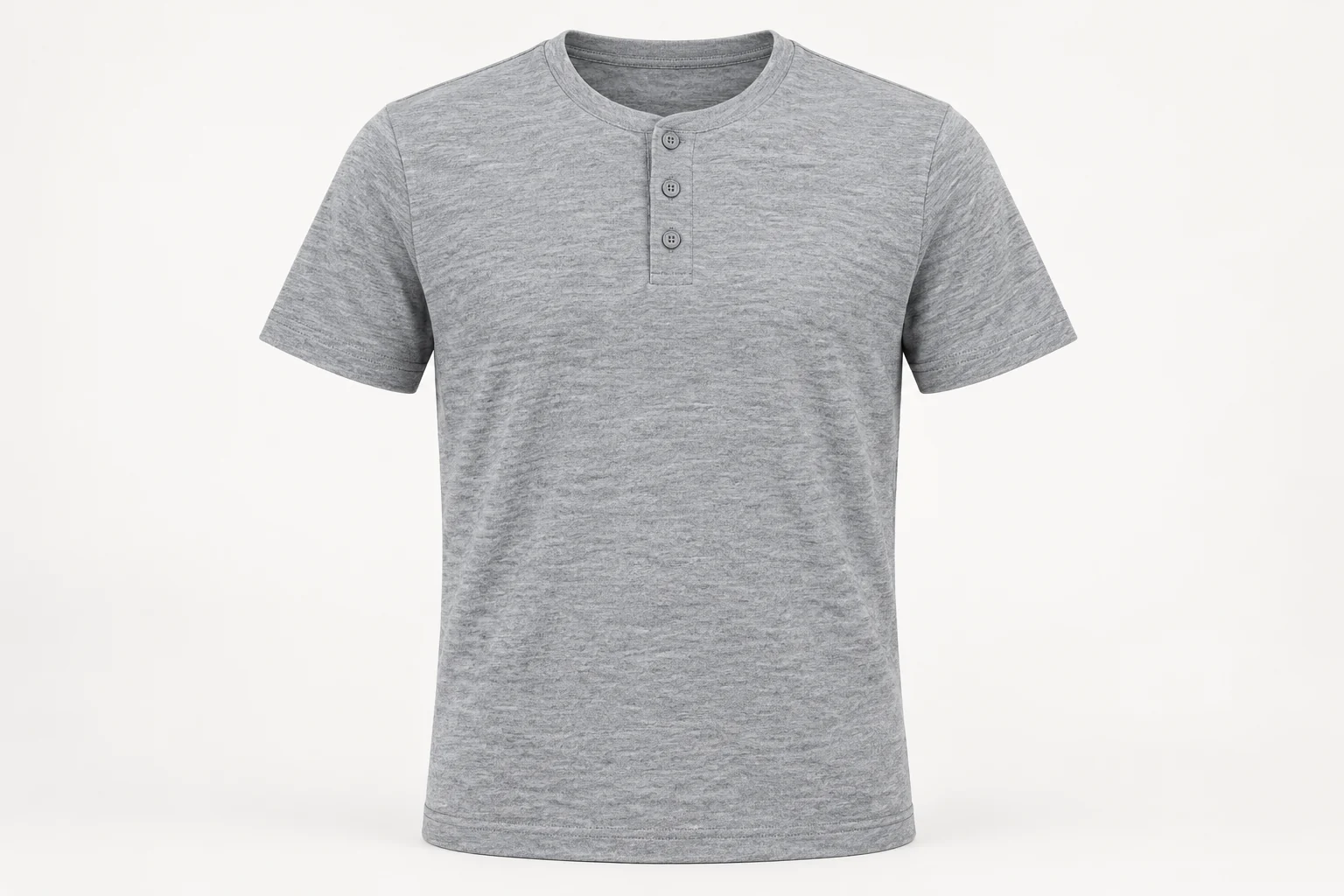
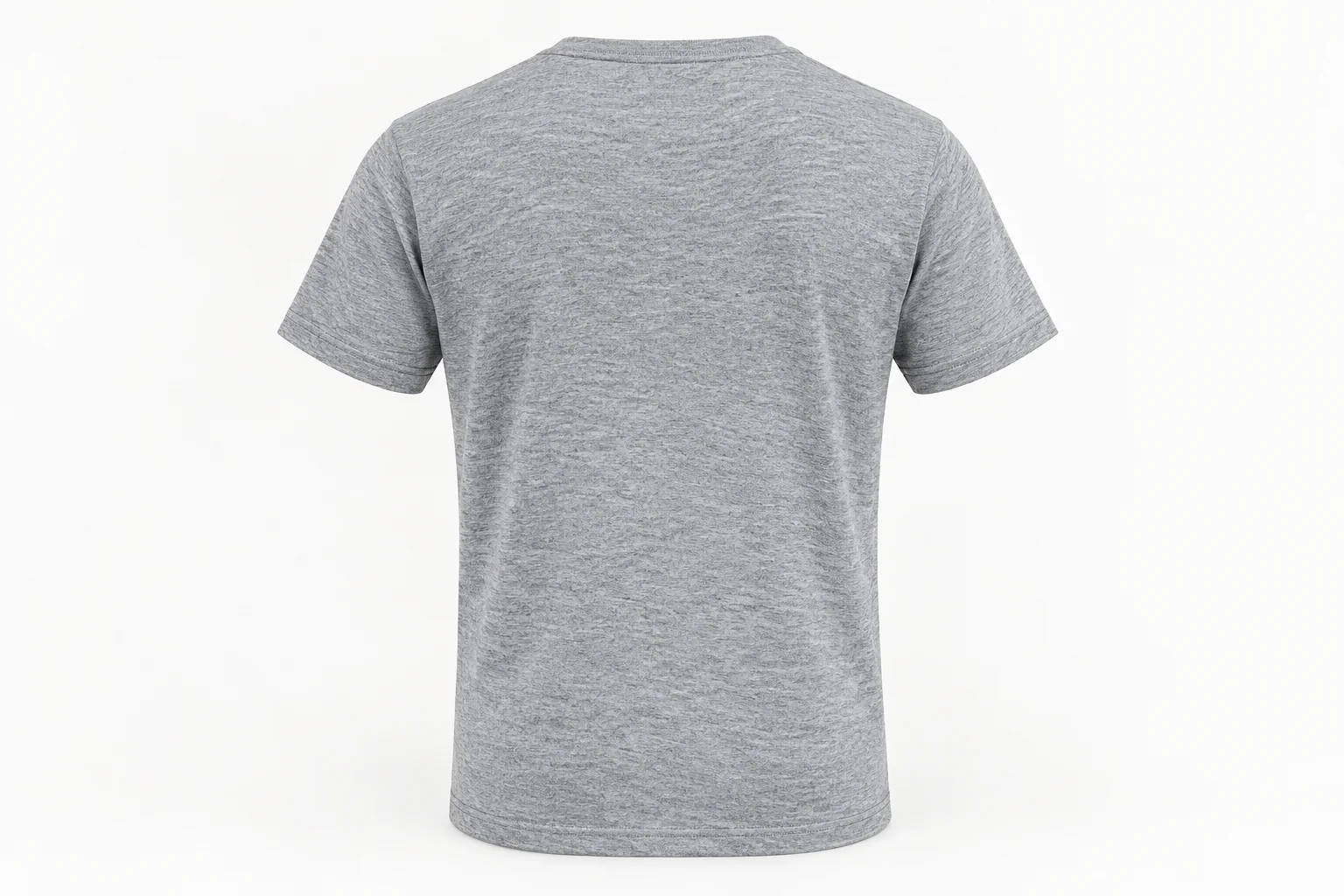
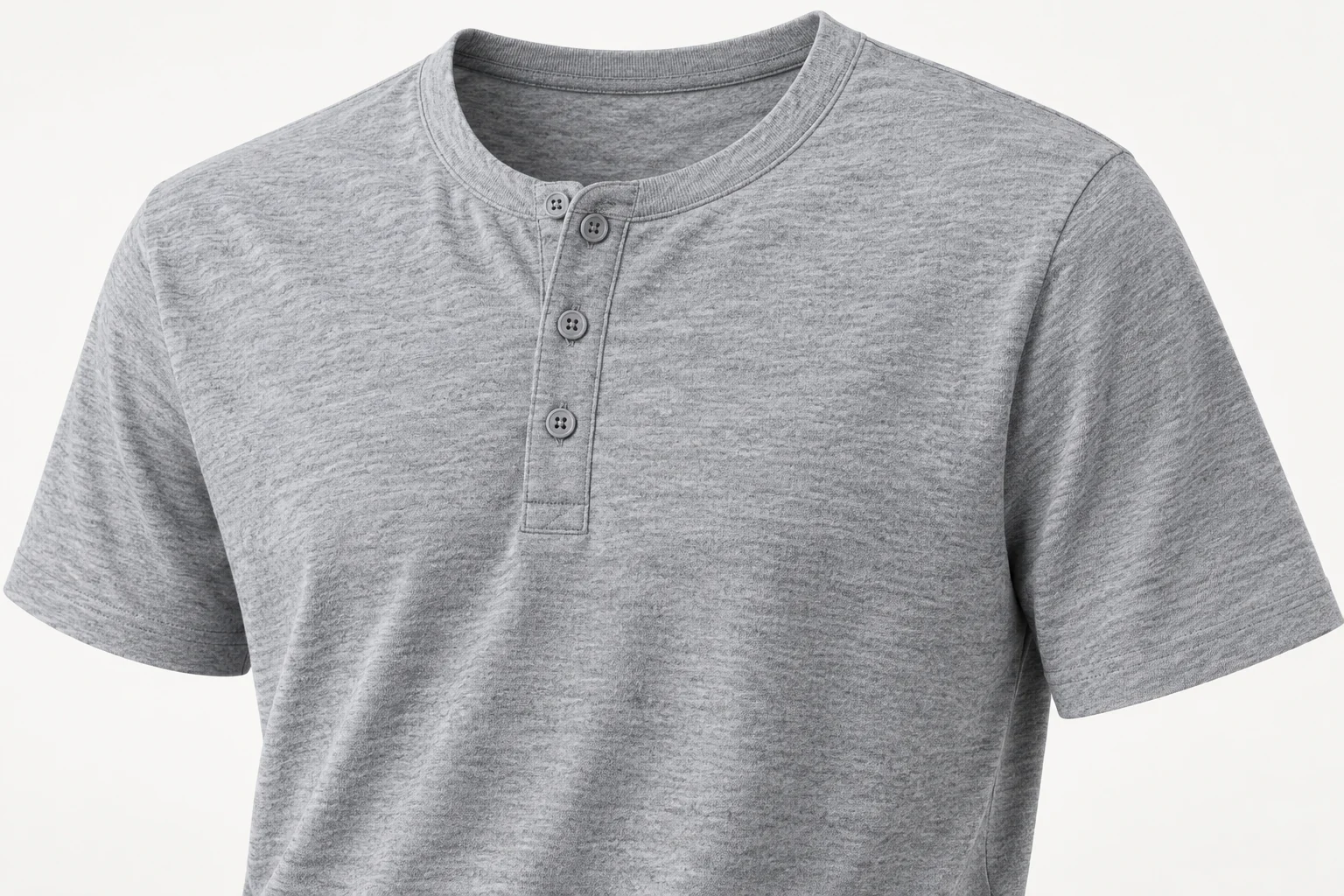
Design the short opening as a visible colour feature
A Henley's placket can blend into the body, create a contrast panel or reveal another colour when unfastened. State which effect is intended and show the shirt in both positions. An image of the closed garment alone may conceal an underside that becomes visually important in wear. Identify the body, placket, support visibility where relevant, buttons and stitching as separate colour decisions. Do not assume a general cotton shade reference settles the appearance of every component in an assembled opening.
Approve buttons against the actual assembled layers
Place the proposed buttons on the real placket and body combination, using agreed viewing conditions and a governing physical reference. Decide whether the button should disappear, form a small accent or contrast strongly. Review the holes and attachment thread where those are visible rather than treating them as colourless details. If the maker changes a button size or placket construction after fitting, ask whether the visual comparison needs reopening. A replacement can be technically proposed while still requiring a separate design decision about its appearance.
Keep artwork relationships clear around the opening end
Show the placket boundary and lower termination on the garment artwork drawing. For an editorial example, a graphic placed immediately below the opening may look intentional in the flat design yet become partly concealed by an open placket or local folds when worn. Decide whether that interaction is acceptable, or whether the image should move. Define placement from agreed finished landmarks and review representative sizes. Do not transfer a crew-neck chest placement without checking the Henley's actual opening length, because the visual space above the graphic has changed.
Make print continuity a conscious component decision
If a repeat, stripe or other pattern crosses the placket area, decide how much continuity the design requires. The body and overlapping pieces may display different parts of the pattern unless cutting is controlled. Ask the cutter to assess the actual proposed arrangement before promising matching, and put any accepted interruption on the design record. For a solid body with plain contrast pieces, omit unnecessary pattern-matching instructions. The colour brief should describe the specific Henley being purchased, rather than accumulating rules from unrelated woven shirts or patterned polo designs.
Sample the decoration on the offered body and placket surfaces
CottonWorks explains that fibre, yarn and fabric characteristics influence textile printing. Confirm the proposed decorator's process and substrate requirements on the actual finished material instead of assuming that a cotton label qualifies every surface. If the graphic touches the placket, ask whether assembly sequence or layered construction affects the proposed application. Review a relevant sewn sample as well as any cutting used for colour. The body record does not establish a print-service offer, decorated-buttonhole performance or care result, so keep such questions in the development plan rather than promising them in the article.
CottonWorks: Cotton Textile Printing Basics — Fibre, yarn and fabric characteristics influence print choices and appearance. No garment-decoration capability, decorated-buttonhole performance or compatibility guarantee is inferred for either offered body or placket.
Catalogue starting points
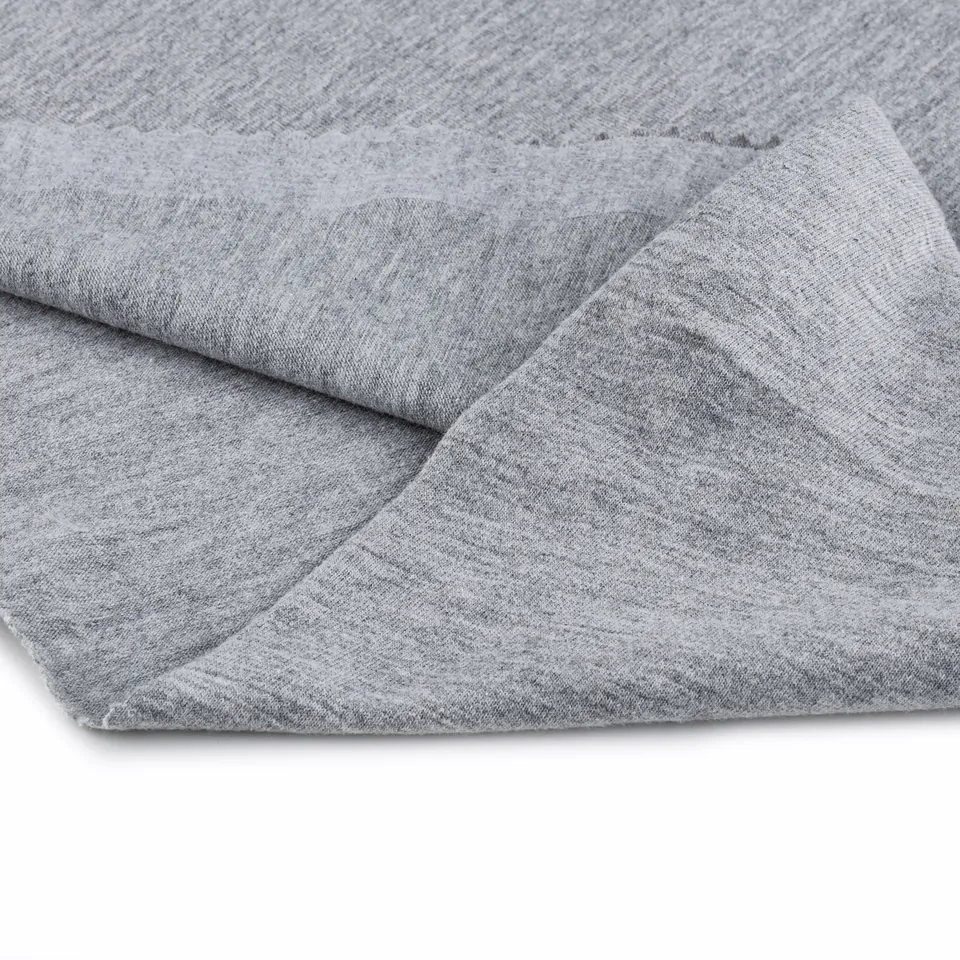
SJ-101 is 100% compact combed cotton single jersey, offered in the local record at 130, 140, 150, 160, 170 g/m² with Enzyme + silicone. IN-201 is 100% combed cotton interlock, recorded at 190, 205, 220, 235, 250 g/m² with Enzyme + compacted. These are body-material descriptions, not approval of the placket shade, button colour or decoration method. Identify the material version actually sampled. If another substrate or finish is proposed, decide explicitly which visual and technical approvals need another trial.
Release one opening-aware colourway record
Keep the accepted body reference, button and placket samples, artwork revision and sewn views in the same pack. Include the shirt open and closed where that difference matters to the design. State which parts of the visual result are accepted and which care or performance evidence remains outstanding. When the placket length, button or graphic changes, review the affected view before reusing approval. This preserves the Henley's intended colour relationships without treating a pleasing body cutting or a successful digital mock-up as proof of the completed garment.
Technical background and scope
This is a structured editorial draft. Garment-specific development advice is paired with existing catalogue records; compatibility must be established by sampling. AL KUMAŞ supplies fabric. Cutting, sewing and finished-garment production are separate unless explicitly agreed.