




Develop a robe opening rather than borrowing dress closure
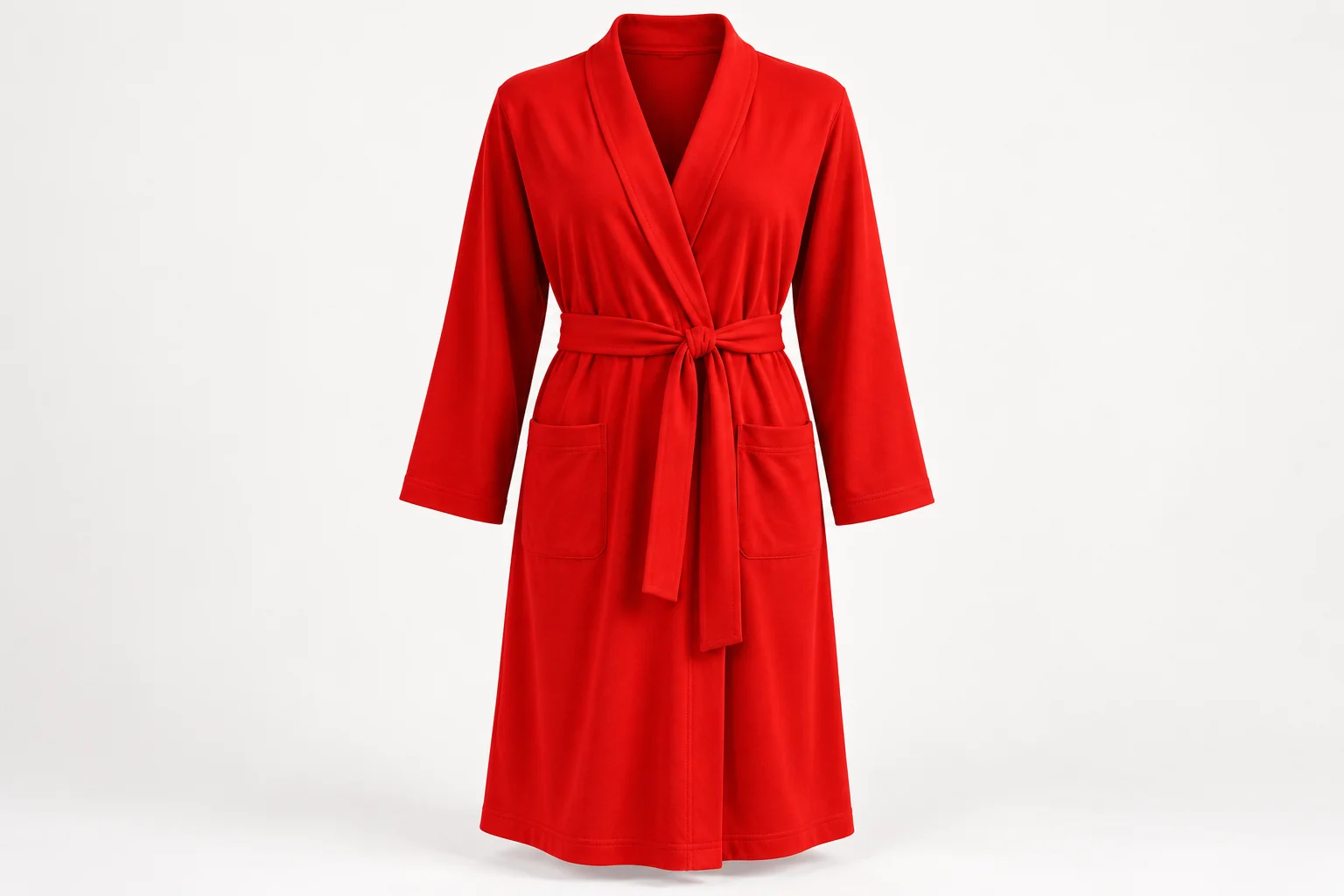
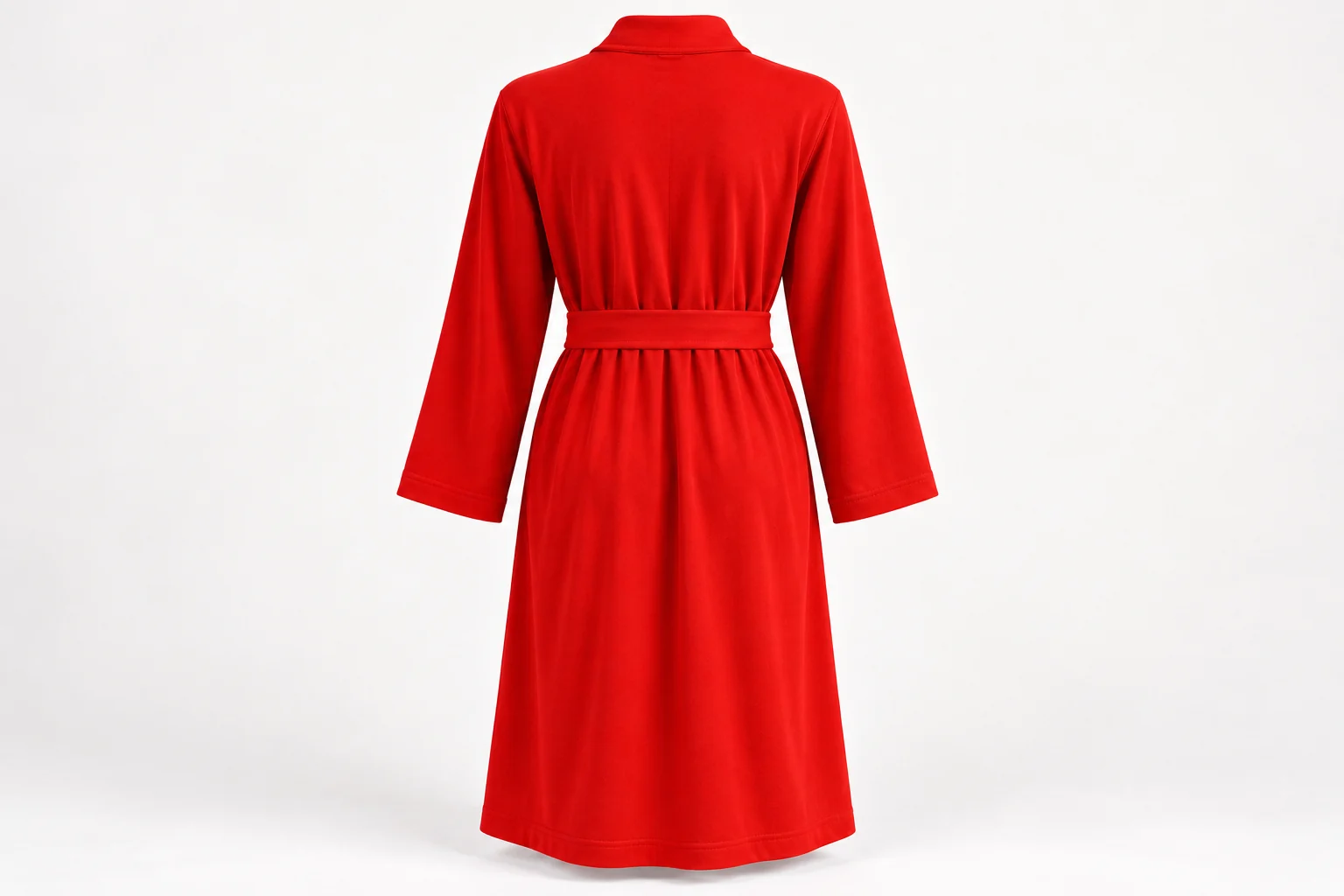
A jersey sleep robe is a layer with a front opening, facing or edge treatment, sleeves and a belt arrangement that must work together. Decide the intended adult underlayer and robe length before sampling. Show the opening untied and tied, because a garment can look balanced in one state and pull unevenly in the other. Unlike a fitted wrap dress, the robe may be worn with a loose belt and a different amount of overlap. The material discussion should begin with that actual use proposition, not a promise that a pleasant-feeling fabric swatch guarantees sleep benefits or coverage.
Compare the two catalogue routes as complete alternatives
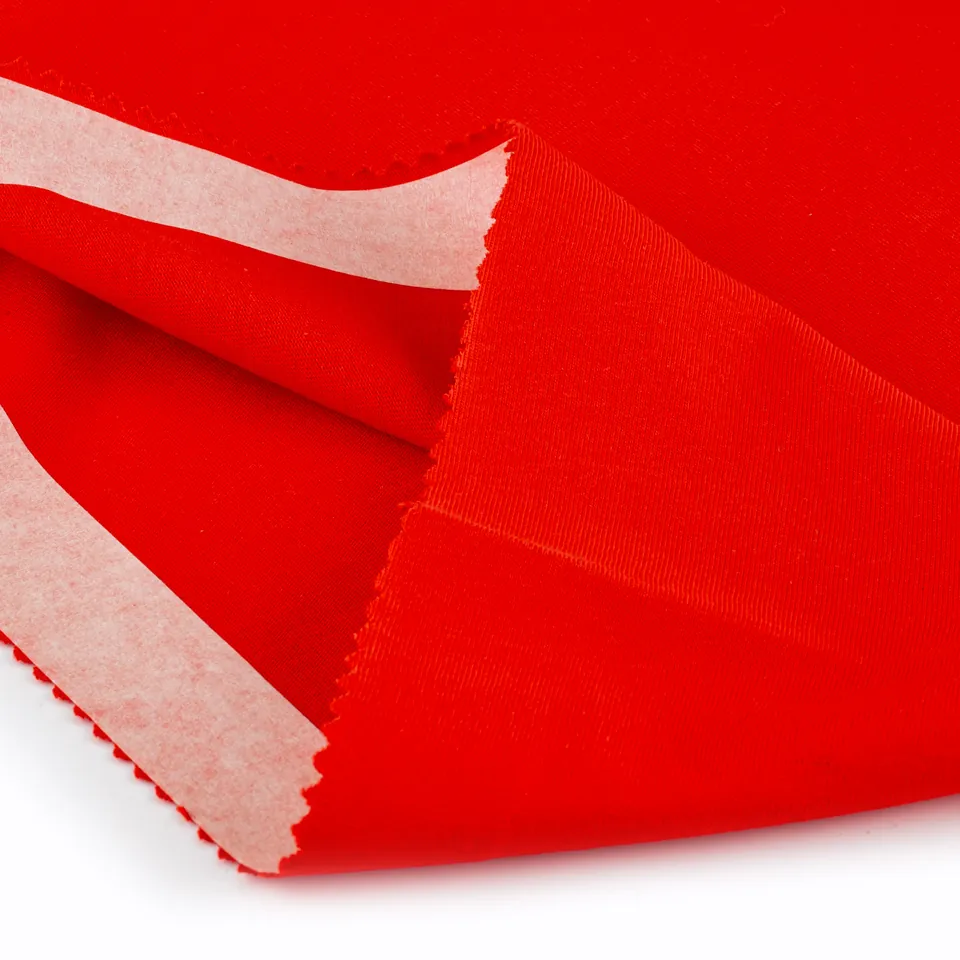
SJ-103 is single jersey containing 95% viscose and 5% elastane, with Bio-polish + silicone and 160, 170, 180, 190 and 200 g/m² options. IN-201 is 100% combed cotton interlock with Enzyme + compacted, at 190, 205, 220, 235 and 250 g/m². Their common listed weight of 190 g/m² can frame an initial sample request if offered. It does not isolate the fibre effect: construction, composition and finish also differ. Neither entry establishes absorbency, thermal comfort, skin benefits or a tested robe-opening performance.
Evaluate the long front edge and facing together
Ask the maker to sample the proposed facing width, fold and attachment along the complete front opening, including its neckline transition and lower end. Inspect the robe hanging freely before it is belted. A front edge that waves, rolls or pulls inward may involve the facing pattern, seam handling or support material. Do not assume that the heavier article is automatically the cure. Compare one defined facing proposal in each candidate and record any adjustment required, so the material decision remains connected to the actual assembled opening.
Make the belt and loops an explicit component system
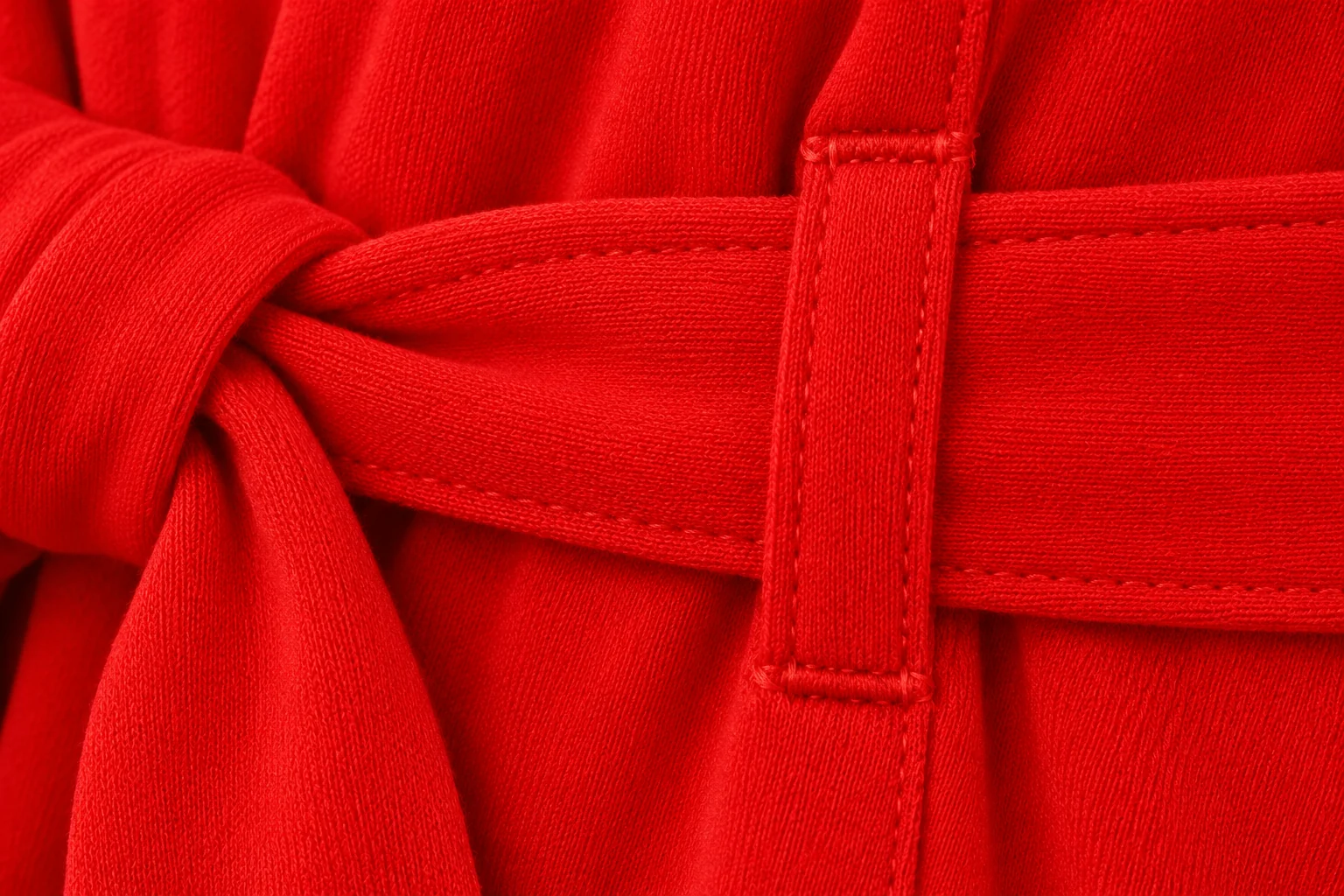
Specify whether the belt is self-fabric, another material or an alternative closure, and show where each loop is attached. Sample the folded belt end, loop construction and any local support in the body seam. A belt can carry several layers at the knot while the loop concentrates a different attachment problem at the side. Check both with the proposed adult fit and belt position. Increasing stitching or adding a patch is a development option to assess, not an assumed guarantee that the body article will tolerate every tightening force.
Consider sleeve and waist bulk over the intended layer
Review the robe over the actual type of adult clothing it is meant to cover, with the proposed sleeve and cuff construction. Bend the elbow, reach forward and tie the belt at the intended waist level. Note whether the sleeve opening, underarm or doubled facing creates unwanted bulk or restricts the underlying garment. A cutting held against the skin cannot answer this layered question. If the design changes from a loose sleeve to a shaped or cuffed version, record that revision and reassess it rather than carrying the earlier material approval forward unchanged.
Use sewing trials to diagnose the edge appearance
Coats explains that seam puckering can involve tension, feeding and differences between assembled components. That is useful background when a robe facing looks uneven along a long opening. Ask the technician for a controlled operation trial on the actual fabric, identifying thread, support and handling. Compare it with the retained original rather than changing fabric, facing width and stitch settings simultaneously. Where the robe includes pockets, inspect their effect on the front hang separately. A pocketless trial cannot approve how a filled patch pocket changes the belt and opening relationship.
Coats: Eliminating Seam Puckering — Tension, feeding and assembled component differences can contribute to puckering; the proposed robe-facing trial is original guidance.
Select the finished robe combination with limits recorded
CottonWorks includes fitting the developed knit material in the garment beyond fabric-stage approval. Retain the accepted untied hang, tied overlap, facing, belt and loop construction with the chosen article and weight. State which observations were made over which underlayer and which care or other evidence remains outstanding. This is a documented adult robe-development decision, not a bathrobe absorbency claim, sleep-safety approval or universal comfort guarantee. Changes to the facing support, belt route or sleeve should reopen the relevant sample questions instead of being treated as cosmetic substitutions.
CottonWorks: Designing Knit Textiles — Fitting developed knit material in a garment is a stage beyond fabric approval; no robe-specific functional property is established.
Technical background and scope
This is a structured editorial draft. Garment-specific development advice is paired with existing catalogue records; compatibility must be established by sampling. AL KUMAŞ supplies fabric. Cutting, sewing and finished-garment production are separate unless explicitly agreed.