





Define the extended top without assuming a dress silhouette
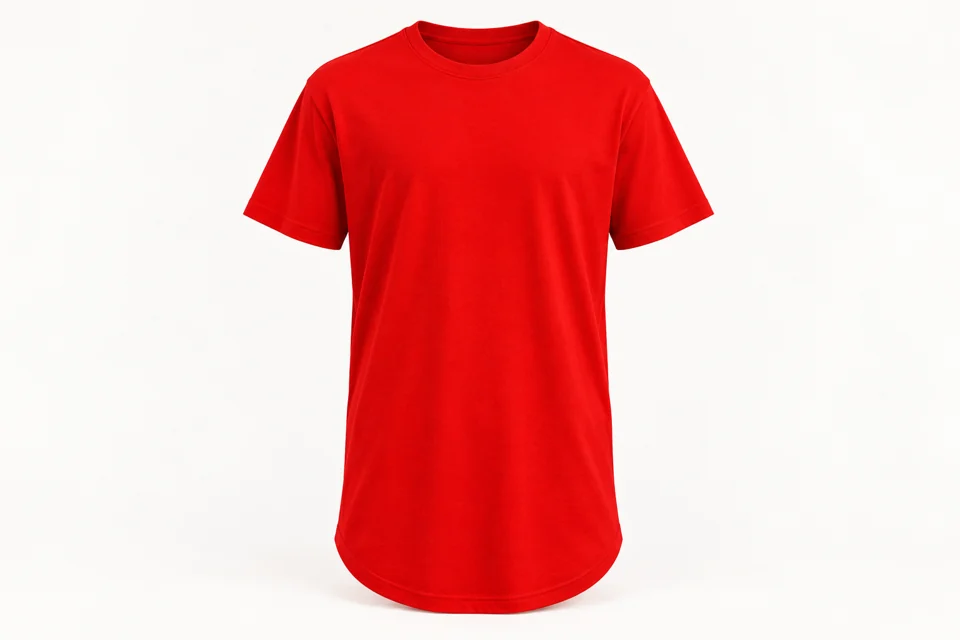
A longline T-shirt extends the lower body of a top while retaining its intended relationship with trousers, shorts or another stated layer. Show where the front and back should finish on the wearer and whether the hem is level, curved or deliberately different in length. The longline label does not settle those choices. Select material against the actual outline, not an assumption that a longer shirt must behave like a dress or an oversized basic. The sample needs enough length to reveal what the designer intends to purchase.
Compare the two routes through their full panels
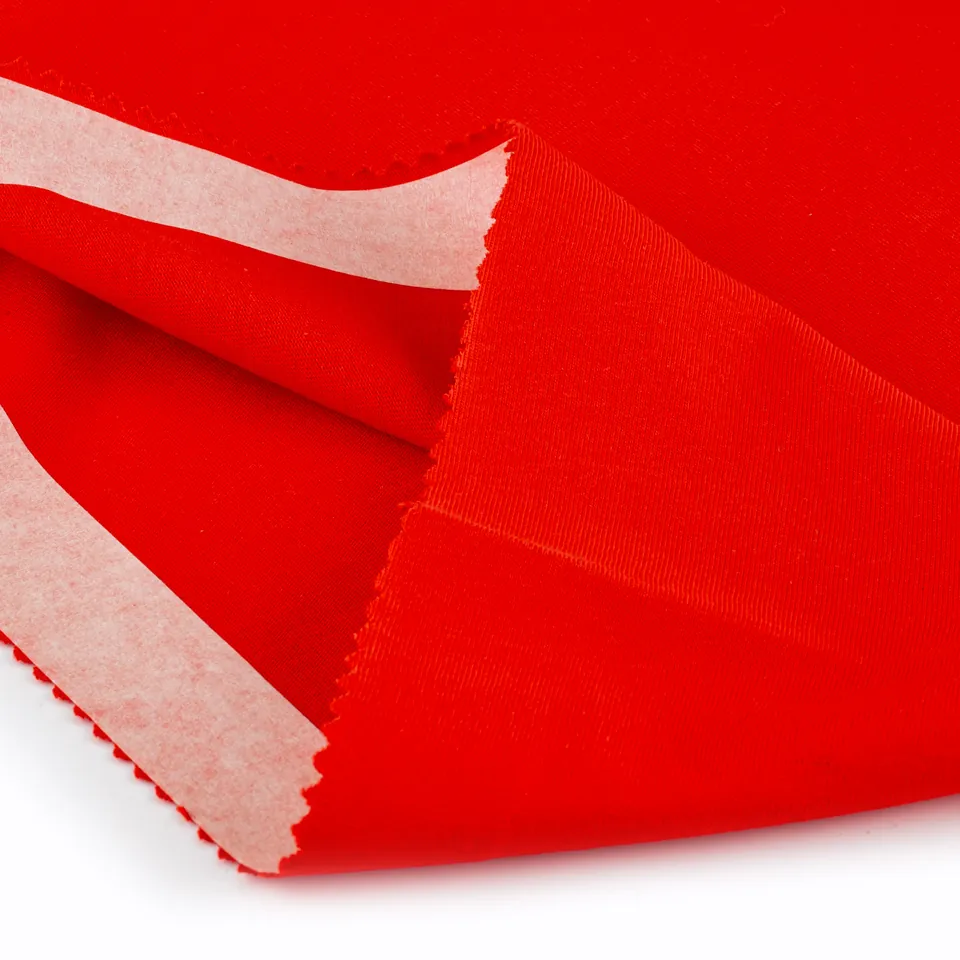
Request actual offered SJ-103 and SJ-101 cuttings, then assess complete front and back panels in the proposed design. The viscose-elastane and cotton records differ in composition, weight range and finish, so a changed result does not isolate one fibre effect. Document whether the maker uses the same initial pattern or explains a necessary adaptation. CottonWorks includes final fabric properties in garment fitting, supporting this full-panel comparison. Avoid promising that viscose automatically creates controlled drape or that cotton necessarily prevents unwanted length change; neither conclusion is a test result for these offers.
CottonWorks: Designing Knit Textiles — Final fabric properties are assessed in the garment-fitting stage. The longline front/back, lower-layer and optional-opening observations are original design-development recommendations, not measured drape or stability evidence for SJ-103 or SJ-101.
Evaluate front-to-back balance from the side
Review the worn side profile as well as front photographs. Identify the accepted relationship between shoulder position, side seam and lower edge. If the back is intentionally longer, show that difference on the drawing so the team can distinguish it from an unwanted imbalance. An extended front that catches or pulls over the intended lower layer may need a pattern or ease review rather than a fabric substitution. Ask the maker to identify the proposed correction and preserve the remaining accepted details so the next sample can answer a specific question.
Include side openings only where the design specifies them
If the style has side openings, show their position, depth and finishing arrangement before material selection. Assess how the opening lies while standing and sitting, and how its end interacts with the extended body. If the style has uninterrupted side seams, evaluate that actual construction instead of assuming a slit is required merely because the shirt is long. A change between these designs can alter appearance, movement and assembly. It should be a deliberate development alternative, not an undocumented sewing-room adjustment made after the body fabric has been approved.
Let the hem construction participate in the material comparison
Sample the intended lower finish around the real outline, including any curve or different front and back lengths. A small straight cutting cannot show how the complete hem sits in the longline shape. Observe the garment hanging and worn in stated conditions, asking the maker to investigate an unwanted twist or turn without diagnosing it solely from fibre content. Where the design uses a longer back, check the resulting appearance over the lower garment rather than smoothing it into place for every photograph. Retain the natural view as part of the selection evidence.
Catalogue starting points
SJ-103 lists 95% viscose 5% elastane, 160, 170, 180, 190, 200 g/m² and Bio-polish + silicone. SJ-101 lists 100% compact combed cotton, 130, 140, 150, 160, 170 g/m² and Enzyme + silicone. Both are single-jersey records, not evidence of a finished longline shirt's drape, recovery or after-care balance. Confirm the actual offered weight, finish and usable width for sampling. The catalogue descriptions identify candidates while leaving the extended front, back and lower-edge outcome to actual garment development.
Choose the accepted length relationship with the material
Retain the selected body article, front and back targets, side construction and developed hem beside the complete sample. State the styling context and representative sizes reviewed, without promising one result for every wearer or lower garment. If an alternative material or another back length is later proposed, identify which observations need repeating. A good selection record explains how this particular longline top is meant to hang and move, preserving its extended-shirt identity instead of accepting an arbitrary amount of extra fabric as a complete design decision.
Technical background and scope
This is a structured editorial draft. Garment-specific development advice is paired with existing catalogue records; compatibility must be established by sampling. AL KUMAŞ supplies fabric. Cutting, sewing and finished-garment production are separate unless explicitly agreed.