




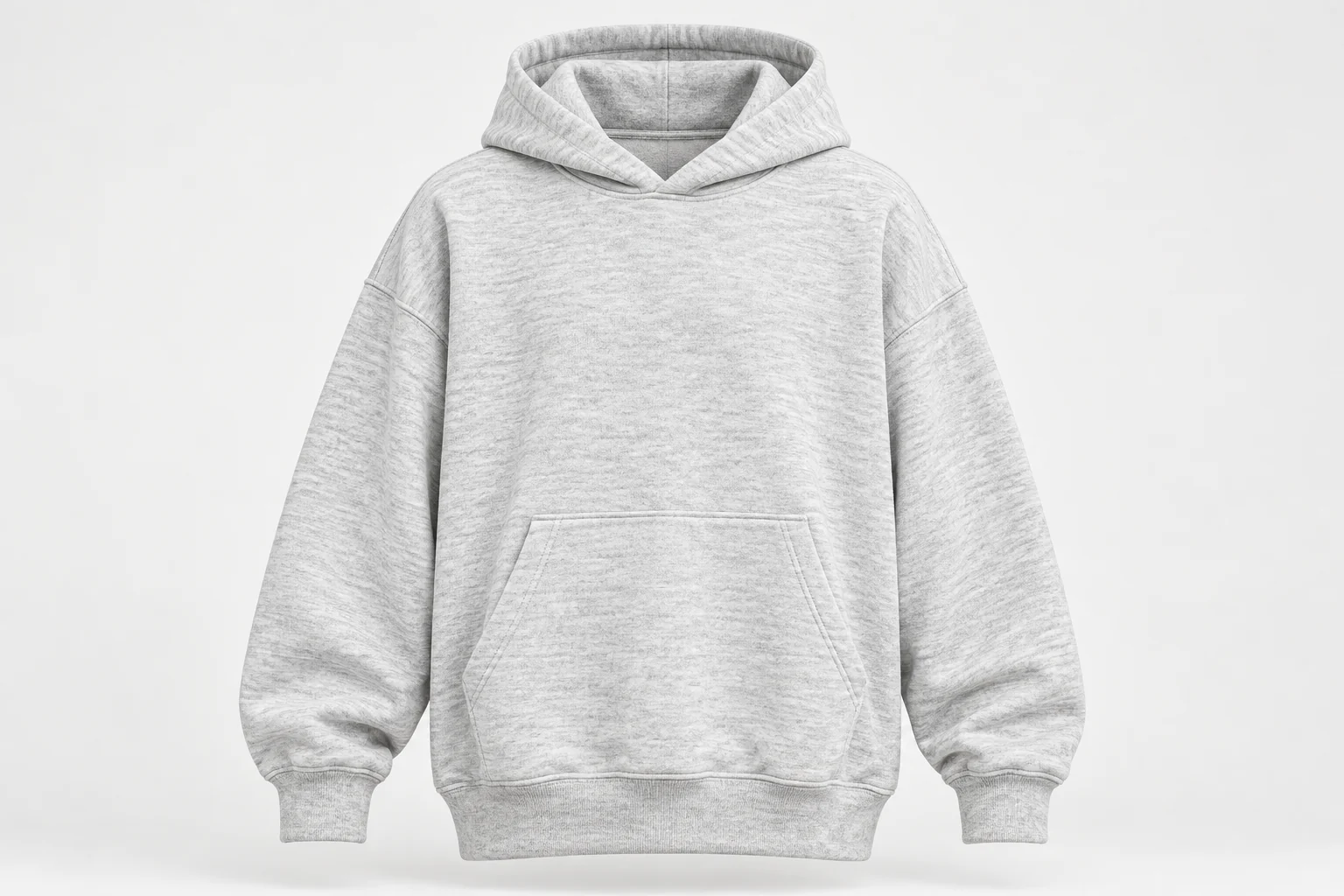
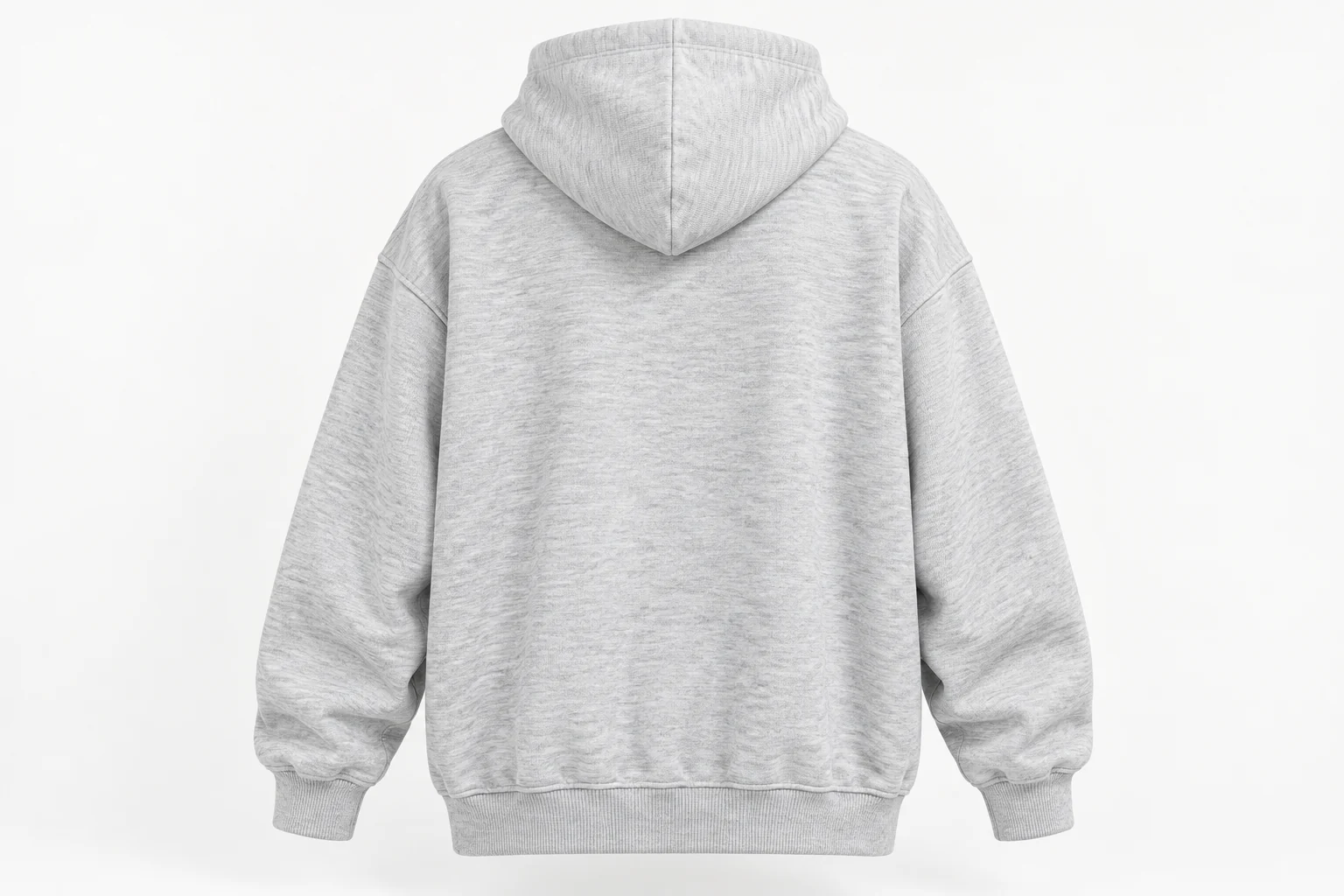

Balance the hood against a deliberately broad body
An oversized hoodie needs more definition than a request for extra chest width. Draw the intended body length, shoulder drop, sleeve volume and hood outline together. Decide whether the hood should look large on the wearer or simply proportionate to the broader body. A deep hood hanging behind a wide neckline can affect the visual balance differently from the same hood on a conventional fit. Evaluate those relationships in a full prototype instead of enlarging every component by one scale factor and calling the result oversized.
Use two clearly identified substantial knit routes
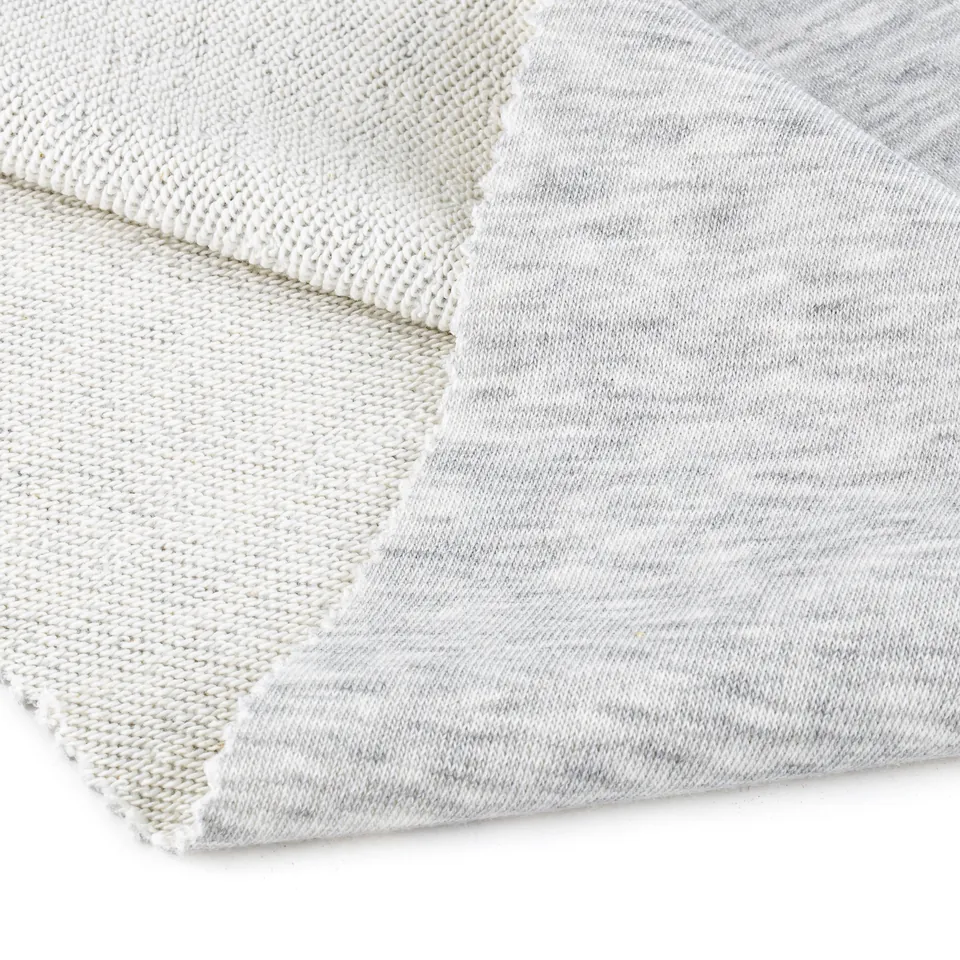
FT-602 is three-thread unbrushed compacted material, seventy percent cotton and thirty percent polyester, at 300, 325, 350, 375 and 400 grams per square metre. FT-603 is three-thread brushed fleece, sixty-five percent cotton and thirty-five percent polyester, with a brushed anti-pilling label at 320, 345, 370, 395 and 420 grams per square metre. The comparison changes blend, finish and weight options, so it cannot isolate brushing as the cause of every difference. The anti-pilling designation is not a test score or a guarantee of permanent appearance.
Trial hood layers before fixing the whole-body weight
Build the intended hood at its actual pattern size, including its inner layer and neckline finish. Attach it to a representative body rather than judging it as an unsupported piece. Observe the front opening and shoulder line with the hood resting down and then raised. If the hood pulls the neckline backward, compare geometry, inner material and component mass with the developer. Do not assume reducing body weight or increasing reinforcement automatically solves the relationship. An accepted lighter lining should be specified as a separate component, not omitted from the record.
Treat shoulder drop and sleeve length as connected choices
A dropped body shoulder moves the sleeve join outward, changing the complete path from neck to wrist. Evaluate that path on the wearer with the arm relaxed and bent. A sleeve cut as long as a conventional version may create more coverage than intended when attached to a broader shoulder, but the actual pattern determines the result. Ask the maker to identify body-shoulder length, sleeve length and cuff depth separately. Shortening one without reviewing the others can change the silhouette while apparently correcting only the wrist position.
Select a pocket that supports the oversized front
Show the pocket dimensions and placement on the broad body, with the intended hem and band position visible. A pocket enlarged in proportion to chest width may become deeper or heavier than the design needs. Sew its attachment and opening in each proposed material and assess the front empty and during intended ordinary use. Record what was evaluated instead of implying a load rating. If the pocket distorts the front, investigate its shape, attachment and material combination rather than assuming the entire hoodie must become heavier.
Specify seams where volume becomes several layers
Inspect the dropped sleeve join, underarm, hood base and pocket corners in the proposed sewing arrangement. Coats distinguishes component arrangement from stitch choice, so a visible topstitch line is not a complete assembly specification. Ask the maker to identify the inside construction and assess its bulk on the actual offered weight. The oversized outline can hide a troublesome junction in a flat photograph. Compare it on the intended adult body and underlayer before concluding that generous circumference guarantees unrestricted movement or comfort.
Coats: Seam Types — Seam component arrangement and stitch choice are distinct. Reviewing hood-base and dropped-sleeve bulk in the complete assembly is original editorial application, not a tested specification for these articles.
Approve a proportion system rather than a bigger size
Review representative sizes against the intended hood, shoulder, pocket and wrist relationships. Identify which proportions should remain consistent and which change deliberately across the range. Keep the accepted material route, offered weight, inner hood and band references with the pattern. Request appropriate evidence for performance requirements separately; neither catalogue weight nor an oversized fit establishes measured warmth, recovery or durability. When a later material alternative is proposed, reassess the affected proportions rather than approving it solely because its cutting feels similar in the hand.
Technical background and scope
This is a structured editorial draft. Garment-specific development advice is paired with existing catalogue records; compatibility must be established by sampling. AL KUMAŞ supplies fabric. Cutting, sewing and finished-garment production are separate unless explicitly agreed.