





Separate the long front from the opening components
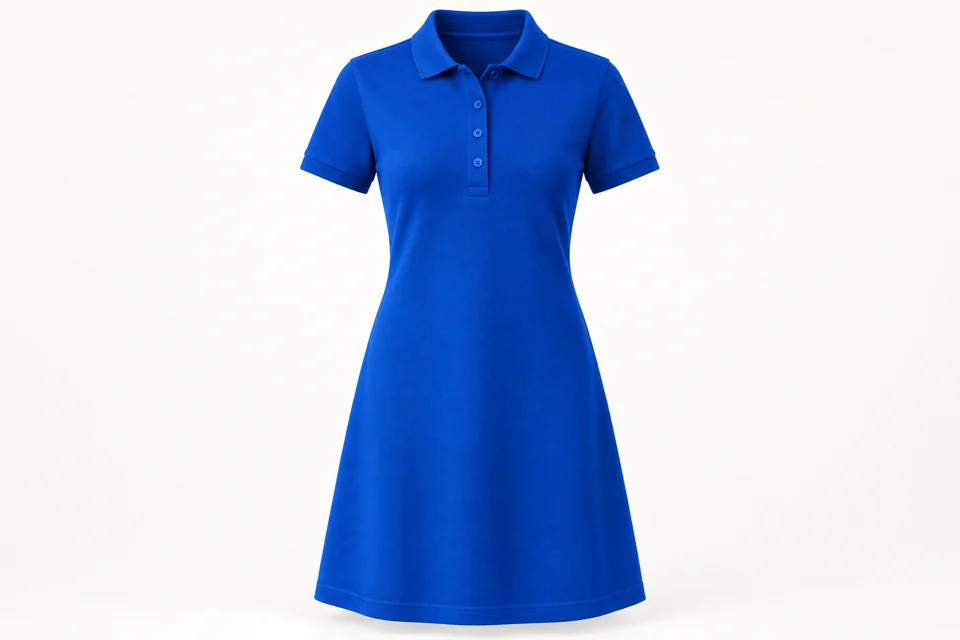
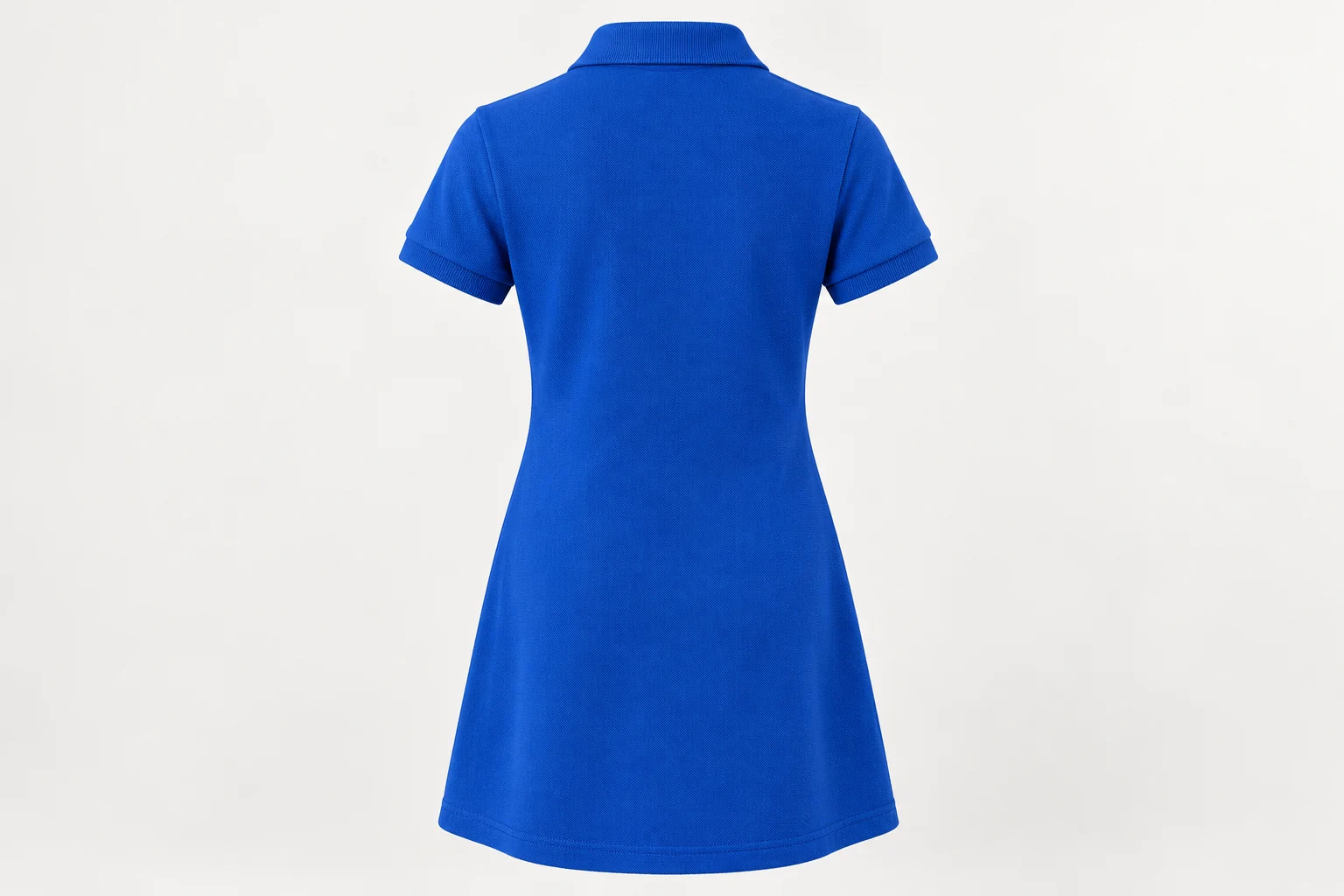
The material list should identify the actual dress front and back, sleeves where present, placket pieces, neckline arrangement and any specified lower-edge or opening components. Show whether the collar is cut from a material roll or purchased separately; that choice changes the calculation. A long-front pattern is not a polo-shirt marker with an unexplained length allowance. Give the cutter the accepted body shape, dress length and size ratio, including any actual variant under discussion. The estimate must describe the configuration that will be sampled rather than an assumed standard polo-dress package.
Use the shared nominal weight carefully
The recorded ranges include a common 190 g/m² option, which may be useful for a limited comparison if both are actually offered. Holding that number constant does not hold structure, fibre blend, finish or usable width constant. Ask the pattern team whether the two trials use one controlled pattern or need separately identified revisions after assessment. The cotton-elastane route should not be costed with a smaller body merely because it contains elastane. Accepted fit, front-opening behaviour and lower-body shape must determine the pattern before the buyer compares the resulting material cost.
Expose a support-piece change without exaggerating its mass
For invented arithmetic only, suppose a proposed front-support revision adds 0.035 square metres of a trial material at 190 g/m². Its net mass would be 6.65 grams before cutting losses and allowances. These figures are not a recommended support, actual placket area or AL KUMAŞ yield. The example shows one small material effect, not the full consequence of the revision. A separate support substrate, different assembly or changed opening shape may have another cost and require another sample. Ask the maker to identify the actual accepted construction instead of hiding it in a generic front allowance.
Request a marker for the complete dress panels
Have the cutter show the long body and its real smaller components at the confirmed usable width, preserving the approved face and direction. CottonWorks describes marker utilisation through the arrangement of actual garment pieces; here the pattern, size ratio and opening configuration must underpin that arrangement. A separately purchased collar should not be counted again as body area, while a cut collar cannot be omitted by assumption. If a directional surface or artwork constrains rotation, include it explicitly. Retain the actual marker reference rather than treating a theoretical mass-to-length conversion as a dress yield.
Garment Construction — CottonWorks — General marker and cutting context; the proposed polo-dress marker and numerical illustration are editorial examples, not source specifications.
Catalogue starting points
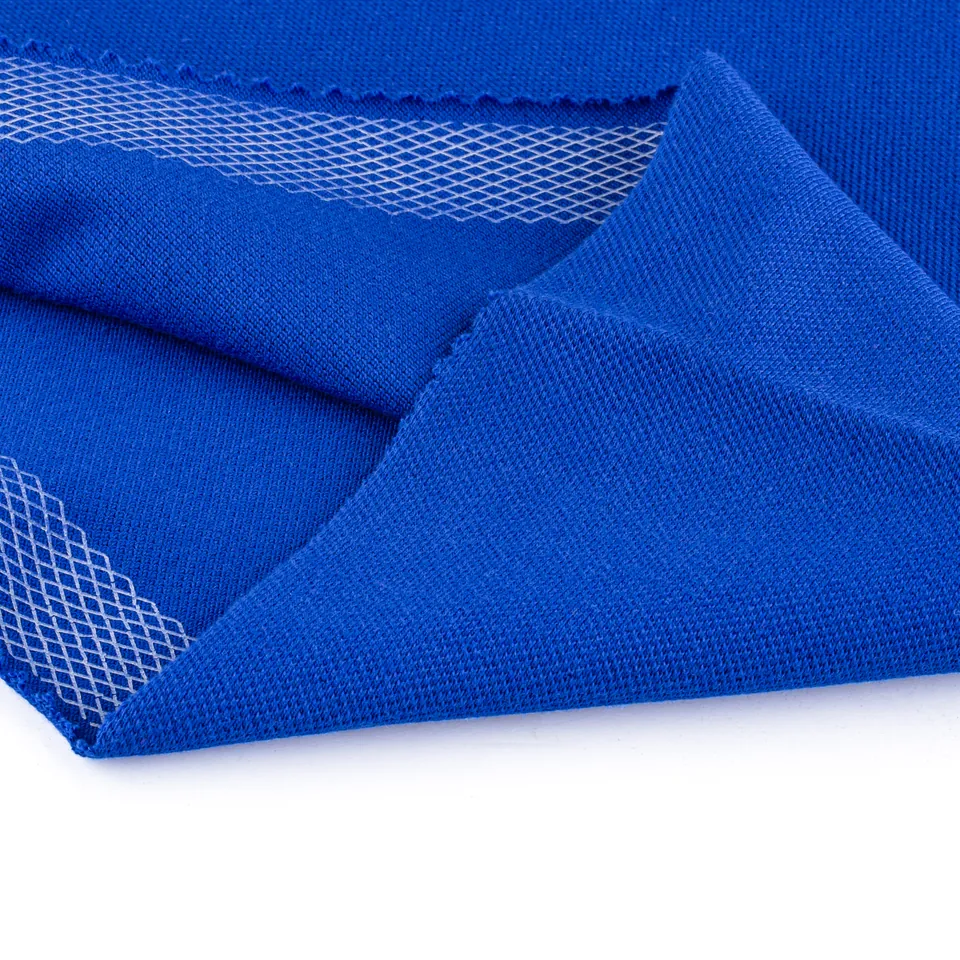
PQ-501 lists 100% combed cotton, 190, 205, 220, 235, 250 g/m² and Enzyme + silicone finishing. SJ-102 lists 95% cotton 5% elastane, 170, 180, 190, 200, 210 g/m² and Enzyme + compacted finishing. Those article facts do not confirm usable width, dress-marker length, supplied collars or a front-support specification. Ask for the precise current offered weight, finish, format and unit before comparing quotations. A shared nominal weight is not evidence of equivalent garment behaviour or a common dimensional allowance, and neither entry confirms current commercial availability.
Keep body grading and placket grading as separate decisions
If the collection offers several sizes or lengths, ask the pattern developer how the opening proportion and collar relationship change, if at all, rather than scaling them automatically with body length. Give the resulting components and ordered mix to the cutter. A revised placket endpoint can alter body and support pieces even if the hem stays fixed. Show pattern compensation, cutting losses and purchasing buffers separately, noting what is already included. This allows a fit correction to enter the cost sheet honestly without preserving an early estimate based on another front configuration.
Compare the price of an accepted long-front assembly
Show body material, actual collar supply, opening components, buttons or other specified fastenings and relevant operations beside the accepted pattern. Include any real hem or slit construction in the maker's costing rather than assuming a shirt finish. Ask which programme charges and commercial basis apply to those actual items. If a lower-front balance correction changes the pattern or support, request the relevant recalculation. The buyer can then compare two developed polo-dress routes without mistaking a lower kilogram price or an incomplete upper-body package for the cost of the complete garment.
Technical background and scope
This is a structured editorial draft. Garment-specific development advice is paired with existing catalogue records; compatibility must be established by sampling. AL KUMAŞ supplies fabric. Cutting, sewing and finished-garment production are separate unless explicitly agreed.