





Send a short-specific adult nightwear drawing
Provide front, back and side drawings with the intended waist position, front and back rise, inseam and finished leg opening. Explain whether the silhouette is loose, shaped or another defined proposal, and identify the top or other layer intended to accompany it. Show a curved hem, binding or slit only if it belongs to the design. A request to shorten a pyjama trouser leaves the coverage and edge decisions open. The enquiry should make clear which dimensions are fixed and which are being compared in the next sample.
Request named body options without a comfort promise
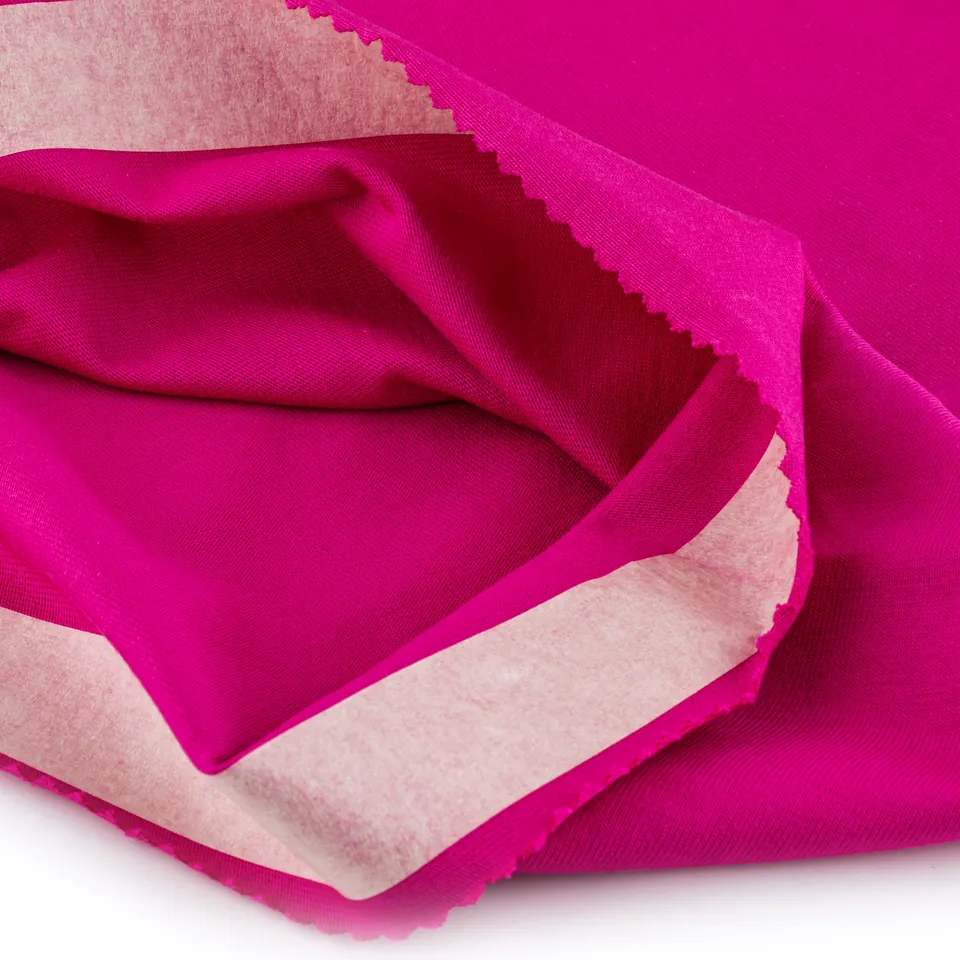
Ask about SJ-104, 95% modal and 5% elastane single jersey with Bio-polish + soft hand at 150, 160, 170, 180 and 190 g/m². SJ-101 is the alternative 100% compact combed cotton jersey, Enzyme + silicone, at 130, 140, 150, 160 and 170 g/m². Select the offered weights to compare and obtain sample identity and confirmed usable width. A shared nominal weight does not make the routes equivalent; no elastane is listed for SJ-101, but its total extension is not quantified here. Neither offer should be described as improving sleep or skin health without separate evidence.
Define a controlled rise or edge comparison
Ask the garment maker to propose named variants around the unresolved decision. For example, compare two documented back-rise proposals with the same waist and hem, or two leg finishes on the same accepted body pattern. These are sampling approaches, not mandatory dimensions. Require each trial to state what changed, who authorised it and which observation it should answer. Avoid a sample in which rise, elastic, body article and hem all change silently. The buyer then has a concrete reason for selecting a variant rather than describing the newest sample as simply softer or better.
Assign the waist and hem materials before costing
List elastic specification, casing or band construction, thread and any separate binding or trim. Identify whether the leg edge uses body material or another article, and who approves its contact and appearance in the sample. A softer-feeling body cannot substitute for approving a dense waist seam or a narrow binding junction. Ask for finished edge width, cut dimensions and join rules where relevant. Keep optional pockets separate rather than adding them as standard details, since they change the pattern, material requirement and short-panel construction being quoted.
Make the sample decision and its cost consequence explicit
Coordinate a complete sewn adult sample for seated coverage, waist position and hem observations, using the intended night-layer combination. CottonWorks treats fitting developed knit material as a stage beyond fabric approval. Specify the reviewer and the decision needed before the maker recalculates consumption. If the accepted variant has a deeper turn-up or altered rise, issue the new pattern to the cutter and request a revised marker and bill of materials. Do not retain the cheapest early estimate after the design behind it has changed.
CottonWorks: Designing Knit Textiles — Developed knit material is assessed in garment fitting beyond fabric-stage approval; short-specific variants are original development guidance.
Quote the selected variant by size, colour and length
Provide the planned adult size ratio, any different lengths and quantities by article, weight, colour or print, using an agreed unit. Mark which values remain forecasts and which derive from the current marker. If a border or contrast-bound edge restricts cutting, have that configuration assessed separately. Ask for actual minimums, sample costs and price basis rather than guessed commercial figures. For a coordinated set, identify the separate top or robe material and colour-approval relationship; combining everything into one unexplained quantity does not establish a comparable offer.
Close the order with evidence and component references
Reconcile the accepted article, weight, finish, confirmed width, pattern, waist and leg-edge package with the written quotation. State the care and other requirements defined by the responsible team and request the available evidence, leaving unresolved questions visible. Confirm fabric supply versus additional operations explicitly agreed, along with charges, packing, payment, delivery terms and accepted dates. A repeat with a new elastic, edge finish, rise or age-group scope can need another review. The handover should preserve that dependency rather than treating an adult styling approval as a safety, sleep or skin-performance declaration.
Technical background and scope
This is a structured editorial draft. Garment-specific development advice is paired with existing catalogue records; compatibility must be established by sampling. AL KUMAŞ supplies fabric. Cutting, sewing and finished-garment production are separate unless explicitly agreed.