



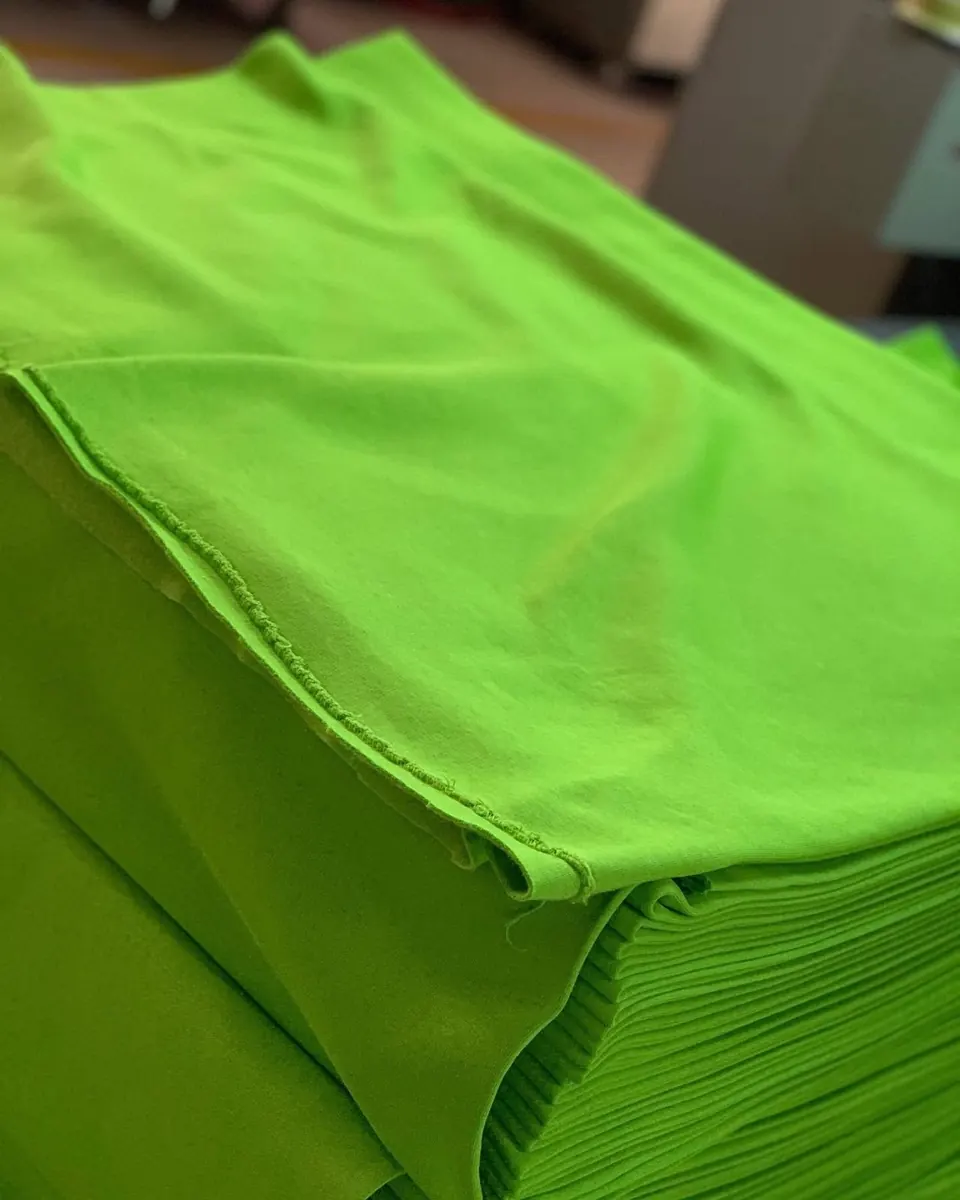
Set a baseline for the rib silhouette
Identify the adult sample as RB-302 2×2 rib, 95% cotton and 5% elastane with Enzyme + compacted, or FR-401 fine rib in the same blend with Silicone + compacted. Record the offered weight, pattern size and intended leg shape. Photograph the rib direction and panel centre lines before fitting, under a documented handling condition. A sample pulled widthwise for display is not the same baseline as one laid relaxed. The first record should show how the garment is being assessed, so later observations are not compared against a differently handled starting point.
Document the knee observation instead of claiming recovery
Agree a relevant movement and seated sequence, then note the knee outline immediately afterwards and after a stated rest interval. Use consistent views and a repeatable measurement approach where dimensions are recorded. Ask whether the observed shape is acceptable for this lounge silhouette and identify any follow-up material assessment. This is not a standardised recovery test unless an appropriate method is actually used. Five percent elastane in both catalogue records does not establish an equal numerical return, an acceptable growth limit or freedom from knee bagging.
Review the seat with the pattern ease recorded
Compare the back and side while standing, seated and after standing again. Note whether the rib spacing, seat shape or rise position changes. Keep the wearer measurements and pattern ease with the report so the team can distinguish a deliberately relaxed trouser from a close-fitting trial. If a hypothetical sample shows an unwanted seat outline after sitting, record the timing and location before asking for a heavier article. Have the technical team consider material behaviour and pattern balance separately, with a named change and another comparison rather than an unexplained adjustment.
Check the waist as the leg’s support point
Observe whether the waistband remains level and at its intended position as the wearer sits and moves. Inspect casing depth, elastic if used, attachment and the orientation of ribbed band pieces. A rolling or slipping waist can alter the apparent leg length and fall, so assess it before trimming a low hem. Request a controlled change if the support is wrong. Do not pull the waistband into a flattering position only for the final photograph; the review needs the normal worn state to give the buyer a useful decision.
Follow the rib lines through seams and hem
Inspect whether a long seam changes direction, whether ribs appear skewed beside it and whether the hem waves or turns outward. Record which effect appears before care and which emerges later. Coats identifies sewing tension, feeding and component differences among possible puckering contributors. That background supports asking the technician for an operation trial on the actual rib. Keep the seam investigation distinct from a pattern correction, and compare the corrected operation with the retained sample. The aim is to identify what changed, not to assume every irregular line proves a fabric defect.
Coats: Eliminating Seam Puckering — Tension, feeding and component dimensional differences can contribute to puckering; rib-specific sample decisions are original guidance.
Repeat dimensional observations after the agreed care
Define measurement points for waist, hip, knee position, inseam, outseam and lower opening as relevant to the pattern. Use the same measurement state and procedure before and after the chosen care trial. CottonWorks explains that construction, processing, sewing and care can influence dimensional behaviour, without supplying results for these rib articles. Obtain the specific evidence needed for the programme and inspect the waist components alongside the body. A fabric-only result does not establish how an elastic, pocketing or hem operation will interact in the completed trousers.
CottonWorks: Shrinkage & Skewing — Manufacturing and care variables affect dimensional behaviour; no RB-302 or FR-401 result or allowance is established.
Retain a decision record with evidence gaps intact
Link each accepted revision to its verification: another knee observation, a corrected waist, a seam trial or a revised panel balance. Check whether solving one issue has shifted the leg fall elsewhere. Retain the earlier sample and identify the article, weight, finish, components and pattern version accepted for the adult programme. List any uncompleted performance assessment rather than implying that a tidy fitting report proves it. The buyer should know what the sample demonstrated, what it did not answer and which changes would reopen the relevant approval.
Technical background and scope
This is a structured editorial draft. Garment-specific development advice is paired with existing catalogue records; compatibility must be established by sampling. AL KUMAŞ supplies fabric. Cutting, sewing and finished-garment production are separate unless explicitly agreed.