



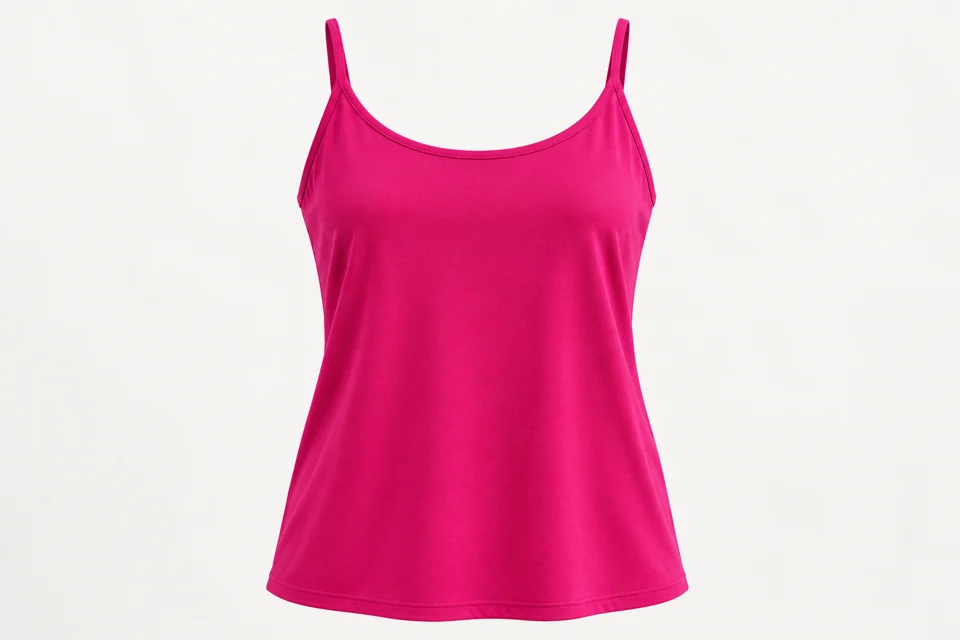
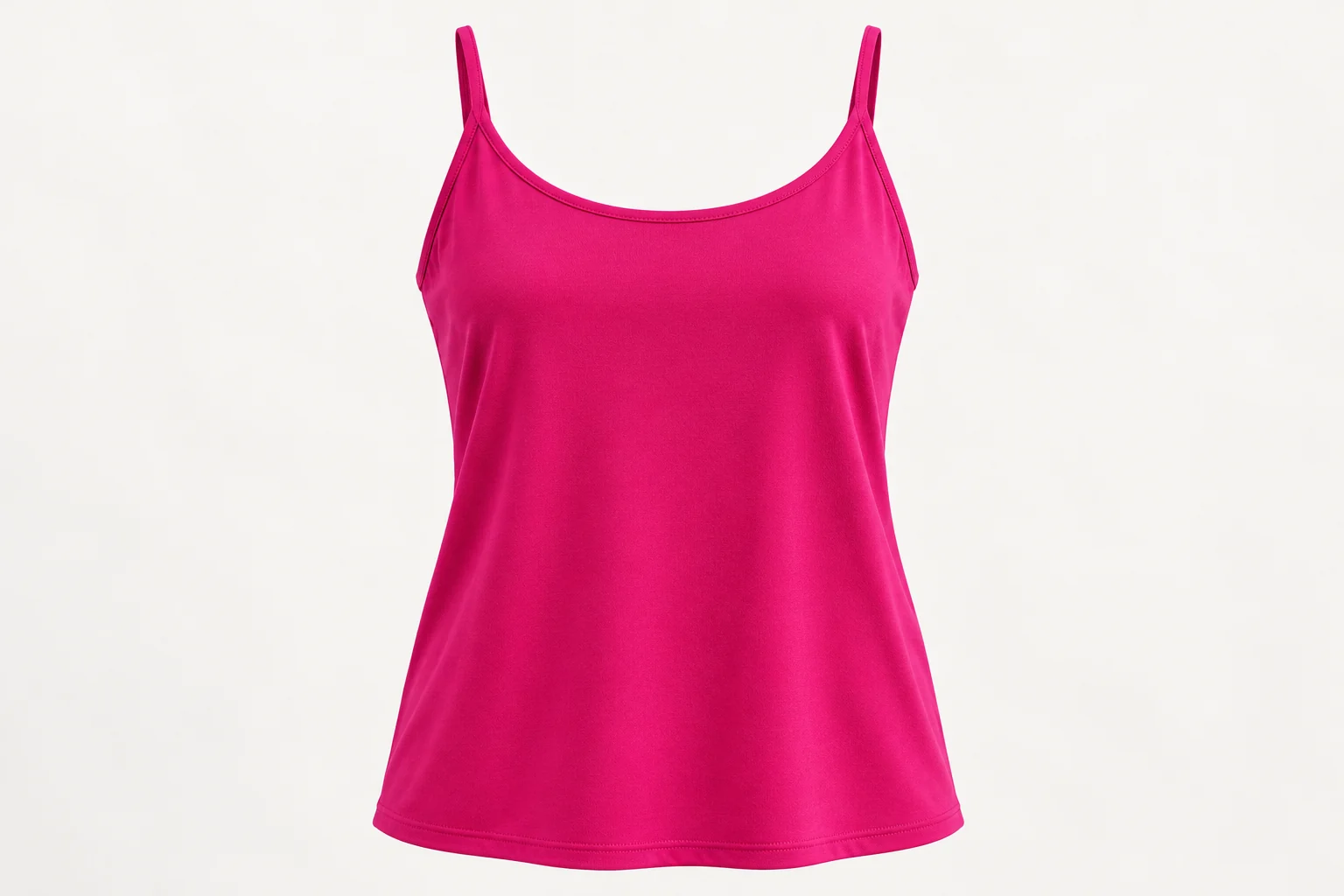


Cost the narrow-edge construction as part of the tank
A sleep tank can have modest body area while its neckline, armholes and shoulder construction still require a carefully defined material package. Obtain the front and back pattern, binding strips and any separately cut straps or facing pieces before estimating consumption. State whether the bindings use the body article or another material. A buying comparison should not reward a low figure that excludes those edges. The costing question is the complete approved adult night layer, with its actual length and opening shape, rather than a sleeve-free fraction of a T-shirt estimate.
Choose exact body weights rather than comparing category names
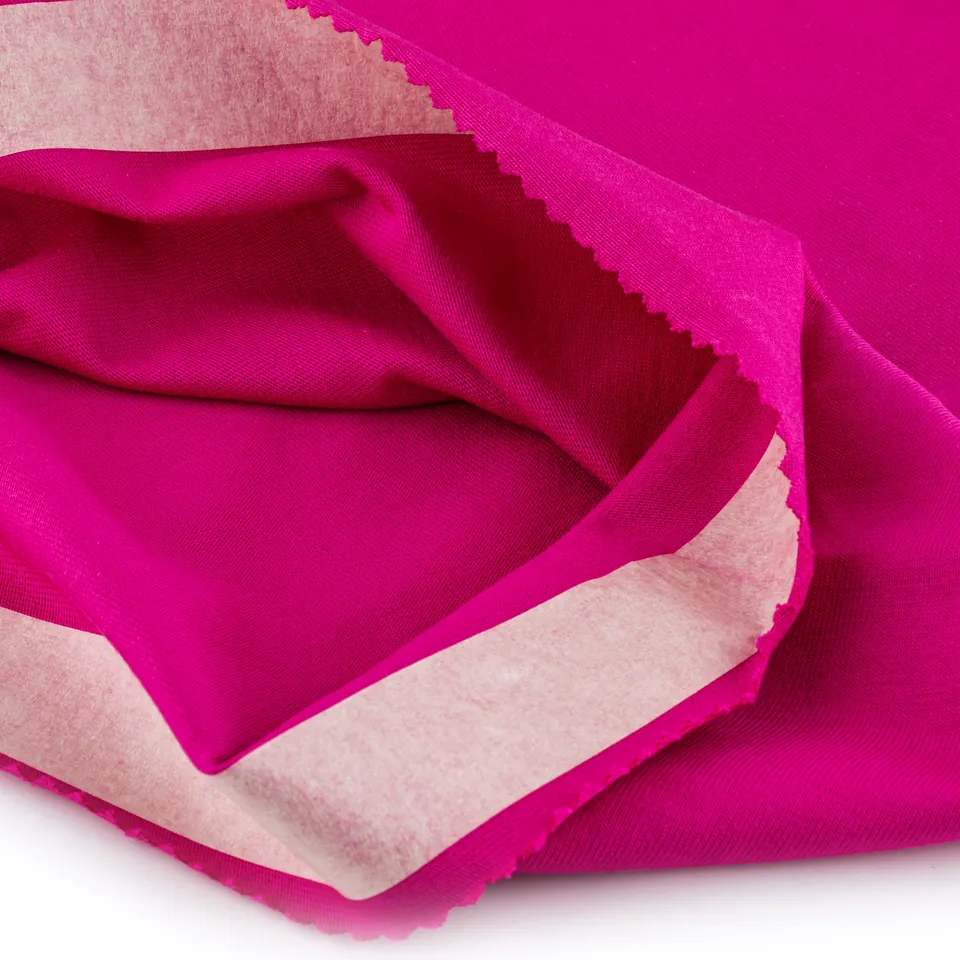
The modal route SJ-104 lists 150, 160, 170, 180 and 190 g/m², with 95% modal and 5% elastane and Bio-polish + soft hand. The cotton route SJ-102 lists 170, 180, 190, 200 and 210 g/m², with 95% cotton and 5% elastane and Enzyme + compacted. Name the proposed weight and tolerance in the offer. Shared entries can support a nominal comparison, but they do not establish equal coverage, edge response or comfort. Obtain the actual usable width; it is not provided by the weight list.
Calculate what a binding-width revision changes
For a hypothetical development example, suppose the total required binding length before agreed allowances is 1.80 metres. Increasing cut strip width from 0.030 to 0.035 metres increases its rectangular area from 0.054 to 0.063 square metres. At 180 g/m², the additional area represents about 1.62 grams. These dimensions are invented arithmetic, not an AL KUMAŞ tank specification. The small mass difference does not decide whether the edge is better. A width change also needs an approved operation, possible layout changes and a review of the finished shoulder and underarm.
Ask the maker how the strips are actually cut
Record strip direction, permissible joins and the location of any join in the neckline or armhole. A marker gap can be useful only if the needed piece fits under those rules. If binding is supplied separately or produced from another format, obtain its own consumption and ordering basis rather than pretending it is freely recovered from body offcuts. The maker should distinguish cut strip width from the finished edge width. That keeps the material estimate aligned with the binding variant the buyer has actually reviewed.
Update the opening revision before accepting the marker
Raising an armhole, changing the shoulder width or moving the neckline alters both the body pieces and the edge requirement. Issue a new pattern reference and ask the cutter which quantities change. If several variants are being compared, retain separate figures instead of averaging them into one unexplained tank consumption. Use the intended adult size distribution, not just the sample size. The smallest shoulder and the largest body outline can present different nesting or component constraints, so have the relevant extremes checked at the confirmed usable width.
Keep care-related adjustments separate from marker losses
Request representative dimensional evidence for the actual body and binding materials and agree how it affects their pattern relationship. CottonWorks identifies processing, construction and care among factors influencing dimensional change; it supplies no sleep-tank allowance for these article codes. Have the technical team document any pattern adjustment before adding cutting loss or purchasing contingency. A general percentage applied to the final fabric order does not demonstrate that a narrow edge and body will remain in the intended relationship after the chosen care trial.
CottonWorks: Shrinkage & Skewing — Construction, manufacturing and care influence dimensional behaviour; no SJ-104 or SJ-102 sleep-tank result or allowance is supplied.
Compare complete edge variants on a clear cost basis
Present each body-and-binding proposal with article, offered weight, confirmed width, strip source, pattern revision and size mix. Separate body quantity, edge quantity and any other material components, and identify which inputs come from a marker versus an early estimate. Add the relevant commercial unit and price basis consistently. A slightly lower body-fabric cost can be offset by a different binding supply or unapproved joins. Select the configuration that passes the adult sample decisions, then obtain a written offer for that configuration rather than buying against an obsolete low-cost prototype.
Technical background and scope
This is a structured editorial draft. Garment-specific development advice is paired with existing catalogue records; compatibility must be established by sampling. AL KUMAŞ supplies fabric. Cutting, sewing and finished-garment production are separate unless explicitly agreed.