





Ask the maker to resolve the completion sequence
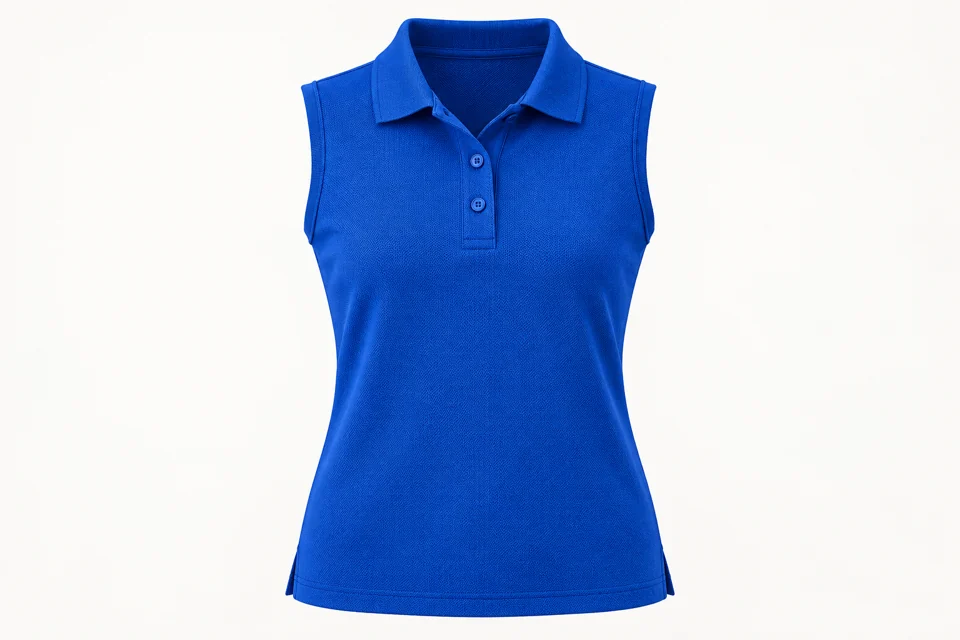
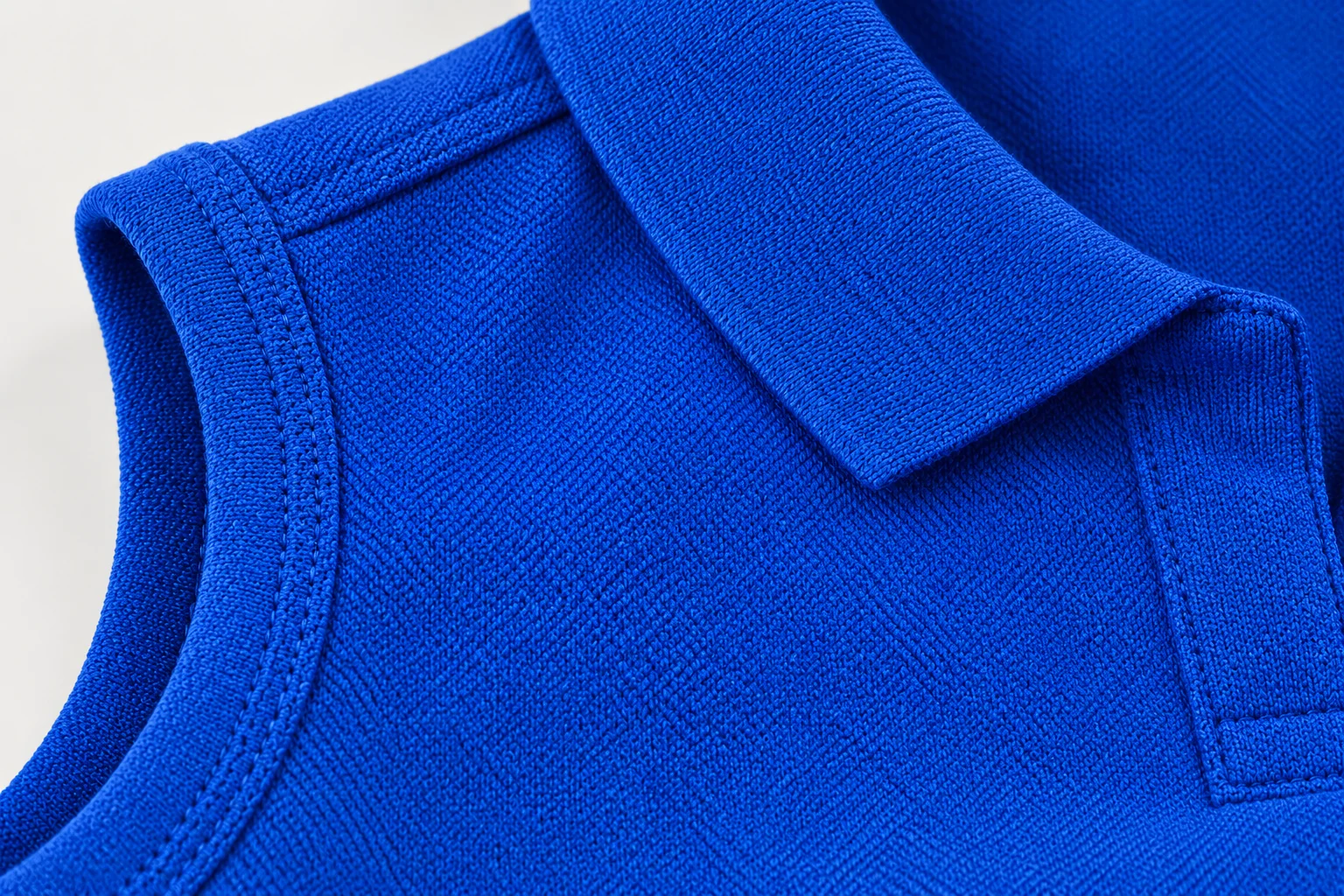
For a sleeveless polo, request an assembly-access plan showing how the collar opening and armhole edges will be completed without sacrificing the approved shoulder and body fit. Its output is a proposed operation order demonstrated on the actual construction, not a general sourcing form, collar grading rule or movement trace. The buyer needs to understand which edges remain accessible at each stage and what the finished inside will contain. Do not prescribe a universal sewing sequence from this guide; the maker should propose and demonstrate the route appropriate to the actual collar, opening and armhole design.
Identify the body and components the route must assemble
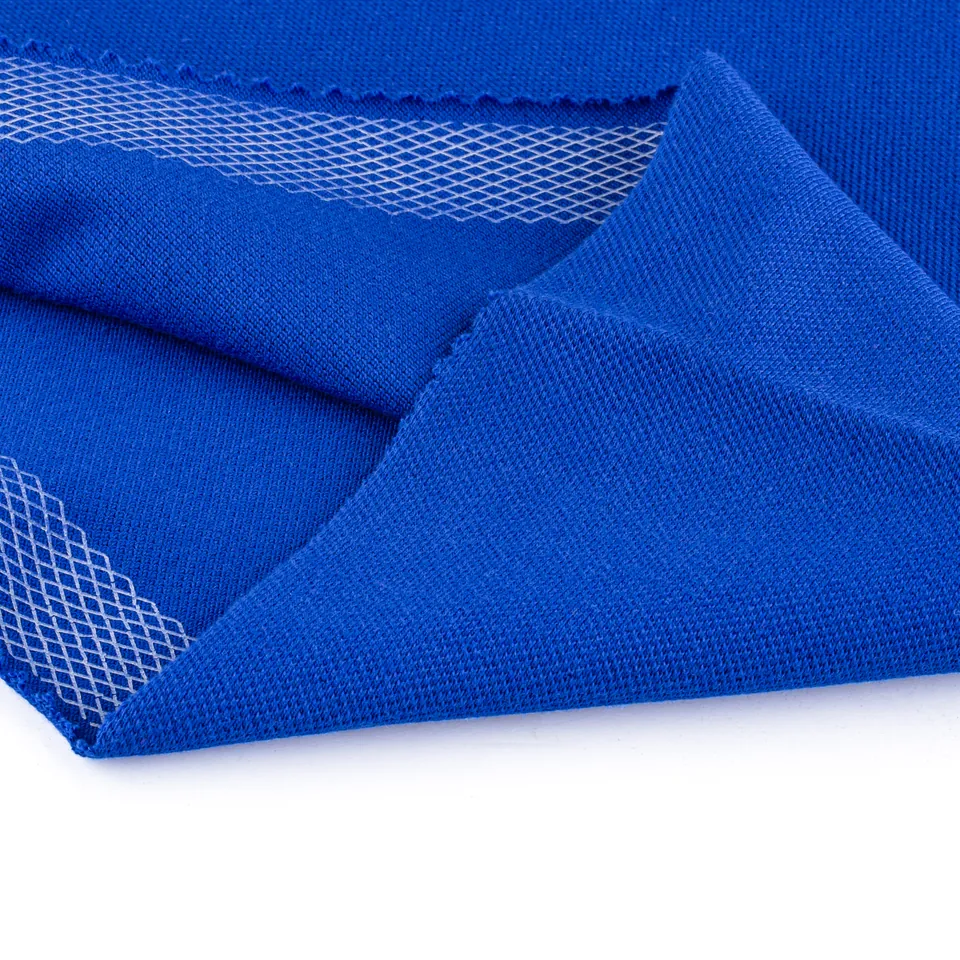
PQ-501 is 100% combed cotton piqué with Enzyme + silicone at 190, 205, 220, 235 and 250 g/m². The alternative assembly route uses SJ-102: 95% cotton and 5% elastane single jersey, finished Enzyme + compacted, with listed weights of 170, 180, 190, 200 and 210 g/m². A common 190 g/m² entry does not make their operations equivalent. Name the selected offered weight and the actual collar, edge strip, opening support and fastenings where specified. The body record supplies none of those finished components by itself, so assign their identities and responsibilities rather than assume fabric supply includes the entire polo assembly.
Show which joins are open when the armhole is finished
Ask the maker to identify whether its proposed armhole method needs an open shoulder or side region, or whether it is developed for completion after those joins close. Have it show the actual strip ends, allowances and junction access on a sample section, with the intended finished shoulder width retained. These are possible route questions, not instructions to use one method on every material. A sequence that looks convenient but leaves an unwanted exposed end or changes body fit is not accepted merely because the edge can be sewn quickly.
Show where collar and front-opening operations depend on access
Require the proposal to identify the collar-base, front-opening and shoulder interfaces, including any support or trim that must be positioned before another join is enclosed. The maker should explain how its actual route avoids trapping or adding an unapproved layer at those locations. A polo with a specified placket needs that construction represented; another opening must use its own actual reference. Do not replace missing access with extra stitching or an unrecorded patch solely to finish a prototype. The buyer should see whether a proposed shortcut changes the intended inside or visible opening.
Demonstrate the completed route on a whole adult top
After showing critical stages, return the completed sample with the collar and both armholes finished under the proposed sequence. CottonWorks includes garment fitting beyond fabric-stage approval, supporting a full-top review rather than acceptance of isolated edge sections. Check that the body fit and shoulder width remain the approved proposition. If the route requires a different edge or collar construction, seek that design decision explicitly before calling it a manufacturing equivalent. The demonstration should show what the maker can reproduce, not conceal changed geometry behind a cleaner close-up.
CottonWorks: Designing Knit Textiles — Developed knit material is assessed through garment fitting beyond fabric-stage review. Assembly-access plan and operation-order branches are original buyer guidance, not a prescribed sewing sequence.
Separate operation changes from pattern and material changes
If the proposed access route succeeds, identify its component and operation references for the actual sample. If it requires a pattern revision, document that as a separate design proposal and request the affected marker and strip calculation. If it requires another support or trim, identify its material, quantity and owner before accepting cost. Do not introduce a universal binding ratio to compensate for an unresolved route. These branches let the buyer decide whether to approve an operation, reconsider a construction or request another sample, instead of receive one undifferentiated sleeveless-polo price for materially different assemblies.
Hand over a reproducible completion route for the actual order
Retain the accepted sequence, critical-stage sections or photographs, finished inside reference, pattern and component identities with the selected article and offered weight. Confirm usable width, size ratio and calculated quantities against that version before reconciling the real commercial offer. A later collar, armhole method or support substitution can alter access and must return to the affected part of the plan. Keep care and any required material evidence separate from the demonstrated assembly. The handoff defines the adult polo route actually developed, without guaranteeing universal fit, performance or availability of additional services from the fabric supplier.
Technical background and scope
This is a structured editorial draft. Garment-specific development advice is paired with existing catalogue records; compatibility must be established by sampling. AL KUMAŞ supplies fabric. Cutting, sewing and finished-garment production are separate unless explicitly agreed.