





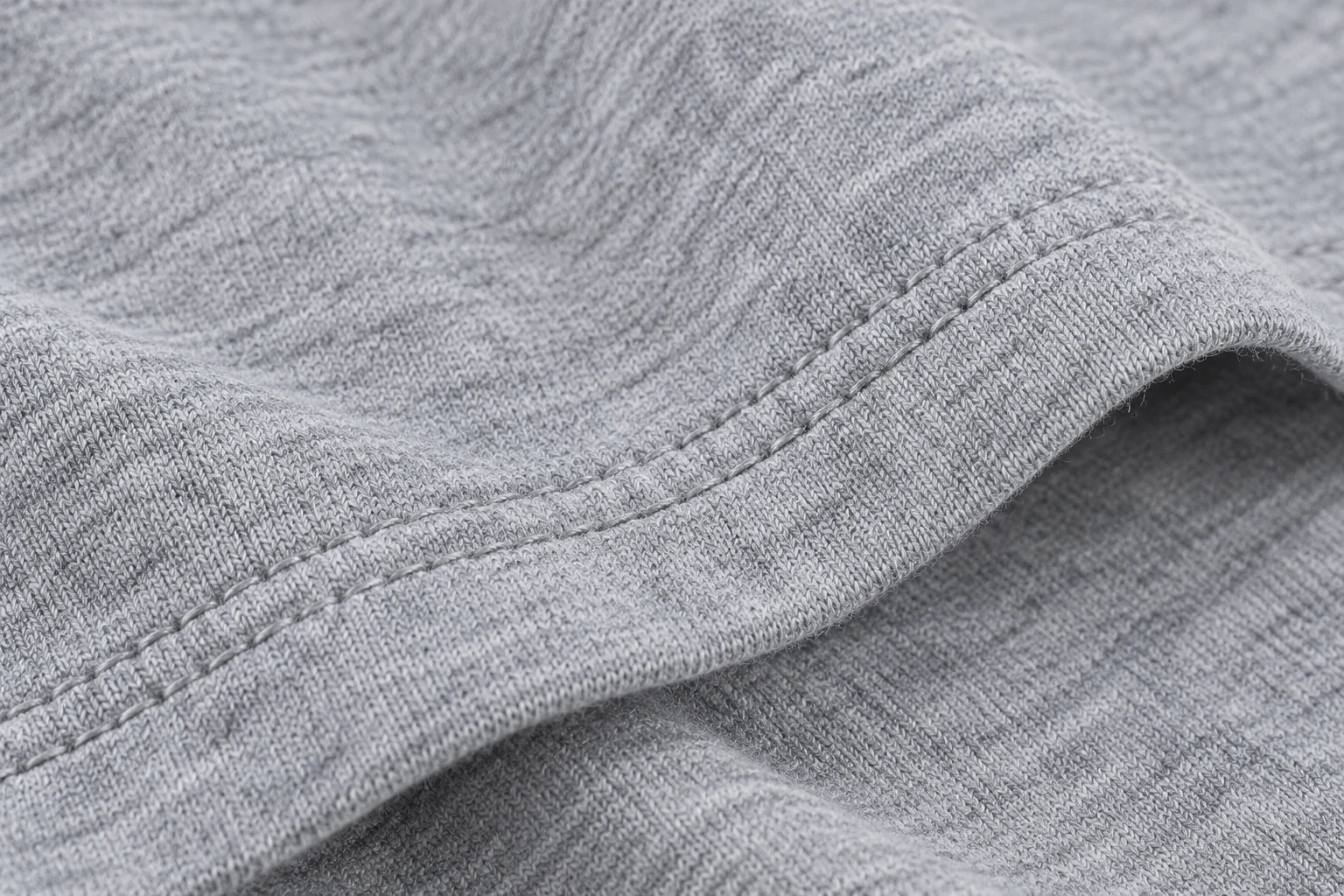
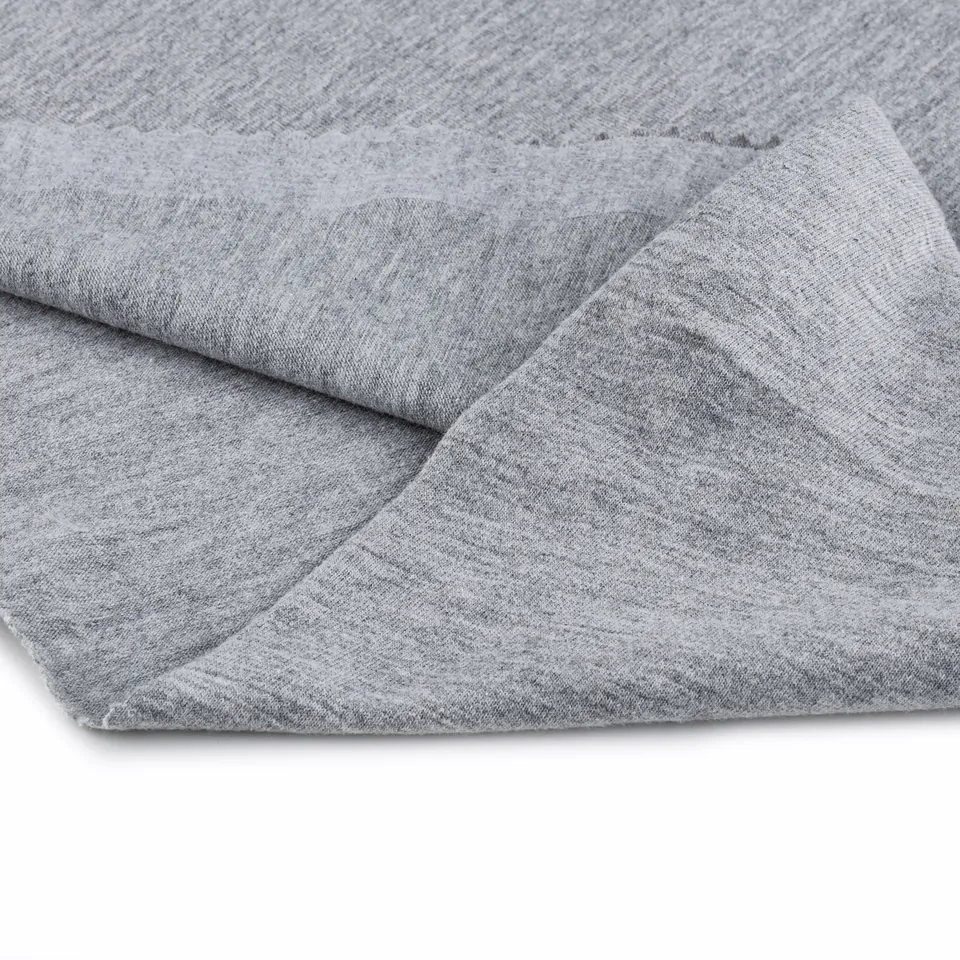
Specify the product as an outer dress with a full silhouette
Tell the fabric supplier that the programme is a T-shirt dress, giving the planned length, shoulder line, sleeve shape and fit intention on front and back drawings. Identify the adult end use and whether the garment is intended as a standalone outer piece or another clearly described role. A photograph of a long top leaves these decisions ambiguous. Include the pattern team's questions about the long body and neckline so the enquiry asks for a material comparison that can inform development, rather than a generic quotation for any jersey used in casualwear.
Explain why two material routes are being requested
Name the comparison you want the sample to resolve: for example, the appearance of the complete silhouette at two offered material configurations. Do not ask the mill to guarantee a flowing viscose dress or a stable cotton dress from composition alone. Supply the intended pattern or representative dimensions and ask for clearly labelled cuttings and a proposal for sufficient sample material. CottonWorks describes evaluating fabric in the garment fitting stage, which supports a full-length trial where that is the unresolved issue. The proposed finish and actual offered weight belong with each sample request.
CottonWorks: Designing Knit Textiles — Actual sample yardage and garment fitting are distinct development stages. This supports requesting a full garment trial where required; quantities, responsibility assignments and commercial questions are original buyer guidance rather than supplier terms.
Show the style variations that affect the request
Identify each planned length and the garment size ratio, distinguishing a single style from a short-and-long range. If the drawings include pockets, slits or a shaped hem, provide those details; otherwise leave them out of the specification. Send any artwork and its intended panel position as a separate development input rather than assuming fabric supply includes decoration. The garment maker needs enough information to establish pattern and marker requirements. The supplier needs to know which material quantities follow from that work and which remain preliminary estimates.
Make the quantity forecast compatible with long-panel costing
Provide forecast garment units and the corresponding material estimate only where the cutter has calculated it, naming the units and assumptions. Break the request down by colour and style length rather than presenting one total that hides small variants. Ask for the offered usable width because the long front and back arrangement can influence yield. If the estimate is still based on an assumed width, mark it accordingly and request recalculation after the offer arrives. No catalogue weight range establishes how many dresses can be produced from a kilogram.
Request technical evidence without inventing the selling claim
Ask what evidence is available for the offered supply where the programme requires information about dimensions, colour performance or another specific attribute. Keep opacity, drape and recovery as open garment-development questions unless relevant assessment has actually been provided. Finish terminology and fibre content cannot serve as a substitute. Ask the commercial team to respond separately on minimum quantities, sample costs, delivery arrangements and quotation validity for the stated programme. A website enquiry does not confirm those terms, and an accepted material price does not settle the full-length dress approval.
Catalogue starting points
For the cotton proposal, reference SJ-101: 100% compact combed cotton, 130, 140, 150, 160, 170 g/m² and Enzyme + silicone. For the alternative, reference SJ-103: 95% viscose 5% elastane, 160, 170, 180, 190, 200 g/m² and Bio-polish + silicone. Ask the supplier to identify its exact offered version and any departure from those recorded fields. These facts do not establish present stock, usable width, finished dress suitability or a garment-making service. The sample and commercial scopes should therefore be confirmed against the actual request.
Assign the next decision to the responsible team
Close the brief with one requested response from the mill and one from the garment developer, such as material availability and a full-length sample plan. Identify who approves the neckline construction, silhouette, colour and final measurement record. If the supplier proposes another weight or finish, send the change to the technical team before treating it as an equivalent order item. This produces a practical handover: the mill can discuss a defined fabric offer, the maker can test the long garment and the buyer can see what still prevents an informed purchasing decision.
Technical background and scope
This is a structured editorial draft. Garment-specific development advice is paired with existing catalogue records; compatibility must be established by sampling. AL KUMAŞ supplies fabric. Cutting, sewing and finished-garment production are separate unless explicitly agreed.