



Protect the linked opening design before positioning artwork
A training tank exposes its front and back upper-body shapes, so artwork should be planned with both openings rather than on a generic chest rectangle. Decide whether the design uses a small front emblem, a back placement, contrast edges or a repeat. Show the actual shoulder width and finished binding, plus the intended underlayer. A motif may look centred while the surrounding armholes shift during the agreed action. Keep the artwork decision connected to that shape, without assuming a racerback outline or importing a yoga coverage proposition the product brief does not specify.
Identify the actual substrates behind the development sample
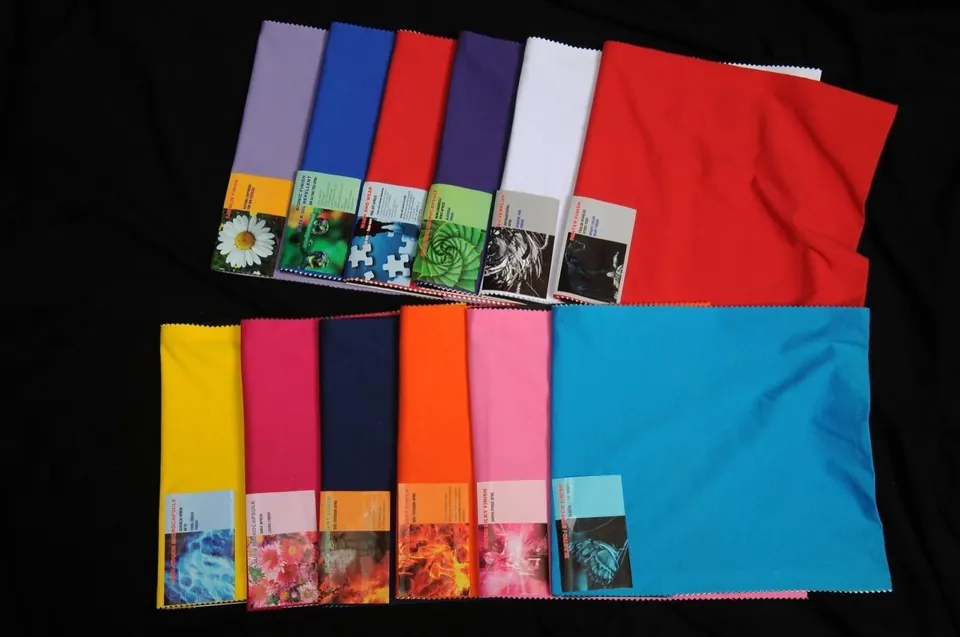
The PF-121 record states 92% recycled polyester and 8% elastane, Moisture management + quick dry, with 130–178 g/m² options. The cotton comparison SJ-102 lists 95% cotton and 5% elastane in single jersey, with Enzyme + compacted and a 170–210 g/m² range. Record the selected offered weight and any separate edge material. CottonWorks relates print choices to fibre and fabric characteristics; its cotton examples do not qualify a process on the recycled-polyester blend. Ask the decorator to identify the actual substrate and application route rather than treating the finish label as decoration compatibility or measured moisture behaviour.
CottonWorks: Cotton Textile Printing Basics — Fibre and fabric characteristics inform print-process choice; cotton examples do not qualify an application on the recycled-polyester blend.
Position the front and back designs against different landmarks
Use stable front and back pattern references for placement, with real artwork dimensions and the final edge operations visible. A front emblem may need to avoid an armhole curve, while a back motif may sit beneath the shoulder path differently during movement. State whether the two placements are visually linked or intentionally independent. Ask for the relevant adult size extremes rather than assuming a fixed centre mark approves every pattern. If the opening changes, assess the affected artwork relationship again instead of accepting a corrected file without a sewn view.
Review the edge colour where the underlayer is visible
For contrast bindings or other edges, identify the governing physical colour references separately from the body and underlayer. Review the finished width at shoulder and underarm junctions, where a narrow strip can be visually prominent. A deliberately visible support layer is a styling decision, not evidence that the tank supplies support. Keep its identity with the colour review so another underlayer does not silently become an apparent mismatch. If an approximate tonal relationship is accepted, retain the physical examples rather than describing it only as close enough.
Evaluate artwork through the agreed action without inventing a test
Review the decorated tank during the programme’s defined adult action sequence and in the neutral reference state. Note where folds, opening changes or the underlayer interrupt the design. These are aesthetic development observations, not proof of stretch-fastness or durability. Compare the actual application with plain material if a changed handle matters. An alternative motif size, position or method should be identified as a new design proposal. Do not infer that a smaller print automatically preserves breathability, moisture management or comfort without the evidence those claims would require.
Keep colour, decoration and care evidence attributable
Retain the physical colour reference, body and edge sample codes, artwork revision and decorated garment. After the agreed care stages, identify whether an observed change concerns shade, application, edge shape or dimensions before assigning a cause. Ask the responsible specialists to define required colourfastness and decoration assessments for the actual supply. A visually accepted tank does not establish quick drying, wicking, recycled-content certification or athletic support. The catalogue can identify a material route while claim substantiation and the sewn design remain separate buyer responsibilities.
Release the artwork only with its linked pattern state
Attach the accepted front and back placement views to the exact pattern, shoulder and edge references, size and underlayer reviewed. State which artwork decisions remain valid if one opening is corrected and which need another sample. Confirm provider responsibilities, charges and accepted timing separately from the design approval. A repeat with a new body or edge route should not inherit an old print approval simply because the artwork file name is unchanged. The release describes a reproducible adult design, not a guarantee that every decoration process or training function is available from the fabric supplier.
Technical background and scope
This is a structured editorial draft. Garment-specific development advice is paired with existing catalogue records; compatibility must be established by sampling. AL KUMAŞ supplies fabric. Cutting, sewing and finished-garment production are separate unless explicitly agreed.