





Give the supplier an opening-specific product brief
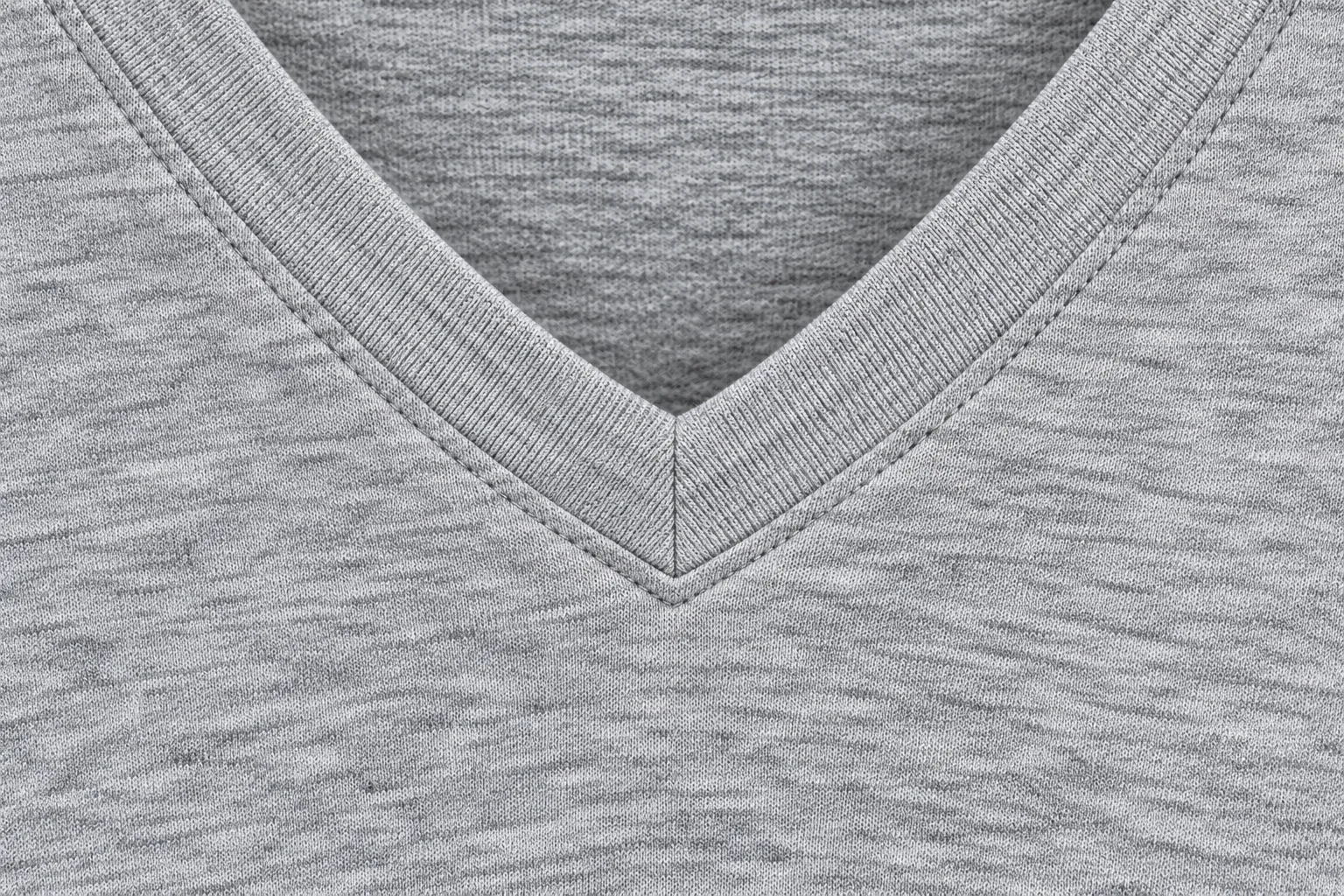
Describe the V-neck T-shirt with a front drawing showing finished opening depth, width, band depth and intended body fit. Include a close reference for the point construction if that detail is already chosen. Explain which aspects remain under development. A supplier can discuss the body fabric more usefully when it knows whether the neckline is a narrow shallow V, a deeper opening or another specified design. The request should not imply that a fabric catalogue listing includes a finished-garment service or an already solved neckband assembly.
Name the body comparison and the band owner
Request the actual offered SJ-101 and SJ-102 versions and explain the material question the buyer wants to resolve. Separately identify who selects the band material and who develops its geometry and attachment. A neckband cut from the body and one supplied from another article are different proposals; the enquiry should say which is intended or still undecided. Ask for labelled cuttings and the information the maker needs to plan the opening trial. Do not assume an elastane percentage in the body provides a finished band-recovery specification.
Send an assembly reference that production can interpret
If the maker has proposed the junction, attach its seam drawing and relevant component description. American & Efird's technical resource describes communicating stitch and seam details through identifiers, stitch density and drawings. This supports a concrete assembly record instead of instructions such as make the point neat. Let the qualified maker establish the actual settings for the offered material. If support or reinforcement is proposed, identify its owner and sample requirement. That avoids a quotation or prototype silently omitting a component that the buyer later treats as part of the accepted garment.
American & Efird: Stitches and Seams — Stitch identifiers, stitch density and seam drawings support communication of an assembly specification. The article leaves actual setting and component development to the qualified maker.
Structure quantities around the real neckline variants
Provide the forecast by body colour, size ratio and any distinct opening or band variant. If the collection includes shallow and deeper V styles, treat their development and component requirements explicitly rather than averaging them into one unspecified product. Give garment units and calculated fabric demand separate labels, asking the cutter to confirm consumption where needed. A separate contrast band may create a different commercial question from the main body. Request the supplier's response to that exact breakdown instead of assuming all colours and components share one minimum or availability position.
Ask for a sample package that resolves the point
State what the sewing room needs to produce complete opening trials and a representative garment, including any separately sourced band or support. Ask the supplier to confirm the offered finished version, sample quantity, charges and timing. CottonWorks includes garment fitting in fabric development, supporting a sewn evaluation where the neckline remains unresolved. Keep the proposed care assessment and any requested evidence in the sample plan. An attractive body cutting may justify proceeding to a trial, but should not be presented as approval of point geometry, skin contact or long-term opening behaviour.
CottonWorks: Designing Knit Textiles — Fabric development proceeds to garment fitting; sample quantities, commercial questions and V-specific approval responsibilities are original editorial buyer guidance rather than supplier terms.
Catalogue starting points
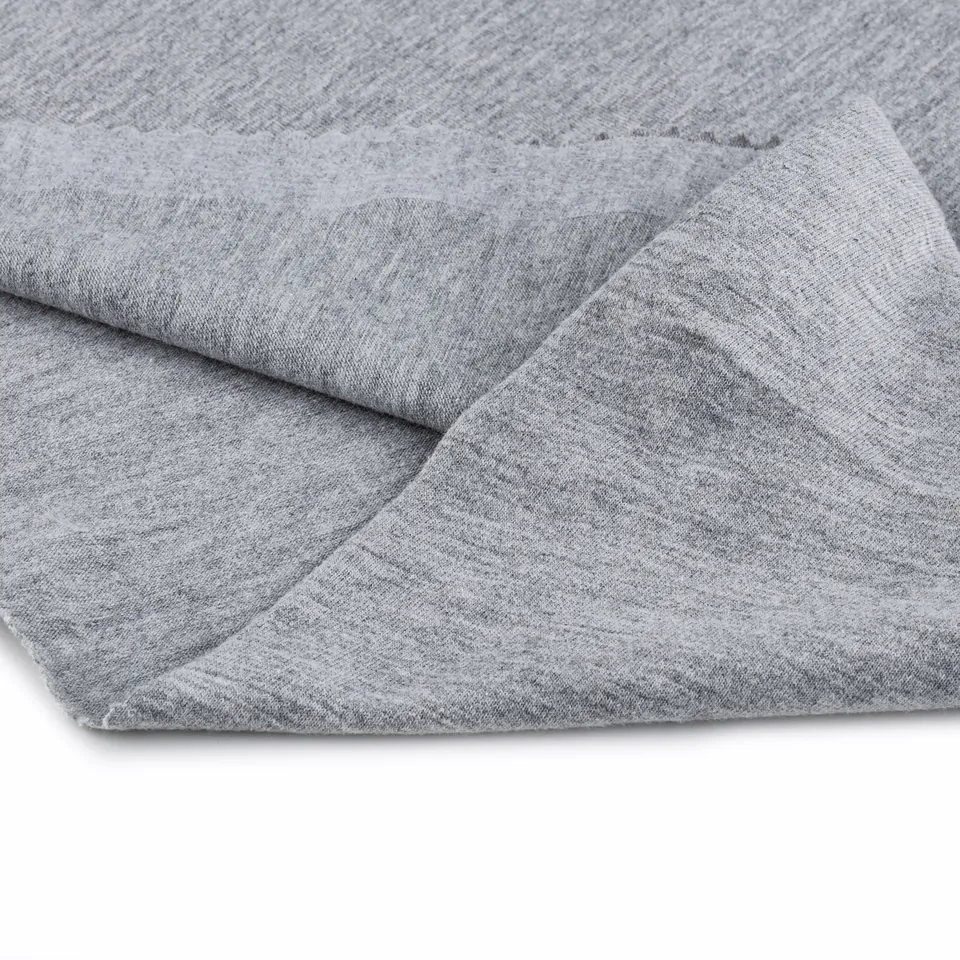
Use SJ-101's recorded specification: 100% compact combed cotton single jersey, 130, 140, 150, 160, 170 g/m² and Enzyme + silicone. State the alternative SJ-102 as 95% cotton 5% elastane single jersey, 170, 180, 190, 200, 210 g/m² and Enzyme + compacted. Ask for confirmed usable width, supply format and the exact material represented by each sample. The catalogue does not establish current stock, a developed V-band ratio, a finished neckline test result or universal commercial terms; those matters require responses tied to this specific programme.
Keep price acceptance separate from point approval
Request the offered price basis, relevant minimums, payment conditions, packing and delivery arrangements for the stated quantity and destination. Identify who approves the body, band, point construction and final garment, then attach any unresolved items to the commercial comparison. If an alternative band or material is proposed, route it back through the relevant development decision rather than accepting it as equivalent without review. A complete buying brief lets the commercial and technical discussions progress together while making clear that a favourable quote does not settle the V-neck assembly.
Technical background and scope
This is a structured editorial draft. Garment-specific development advice is paired with existing catalogue records; compatibility must be established by sampling. AL KUMAŞ supplies fabric. Cutting, sewing and finished-garment production are separate unless explicitly agreed.