




Define a clothing review around the intended practice
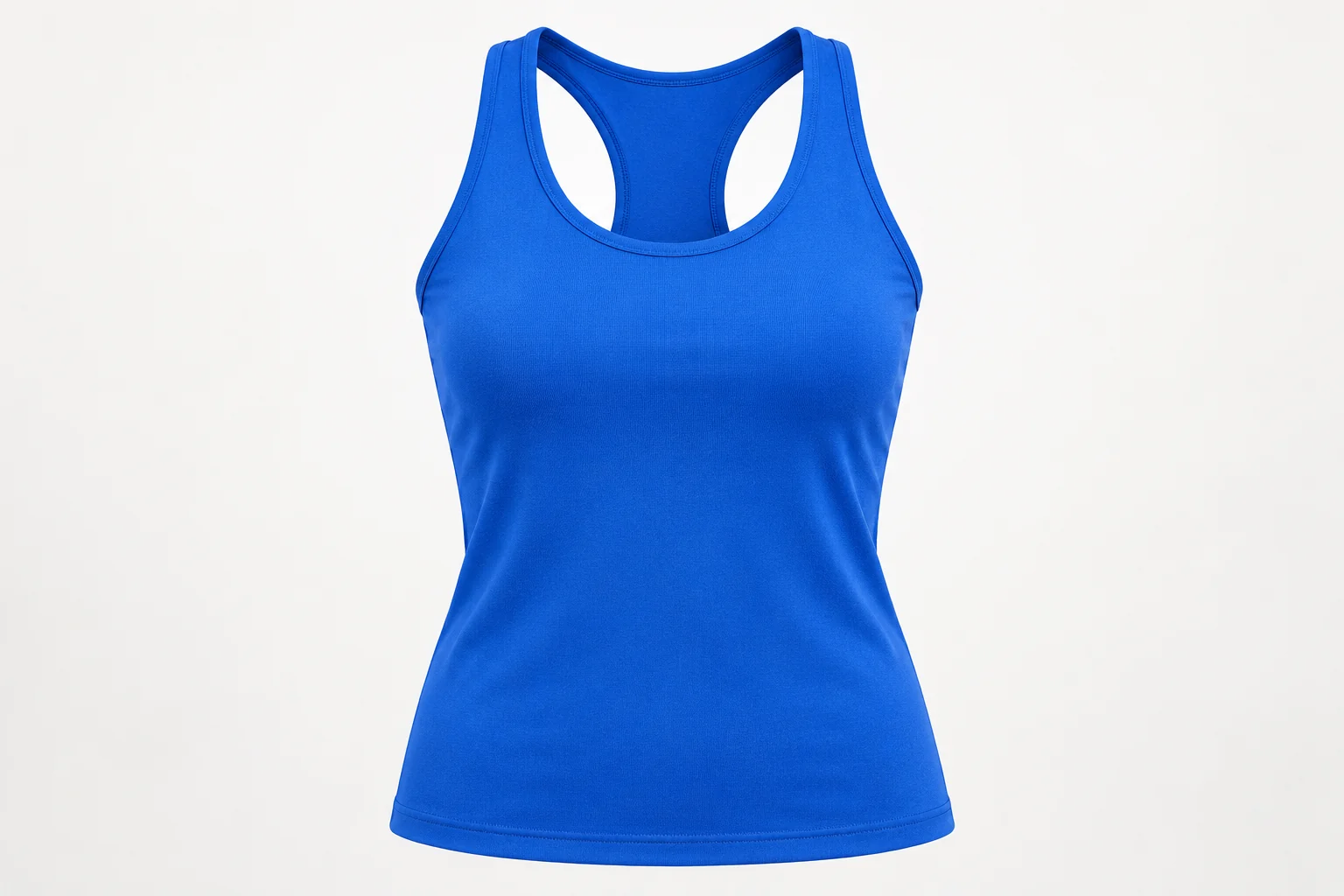
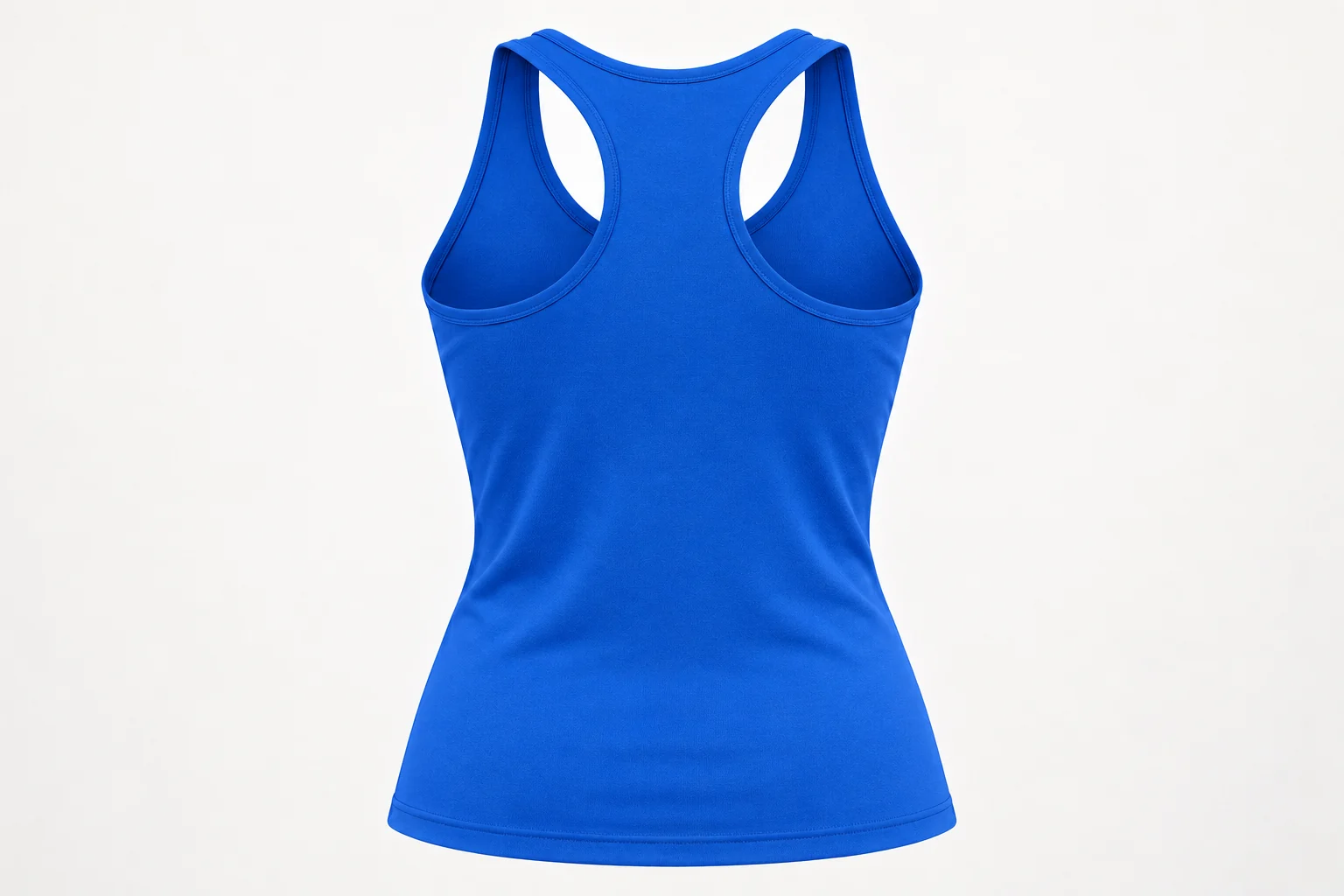
Agree which normal practice positions are relevant to the design and who is appropriately experienced to review them. This is a garment assessment, not a request to attempt an unfamiliar pose. Record the sample size, pattern version, intended lower garment and any underlayer. Identify neckline depth, torso fit and hem position before the sequence. A yoga-top sample should answer the specific coverage and seam questions in that brief, rather than be approved from a standing image while a different orientation is silently assumed to work equally well.
Record the actual material and edge assembly
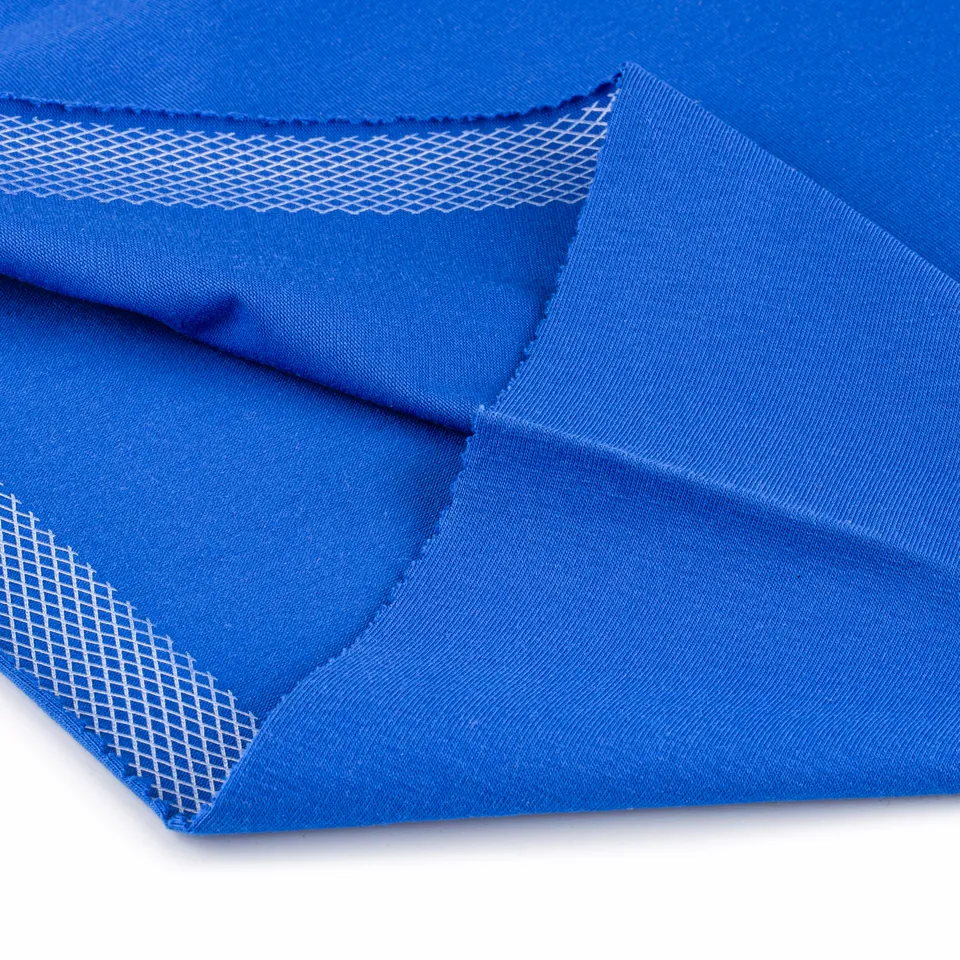
SJ-102 offers 170, 180, 190, 200 and 210 g/m² in 95% cotton and 5% elastane single jersey with an enzyme and compacted finish. PF-121 offers 130, 142, 154, 166 and 178 g/m² in 92% recycled polyester and 8% elastane, labelled Moisture management + quick dry. Identify the exact sample option, colour and binding or band materials. Neither label is a report establishing recovery, wicking, cooling or opacity. Keep any substitution visible so the garment maker and reviewer know which assembly actually produced the recorded observation.
Observe neckline coverage without adjusting it between views
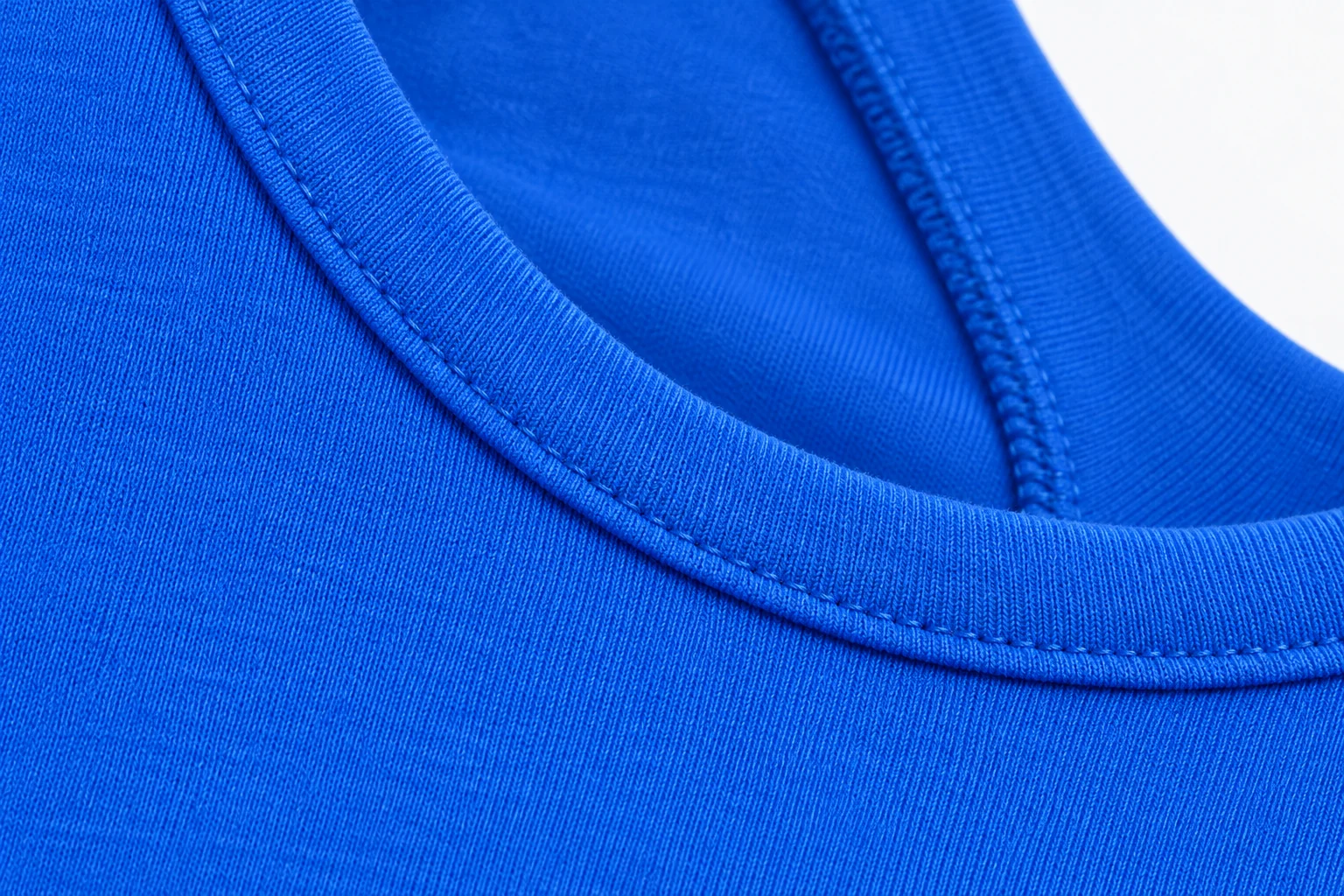
Record the opening in the starting position, then note how it sits through the relevant sequence before the wearer repositions it. Inspect front and back where the design requires. If a gap appears, ask the pattern and sewing teams to review neckline shape, body ease and edge construction together. A tighter binding can change dressing access or pull another region, so repeat the complete observation after correction. Do not equate a successful neckline review with support performance, and do not assume a larger elastane percentage would correct every opening problem.
Track hem and torso coverage through orientation changes
Use the intended lower garment and note the starting overlap or deliberate separation at the waist. During relevant folding, reclining or inverted orientations included in the brief, observe whether the hem moves beyond the design's agreed coverage line. Record what happens before readjustment and identify the material and size. A longer body, closer torso or optional band are different proposed corrections requiring their own samples. These observations are development guidance, not a universal stay-put test or an assurance that one garment works for every practice and wearer.
Review seams in the positions where they are noticed
Ask the wearer to identify seam feel, local bunching or pressure actually noticed during the sequence. Map the comment to the physical seam and garment region rather than diagnosing a skin condition or claiming a medical benefit. Examine the stitch arrangement, allowance and fit with the sewing specialist. A body fabric may remain a useful candidate while one seam construction needs revision. Record any change and repeat the relevant observation. Informal wearer comments help locate a development question; they do not establish irritation-free performance or replace a defined assessment where required.
Recheck the same coverage decisions after care
Agree the care procedure, measurement preparation and landmarks before comparing outcomes. Track neckline, torso, body length and relevant bands, then review the worn top with the same layering references. AATCC lists garment dimensional changes and appearance after home laundering separately; a competent provider should confirm current applicable methods and requirements. Photograph shape and seam alignment as well as recording numbers. If one overall dimension remains similar while the neckline relationship changes, retain that observation rather than using the favourable measurement to close the coverage question.
AATCC: Standard Test Methods and Procedures — Garment Care — Public index separately identifies garment dimensional changes and appearance after home laundering. Current applicable method selection and agreed requirements remain necessary; the yoga-position review is not an AATCC test or a universal coverage guarantee.
Close the record with supported scope and next actions
List accepted observations, requested changes and evidence still missing against the material, finish, colour, pattern and component versions. State which practice positions and layers were reviewed. Identify what must be repeated after a changed neckline, hem, fabric or binding. Do not add medical, support, compression or cooling claims to a fit conclusion. A useful release gives purchasing an identifiable sample combination and gives the garment maker a reproducible next step, while making it clear that unreviewed sizes, orientations and performance questions have not been approved by implication.
Technical background and scope
This is a structured editorial draft. Garment-specific development advice is paired with existing catalogue records; compatibility must be established by sampling. AL KUMAŞ supplies fabric. Cutting, sewing and finished-garment production are separate unless explicitly agreed.