



Give the colour a single identity
A colour enquiry becomes difficult when the designer, buyer and supplier are looking at different references. Begin with one named target and record what it is: a physical textile sample, an ALK catalogue reference or another specified colour standard. Keep a dated photograph for identification, but do not use a phone image as the sole approval reference. Screen settings and viewing conditions can turn a precise discussion into a series of conflicting impressions.
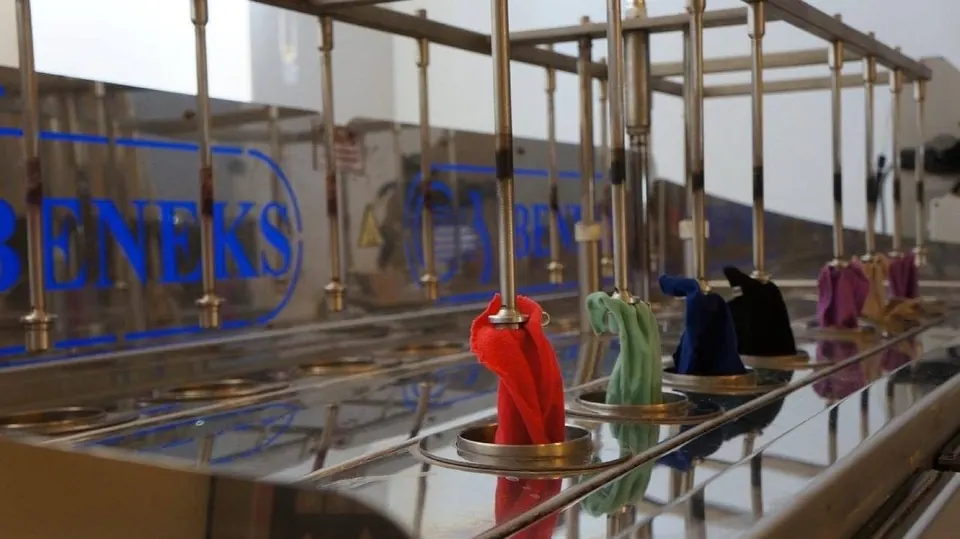
The laboratory archive clip shows a process context. It does not establish the colour accuracy, test results or laboratory accreditation of a particular order. The useful question is how your own reference will be identified, evaluated and approved.
Make the submission easy to evaluate
CottonWorks describes lab dipping as an early colour-development and approval step. Its lab-dip reference provides the technical background; the workflow here is a recommended way to organise a buyer’s review. Ask which fabric substrate and finish the submitted sample represents. Keep that information with the sample, because approval comments should relate to the article you are actually developing.
Before submissions arrive, agree who makes the decision and how comments should be returned. If a designer reviews the sample informally and purchasing later gives a different instruction, the mill receives two competing briefs. Nominate one approval owner who can gather internal feedback. Give each submission an identifier so the team can distinguish a current proposal from an earlier version without relying on memory.
Comment on a comparison, not a mood
Set up the agreed reference and the proposed sample together under the evaluation conditions your parties have chosen. Record those conditions and ask for clarification when they have not been specified. Comments such as more premium or less dull may express an intention, but they do not explain the observed difference. Describe what the reviewer sees relative to the target, and ask the colour team to translate that observation into a development response.
For example, a buyer may prefer submission B to A while still finding it different from the target. The useful response records that preference and the remaining concern separately. It should not say approved if another revision is requested. Keep a short status vocabulary: review pending, revision requested or approved for the stated reference. Define any conditional approval in writing so nobody treats a provisional comment as an unrestricted release.
Preserve the route to bulk production
Once the authorised reviewer approves the lab dip, retain its identifier and the physical reference with the fabric brief. Ask how that approval connects to bulk shade review and what later submissions are required for your programme. A lab dip is not, by itself, proof that every subsequent roll meets the order’s requirements. Decide in advance how differences will be escalated and who may release the next stage.
If the collection has matching trims, contrasting panels or several fabric qualities in the same colour, list them. Ask the relevant suppliers and garment team how those components will be reviewed together. Do not assume that sharing a colour name makes different materials visually identical. A coordinated garment review can reveal a problem that individual swatch approvals miss.
Close the colour file with the target identity, substrate, sample revision, approval owner, date and outstanding actions. Keep technical acceptance criteria distinct from personal preference and from delivery pressure. This disciplined record helps AL KUMAŞ and the buyer discuss knitted dyed fabric clearly, while leaving order-specific tolerances and commercial commitments to the written agreement rather than a general website promise.
Sources and scope
Guidance is for development planning. Confirm current article specifications, tests, availability and commercial terms with the mill. Archive footage is not evidence of a particular order, capacity or certification.
Next: From approved colour to a controlled bulk-fabric handover ↗