





Define the camisole as a short layering piece
A narrow-strap camisole intended beneath an open shirt or jacket needs a deliberate relationship with the outer layer. Show where its neckline should appear, whether its hem will be tucked and how much ease the short body should have. That is a different brief from a broad-shouldered tank or a full-length nightdress. Choose a reference outfit rather than judging the camisole in isolation. The intended combination makes it possible to discuss a front edge that is meant to remain visible and a body that should not create unwanted folds beneath the outer garment.
Develop a strap, not merely a narrow shoulder extension
Specify whether the design uses a separately made strap and how its finished width is defined. The body material may be attractive yet unsuitable for the proposed strap construction without further development. Ask the sewing team to produce a strap sample and show its internal arrangement, seam position and attachment allowance. If adjustable hardware is actually drawn, include its exact reference in that sample; otherwise do not add sliders as an assumed standard feature. A fixed strap has a different fitting decision from an adjustable one, and neither is established by the body article code.
Evaluate each anchor with its surrounding edge
At the front and back attachment, a narrow strap meets a wider fabric panel and its neckline or underarm finish. Inspect that junction rather than judging the strap alone. Ask how the end is enclosed, what seam crosses it and whether the finished panel shows an unwanted lump or drawn-in point. Coats discusses compatibility among sewn components as part of avoiding puckering; for this camisole, the useful trial is the actual strap-and-edge assembly. Do not prescribe a universal reinforcement or tightening ratio before the maker has assessed the proposed materials together.
Coats: Eliminating Seam Puckering — Component compatibility is relevant to seam appearance. The proposed narrow-strap and anchor comparisons are original editorial applications, not tested results for SJ-104 or SJ-103.
Balance neckline height against the underarm
A strap-length correction moves more than the neckline: it can change underarm position, back height and hem level too. During fitting, mark the intended position of each opening before shortening a strap to solve one visible gap. If the neckline improves while the armhole becomes restrictive, ask the pattern developer to review the relationship rather than accepting that tradeoff silently. Compare the camisole standing and seated with the proposed outer layer. The goal is the specified layering silhouette, not a promise of breast support, shaping or athletic function that this simple design has not established.
Catalogue starting points
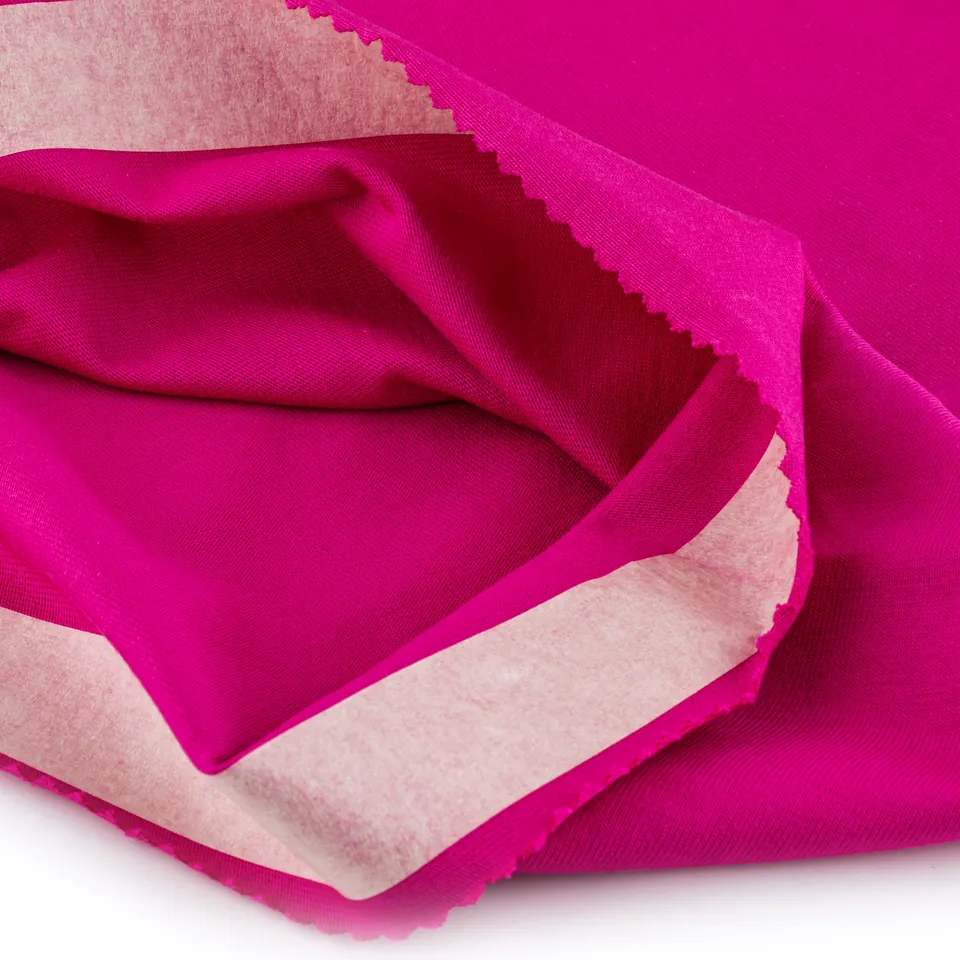
SJ-104 is recorded as 95% modal 5% elastane, with 150, 160, 170, 180, 190 g/m² options and Bio-polish + soft hand finishing. SJ-103 is 95% viscose 5% elastane at 160, 170, 180, 190, 200 g/m² with Bio-polish + silicone finishing. Neither the modal name nor the finish wording supplies a measured camisole fit, strap-extension or coverage result. Compare the offered weights using identified material, and ask for the actual usable width and finish confirmation. No branded-fibre certification or current availability should be inferred from these catalogue descriptions.
Inspect the hem in the outfit that matters
Test the selected hem construction under the intended waistband or outer layer. A camisole that hangs pleasantly untucked may show a different outline when tucked into a high-waisted skirt. Ask the fitter to assess whether the planned length remains useful during ordinary sitting and reaching, without treating added length as an automatic solution. Observe the side seams and hem together, and identify whether the chosen ease creates unwanted gathering beneath the outfit. Record that appearance as a design observation; the material's softness description cannot establish how the complete outfit will look.
Select a documented short-body combination
At the first decision, retain the sampled body, finished strap, anchor construction and accepted neckline position as one reference. State whether the selected material is accepted for appearance only or also for the assessed fit and assembly. If the outer layer, hem treatment or strap type changes, identify the comparison that must be repeated. A useful material choice explains why the camisole works in the planned outfit and where further evidence is required. It should not rely on broad claims that one regenerated-cellulose blend is universally more comfortable or more suitable for layering.
Technical background and scope
This is a structured editorial draft. Garment-specific development advice is paired with existing catalogue records; compatibility must be established by sampling. AL KUMAŞ supplies fabric. Cutting, sewing and finished-garment production are separate unless explicitly agreed.