





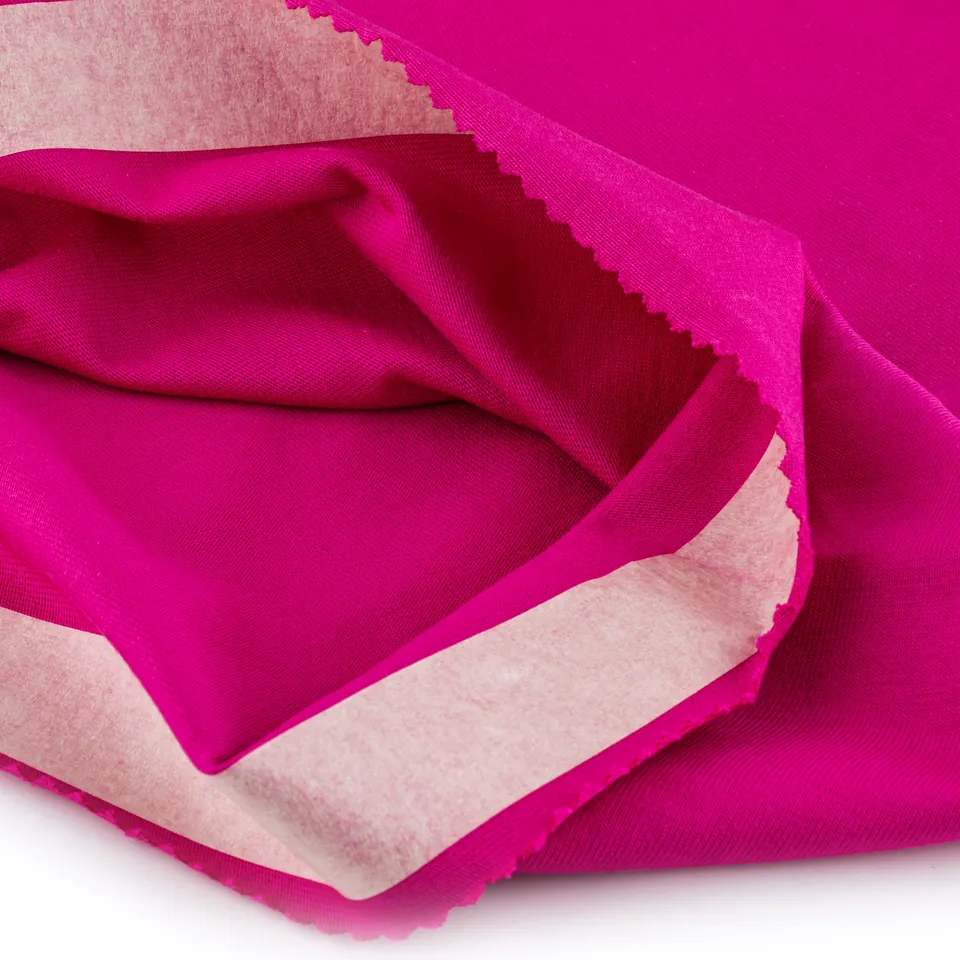
Design the visible neckline within a layered outfit
A layering camisole may show only a small upper section beneath a jacket or open shirt. Decide whether that visible area should be a quiet colour field, a contrast edge or a small motif. Place the proposed outer garment over the camisole drawing so the design is evaluated in its intended setting. A graphic centred on the entire body panel might be mostly concealed, while an apparently small contrast can dominate the exposed neckline. Treat that as an intentional styling question before developing an artwork file or approving a colour sample.
Compare strap colour in its finished form
The strap may come from the body material, another textile or a purchased trim, depending on the approved design. Identify that source and inspect the finished narrow component beside the body rather than relying on two flat swatches. Folding can change which face is visible and an attachment seam can expose the underside. If a near-match is wanted, say how it will be reviewed; if the design uses contrast, specify the intended relationship. Optional hardware, when present, adds another visible surface that needs its own reference rather than an assumed matching finish.
Keep colour development attached to the offered substrate
CottonWorks presents lab dipping as a development step associated with a specified colour and substrate. For this camisole, identify the sampled body article, selected weight and actual finish when making the request. A modal cutting and a viscose cutting should not silently share one approval simply because their colour names match. Ask the responsible supplier how any separate strap or edge material will be coordinated. These are development requests, not claims that a dyeing service, colour tolerance or matched trim package is automatically available with the catalogue fabric.
CottonWorks: Lab Dip Process — Colour development relates a specified colour to a specified substrate. Does not establish a print or dyeing service, trim match or fastness performance for these article records.
Protect the strap anchor from an artwork conflict
Show the actual front attachment points, finished edge and seam allowances on a full-size artwork layout. A motif close to the upper edge should not disappear into the anchor join or force decoration across an unapproved folded area. Have the decorator and garment maker agree the usable application region for the chosen process. There is no universal distance supplied by this guide. Inspect the sewn decorated sample with the intended outer layer in place, and decide whether the important part of the design remains visible without asking the wearer to arrange the garment unnaturally.
Catalogue starting points
SJ-104 carries the local specification 95% modal 5% elastane, 150, 160, 170, 180, 190 g/m² and Bio-polish + soft hand finishing. SJ-103 records 95% viscose 5% elastane, 160, 170, 180, 190, 200 g/m² and Bio-polish + silicone finishing. These facts identify two proposed substrates; they do not approve printing chemistry, decorated appearance or colourfastness for either. Ask the decorator to assess the exact material and finish proposed. Changing article or weight after artwork development should trigger a decision about which sample stages need repeating.
Review all-over designs at the short hem
For an all-over pattern, consider the relationship between repeat size, neckline cutting and the short hem. Decide whether a cropped motif at the lower edge is acceptable and whether the two body panels need a particular alignment. Show how that decision works across the intended sizes rather than approving only one flat sample. If a border is important, ask the cutter to assess its placement implications and cost; do not carry over the solid-colour consumption unchanged. The issue is a deliberately resolved garment appearance, not a guarantee that every motif can be matched without additional constraints.
Keep appearance approval separate from product evidence
Record the accepted colour reference, finished strap comparison, artwork version and placement on the sewn camisole. Ask the relevant technical team to define any care, rubbing or other colour assessments needed for the actual programme. A pleasing first photograph is not a durability result. If decoration changes the feel of a small area that sits under the outer garment, review that assembled combination too. The marketing description can explain the intentional layering design, but should not turn a material label or untested application into claims of skin benefits, support or improved sleep.
Technical background and scope
This is a structured editorial draft. Garment-specific development advice is paired with existing catalogue records; compatibility must be established by sampling. AL KUMAŞ supplies fabric. Cutting, sewing and finished-garment production are separate unless explicitly agreed.