



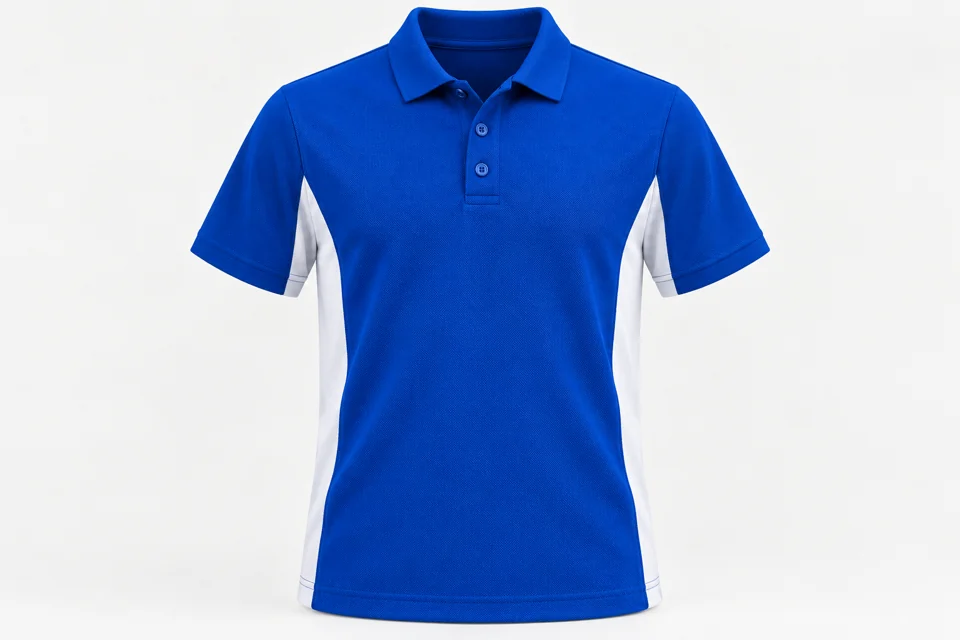


Decide which part of the polo carries the contrast
Draw the actual panel boundary before requesting cloth: a shoulder insertion, chest band and side panel create different junctions with the collar, opening and sleeve. They should not be treated as interchangeable styling details. Identify which panel continues behind the placket and which reaches the armhole. Ask whether contrast means a solid-versus-printed relationship, a change of texture, or both. The catalogue candidates permit a development discussion, but do not establish a finished design. Choose one proposed geometry so the first comparison answers a real polo question rather than showing unrelated fabric rectangles.
Catalogue starting points
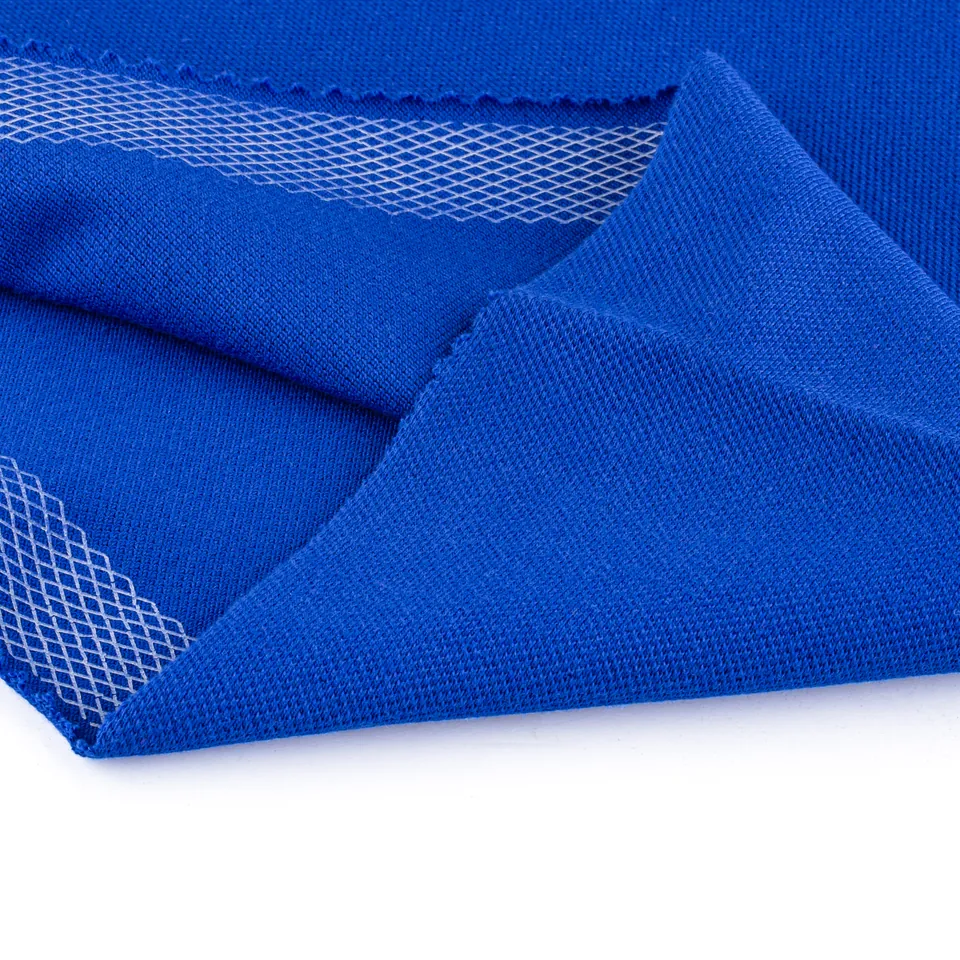
For the body or other specifically assigned pieces, PQ-501 lists 100% combed cotton piqué, weights of 190, 205, 220, 235, 250 g/m² and Enzyme + silicone finishing. PR-112 is 100% combed cotton printed interlock, with 190, 205, 220, 235, 250 g/m² and Pigment print recorded. Confirm the actual offered weight and print reference for each assigned panel. These descriptions establish neither present availability nor a custom printing service. Their matching composition and weight choices do not prove that the two fabrics can be joined successfully in the proposed polo.
Compare the seam as a material combination
Request a sewn example that uses the actual candidates, intended seam direction and proposed construction. Coats explains that sewing and component behaviour can influence puckering, including differing relaxation of joined materials. That principle justifies reviewing this combination; it does not predict a defect or prove that a single machine adjustment will resolve one. Ask the maker to identify the thread and operation used so the buyer knows what was compared. A smooth unsewn overlap cannot establish the appearance of an assembled junction beside a polo opening or under the arm.
Eliminating Seam Puckering — Coats — Sewing and component relaxation can influence seam appearance; not evidence that PQ-501/PR-112 are incompatible or that a specific remedy works.
Let the collar and opening interrupt the contrast deliberately
When a chest panel meets the placket, decide whether the contrast continues through the opening pieces or stops at their edges. Ask the designer to show the fastening both closed and in its intended open position. The panel may otherwise appear to end at different heights on each side of the opening. Confirm the actual collar construction separately because neither body record supplies it. If contrast reaches the shoulder, inspect how the collar attachment visually crosses that boundary. The selection concerns the complete neckline composition, not simply whether two swatches look attractive together.
Assess the printed insert as supplied rather than imagined
Obtain the actual PR-112 printed sample and inspect its scale, direction, face and usable printed area with the proposed pattern piece. Do not invent a motif, repeat dimension or placement option from the printed-interlock label. CottonWorks explains that pigment printing uses a binder; this describes the process category, not the hand or fastness of this offered print. Compare the actual insert beside PQ-501 on a garment mock-up. If only a small piece of the print will be visible, decide whether that crop communicates the intended contrast before committing to its material allocation.
Cotton Textile Printing Basics — CottonWorks — Pigment printing uses a binder; does not establish the offered PR-112 formulation, hand or fastness.
Inspect the boundary during ordinary polo movement
Review the relevant junction while the wearer reaches and bends the elbow, especially where a panel enters the armhole or sleeve. Observe whether the boundary changes the intended chest line or feels intrusive on its underside. These are questions for the particular sample, not claims that a named material restricts movement. If the contrast sits at the side, include the selected hem and any actual slit detail. Keep discomfort, visual distortion and pattern balance as separate observations so a material recommendation does not conceal an unresolved construction choice.
Choose the panel assignment with its limits recorded
Retain a marked drawing that assigns each actual cloth reference to its pieces, together with the sewn junction and reviewed neckline sample. State which combination is preferred and which questions remain, including any required care evidence. Approval of the printed insert alone cannot approve its seam with the piqué or its relationship to the collar. A later change in print reference, panel direction or material weight should be visible to the responsible reviewer. This preserves the developed polo configuration without promising permanent flatness, compatible shrinkage or garment production that has not been demonstrated.
Technical background and scope
This is a structured editorial draft. Garment-specific development advice is paired with existing catalogue records; compatibility must be established by sampling. AL KUMAŞ supplies fabric. Cutting, sewing and finished-garment production are separate unless explicitly agreed.