



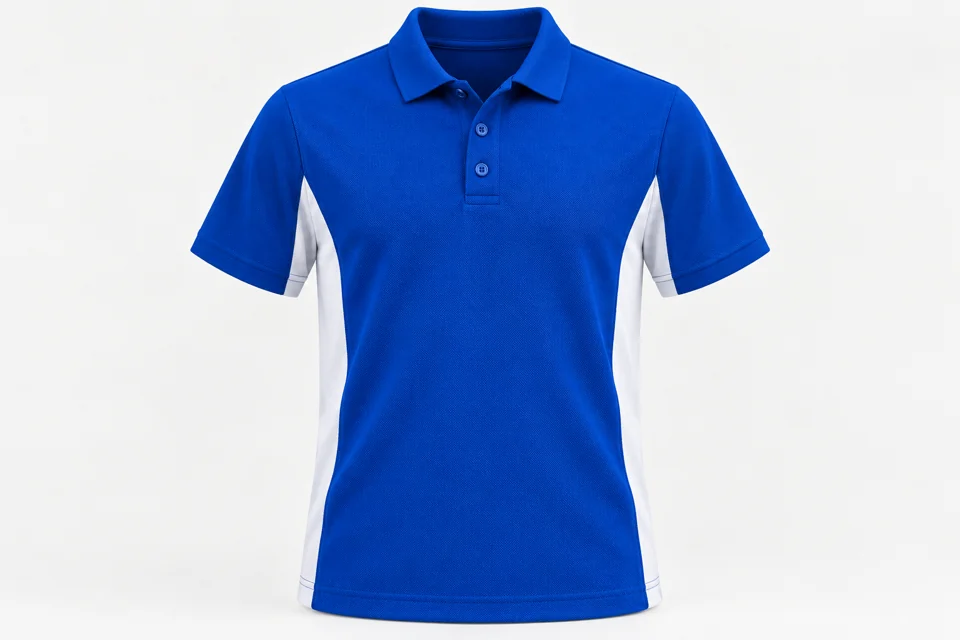


Count the contrast pieces before estimating the polo
Separate the actual pattern pieces by material assignment, including any opening pieces cut from the contrast cloth. A chest band divided by the placket may require two distinct pieces rather than one continuous rectangle. If the contrast enters the sleeve, include the relevant sleeve sections instead of pricing an undecorated basic polo and adding a guessed percentage. Ask the pattern owner to confirm whether pieces are paired, mirrored or cut in a fixed print direction. These decisions establish the consumption question before any comparison of kilogram prices begins.
Catalogue starting points
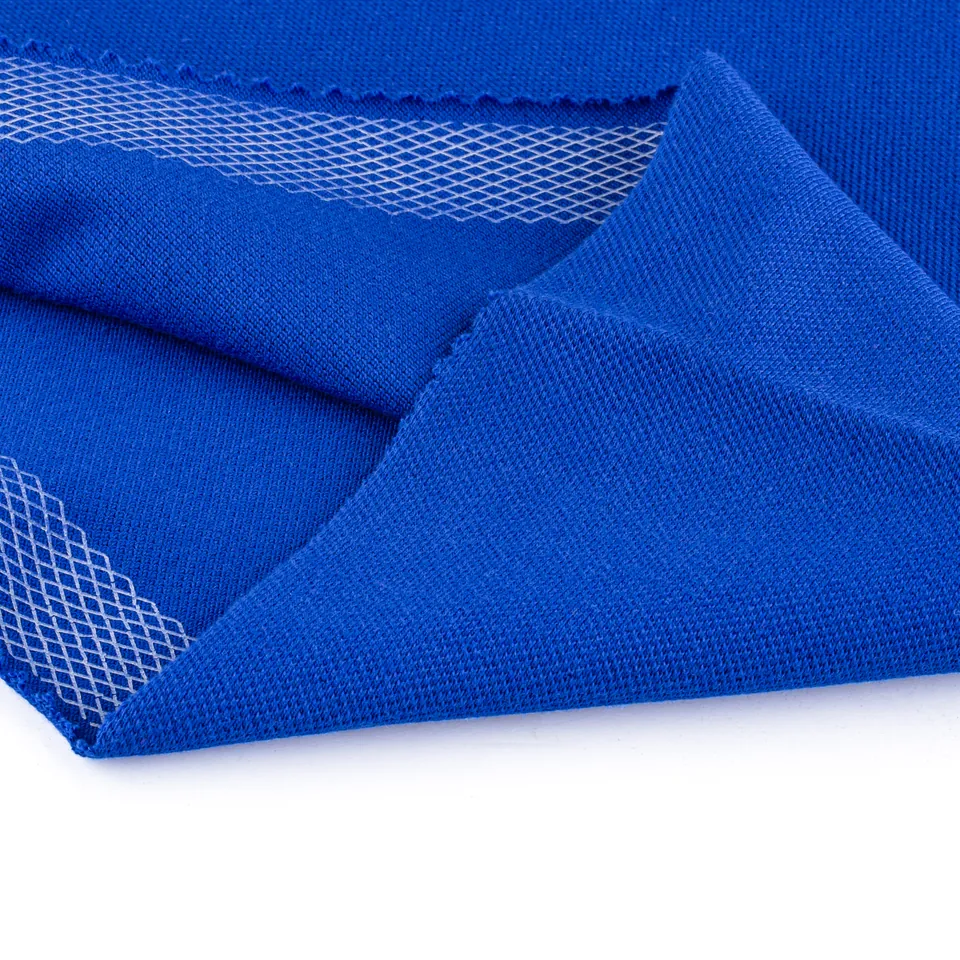
The proposed piqué PQ-501 is 100% combed cotton with 190, 205, 220, 235, 250 g/m² options and Enzyme + silicone finishing. The printed interlock PR-112 is also 100% combed cotton with those five nominal weights and Pigment print recorded. Request the offered usable width, format and printed-area information for the selected references. No width or stock position is established by this weight list. Even when both selected offers are 220 g/m², they need separate consumption calculations because the assigned pieces and any confirmed directional restrictions differ.
Ask for two real layouts rather than one blended yield
Have the marker planner calculate the PQ-501 pieces and PR-112 pieces against their respective actual widths. CottonWorks describes a marker as the arrangement of garment pattern pieces for cutting and relates its efficiency to material utilisation. Use that definition separately for each cloth rather than claiming the small contrast area creates negligible waste. The printed insert may leave unusable spaces depending on its confirmed direction and crop requirements; the piqué layout has a different set of pieces. Require the planner’s actual explanation instead of presuming that either material can fill the other layout’s gaps.
Garment Construction — CottonWorks — Definition of markers and utilisation only; actual layouts and example numbers are not source specifications.
Explain a panel change using labelled arithmetic
For illustration only, a hypothetical net insert area of 0.12 m² at 220 g/m² represents 26.4 g before seam allowances, layout loss or other components. Increasing that hypothetical area to 0.16 m² gives 35.2 g on the same narrow basis. These are explanatory calculations, not consumption for the pictured polo or an instruction to order those quantities. A different chest-band height also changes the surrounding body pieces and potentially the marker. Ask the planner to calculate the complete revised set rather than pricing only the additional visible printed area.
Keep print cropping costs tied to an actual requirement
If the buyer wants a specific feature of the supplied print centred within a chest panel, show the desired crop and ask whether the offered material permits it. Do not assume a custom placement-print service. The cutter should distinguish unrestricted use of the actual print from any agreed matching or positioning requirement. Request a separate layout comparison if both alternatives are under consideration. This reveals the cost of the visual decision without inventing a repeat size, additional allowance or universal waste factor. A rendering alone does not establish that the crop can be repeated economically.
Include junction operations and opening components in the comparison
Ask the maker which additional joins, pressing operations or component changes the actual panel design introduces. A contrast line crossing the front opening may require different cutting or assembly from a panel confined to the upper back. Confirm the proposed construction before counting operations, and keep purchased collar and fastening costs separate where relevant. The same nominal fabric mass does not settle the finished-polo cost. Request an offer that identifies the selected configuration, rather than adding an unexplained panel surcharge or assuming the cloth supplier undertakes the garment assembly.
Compare approved design alternatives on equal quantity assumptions
When deciding between a wider chest insert and a narrower one, retain the same stated size mix, order quantity and offered widths for the comparison unless the maker identifies a necessary difference. Show the actual changed material use and assembly scope alongside the visual sample. If one proposal relaxes print positioning, name that tradeoff instead of presenting it as a cheaper equivalent. Keep the accepted costing basis with its pattern and crop references so another buyer can reconstruct the decision. Nothing here establishes a price, MOQ or future supply condition for either candidate.
Technical background and scope
This is a structured editorial draft. Garment-specific development advice is paired with existing catalogue records; compatibility must be established by sampling. AL KUMAŞ supplies fabric. Cutting, sewing and finished-garment production are separate unless explicitly agreed.