





Choose the T-shirt silhouette before choosing the blend
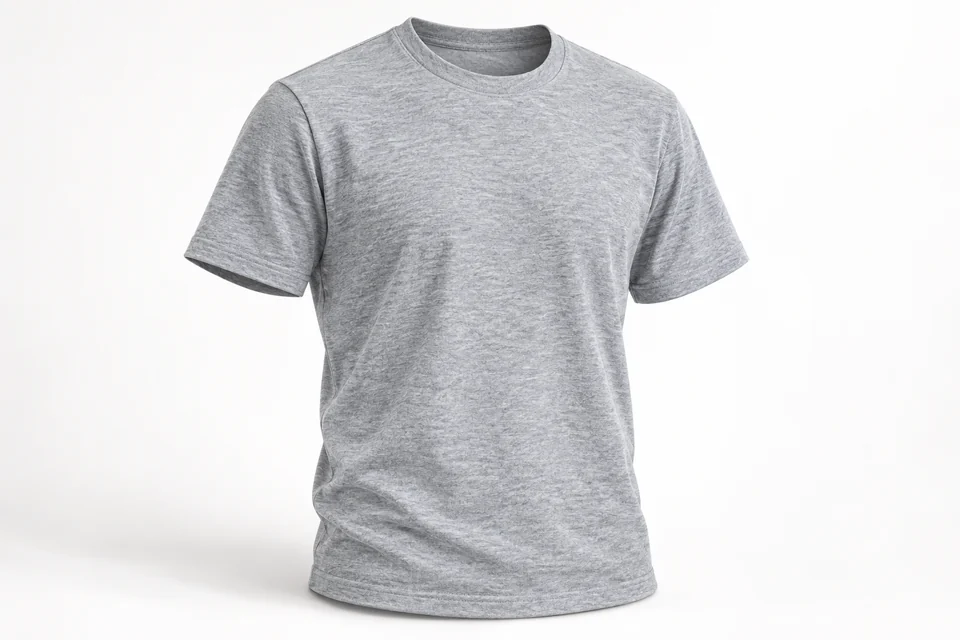
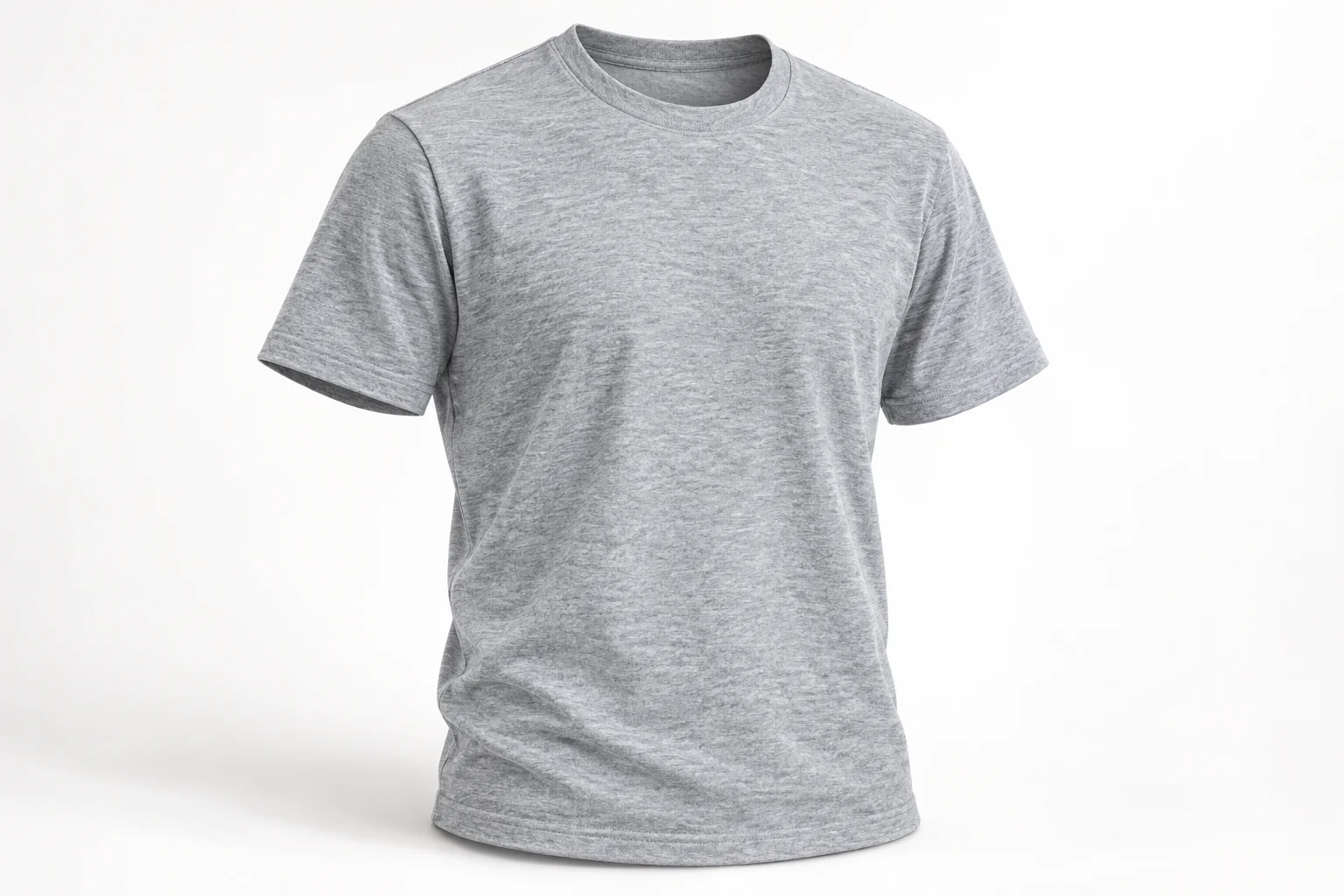
A crew-neck T-shirt can be a straight everyday layer, a close base layer or a boxy outer piece. Those briefs should not begin with the same fabric instruction. Put the intended chest ease, shoulder position and body length beside a reference photograph, then identify what makes the reference work. A heavier-looking surface, a neckline that hugs the neck and a sleeve that stands away from the arm are different decisions. Ask the sample room which of these should come from the material and which should come from the pattern.
CottonWorks: Designing Knit Textiles — Fabric performance and garment construction must be assessed together, including the final garment fitting; this supports the development approach, not the suitability of an AL KUMAŞ article.
Compare the two body candidates without confusing variables
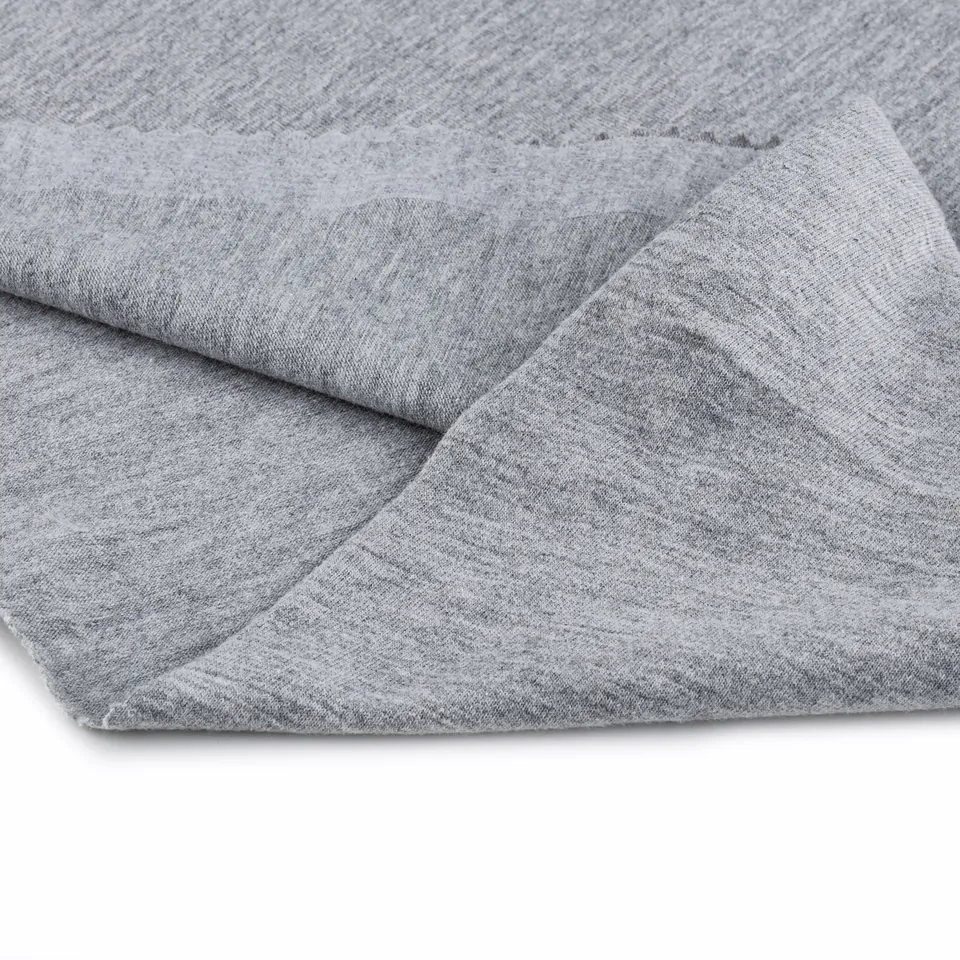
SJ-101 and SJ-102 are both listed under single jersey, but their catalogue options do not create a controlled fibre-only comparison. SJ-101 has no stated elastane and runs lighter; SJ-102 contains elastane and starts at a higher weight. Begin with the offered weights closest to your target, make the same basic body pattern in each and record what changes. If the second sample looks more substantial, do not attribute that outcome solely to elastane. Ask separately about yarn, construction and finish before deciding which variable to change next.
Develop the neckband as its own component
Neither body article code establishes a neckband construction or attachment ratio. Ask the sewing team to trial the actual band material on the chosen body and document the opening seam length, band length, finished depth and joining method. Do not copy a percentage from a different T-shirt without testing it. Assess the opening both flat and worn: the band should permit dressing and return to the intended position. Photographs from consistent viewpoints help compare rippling, spreading and standing away. Approve the body and neckband together, including their behaviour after the proposed care trial.
Examine the hem and sleeve instead of judging a swatch alone
For a straight everyday design, hang the full garment and look at the side profile. Does the hem fall as intended, or is the apparent volume coming from an oversized pattern? Turn the sleeve and bottom hems to the proposed depth and make the actual stitch trial. A small cutting does not reveal the combined effect of a double layer, stitching and seam tension. Ask the maker to show alternatives on one trial garment so the buyer can compare equal details rather than unrelated samples with different styling.
CottonWorks: Designing Knit Textiles — Fabric performance and garment construction must be assessed together, including the final garment fitting; this supports the development approach, not the suitability of an AL KUMAŞ article.
Set a visible rejection decision
Consider an illustrative development problem: the body has the desired handle, but the neckline waves after care. Rejecting the complete fabric route immediately may discard a workable body material. Check whether the band, attachment process or body growth caused the problem, changing one element at a time. Conversely, repeated pattern adjustments cannot establish an untested material's recovery. CottonWorks describes knit dimensional behaviour as influenced by construction and processing, not just a fibre label. Keep that distinction visible when asking the mill and sewing room to diagnose a sample.
CottonWorks: Shrinkage & Skewing — Dimensional behaviour depends on construction and processing as well as fibre; no article-specific shrinkage or recovery result is asserted.
Catalogue starting points
The current local record lists SJ-101 as 100% compact combed cotton, with weight options of 130, 140, 150, 160, 170 g/m². SJ-102 is 95% cotton 5% elastane, with options of 170, 180, 190, 200, 210 g/m². These records describe possible comparisons; they do not confirm available colours, usable width or an approved finish. Request those particulars against the exact offered cutting. A nominal weight and composition alone cannot establish neckline recovery, opacity, shrinkage or whether the proposed fit will work.
Make the next sample answer one question
At the end of the first comparison, choose a decision such as body route, neckline construction or hem finish. Send a labelled sample and a short account of what should remain and what should change. If everything changes together, the second sample may look better without explaining why. Retain the rejected combination for comparison and give the approved body, band and pattern their own references. The useful outcome is a reproducible T-shirt specification, not a premium-sounding fabric description that the next production team must interpret again.
Technical background and scope
This is a structured editorial draft. Garment-specific development advice is paired with existing catalogue records; compatibility must be established by sampling. AL KUMAŞ supplies fabric. Cutting, sewing and finished-garment production are separate unless explicitly agreed.