





Give a supplier enough detail to offer the right T-shirt fabric
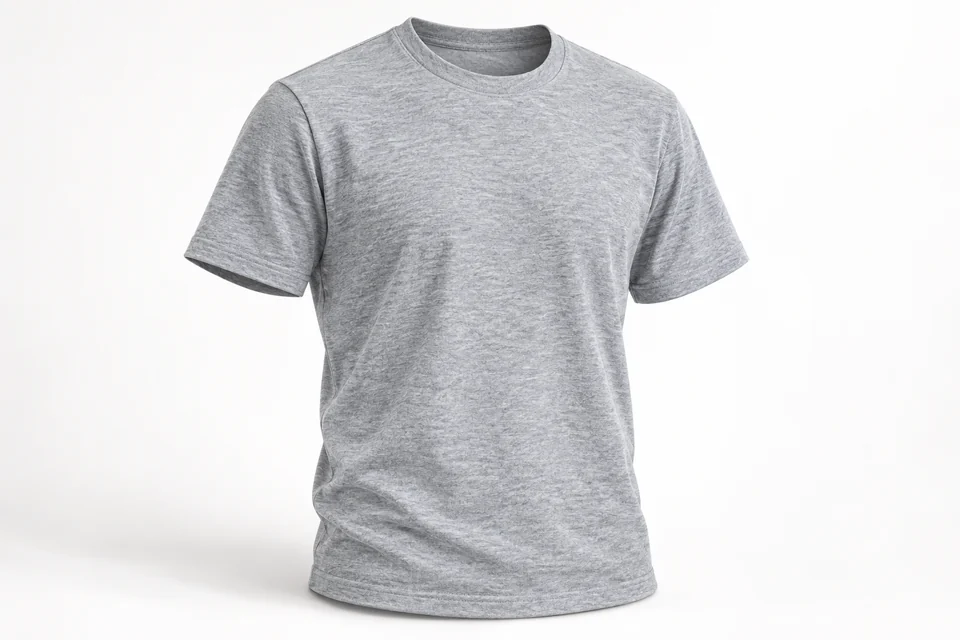
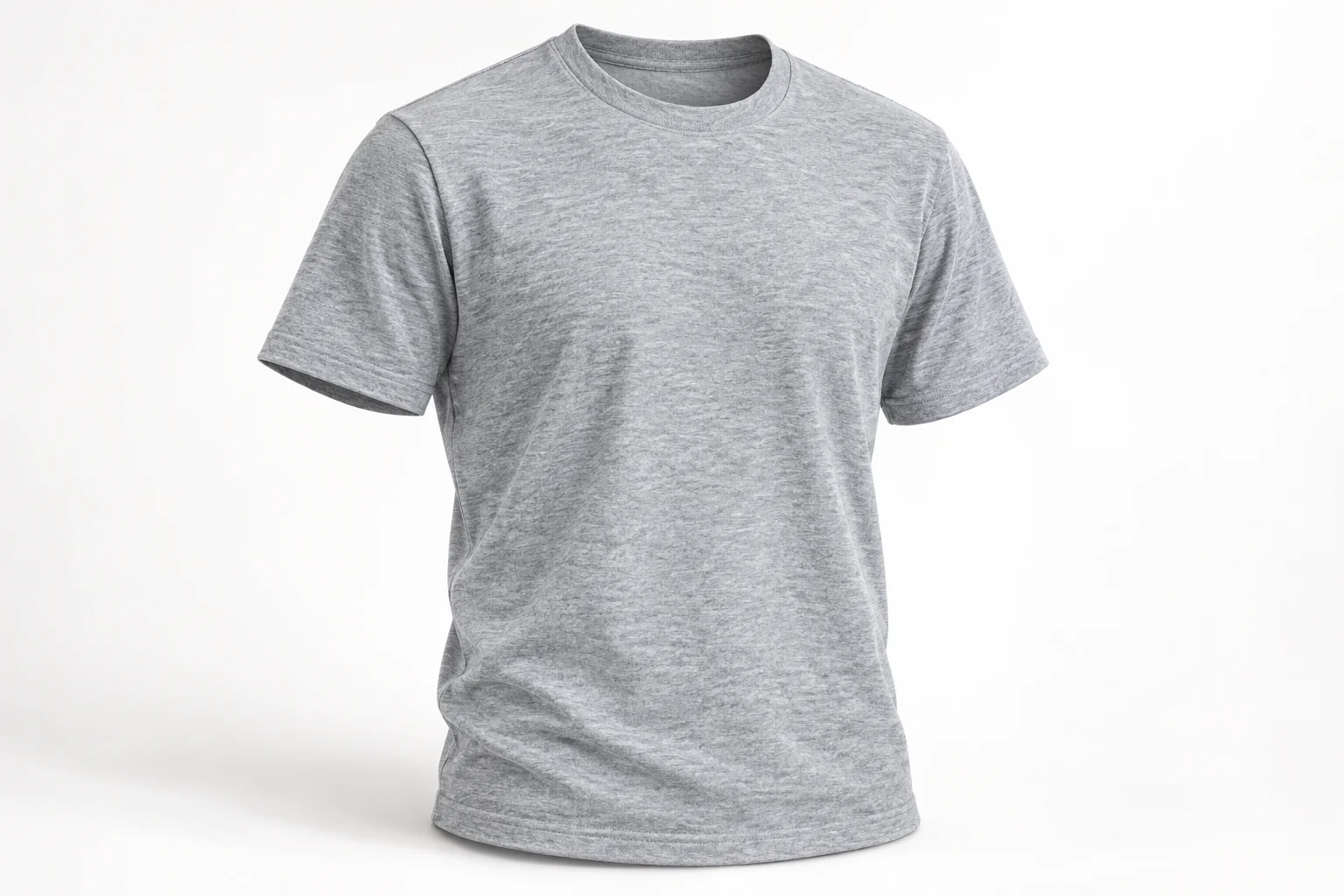
A useful crew-neck fabric enquiry describes a product programme rather than asking for the best cotton. Explain whether the T-shirt is a relaxed standalone piece, a fitted layer or a promotional base for decoration. Attach a drawing or reference and name the details that matter: shoulder position, sleeve shape, body length and neck opening. The supplier can then discuss an article against a defined need. Avoid presenting a reference garment as a demand to reproduce every characteristic when its actual material and construction are unknown.
Turn a launch idea into a quantity table
Provide estimated fabric requirements by colour with an explicit unit. If only garment-unit forecasts exist, label them as such and ask the garment maker to calculate material demand from the pattern and size ratio. A plan for three colours is not enough if one colour represents most of the quantity and the others are small trials. Describe whether the request is for sampling, a first production run or a potential repeat. Ask the mill to confirm relevant minimums and charges for that breakdown; do not assume one minimum applies to every article and shade.
Clarify who supplies the neckband and who makes the garment
A fabric purchase does not automatically include cutting and sewing. Tell the supplier whether a separate garment manufacturer is appointed and which team will develop the neckband. If the band comes from another source, arrange compatible sampling rather than leaving the collar decision until the body fabric arrives. Specify whether the buyer needs body cuttings, full-width sample length, colour development or a fabric trial for decoration. Those requests serve different decisions and may have different costs. Ask for availability and timing explicitly instead of treating a catalogue listing as a sample-stock confirmation.
Ask for comparable technical and commercial replies
Request the proposed finished GSM, usable width, supply format and finish against the article code. For commercial comparison, ask the supplier to identify the price unit, quotation validity, packing basis, delivery terms and payment terms. Send the destination so the team can discuss the requested logistics; worldwide marketing does not establish that every route or term is available. Do not merge an estimated delivery date with a confirmed dispatch commitment. Mark the points still awaiting agreement so a promising email exchange is not mistaken for a production-ready order.
Request evidence tied to your actual product claims
If the T-shirt will be sold with a particular material or performance claim, ask what documentation is available for the offered supply and which claims remain unverified. A catalogue fibre statement does not prove organic status, a certification, dimensional stability or a completed garment care label. For care-related development, CottonWorks shows why construction and processing need consideration alongside fibre choice. Share the proposed trial and let the relevant technical specialists identify the evidence needed. A sensible enquiry can state an unresolved requirement without pretending the supplier has already demonstrated compliance.
CottonWorks: Shrinkage & Skewing — Fibre designation alone cannot settle dimensional behaviour because construction and processing also contribute. Commercial enquiry fields are original practical guidance, not a statement of the mill's terms.
Catalogue starting points
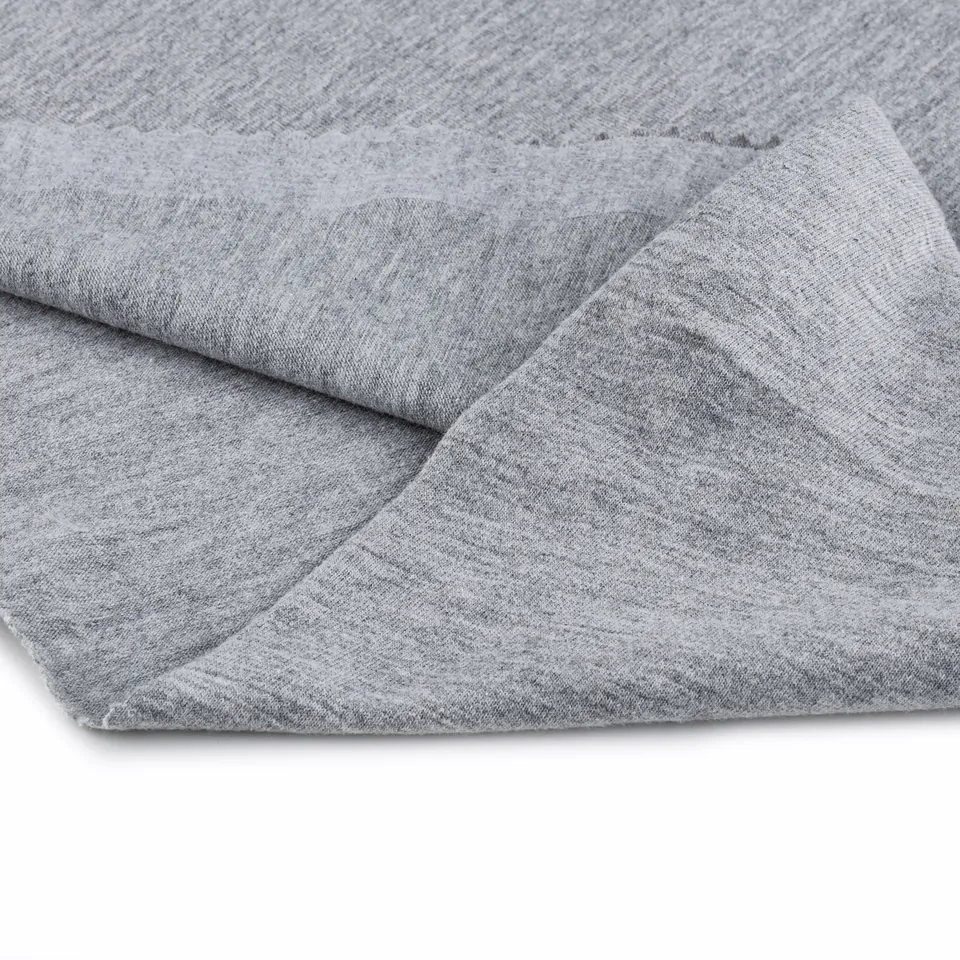
Use SJ-101 for a discussion of the listed 100% compact combed cotton single jersey options: 130, 140, 150, 160, 170 g/m². Use SJ-102 to compare the recorded 95% cotton 5% elastane route at 170, 180, 190, 200, 210 g/m². Select an actual offered weight before calculating material cost. The code pair is a starting point for a crew-neck programme, not a guarantee that both routes meet your fit, decoration or care requirements. Ask the supplier to identify the precise version represented by each supplied cutting.
Finish with one actionable sample request
An illustrative closing request might ask for labelled body cuttings at two specified offered weights, confirmation of usable width and a response on the buyer's stated neckband plan. Attach the colour quantity estimate and identify who approves the fabric and sewn sample. Give a requested response date without implying acceptance of an unconfirmed delivery timetable. When the offer arrives, reconcile substitutions with the original brief and record any changed assumption. This keeps the next action narrow enough for a useful answer while preserving the complete information needed for a later quotation and sample decision.
Technical background and scope
This is a structured editorial draft. Garment-specific development advice is paired with existing catalogue records; compatibility must be established by sampling. AL KUMAŞ supplies fabric. Cutting, sewing and finished-garment production are separate unless explicitly agreed.