



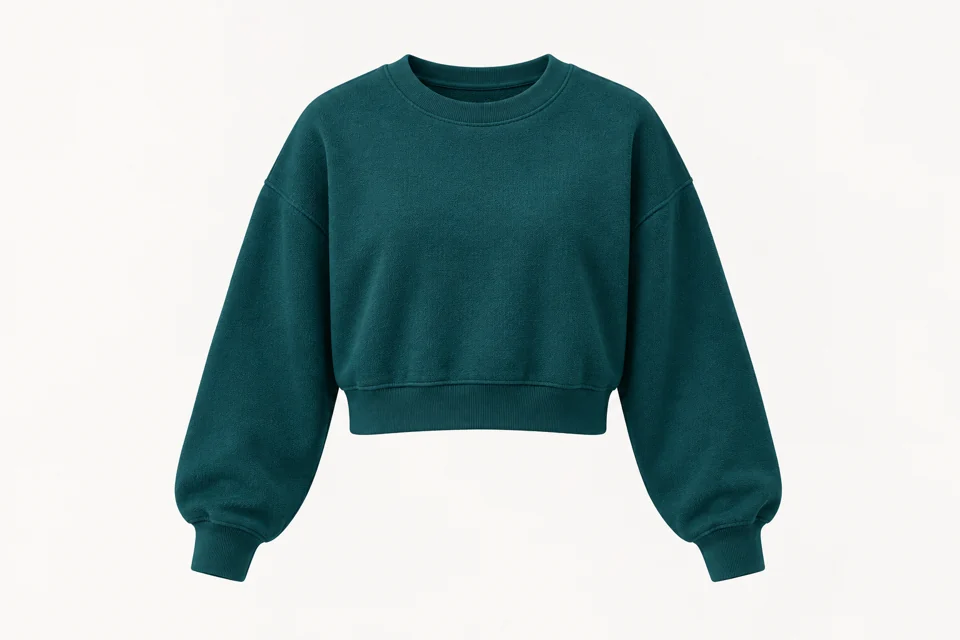


Compose the graphic between neckline and rib join
The visible body field of a cropped sweatshirt ends at the lower-band attachment, not necessarily at the finished hem. Map that seam on the artwork drawing before scaling a design from a longer sweatshirt. Decide whether the graphic belongs entirely on the body, deliberately approaches the rib or continues through it as a separately developed idea. A large motif may dominate the compact front even when its dimensions looked balanced on a full-length garment. Review that composition with the intended lower garment rather than approving an isolated rectangle.
Identify the chosen body and the separate rib surface
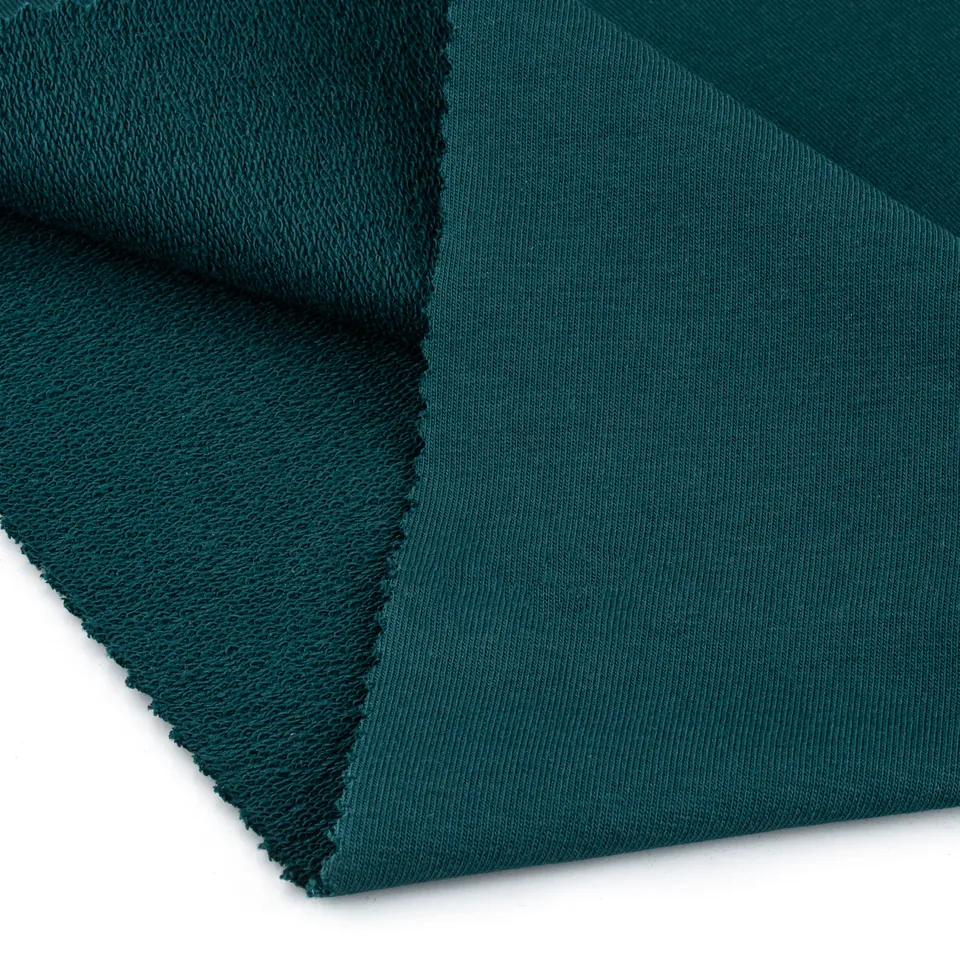
FT-601 is seventy percent cotton and thirty percent polyester, two-thread unbrushed silicone French terry, at 240, 260, 280, 300 or 320 grams per square metre. FT-603 is sixty-five percent cotton and thirty-five percent polyester, three-thread brushed fleece, labelled brushed anti-pilling, at 320, 345, 370, 395 or 420 grams per square metre. Record the offered option beside the colour sample. The lower rib needs its own material reference. A shared colour name does not establish the shade relationship between different surfaces or transfer approval from body to band.
Approve the band as a prominent colour area
A deep contrast band can occupy a significant share of a short sweatshirt's visual height. Review it attached to the actual body and decide whether it should coordinate with cuffs, neck trim or another collection element. CottonWorks describes colour development against a named substrate and reference; that context supports identifying each component rather than requesting one undifferentiated colour approval. It does not establish a recipe or matching tolerance for this material combination. Keep the accepted physical band and body samples together with any intentional tonal difference clearly recorded.
CottonWorks: Lab Dip Process — Colour-development requests identify a colour reference and substrate. The prominent-rib approval advice is editorial application; no matching tolerance, dye recipe or supplier capability is established for this body-band combination.
Choose artwork rules for both crop and band variants
If two sample variants use different band heights at the same total length, their visible body areas differ. Check whether the same artwork still has the intended clearance and proportion in each. Do not move only the finished hem line on the mock-up while leaving the attachment seam invisible. Define reference points from the pattern and inspect representative sizes. A design placed centrally on the shorter body field can shift relative to the wearer or waistband compared with the original, so the chosen rule should be a deliberate visual decision.
Sample the decorated junction if the design crosses it
Where a print or other application approaches the rib seam, have the decorator and garment maker evaluate the actual body, rib and assembly. A flat image cannot prove continuity over materials that have different surface and movement characteristics. Include any backing or support in the trial and inspect the garment with the body gathered as intended. Do not infer compatibility from cotton content or assume decoration is included in fabric supply. If the visual effect needs another process or construction, identify it as a new development option rather than an automatic production instruction.
Review the design during movement and after care
Observe the artwork and contrast band standing, seated and through the agreed arm movements. Note whether body gathering or band movement conceals a significant part of the graphic. Repeat the relevant appearance review after the defined care procedure. CottonWorks includes cleaning-related appearance changes in quality testing, but does not supply a colourfastness or decoration result for this sweatshirt. Separate changes in shade, surface and the visible placement caused by altered component relationships. A satisfactory flat photograph does not settle every one of those questions.
CottonWorks: Quality Testing — Quality evaluation includes cleaning-related appearance effects. It supplies no article-specific colourfastness, decoration or coverage result for the cropped garment.
Release a short-body visual package with its actual seam
Retain the body shade, rib reference, offered weight and finish, artwork revision and placement drawing together. Identify the lower-band attachment and accepted front-back crop relationship on that drawing. Include worn views that show the intended styling and any deliberately exposed layer beneath, without treating one styling choice as a universal coverage promise. If band height, body length or rib supplier changes later, review the affected artwork and shade decisions again. Keep visual acceptance separate from the commercial availability of the components needed to reproduce it.
Technical background and scope
This is a structured editorial draft. Garment-specific development advice is paired with existing catalogue records; compatibility must be established by sampling. AL KUMAŞ supplies fabric. Cutting, sewing and finished-garment production are separate unless explicitly agreed.