



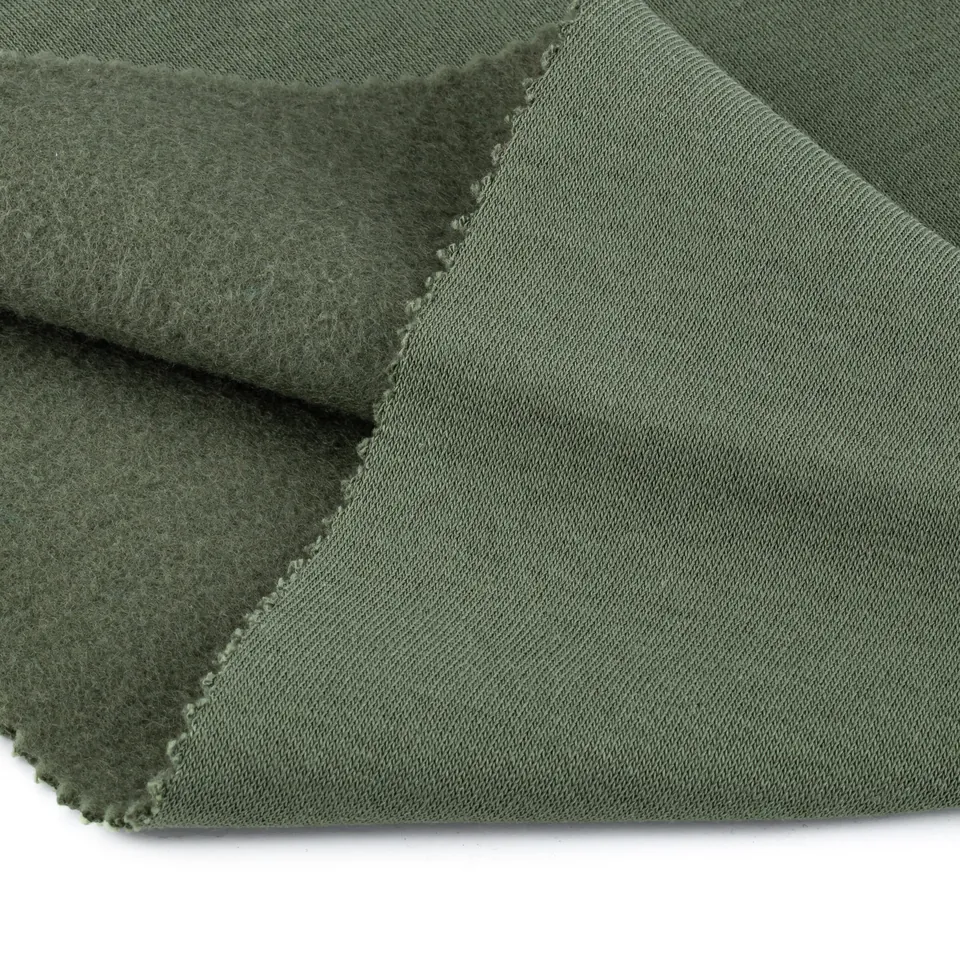
Plan the visible fleece surfaces before commissioning artwork
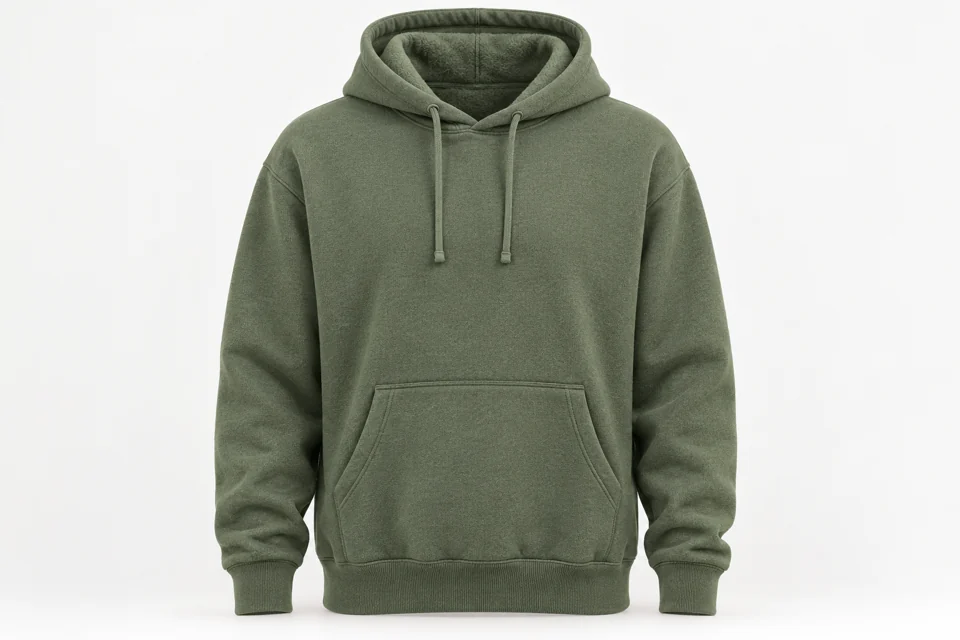
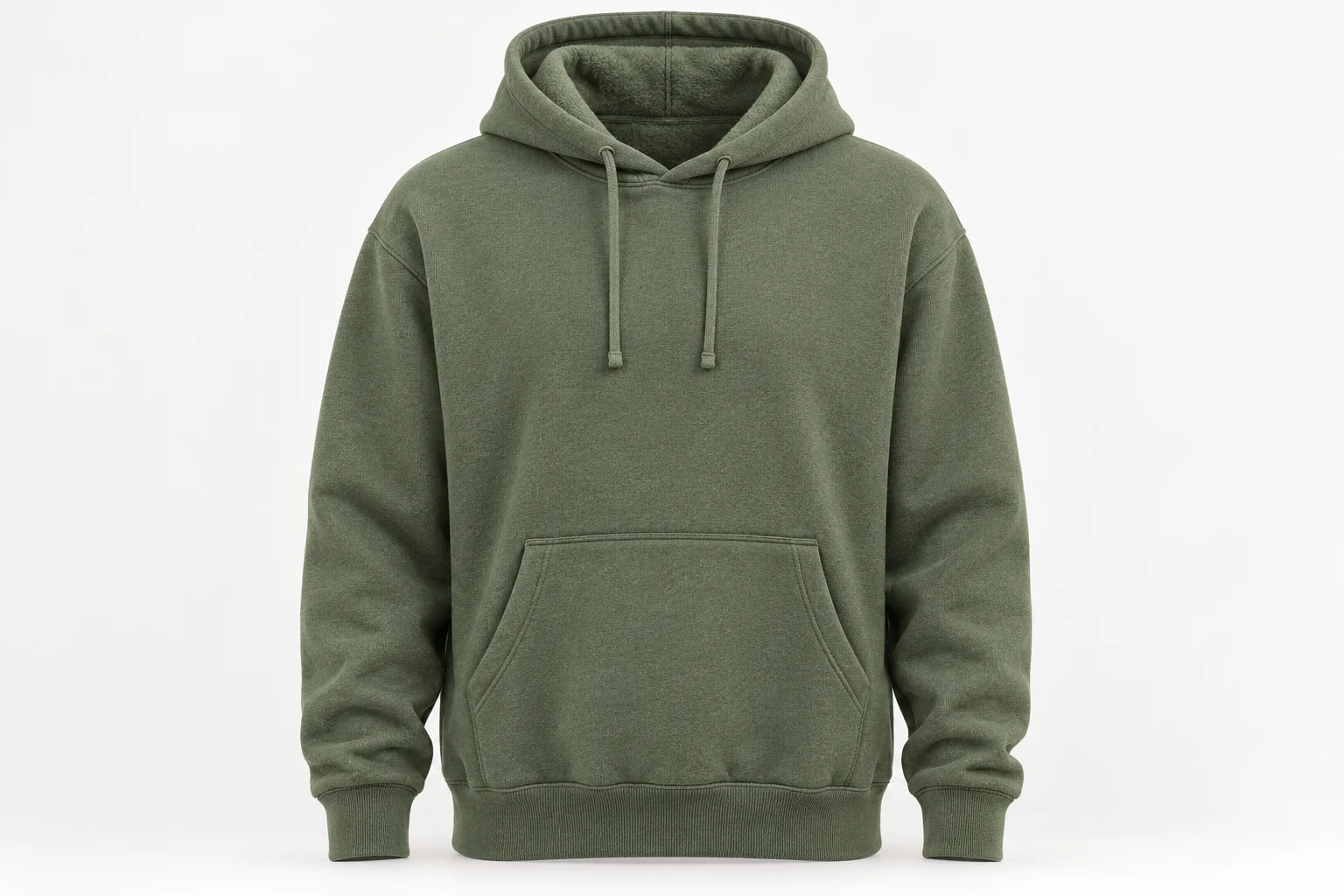
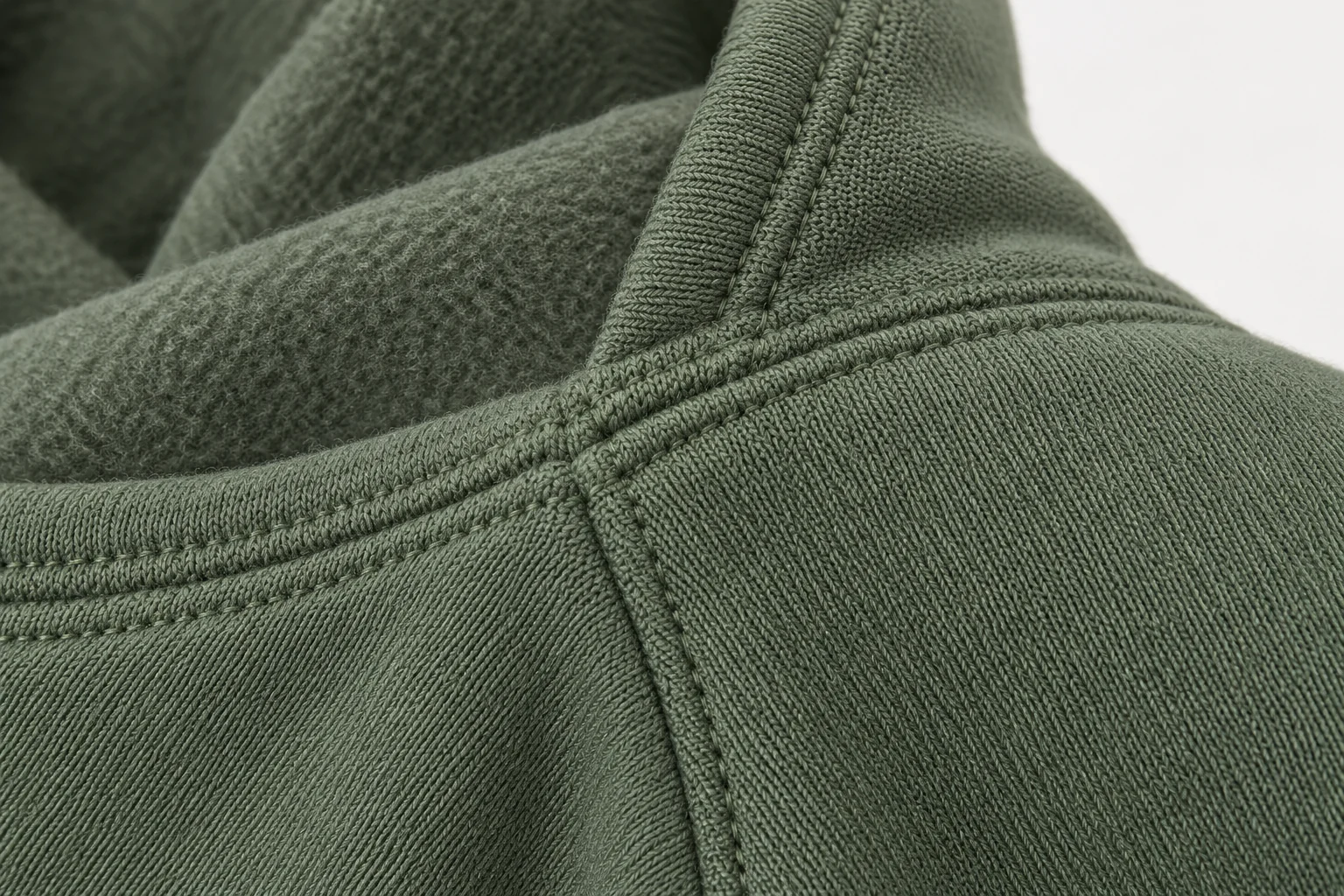
A fleece hoodie has several colour views: the exterior body, the hood interior when worn, the folded opening and the reverse exposed when the garment is handled. Decide which of these belongs in the intended design presentation. If the raised reverse is deliberately visible, provide an actual material reference for that view instead of relying on a face-only colour approval. A darker-looking fold in a photograph can involve lighting and surface presentation; it should not be diagnosed as a dye fault without examining the identified physical sample.
Attach the colour route to the complete material identity
FT-603 is sixty-five percent cotton and thirty-five percent polyester, three-thread brushed fleece with brushed anti-pilling finishing, listed at 320, 345, 370, 395 and 420 grams per square metre. FT-602 is seventy percent cotton and thirty percent polyester, three-thread unbrushed compacted fleece at 300, 325, 350, 375 and 400 grams per square metre. Neither carries a stretch designation. These are different blends and finishes without a shared listed weight. A colour cutting from one cannot approve the other, and an anti-pilling designation does not establish colour or print endurance.
Separate raised reverse appearance from exterior shade acceptance
CottonWorks describes napping as raising surface fibres. In this hoodie, use that limited fact to justify observing the reverse as a physical surface, not predicting its exact shade or optical behaviour. Review the outer hood and inner hood in their intended orientations, with the body and bands nearby. Where the inner uses a different material, identify its own colour reference and approval status. Record whether a visible contrast is intentional, acceptable or unresolved. Avoid describing an unspecified inside as matching merely because both pieces carry the same colour name.
CottonWorks: Mechanical Finishing — Supports the limited explanation that napping raises surface fibres; does not predict exact shade or optical behaviour of these catalogue articles.
Trial the intended graphic on the actual face
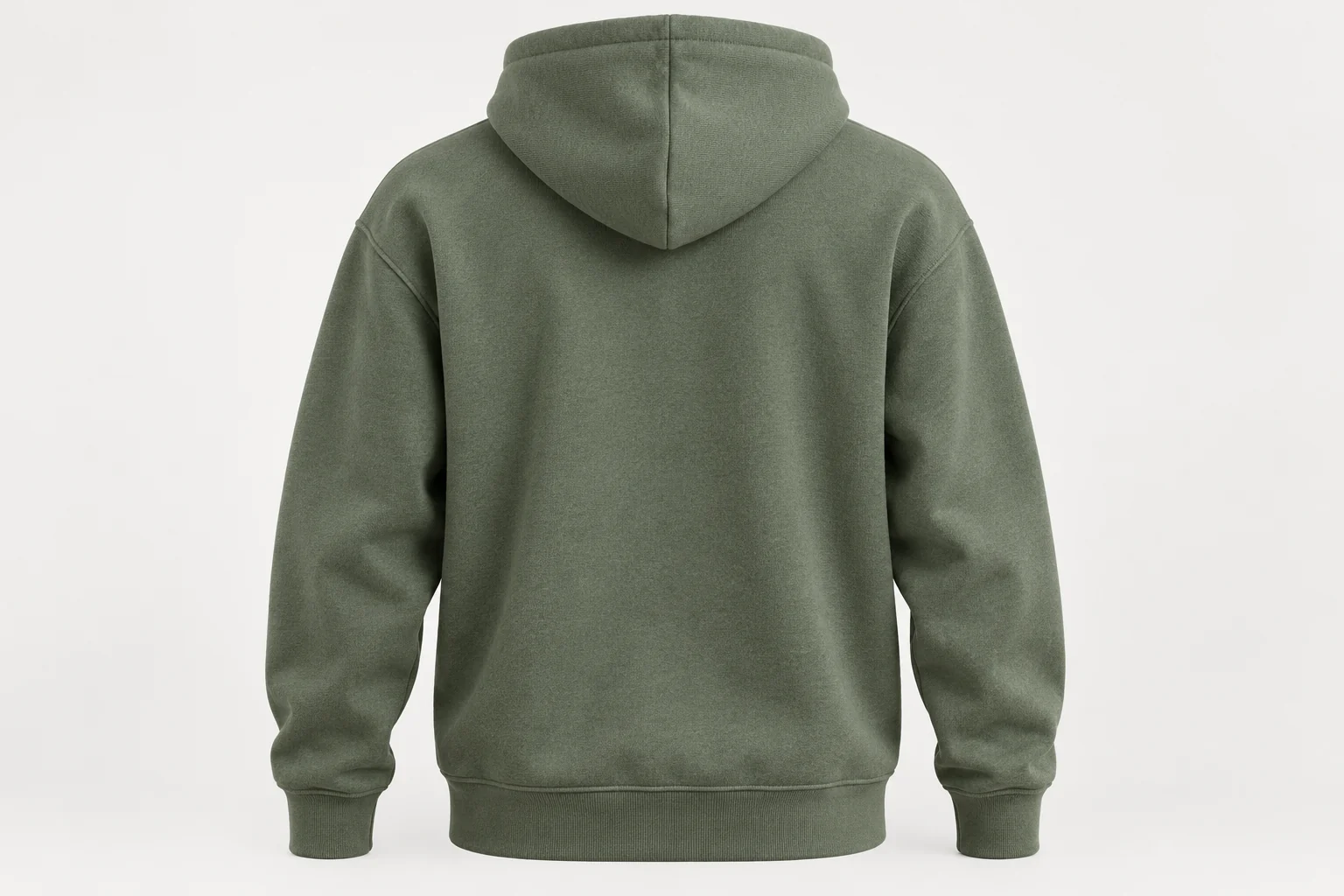
Choose artwork placement with the completed hood behind the neck and chest area visible. A high back graphic may be partly covered by the resting hood; a large front graphic may approach pocket seams or a folded opening. CottonWorks explains that fibre and textile surface characteristics matter to printing choices. Ask the actual decorator to assess the selected article and proposed design, without assuming an available process or prescribing universal settings. Keep the print trial attached to the material identity, scale and location the buyer intends to purchase.
CottonWorks: Cotton Textile Printing Basics — Supports considering fibre and textile surface in printing choices; does not verify a decoration method, service or result for this hoodie.
Inspect decoration backing from the fleece side
An embroidered or otherwise backed decoration can introduce an additional surface inside a hoodie whose brushed reverse was part of the appeal. Where such a method is proposed, inspect the completed inside at the actual location, over the intended underlayer. Ask who specifies and supplies the backing and whether it remains visible in the hood or neckline. A face-only artwork photograph leaves that decision unresolved. The maker and decorator should review their actual assembly; neither a fleece catalogue entry nor a general process description demonstrates acceptable skin contact or garment comfort.
Keep the accepted colour story through the care review
Review the decorated garment and its exposed inside after the agreed care work. Note which observations concern the raised reverse, the body colour, separate bands or the decoration itself. CottonWorks treats durability evaluation as a defined product and end-use question; it does not supply a passing result for this hoodie. Request appropriate article-specific evidence for any required colourfastness or decoration durability claim. A pleasing initial contrast between brushed interior and exterior does not establish how that contrast will appear throughout an undefined lifetime of wear and washing.
CottonWorks: Garment Durability — Explains evaluating durability for a defined product and end use; no colourfastness, decoration or surface result is implied.
Release imagery that represents the accepted construction
For the product page, show the real exterior and an honest inside detail if that surface matters to the purchasing decision. Identify decorative mockups as proposals until an actual decorated sample exists. Keep artwork files linked to the accepted location and size rather than suggesting every offered fleece weight has been approved. Do not convert a tactile brushed description into a warmth rating or advertise permanent colour and surface retention. The buyer-facing story can explain the intended look clearly while leaving measured performance claims to relevant evidence and confirmed specifications.
Technical background and scope
This is a structured editorial draft. Garment-specific development advice is paired with existing catalogue records; compatibility must be established by sampling. AL KUMAŞ supplies fabric. Cutting, sewing and finished-garment production are separate unless explicitly agreed.