




Decide whether the pocket interrupts or carries the image
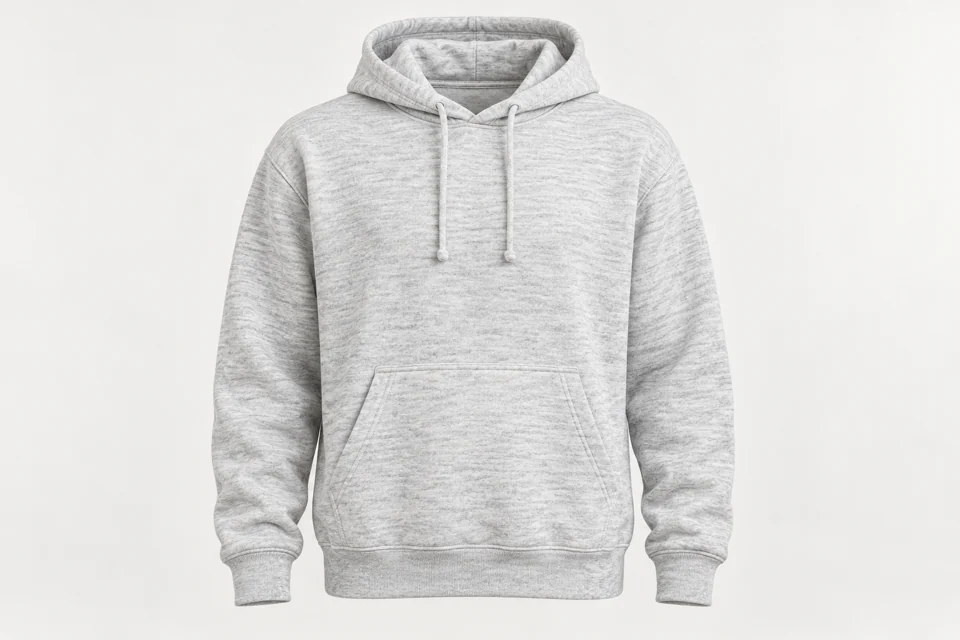
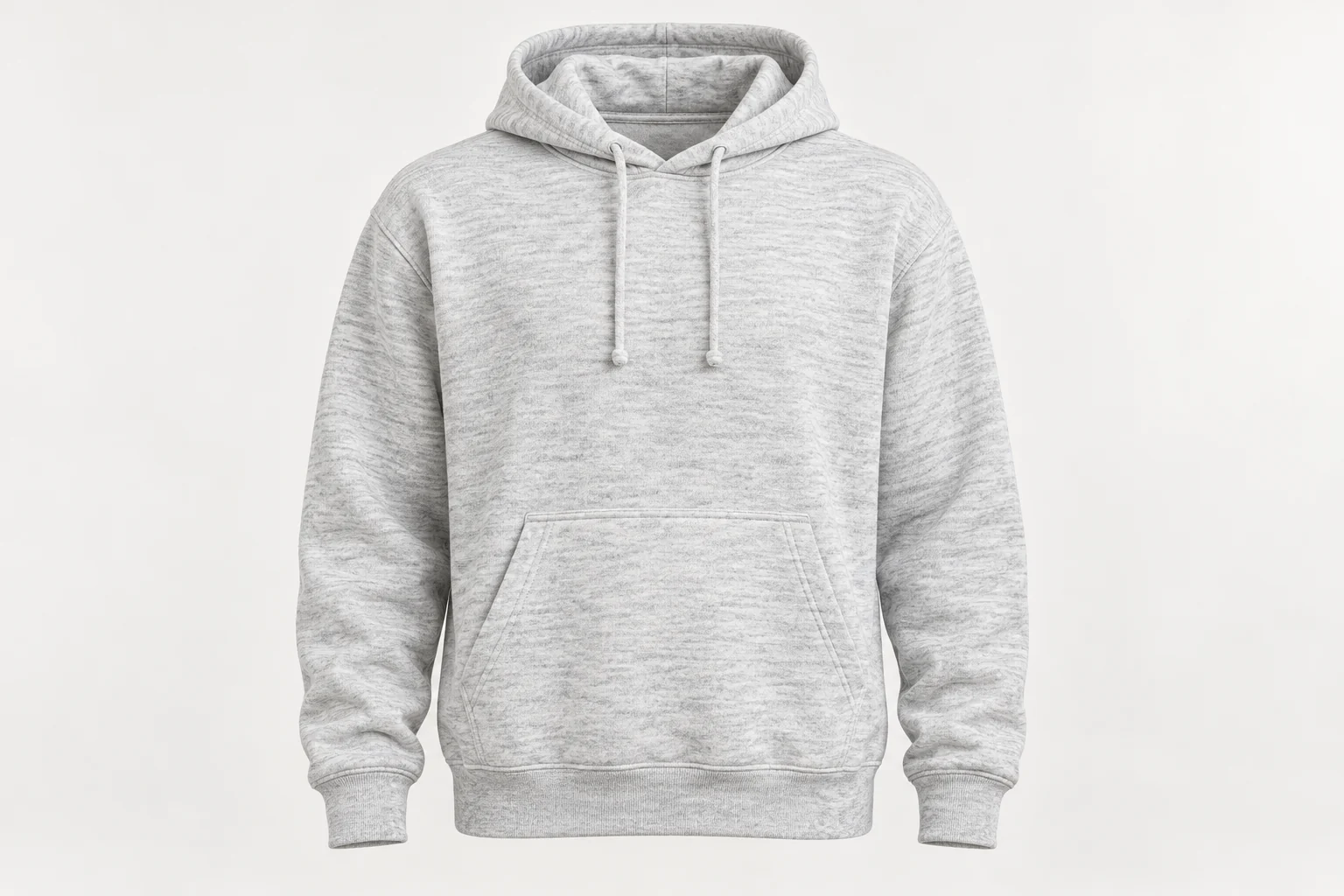
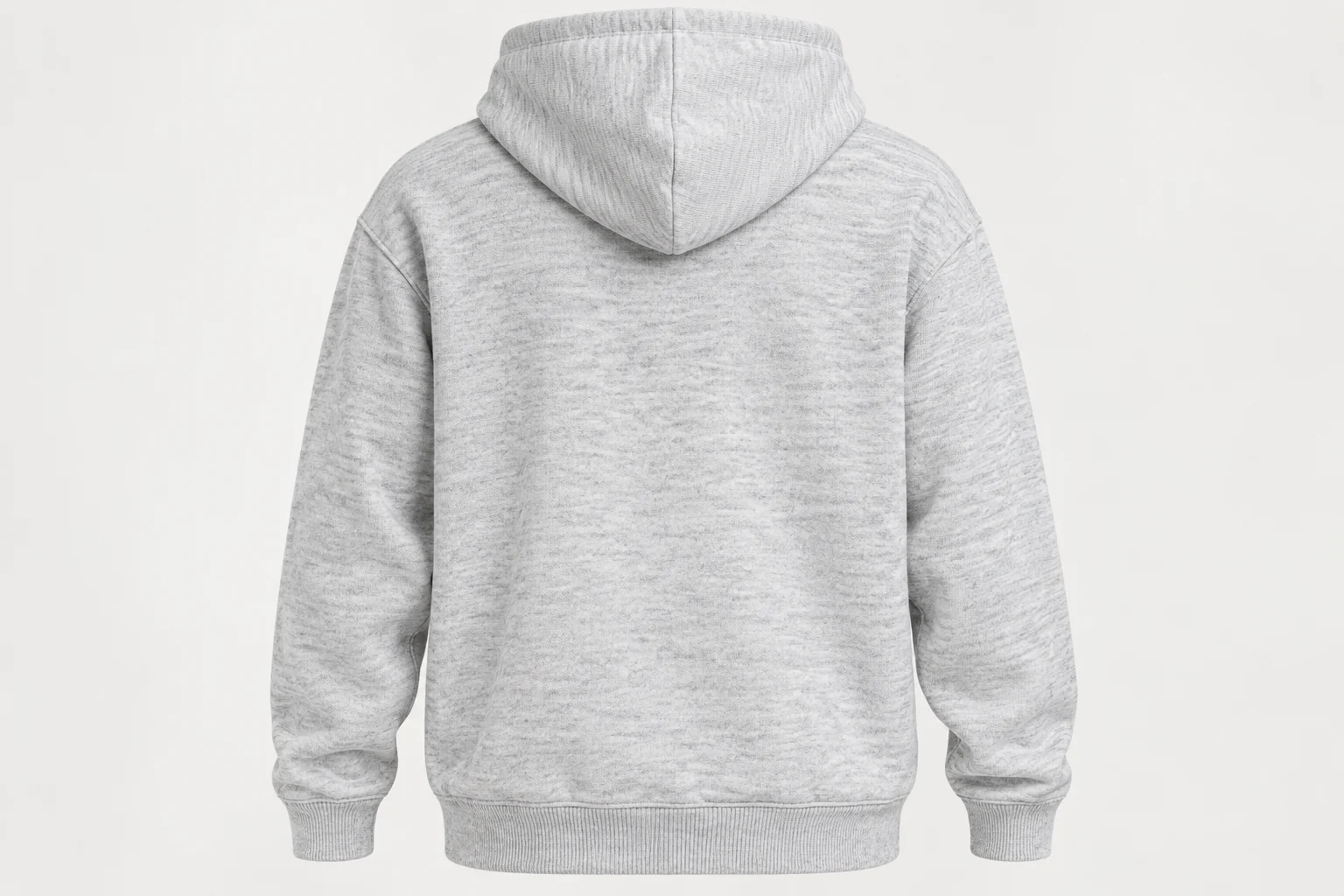
A kangaroo pocket occupies a large part of the lower front and includes openings, folds and attachments that can divide artwork. Decide whether a motif stays above it, belongs on it or intentionally relates across its boundary. Show those choices on the actual pocket master and body placement, not a flat hoodie image that conceals the seam. A graphic that looks continuous on screen may not read the same way with hands entering the pocket or the front folded while seated. Approve the intended visual effect rather than leaving it to production inference.
Identify body and pocket substrates separately
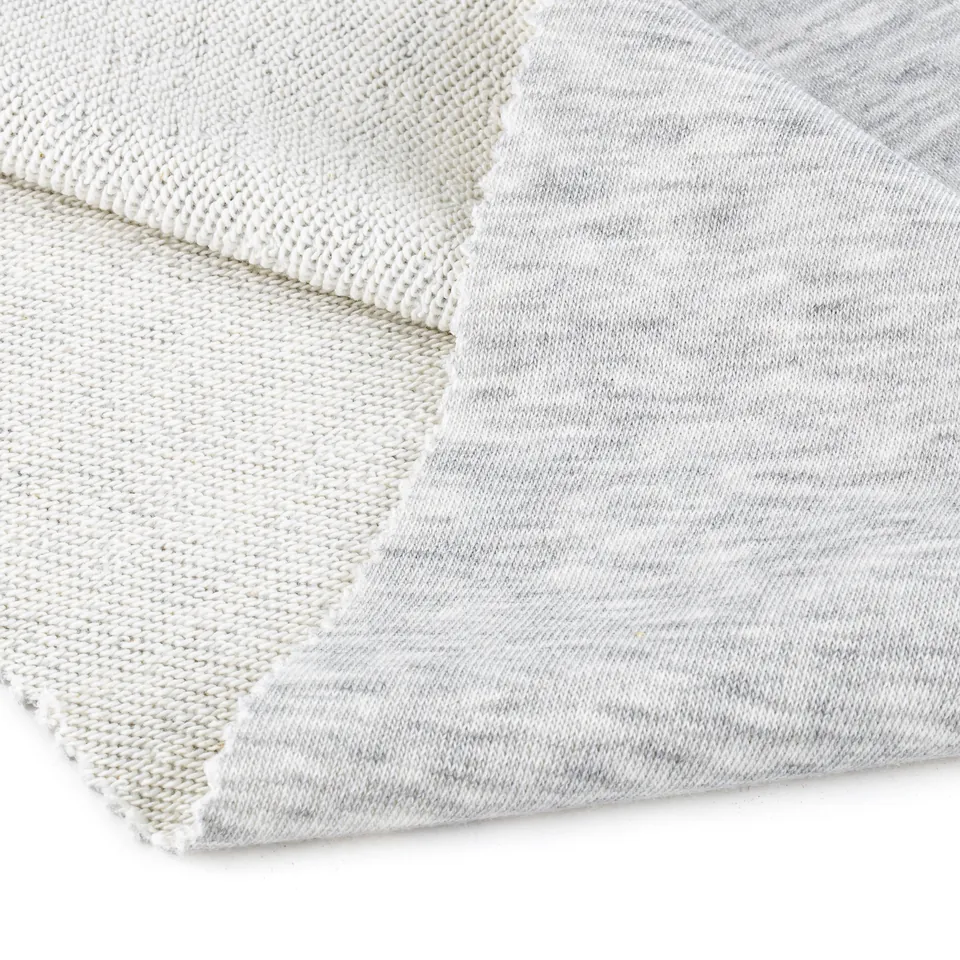
FT-602 is seventy percent cotton and thirty percent polyester, three-thread unbrushed compacted material, with 300, 325, 350, 375 and 400 grams per square metre options. FT-601 uses the same blend in two-thread unbrushed silicone French terry at 240, 260, 280, 300 and 320 grams per square metre. Record the offered article, weight and finish for the body and pocket. If they differ, a matching colour name does not make the application or appearance equivalent. Keep any contrasting pocket or opening component explicitly identified rather than treating it as a body-fabric detail.
Approve the pocket's visible direction and shade relationship
Place the finished pocket on the actual body and inspect the accepted surface direction and shade under the agreed conditions. A detached cutting can be viewed in a position that does not match the garment. Identify whether a contrast is intentional or whether the body and pocket should appear coordinated. Include opening folds and any visible inside material in that decision. Keep the physical sample references governing the relationship, while photographs explain placement. The material record alone does not prove identical appearance across separately supplied pieces or establish a finished colour tolerance.
Map artwork against open and stitched boundaries
Give the decorator a drawing that distinguishes hand-entry edges from attached edges, with the corner treatments and body position visible. Define stable placement points and inspect representative sizes before selecting fixed or varying artwork dimensions. For a motif crossing from body onto pocket, ask the maker and decorator to evaluate registration and processing order on the actual construction. Do not place an important word across an unapproved opening or reinforcement because the mock-up omits it. A revised pocket master or attachment position should generate a reviewed artwork layout, not a silent production adjustment.
Qualify the application with its actual layers
CottonWorks explains that fibre content and fabric surface affect printing choices. Request the proposed decoration on the offered body or pocket material, including any support or backing. Inspect handle and local fold behaviour as well as detail and colour. If the pocket is decorated before attachment, assess the completed front too; a good separate print does not establish the sewn corner or opening appearance. Neither catalogue record confirms decoration compatibility or a service included in AL KUMAŞ fabric supply, so the responsible provider must evaluate the actual application.
CottonWorks: Cotton Textile Printing Basics — Fibre content and surface affect printing choices. Inspecting the decorated pocket after attachment is original editorial guidance, not confirmed process compatibility or a supplier service.
Review the image during ordinary pocket use and care
Observe the selected adult development condition with hands or the specifically intended item identified, without turning it into a retention or capacity claim. Look at motif visibility, pocket folds and the body around the corners. Repeat relevant appearance checks after the agreed care procedure. CottonWorks includes cleaning-related appearance in quality testing, but supplies no article-specific decoration, fastness or pocket result here. Keep a changed application distinct from an altered pocket-body relationship so a graphic is not repositioned merely to conceal unresolved lower-front distortion.
CottonWorks: Quality Testing — Quality testing includes cleaning-related appearance evaluation. No article-specific decoration, colourfastness or pocket-attachment result is established.
Release an artwork map tied to the pocket master
Retain the accepted body and pocket material identities, shade references, pattern revisions, placement points and application details together. Mark the intended open edges and the actual attachment outline on the production artwork. Include comparable worn views where they informed acceptance. If pocket shape, opening treatment or corner construction changes later, review the visual decisions affected. A repeat image file and hoodie colour name cannot reproduce an approved pocket graphic without the actual master, body placement and sewing relationship that the buyer selected.
Technical background and scope
This is a structured editorial draft. Garment-specific development advice is paired with existing catalogue records; compatibility must be established by sampling. AL KUMAŞ supplies fabric. Cutting, sewing and finished-garment production are separate unless explicitly agreed.