





Translate lightweight into fields the supplier can answer
Begin the enquiry by replacing the ambiguous adjective with an identified comparison reference. State whether the buyer seeks a lower offered GSM, lower measured garment mass, less hood bulk or a particular inside surface. These are separate fields, not interchangeable promises. Mark which result requires a material offer and which depends on the garment maker's construction. The response should let purchasing distinguish an actual proposed specification from a marketing description, rather than asking a supplier to guarantee every attractive meaning of lightweight terry at once.
Keep the actual catalogue vocabulary in the response
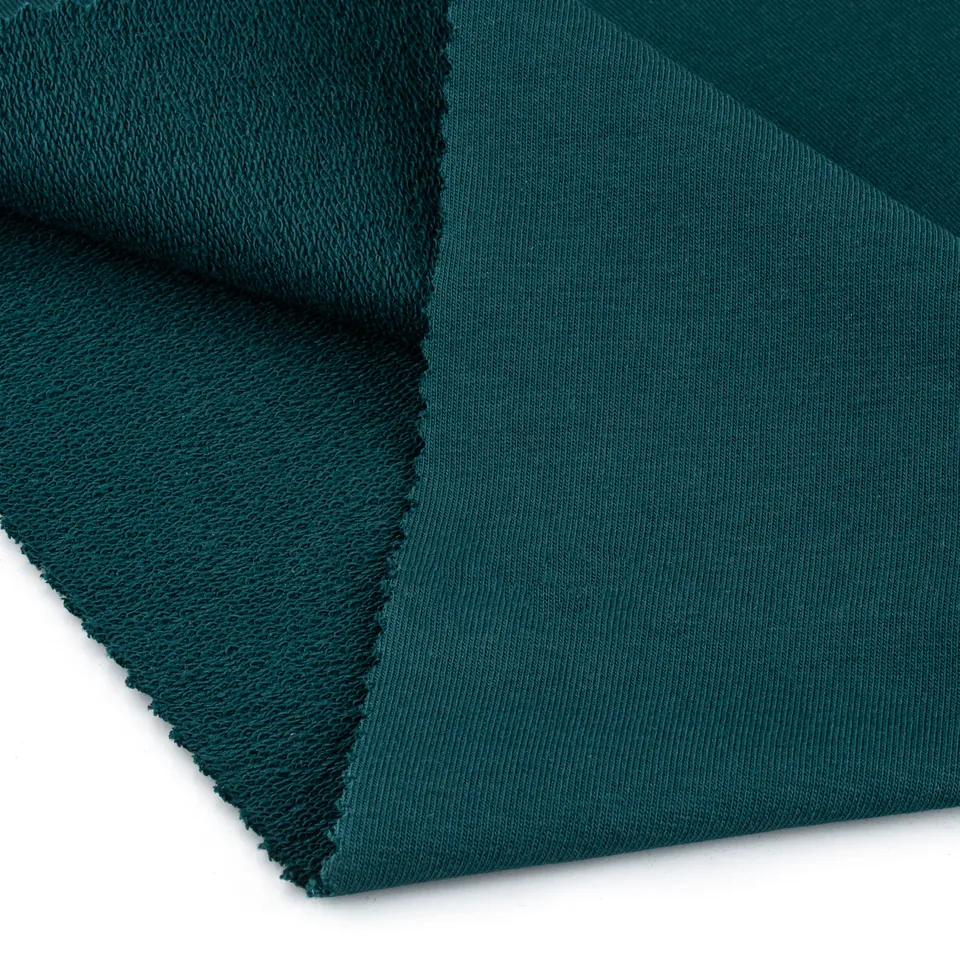
FT-601 lists seventy percent cotton and thirty percent polyester, two-thread unbrushed silicone French terry, at 240, 260, 280, 300 and 320 grams per square metre. TL-701 is eighty percent cotton and twenty percent polyester, loop-back terry with enzyme and silicone finishing, at 250, 270, 290, 310 and 330 grams per square metre. Ask which offered option the supplier is naming, with current finished specification and sample identity. Their ranges overlap without an identical listed weight. Do not allow one terry term to erase the actual family, blend and finish differences in the commercial reply.
Commission an explicit face-and-reverse material reference
Ask the supplier to label both sides of the offered physical sample and identify which is intended inside. Attach the buyer's accepted reverse reference where one exists, describing the actual appearance and handle decision without inventing a loop height or requiring an unconfirmed production process. CottonWorks explains why industry French-terry wording does not itself describe every technical loop structure. Use that distinction to resolve naming ambiguity before substitution, not to infer TL-701's detailed machinery. A swatch should be traceable to an offer rather than stand for an unspecified category of similar looped fabrics.
CottonWorks: Single & Double Knits — Supports requesting an explicit reverse description rather than inferring exact knitting construction from the terry name.
Separate the material target from the assembled hood target
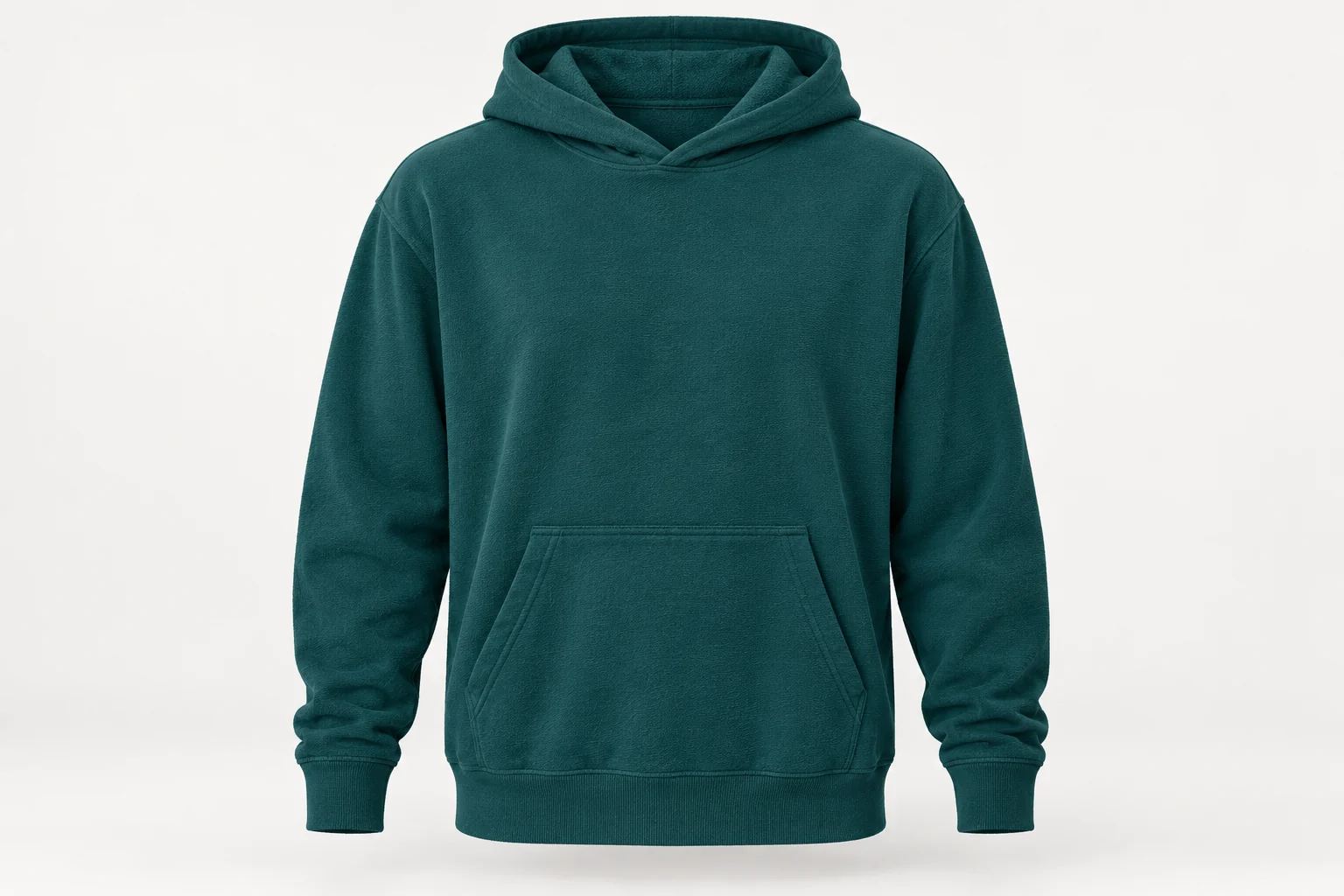
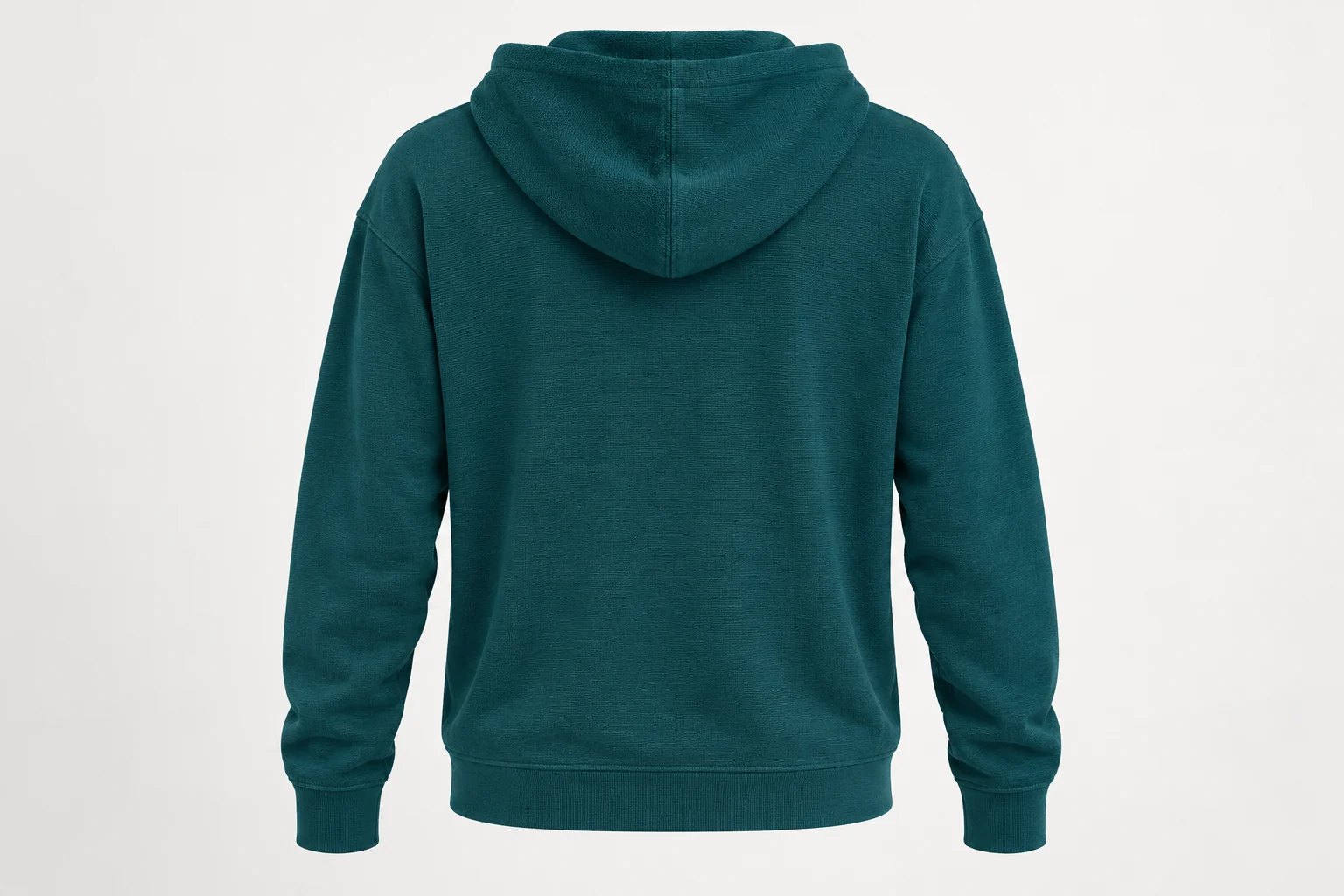
Have the garment maker identify hood pattern, layer count, inner material and relevant seam arrangement. Record whether the desired less-bulky appearance concerns that assembly rather than the whole body's GSM. If a complete-garment mass comparison is required, the maker should state the actual size, components and measurement condition. A supplier can propose a fabric, but its lower area mass does not authorise a claim about the finished hood. Keep the actual assembled reference attached to this field so another lining or omitted layer cannot silently make the comparison appear to pass.
Write substitution boundaries before comparing lower numbers
Ask the buyer to identify which fields an alternative may change and which require renewed review. For example, an offered TL-701 weight below a selected FT-601 weight is not automatically an equivalent replacement if family, reverse and blend differ. A change of inner hood may leave the body material unchanged but reopen assembly acceptance. Do not convert a lower GSM into a waiver of those decisions. The output should distinguish accepted material identity, allowed commercial alternatives and uncompleted technical questions, without pretending a generic family name supplies compatibility evidence.
Keep unsupported performance language out of the offer read-back
Review the supplier's written response against the defined fields. If the reply describes warmth, absorbency, fast drying or permanent recovery without relevant article-specific evidence, ask what supports that statement rather than copying it into the product story. CottonWorks includes defined quality evaluation; a familiar looped appearance is not a substitute for the required assessment. Preserve the actual offered GSM, composition, finish, confirmed width and units separately from the design comparison. Ask the maker for the real component and marker requirement only after the material and assembled reference are sufficiently identified.
CottonWorks: Quality Testing — Supports defining product quality requirements and evaluation; does not substantiate warmth, absorbency, drying or recovery claims.
Issue an agreed material description with an honest comparison claim
The final brief should name the actual offered article and weight, face and reverse reference, complete hood construction and the specific lightweight comparison the evidence supports. State outstanding evidence or review requirements explicitly. Use that description for actual quantities, current prices and commercial terms, confirming them directly for the programme rather than inferring service or availability from a sample. Later alternatives must return to the defined substitution boundaries. This gives purchasing a usable terry specification while preventing an unqualified adjective from becoming an invented warmth, moisture-handling or lifetime-performance guarantee.
Technical background and scope
This is a structured editorial draft. Garment-specific development advice is paired with existing catalogue records; compatibility must be established by sampling. AL KUMAŞ supplies fabric. Cutting, sewing and finished-garment production are separate unless explicitly agreed.