




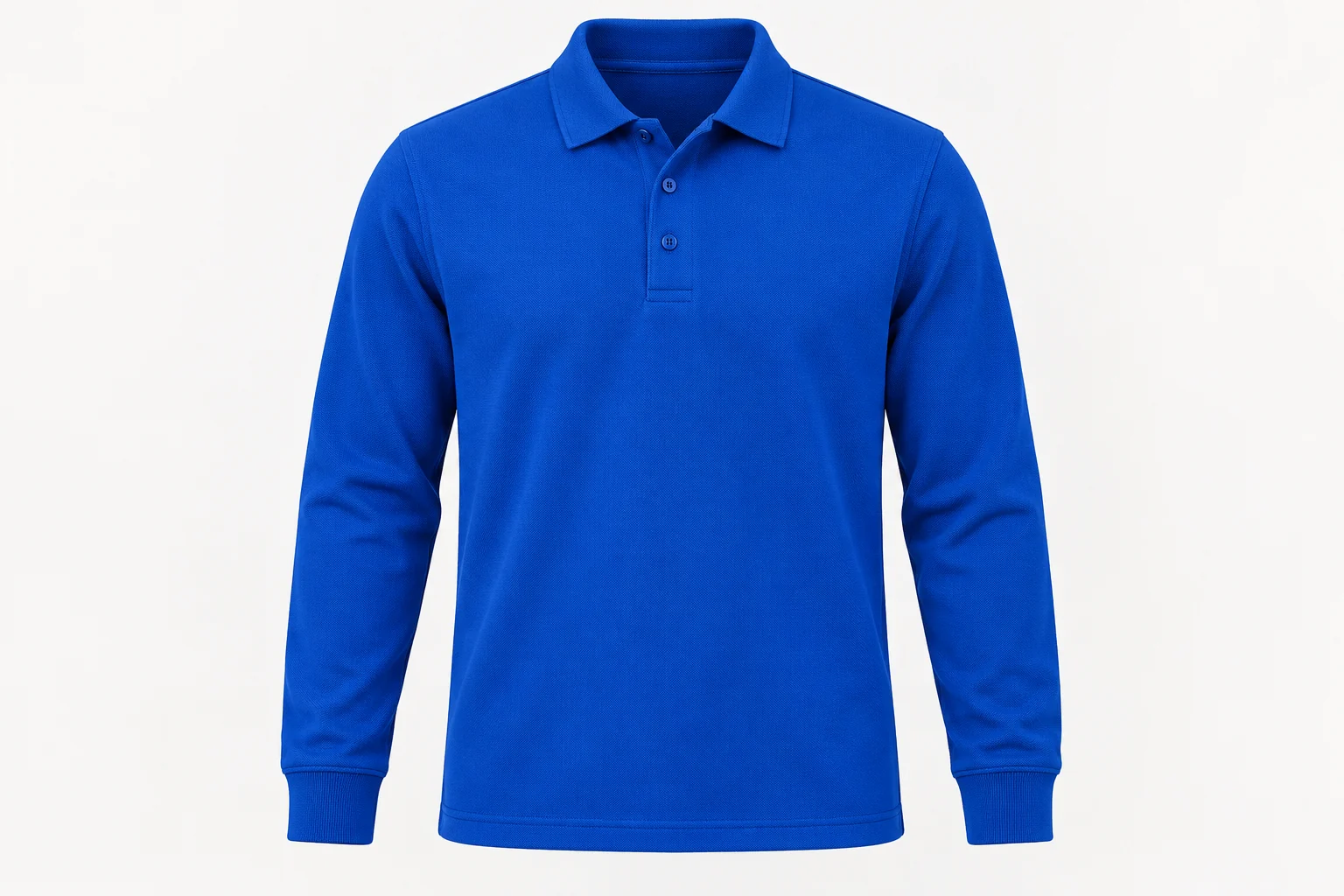


Plan the colour relationship at the wrist
A long-sleeve polo brings cuff colour into repeated view as the wearer bends the arm, works at a desk or pushes a sleeve upward. Decide whether the wrist should disappear into the sleeve, echo the collar or introduce a deliberate contrast. Show that relationship on front and side drawings, not just a collar swatch card. A cuff hidden beneath a styled jacket in the product image still needs a defined approval. Keep the placket and buttons in the same colour plan so the finished garment reads as one collection decision.
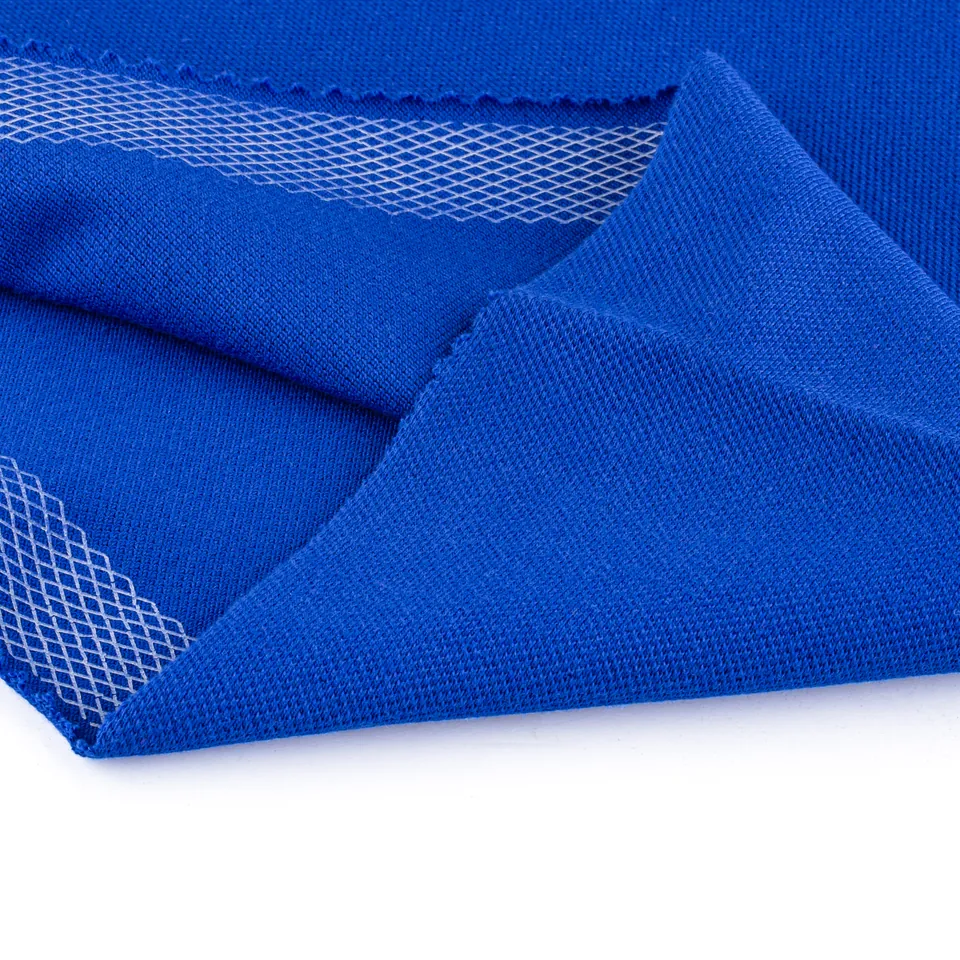
Identify which cotton construction carries the colour
The proposed body routes are PQ-501 piqué with enzyme and silicone finishing and IN-201 interlock with enzyme and compacted finishing. Each lists one hundred percent combed cotton at 190, 205, 220, 235 or 250 grams per square metre. State which offered weight and finish applies to every sample. Matching fibre content does not establish identical surface appearance or a shared physical colour approval. The material selected for a purchased collar or cuff also needs its own identity rather than inheriting the body description by assumption.
Assess adjacent components under agreed light
View the body, actual collar, wrist component, thread and buttons together under the conditions agreed with the colour specialists. Datacolor describes metamerism as an apparent match under one light that separates under another. This is a reason to define the viewing process, not a finding that these proposed components necessarily have that issue. Record which sample governs the intended tonal relationship and identify any accepted contrast. Use photographs to explain the arrangement while retaining the physical references needed for shade approval.
Datacolor: What Is Metamerism? — Samples may appear matched under one light and different under another. This supports agreed viewing conditions, not a finding that the proposed body and cuff combination is metameric.
Place sleeve artwork on the worn shape
For a sleeve logo or vertical graphic, identify where the design should appear with the arm resting and where it moves during a bend. Map the artwork on the actual sleeve pattern, showing the elbow region, cuff seam and any wrist opening. A mark centred on a flat rectangle is not automatically centred on the worn sleeve. Ask the designer whether it belongs on the outside arm, near the cuff or another defined location. Review representative sizes before deciding whether motif dimensions remain fixed across the range.
Evaluate decoration where the sleeve flexes
CottonWorks explains that fabric surface affects printing choices. Request the intended decoration on the actual piqué or interlock offer rather than accepting a trial made on an unrelated smooth cotton. For an application near the elbow, include the relevant movement and assess how its size and handle interact with the folds. If embroidery needs backing, review that complete stack. These are practical sampling questions, not a declaration that a particular process is available or suitable. The catalogue provides no article-specific decoration approval or supplier service commitment.
CottonWorks: Cotton Textile Printing Basics — Fabric surface affects printing choices. Sleeve-flexion and decoration trials are original garment-development suggestions, not confirmed process compatibility or a service offered by AL KUMAŞ.
Review cuffs and decorated sleeves after care
Keep an identifiable accepted component set beside the sample during the agreed care review. Inspect whether the sleeve and cuff still produce the intended visual combination and whether the application changes the local appearance. CottonWorks discusses cleaning-related appearance changes, including colour and surface effects. That general guidance does not establish fastness, abrasion or recovery results for this programme. Agree the relevant evidence with the responsible technical team. Do not assume that a shade looking acceptable before sewing will necessarily settle the post-care appearance of adjacent materials.
CottonWorks: Quality Testing — Cleaning-related appearance evaluation includes surface and colour changes. It provides no article-specific fastness, recovery or appearance result for the proposed polo.
Release a sleeve-aware visual specification
Document the body route, offered weight, collar and cuff references, button appearance, artwork revision and placement points. Include worn views of the sleeve resting and bent where those positions informed approval. Note whether a contrast cuff coordinates with the collar or follows an independent shade reference. When a cuff supplier or body finish changes, identify the visual decisions affected before accepting the substitution. Keep this approval separate from quantity and timing confirmation; a finished colour plan does not establish current availability of the components needed to reproduce it.
Technical background and scope
This is a structured editorial draft. Garment-specific development advice is paired with existing catalogue records; compatibility must be established by sampling. AL KUMAŞ supplies fabric. Cutting, sewing and finished-garment production are separate unless explicitly agreed.