




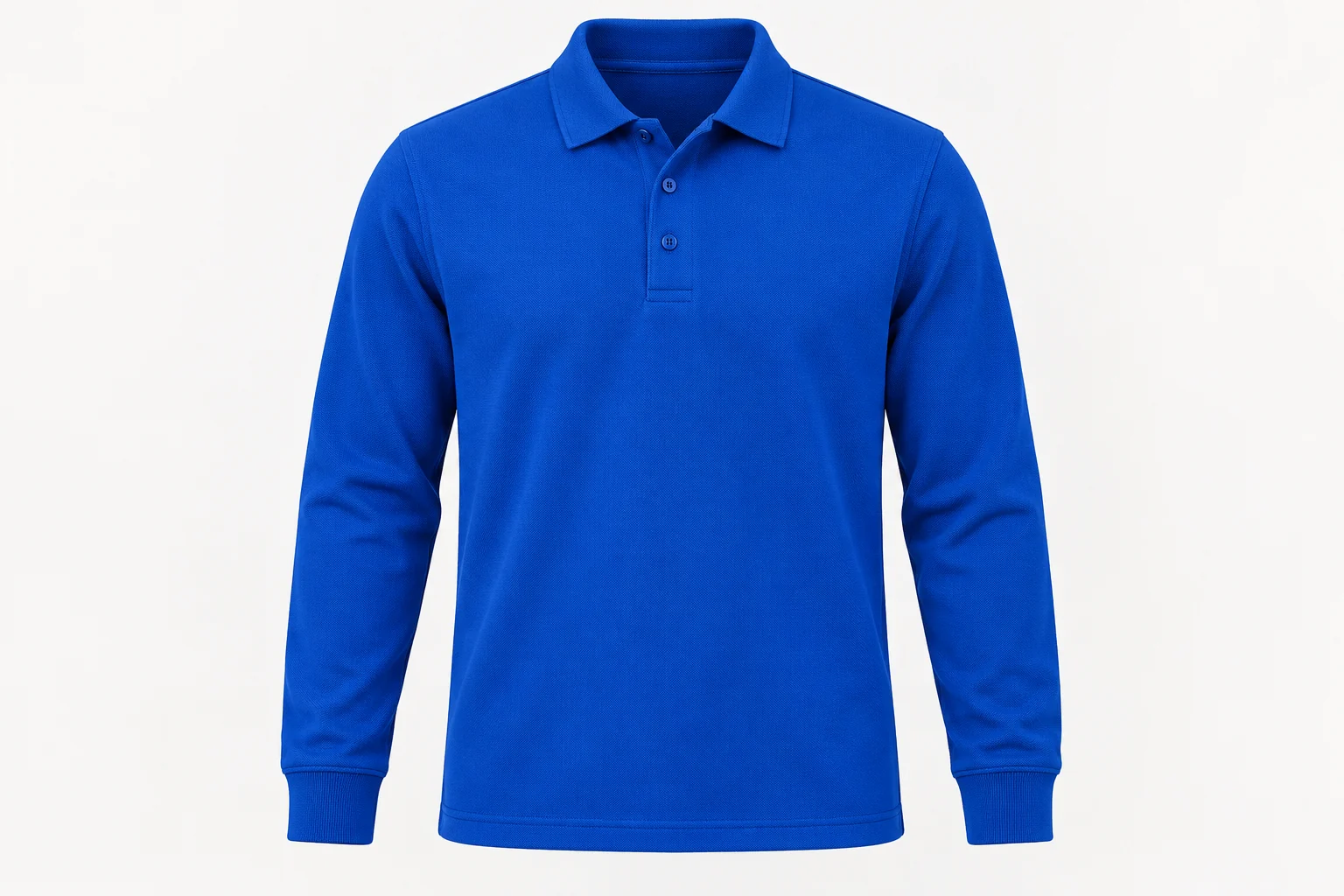


Make elbow and wrist checks central to the fitting
Plan the long-sleeve polo review around the adult movements relevant to its intended use, while retaining the collar and placket checks. Ask the wearer to bend the elbow, reach forward and return the arms to a natural resting position. Record the underlayer and representative size. Observe whether the cuff stays where intended and whether the sleeve twists or pulls the body. An attractive short-sleeve prototype cannot answer these questions, and an instruction to improve sleeve comfort is too vague unless the reviewer identifies the action and location involved.
Record body, collar and cuff as the tested set
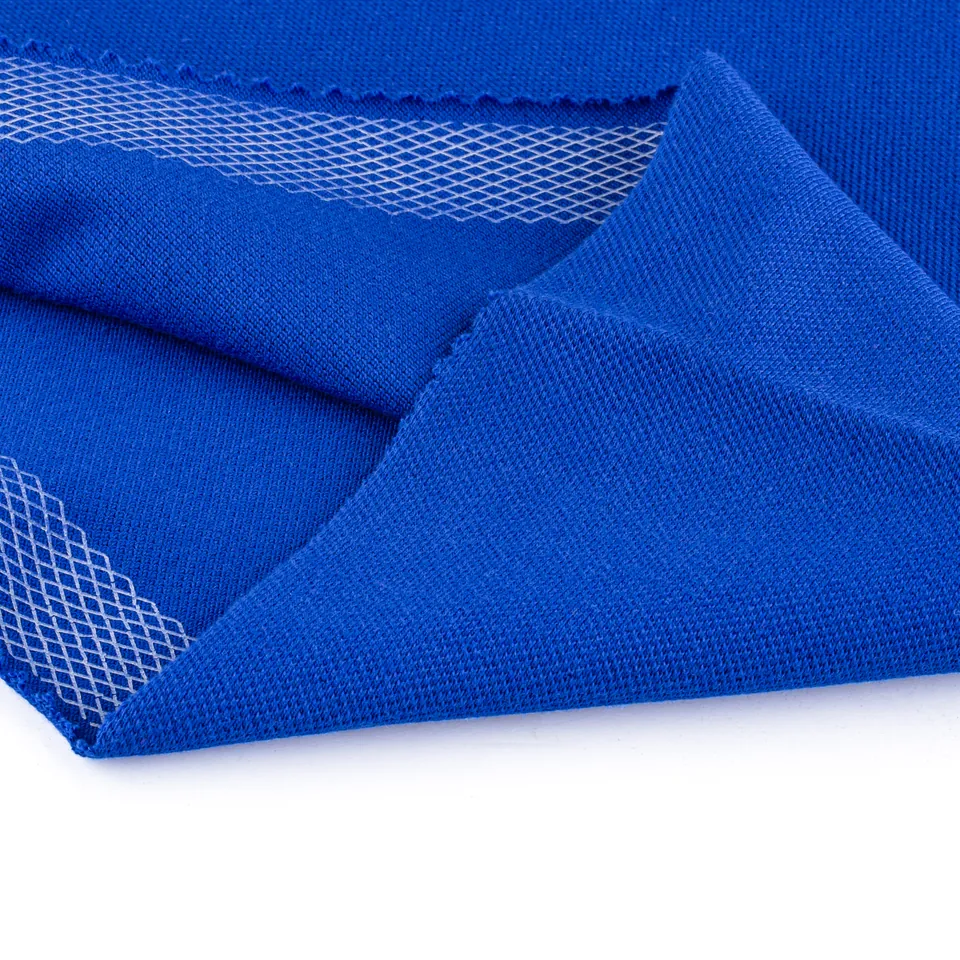
PQ-501 is one hundred percent combed cotton piqué, enzyme and silicone finished; IN-201 is one hundred percent combed cotton interlock, enzyme and compacted finished. Their recorded weight options are 190, 205, 220, 235 and 250 grams per square metre. Identify the actual offered option in the sample. List the collar and cuff materials separately, including any substituted sample-room components. Neither body record establishes a quantitative stretch or recovery result. Keep that distinction when interpreting a sleeve that fits satisfactorily in one prototype.
Separate sleeve length from cuff restraint
Measure the sleeve using agreed points, then inspect it on the wearer with the wrist relaxed and elbow bent. If the cuff rides upward, ask whether the issue comes from sleeve length, pitch, ease or the way the cuff grips. A cuff that is tighter than the intended production component can change the observed result. Try the responsible pattern or component revision in a controlled way and record it. Avoid lengthening every sleeve immediately, since that may create excess fabric at rest without resolving the actual restriction.
Check wrist access and any opening construction
Observe dressing through the intended cuff arrangement without forcing an unsuitable sample. A closed cuff, buttoned cuff and open hem are different development choices; assess the one actually specified. If the design includes a wrist slit, examine its reinforcement and the seam transitions when the elbow bends. Coats distinguishes seam arrangement and stitch selection, so describe the complete assembly rather than recording only a stitch name. Any discomfort or distorted opening should lead to an identified revision, not an unsupported claim that one cotton construction is inherently better for every wearer.
Coats: Seam Types — Seam arrangement and stitch selection are distinct assembly descriptors. The cuff-access observations are editorial guidance and do not prescribe an approved sewing specification.
Review collar balance while the sleeves are active
Reach forward and look at the shoulder, upper chest and placket at the same time. A sleeve-pattern problem can pull the shirt body and make the collar appear unsettled. Ask the maker to distinguish that interaction from a collar-component issue before changing both. Assess the opening with the intended buttons fastened and unfastened, then inspect the placket's lower junction. Keep the fit comments tied to particular positions and pattern references. Do not rearrange the shirt between photographs without noting it, since styling can hide the relationship being investigated.
Reassess the whole sleeve after documented care
Use the procedure and measurement conditions agreed with the quality team, retaining the pre-trial dimensions and component references. Check sleeve length, twist, elbow appearance, cuff shape and the relevant seams afterwards. CottonWorks describes testing and evaluation of cleaning-related appearance rather than a single universal visual judgement. Request the evidence required for the actual programme and agree its acceptance criteria. An ordinary fitting after one development trial does not substantiate a product claim of permanent cuff recovery, pill resistance or a particular dimensional-change limit.
CottonWorks: Quality Testing — Quality evaluation includes cleaning-related appearance assessment. The source does not supply permanent recovery, pilling or dimensional-change guarantees for either body material or the finished cuff assembly.
Keep an accountable sleeve approval record
Close each issue with the observed problem, proposed alteration and result of the revised sample. Show whether a change affected pattern, body article, offered weight, cuff or sewing construction. Preserve the accepted polo with its full component schedule, measurement sheet and relevant care observations. When purchasing proposes a replacement wrist component, repeat the checks that depend on it rather than approving it from colour alone. The final decision should state which parts are accepted and which still require technical evidence, avoiding a blanket sign-off based on the main fabric cutting.
Technical background and scope
This is a structured editorial draft. Garment-specific development advice is paired with existing catalogue records; compatibility must be established by sampling. AL KUMAŞ supplies fabric. Cutting, sewing and finished-garment production are separate unless explicitly agreed.