




Choose how the short flare belongs to the upper body
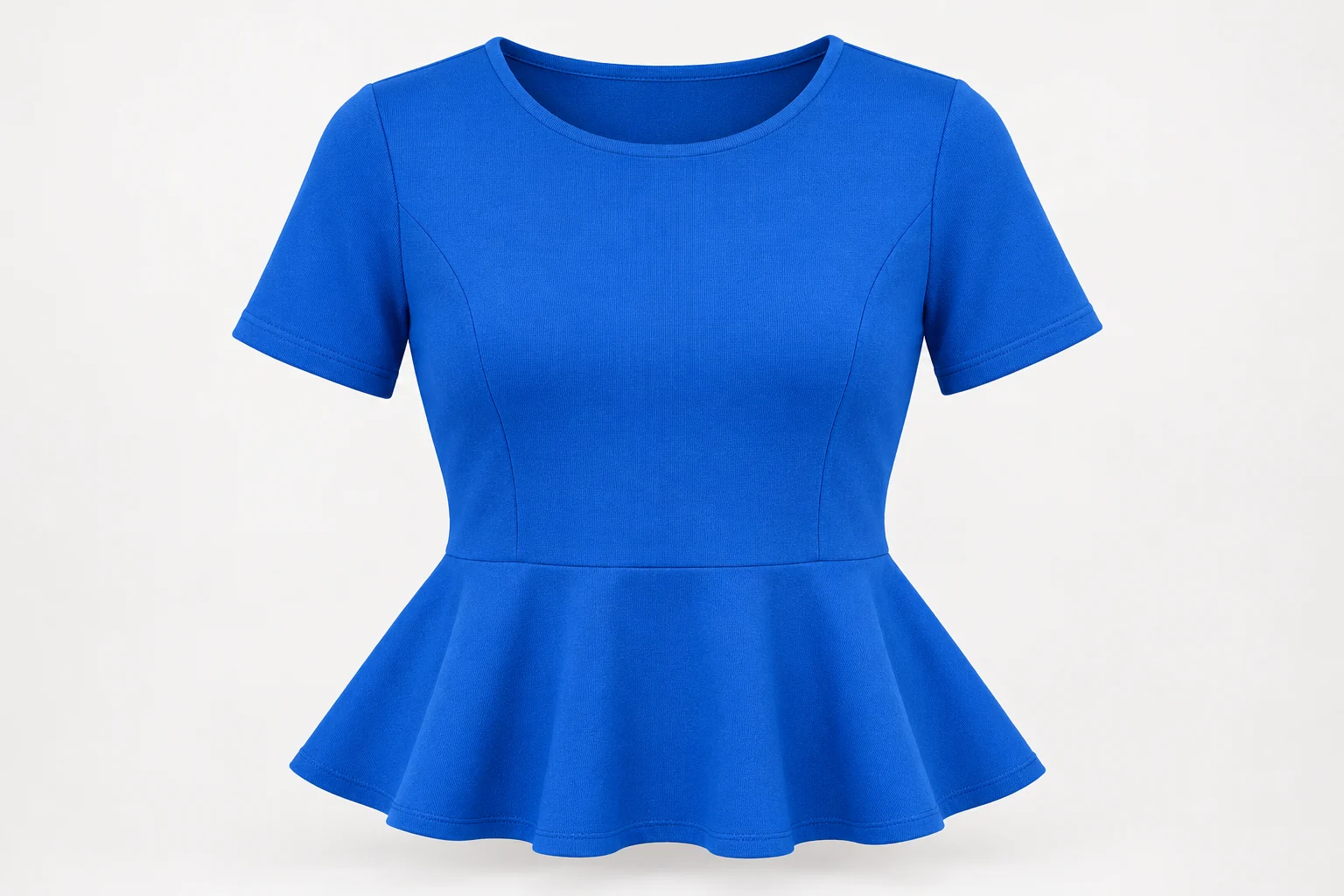
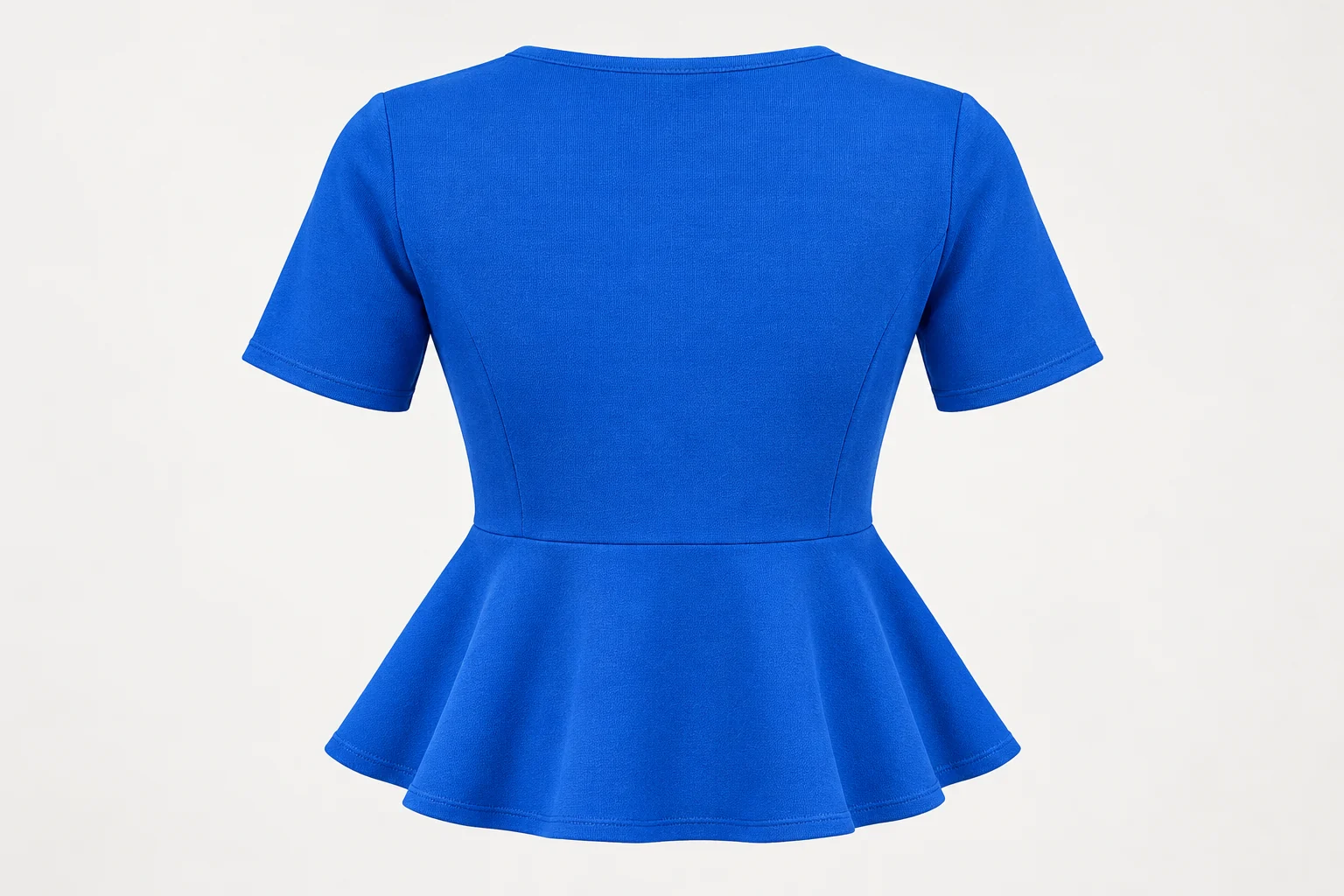
A peplum top joins a shaped upper body to a short flared lower section, creating an outline that interacts with the hip and the intended lower garment. Draw the attachment height, finished peplum length and desired projection at front, sides and back. Do not assume the design needs the same volume everywhere. Establish whether fullness comes from gathering, shaped cutting or another specified method. The material comparison should assess that actual short flare, not borrow a skater dress's longer skirt outcome or treat every peplum as a decorative strip added to an already approved bodice.
Compare cotton-elastane jersey and cotton interlock honestly
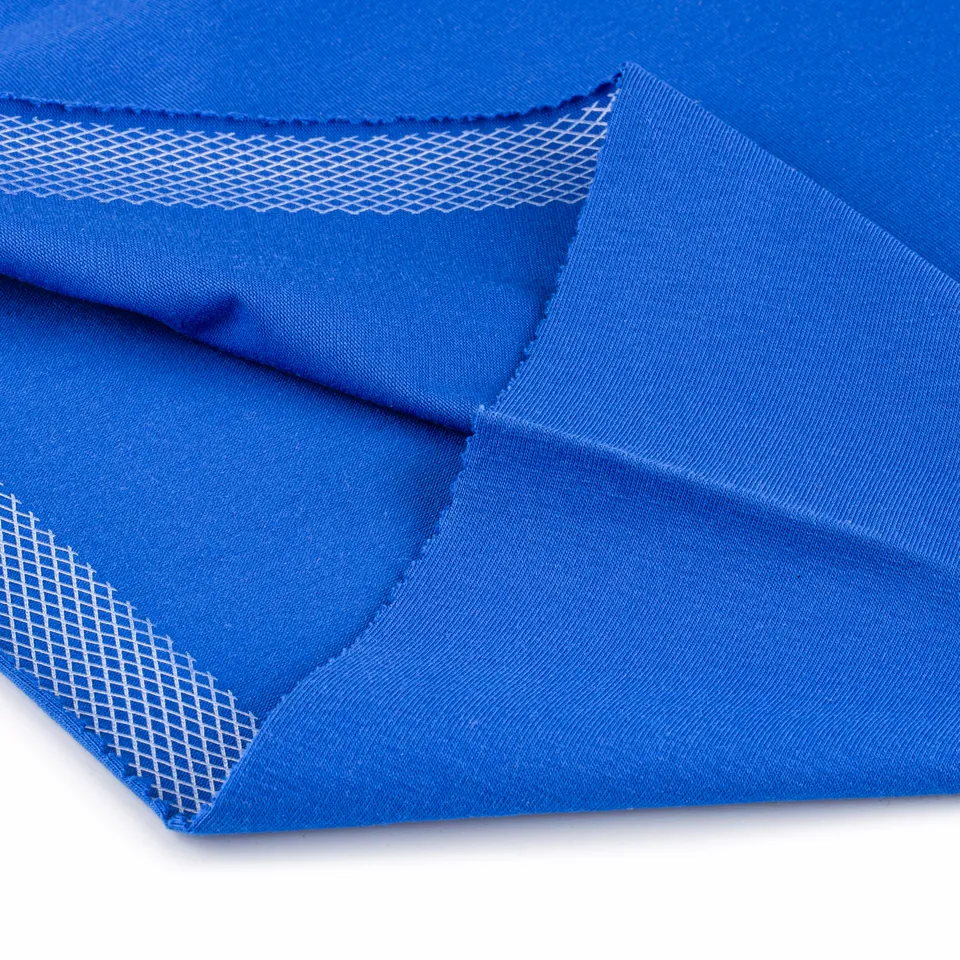
SJ-102 and IN-201 offer different constructions, fibre proportions and weight choices, although both carry the Enzyme + compacted label. Request actual offered versions and document the pattern and assembly used in each sample. A common finish name does not establish equal support, fall or dimensional behaviour. CottonWorks includes final fabric properties within garment fitting, supporting a complete upper-body-and-peplum comparison. Ask what the trial is intended to resolve and avoid promising that interlock automatically projects the flare or that elastane automatically keeps the upper body in the desired position.
CottonWorks: Designing Knit Textiles — Final material properties are assessed within garment fitting. The short hip-level flare and lower-garment comparison are original design-development guidance, not measured peplum projection or a guarantee for either cotton route.
Make fullness distribution part of the material trial
If the design uses gathers, show where they are intended and whether any region should remain comparatively flat. Ask the maker to develop that distribution on the actual material rather than applying one generic fullness ratio around the entire join. A shaped-cut flare needs its own panel proposal instead of being described as gathers without sewing. Compare the complete lower outline over the intended lower garment, noting whether volume at the sides and back matches the drawing. The buyer is selecting a specific silhouette, not a universal property of a cotton fabric.
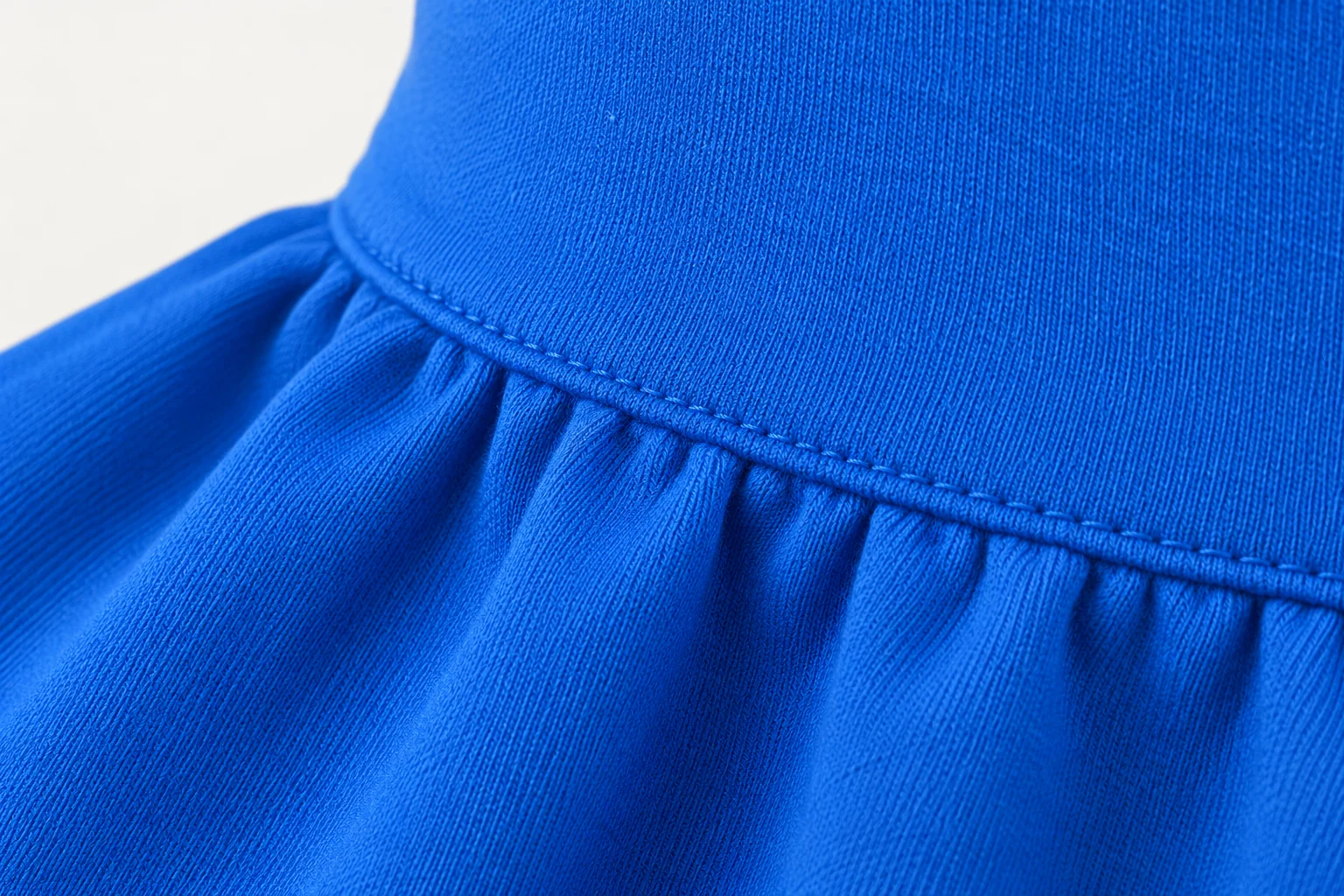
Assess seam build-up without confusing gathers and defects
Review the attachment from the face and underside, including how the intentional lower fullness meets the upper body. Distinguish the gathers the designer requested from unintended distortion in the upper panel or seam. Coats describes several material and assembly contributors to puckering, supporting investigation rather than immediately changing fibre or increasing support. Ask the maker to identify a controlled correction where needed. A heavier sample is not automatically a better construction, and a smoother seam is not a complete success if it removes the intended peplum volume or changes the attachment height.
Coats: Eliminating Seam Puckering — Puckering can involve several material and assembly causes. The guide distinguishes designer-requested gathers from unwanted distortion and does not prescribe a universal correction or machine setting.
Test the short flare while sitting and returning to rest
Observe the wearer standing, sitting and making a relevant reach, then returning to a neutral position. Look at where the peplum settles around the hip and whether the upper body and attachment remain as the design intended. Keep the reference lower garment identified; an outline accepted over one waistband is not a guarantee for every outfit. If the lower section catches, projects differently or pulls the upper body, ask the technical team to assess geometry, fullness and construction before blaming a material label. These are design-development observations, not formal drape or recovery measurements.
Catalogue starting points
The SJ-102 component proposal can reference 95% cotton 5% elastane single jersey, 170, 180, 190, 200, 210 g/m² and Enzyme + compacted; the IN-201 alternative references 100% combed cotton interlock, 190, 205, 220, 235, 250 g/m² and Enzyme + compacted. The shared listed 190 g/m² and finish name do not make the routes equivalent in a gathered or shaped peplum. Confirm the actual offered versions and usable widths. Neither record contains a completed short-flare, attachment-bulk or garment-care result, so keep those outcomes within the actual sample assessment.
Select the upper body and short flare together
Retain the chosen article, attachment height, peplum length, fullness method and distribution with the complete reference top. Include the seam construction, inside view and intended lower-layer context. State which representative sizes and observations were accepted and what evidence remains open. If a later proposal changes the lower panel or its gathering, identify which garment and costing decisions need another review. The material choice should explain how this actual top creates its intended hip-level silhouette, rather than assuming that an accepted upper-body cutting qualifies every short flare attached to it.
Technical background and scope
This is a structured editorial draft. Garment-specific development advice is paired with existing catalogue records; compatibility must be established by sampling. AL KUMAŞ supplies fabric. Cutting, sewing and finished-garment production are separate unless explicitly agreed.