




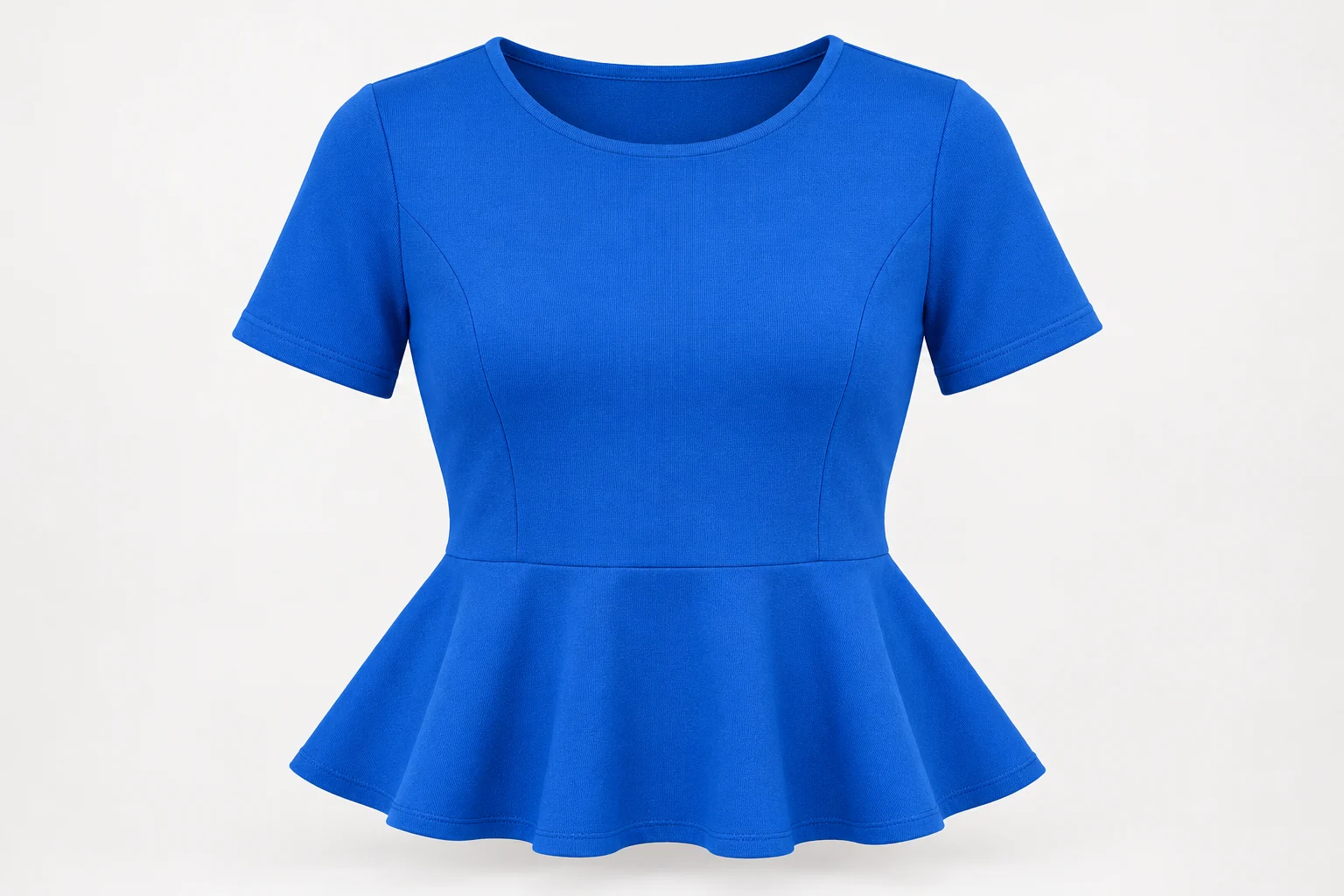
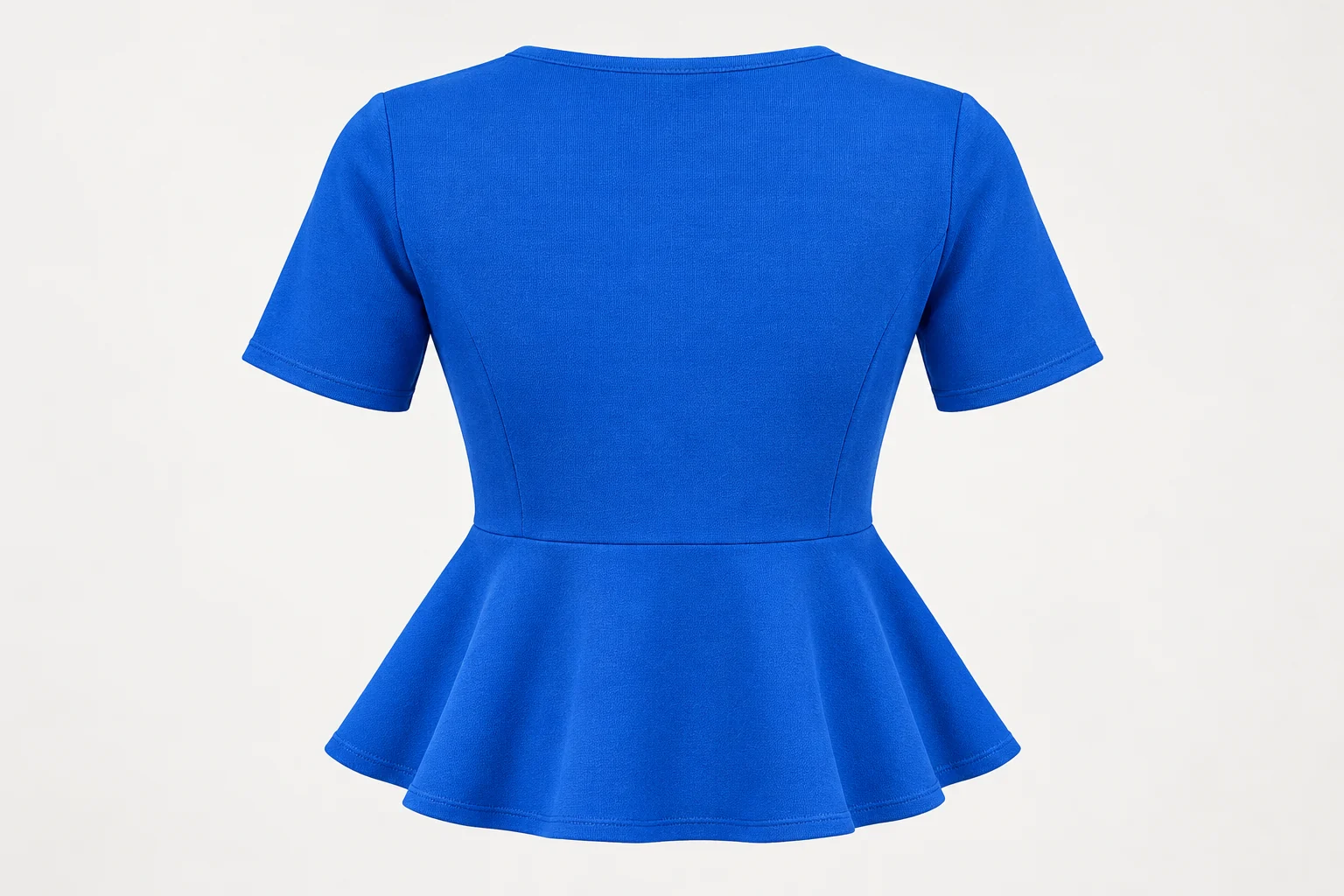
Compose the colourway around a short hip-level flare
A peplum top combines a shaped upper region with a short lower section whose folds can concentrate a repeat or alter a colour block's appearance. Show the complete top over the intended lower garment in the design brief. Decide whether the attachment line should disappear, divide two colours or interrupt the image deliberately. A dress graphic cannot be transferred simply by shortening its skirt area, because the visible role and position of the peplum are different. The designer should choose what the short flare contributes to the outfit before colour and artwork approval begins.
Choose how pattern density changes across gathered regions
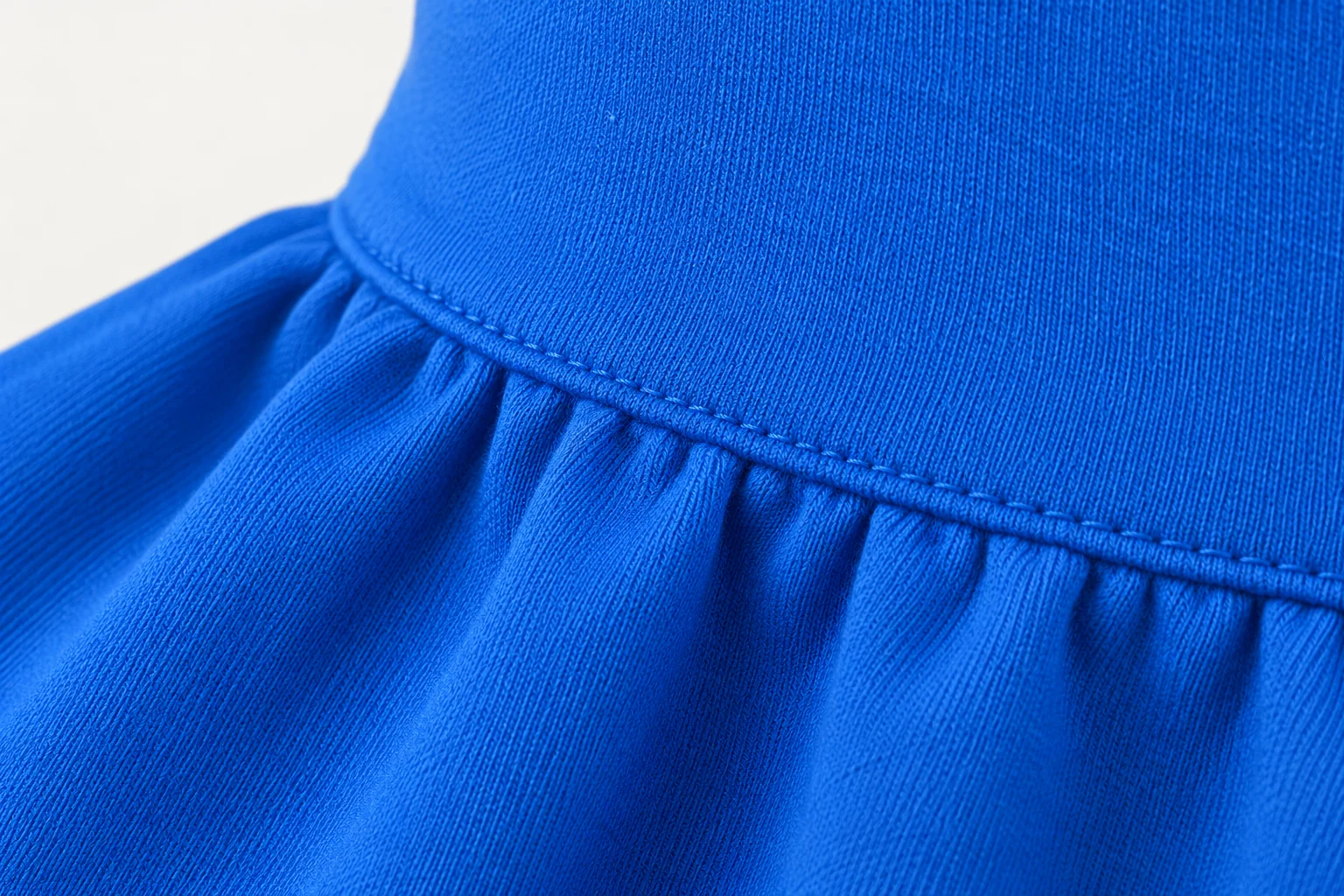
If gathering is specified, review the actual repeat or motif scale in the developed fullness, not only on flat cloth. Decide whether a denser appearance is welcome or whether recognisable shapes need another arrangement. Where some regions remain flatter than others, show that distribution to the designer and cutter. A global instruction to match the print cannot explain the result on a gathered edge. For a shaped-cut peplum, assess its actual panels separately rather than pretending that an ungathered flare has the same artwork distortion or cutting requirements.
Resolve borders at the peplum hem and side junctions
If a lower border is part of the design, specify its relationship with the finished hem and the lower-panel direction. Ask the maker and cutter whether the proposed shape and joins can deliver that effect. A curved shaped panel and a rectangular gathered strip may need different artwork or placement decisions, so request a relevant demonstration before promising continuity. For a plain colour with no border, omit unnecessary matching restrictions. The approval should describe the actual peplum concept, including any accepted visual breaks, rather than a collection of inherited instructions from another garment.
Review the upper-to-lower shade relationship in the assembled top
View the offered materials and finishes together under agreed conditions, then inspect the worn attachment and folds. If upper body and peplum use one material, record that identity; if another substrate or contrast colour is proposed, give it a separate reference. Do not describe a fold-related visual difference as a dye mismatch without technical and colour review. The intended lower garment also forms part of the visual context, but its presence does not change the governing physical standard for the top. Keep the accepted combination identifiable when the collection later changes styling.
Qualify decoration on the actual offered route
CottonWorks relates material characteristics to textile-print choice and appearance. Request the proposed decorator's trial on the actual SJ-102 or IN-201 version and finish rather than transferring approval because both contain cotton. A shared finish name does not confirm a printing service or an equivalent decorated result. Review any graphic that approaches the attachment in the assembled fullness, keeping visual acceptance separate from required care or fastness evidence. If the lower panel changes method or distribution, identify which artwork decisions need another relevant sample before retaining the previous colourway approval.
CottonWorks: Cotton Textile Printing Basics — Material characteristics influence printing choices and appearance. No mill decoration service, border continuity or tested decorated peplum result is inferred from the source or shared finish name.
Catalogue starting points
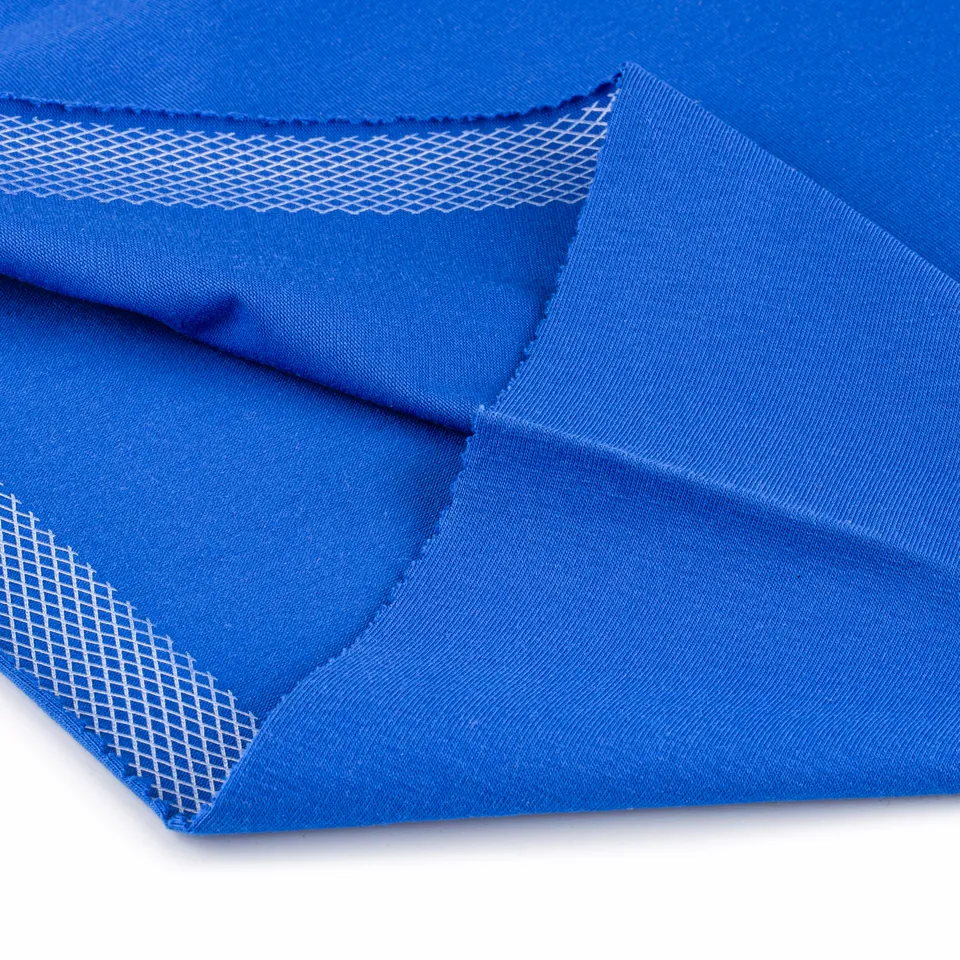
SJ-102 is recorded as 95% cotton 5% elastane single jersey, 170, 180, 190, 200, 210 g/m², Enzyme + compacted. IN-201 is recorded as 100% combed cotton interlock, 190, 205, 220, 235, 250 g/m², Enzyme + compacted. These descriptions identify body candidates, not a tested print, attachment shade relationship or full peplum colourway. Confirm the actual offered versions used above and below the join. Any separate lower material or finish needs its own identity instead of inheriting all visual approval from the upper-body article.
Release the colour with the actual fullness instruction
Keep accepted physical references, artwork revision, panel layout, fullness distribution and relevant assembled views together. State whether border alignment or motif interruption is deliberately permitted, and which representative sizes or lower lengths were reviewed. A later change from gathers to shaped flare can alter the visible design even if the fabric and colours stay the same. Revisit those affected views instead of carrying approval forward from a flat cutting. The production target should make the peplum's short, outfit-level visual role clear without promising an untested decorated-garment performance.
Technical background and scope
This is a structured editorial draft. Garment-specific development advice is paired with existing catalogue records; compatibility must be established by sampling. AL KUMAŞ supplies fabric. Cutting, sewing and finished-garment production are separate unless explicitly agreed.