





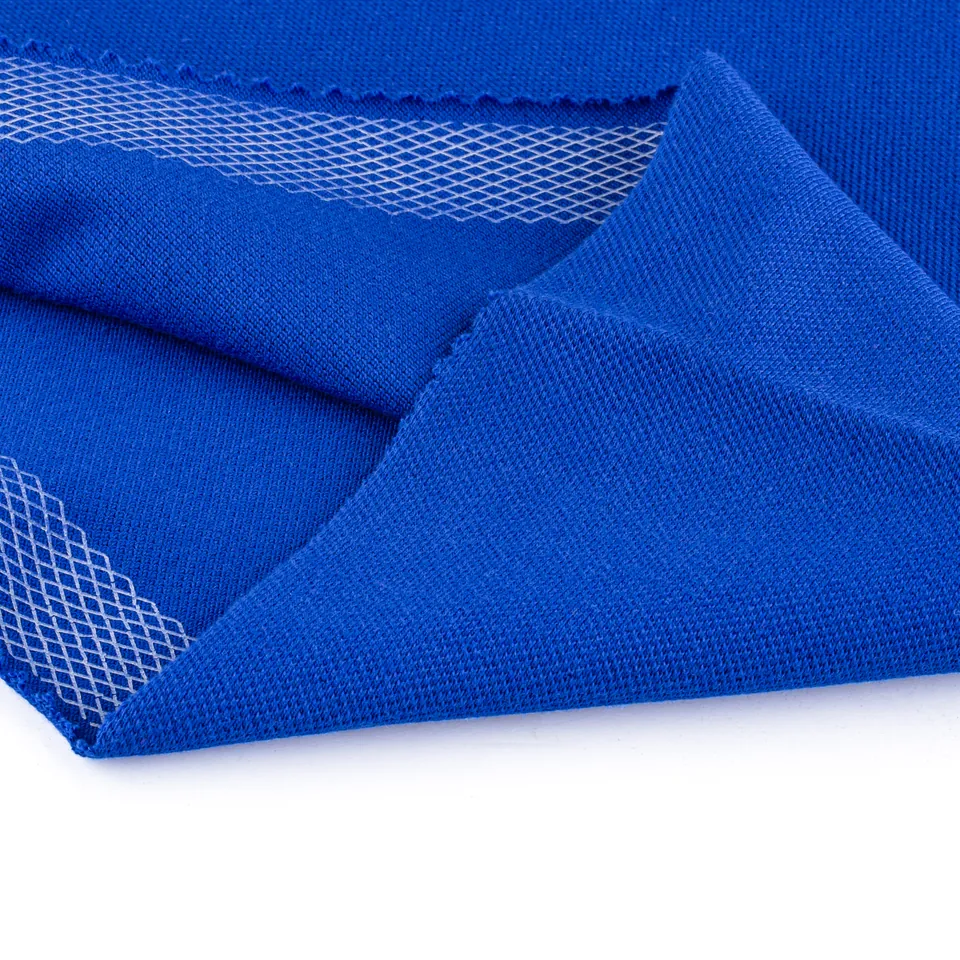
Request a supported-front architecture proposal
Ask the maker to return a full shoulder-to-hem front drawing and a representative sewn front showing how the opening and patch-pocket regions are supported. The drawing should identify the body, any internal material and the actual attachment operations, not merely list a piqué article and matching buttons. CottonWorks describes shaping materials as internal components used to support key garment areas. The requested proposal applies that idea to this outer front; it is not a published reinforcement recipe or permission to assume carrying strength. State the underlayer and actual pocket-use intention before the construction is developed.
CottonWorks: Garment Construction — Shaping Materials — Internal shaping materials are used to support key areas. The supported-front drawing, representative assembly and material/operation comparison are original buyer decision aids, not a published construction formula, confirmed supplier capability or carrying-strength guarantee.
Keep both real textured body candidates in the proposal
The body routes are PQ-501, 100% combed cotton piqué, enzyme and silicone finished, at 190, 205, 220, 235 and 250 g/m²; and TX-801, Ottoman knit in 75% cotton, 20% polyester and 5% elastane, compacted and silicone finished, at 250, 270, 290, 310 and 330 g/m². Ask which exact offered option the maker uses. A common 250 g/m² record does not make them equal in front behaviour, and the heavier route does not automatically eliminate support. Any separate reinforcement needs its own identity and trial rather than be treated as a property already supplied by the body.
Ask where the proposed support begins and ends
Have the maker mark support boundaries and explain why each region is included. A local patch around an attachment, a continuous front strip and a broader supported panel answer different construction questions. Request the relevant sewn area with surrounding body visible so the buyer can inspect the transition instead of only a neat isolated band. If the maker changes the pocket or opening location, show that change on the same front drawing. The reply should make the actual material arrangement understandable without the buyer prescribing an unverified width, adhesive process or sewing recipe.
Require an explanation of the used-pocket front response
Define representative pocket contents where carrying is part of the design, with dimensions and mass supplied for the observation. Ask the developer to show where the front pulls, or remains as intended, and how that relates to its actual support proposal. The question concerns the whole front relationship, not just whether the patch seam looks intact. If a correction is proposed, identify whether it changes support, pocket geometry, body ease or another operation. Do not accept an unexplained heavier article as a universal cure or a successful informal observation as a strength rating.
Ask for the material and operation difference between viable support routes
Once the maker has identified a useful alternative, request the actual body pieces, support pieces, patch components and opening operations for each route. Obtain confirmed usable widths and formats where materials enter the marker. Ask what changes in cut quantity and what changes only in assembly cost. A broader support piece can affect handle and care as well as purchasing demand, so its acceptance needs the representative front, not just a lower unit price. Keep those consequences visible before combining separate material quotations into an apparently complete overshirt offer.
Make the cared-front proposal answer the same architecture question
Request an agreed care review of the actual supported front and patch assembly with its component identities retained. Ask whether the support boundaries, pocket opening and front line remain acceptable, and have a qualified provider define any required measured assessments. If the maker replaces or resets a component in the sample, require the reason and proposed production method. The output should distinguish a genuine construction correction from a repaired display piece. Do not let a report for the body fabric alone become approval of the complete supported front or an unsupported protection claim.
Quote the accepted architecture rather than a texture description
Attach the accepted body option, offered weight, finish, pattern, support drawing, actual patch and opening operations to the request for current supply terms and the real colour and size demand. Keep support and component quantities separate where purchased separately. Ask for relevant evidence within its actual scope and identify remaining uncertainty. A later material, reinforcement or attachment substitution should reopen the affected front question. The commercial specification should reproduce an inspectable knit outer layer, without relying on the piqué name or a jacket-like photograph to imply untested carrying or protective capability.
Technical background and scope
This is a structured editorial draft. Garment-specific development advice is paired with existing catalogue records; compatibility must be established by sampling. AL KUMAŞ supplies fabric. Cutting, sewing and finished-garment production are separate unless explicitly agreed.