





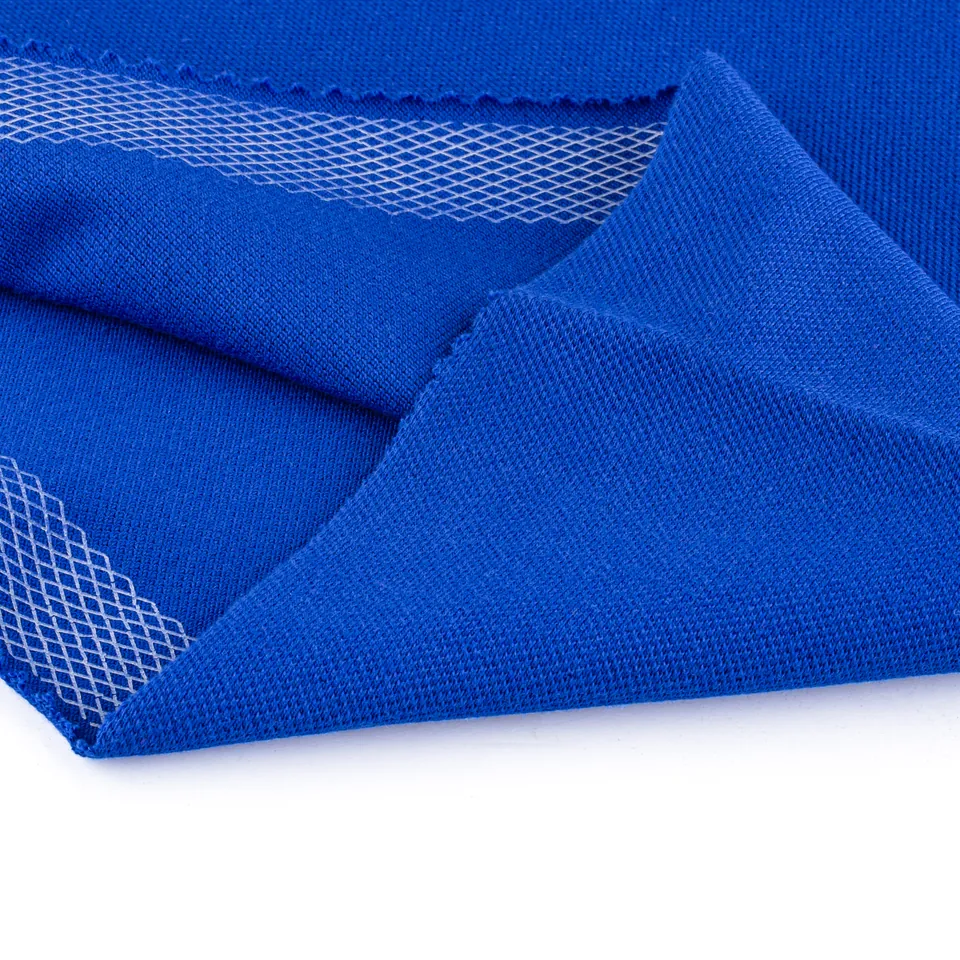
Cost the supported front rather than the textured shell alone
An overshirt estimate should identify the body pieces, full opening construction, patch pockets and actual support materials before a complete price is claimed. CottonWorks distinguishes shell, findings and shaping components in garment construction. Ask the maker which proposed support regions are cut from separate material and which are body folds or facings. A body-only quantity can be useful when labelled, but it should not be compared with another proposal that already includes the developed front. The purchasing question concerns a viable outer-layer assembly, not just a heavier-looking textured fabric.
CottonWorks: Garment Construction — Components and Shaping Materials — Shell, findings and internal shaping components are distinct construction inputs. Supported-front costing is an original application; support-area and mass examples are explicitly hypothetical, not recommended reinforcement dimensions, offered materials or performance results.
Attach exact weights and finishes to both routes
PQ-501 lists 190, 205, 220, 235 and 250 g/m² in 100% combed cotton piqué with an enzyme and silicone finish. TX-801 lists 250, 270, 290, 310 and 330 g/m² in 75% cotton, 20% polyester and 5% elastane Ottoman knit, compacted and silicone finished. Request exact offered sample and quote options. Equal nominal weight at the shared 250 g/m² point does not establish equal support needs, and a heavier TX-801 option is not automatically a substitute for reinforcement. If the developed patterns differ, preserve that distinction in the cost comparison.
Show the consequence of local versus broader support
For an illustrative area comparison, suppose two local support pieces total 0.024 square metres, while an alternative broader front-support proposal totals 0.120 square metres. At a hypothetical support-material weight of 80 g/m², their cut-area masses would be 1.92 and 9.60 grams, a difference of 7.68 grams before other considerations. These are not recommended support dimensions, offered materials or performance results. The example separates one material input from the actual construction decision. Ask the maker to calculate real patterns, supply quantities and operations instead of pricing support through an unexplained percentage.
Include each patch as a cut piece with its actual direction
Provide the full patch-pocket pattern, including the intended opening construction and allowances, and identify whether self fabric or another material is used. Show the body surface direction and any matching constraints. A pocket that fits neatly in a marker gap may still be unacceptable if its direction changes the intended texture or extension relationship. Ask the cutter to use the approved pocket and support pieces, not only their visible finished area. Keep component demand by actual size or style variation identifiable where the design changes across the programme.
Obtain width for the long front and facing layout
Ask for usable finished width, supply format and the measurement convention behind each offered body dimension. Give the cutter the complete front, back, sleeves and actual facing or band shapes with the intended size ratio. Any separate support material needs its own width and direction assumptions. Do not treat the broad outer layer as a scaled polo-shirt marker. A full front and long facing can constrain the arrangement differently from a short neck opening, so request the layout reference that actually supports the claimed consumption.
Separate assembly operations from material consumption changes
A revised pocket attachment or support operation can alter garment-making cost without the same change in body area. A wider facing or another pocket position may change both cut pieces and layout. Ask the maker to distinguish those consequences after sample review. Keep agreed dimensional allowances, marker loss and other purchasing allowances separate from intentional construction revisions. If the chosen support route still requires an offered-material trial, mark the estimate provisional rather than hide uncertainty in extra body kilograms or label the heavier article automatically ready for production.
Compare complete front-architecture cost proposals
Show article, exact offered GSM, finish, confirmed width and format, pattern, size ratio, pocket pieces, support material and opening operations beside their marker and quantity outputs. Ask for current terms, minimums and availability for the actual programme. Preserve differences between an accepted piqué route and an Ottoman alternative instead of presenting them as equivalent surface choices. The buyer should be able to trace a cost change to body, support or assembly while retaining the outer-front appearance that was reviewed. No price or material mass establishes a jacket-protection or carrying-strength rating.
Technical background and scope
This is a structured editorial draft. Garment-specific development advice is paired with existing catalogue records; compatibility must be established by sampling. AL KUMAŞ supplies fabric. Cutting, sewing and finished-garment production are separate unless explicitly agreed.