



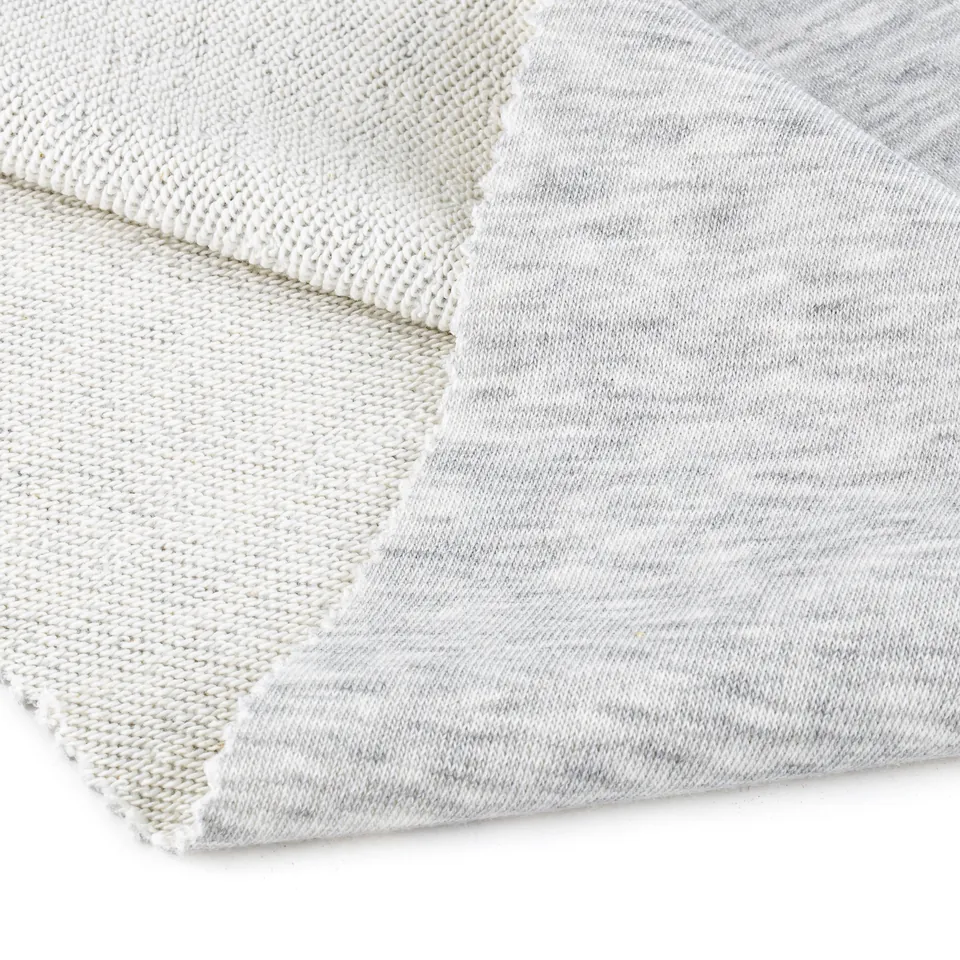
Design the inside collar as a visible colour field
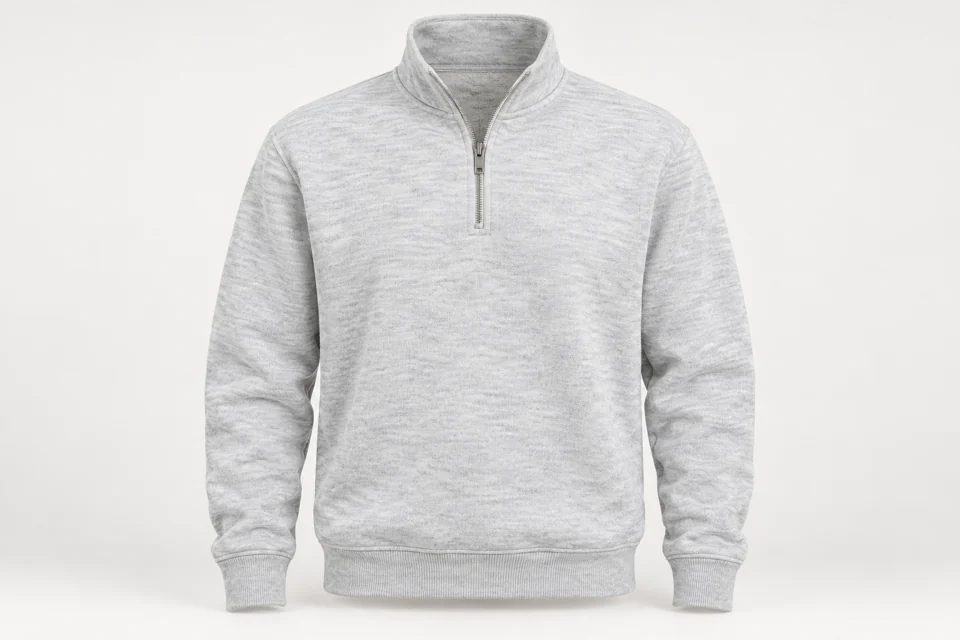
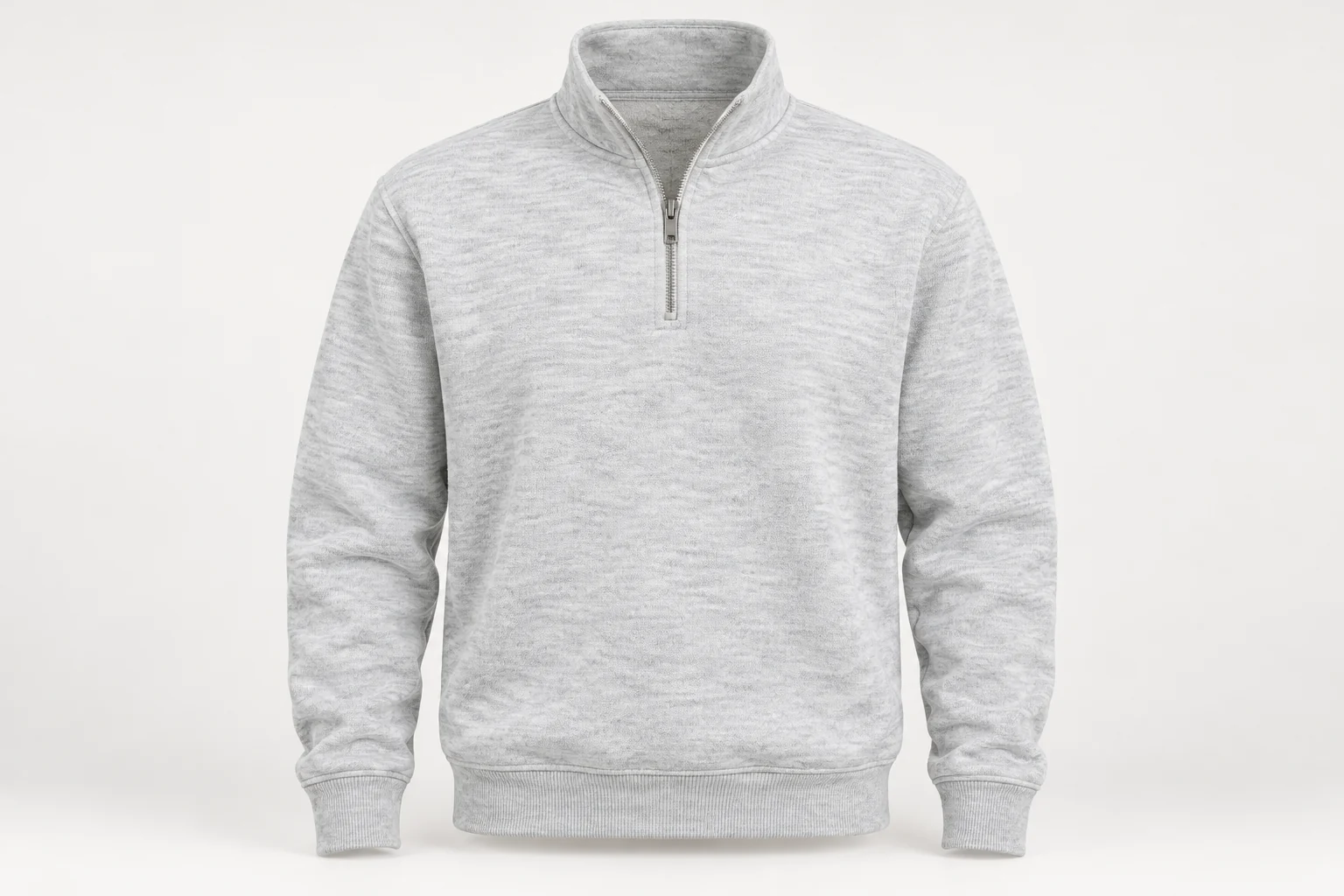
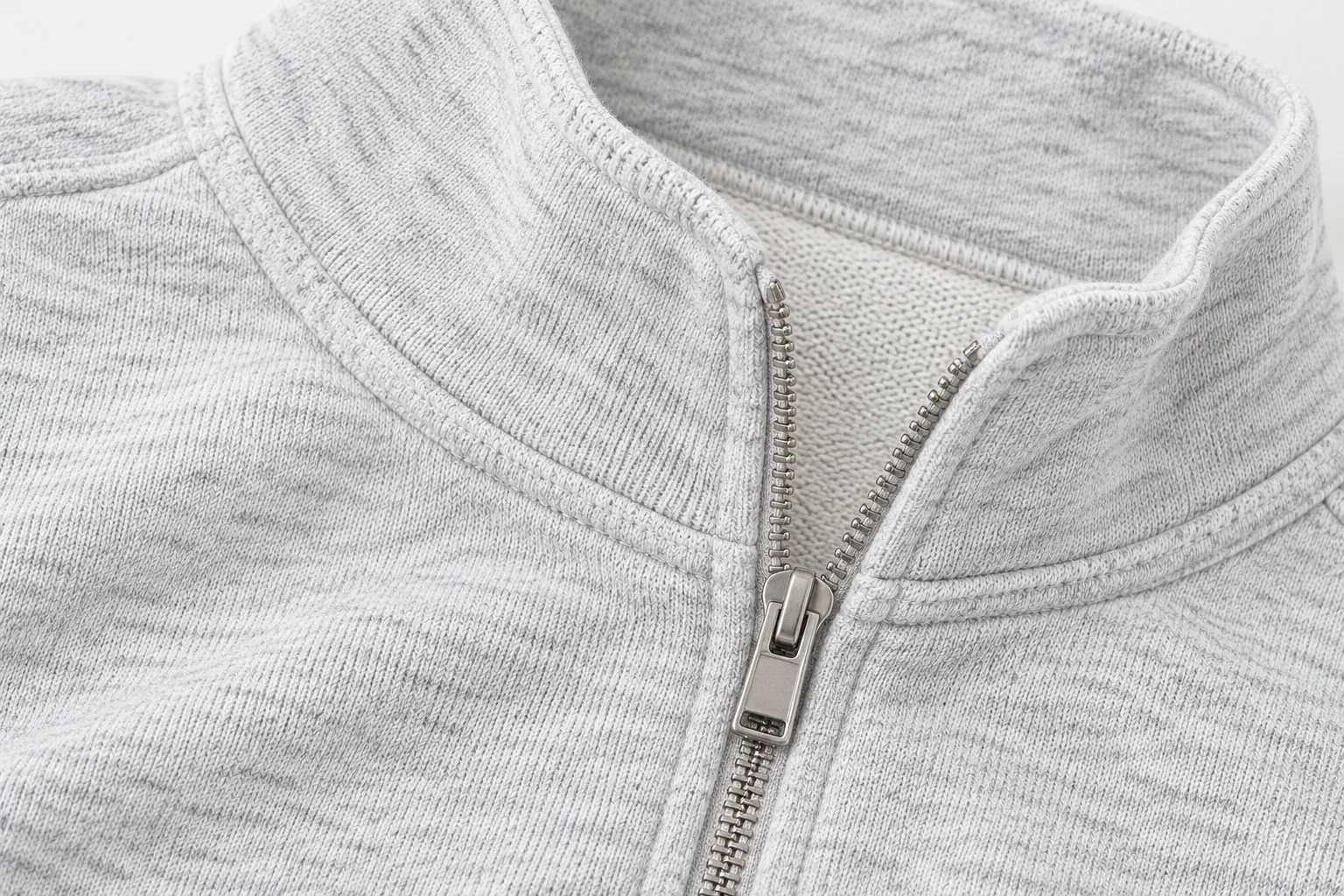
When a quarter-zip sweatshirt is opened, its collar exposes an inner surface close to the face. Decide whether that surface should match the body, contrast deliberately or use a separate material. Assess it in the folded position rather than approving the outside alone. The closed collar can show only a narrow edge of that choice, while the opened shape reveals much more. A colour combination should work in both arrangements so the garment does not depend on one carefully styled product photograph.
Request the shade against the selected unbrushed article
FT-602 lists a 70% cotton and 30% polyester three-thread unbrushed construction with compacted finishing at 300–400 g/m². FT-601 is the same recorded blend in two-thread French terry, unbrushed silicone, at 240–320 g/m². Keep the offered weight and finish identified through development. CottonWorks describes colour development against a specified substrate. That principle supports requesting a representative sample for the chosen route; it does not establish a dye recipe, a universal tolerance or an interchangeable colour approval between these two article records.
CottonWorks: Lab Dip Process — Colour development uses a specified substrate and reference. The source does not establish recipes, tolerances or transferable approvals for FT-601 and FT-602.
Review the collar, facing and fastening together
Place the actual upper-opening components beside the body sample: inner collar, outer collar, facing, zip tape and any visible puller finish. Examine the set with the neckline fastened and with the collar spread. A dark facing may become visible at the lower opening even when the upper collar looks matched. Identify intentional contrasts on the approval card so the maker does not try to conceal a design feature or copy an accidental mismatch. Photographs can document placement, but the agreed physical references should govern shade decisions. Include any neck label that becomes visible inside the opened collar in that visual review.
Mark the collar's sweep before placing chest decoration
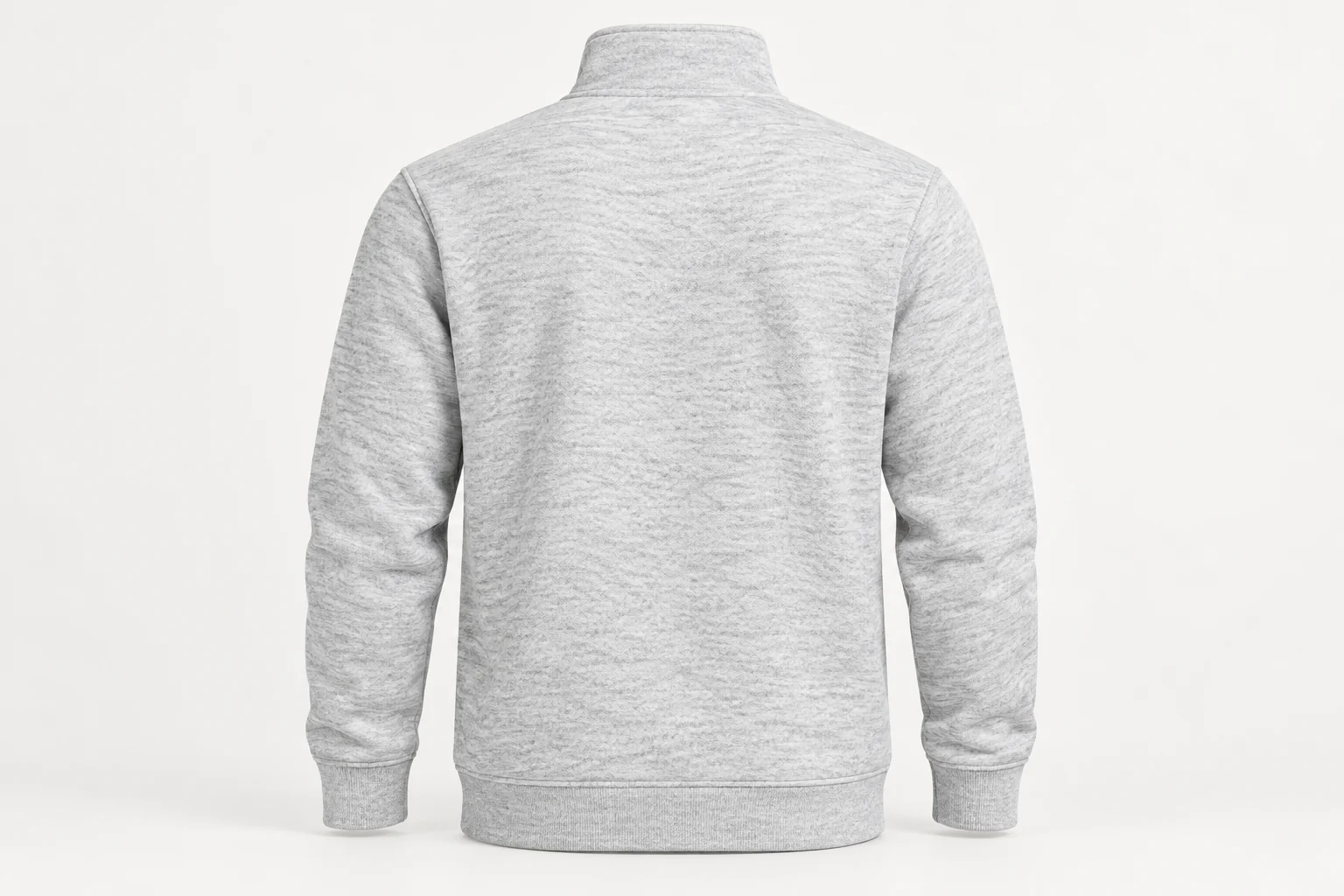
Map a small chest logo or larger graphic onto a full-size front pattern showing the partial opening and the collar in its opened position. Check whether a folded collar edge covers part of the mark or changes its visual balance. Use the actual garment size and specify the placement reference points. A logo positioned safely below the fastener while closed may still look crowded when the collar spreads. Have the designer decide which views matter, then compare representative sizes rather than assuming one layout automatically fits the whole range.
Trial the decoration without ignoring the finish
CottonWorks explains that fabric surface and fibre content influence printing choices. Ask the decoration provider to evaluate the actual offered FT material, with its finish identified, instead of selecting a process solely from a generic cotton-rich description. Where embroidery sits near the opening, include its backing and the relevant facing in the sewn trial to inspect local thickness and distortion. The catalogue establishes neither decoration compatibility nor a supplier service. Document the proposed process and its sample result before approving artwork appearance on the sweatshirt.
CottonWorks: Cotton Textile Printing Basics — Surface and fibre content influence printing choices. Decoration clearance from the folded sweatshirt collar and the proposed combined trial are editorial decisions, not confirmed supplier process capabilities.
Check shade relationships after collar folding and care
Review the opened collar, its fold and the front application after the agreed development procedure. Look for an unwanted difference between visible inner and outer surfaces or a decorated area whose handle changes the way the collar-adjacent panel falls. These observations are proposed buying checks, not a standardised fastness test. Ask the responsible technical specialists which evidence the programme needs. A visually attractive sample does not substantiate every washing, rubbing or appearance-retention claim, and an unbrushed finish description supplies none of those article-specific results.
Approve a combination with its positions documented
Retain the accepted component card, decoration version and sweatshirt sample together. Show photographs of the collar closed, partly opened and fully folded to make the intended colour presentation clear. Identify whether the cuffs and lower band coordinate with the body or with a contrast inner collar; that choice should not be inferred later from a tiny swatch. If an inner layer, facing or fastener changes, review the affected relationships again. Keep visual approval separate from the supplier's confirmation of offered quantities, costs and timing.
Technical background and scope
This is a structured editorial draft. Garment-specific development advice is paired with existing catalogue records; compatibility must be established by sampling. AL KUMAŞ supplies fabric. Cutting, sewing and finished-garment production are separate unless explicitly agreed.