




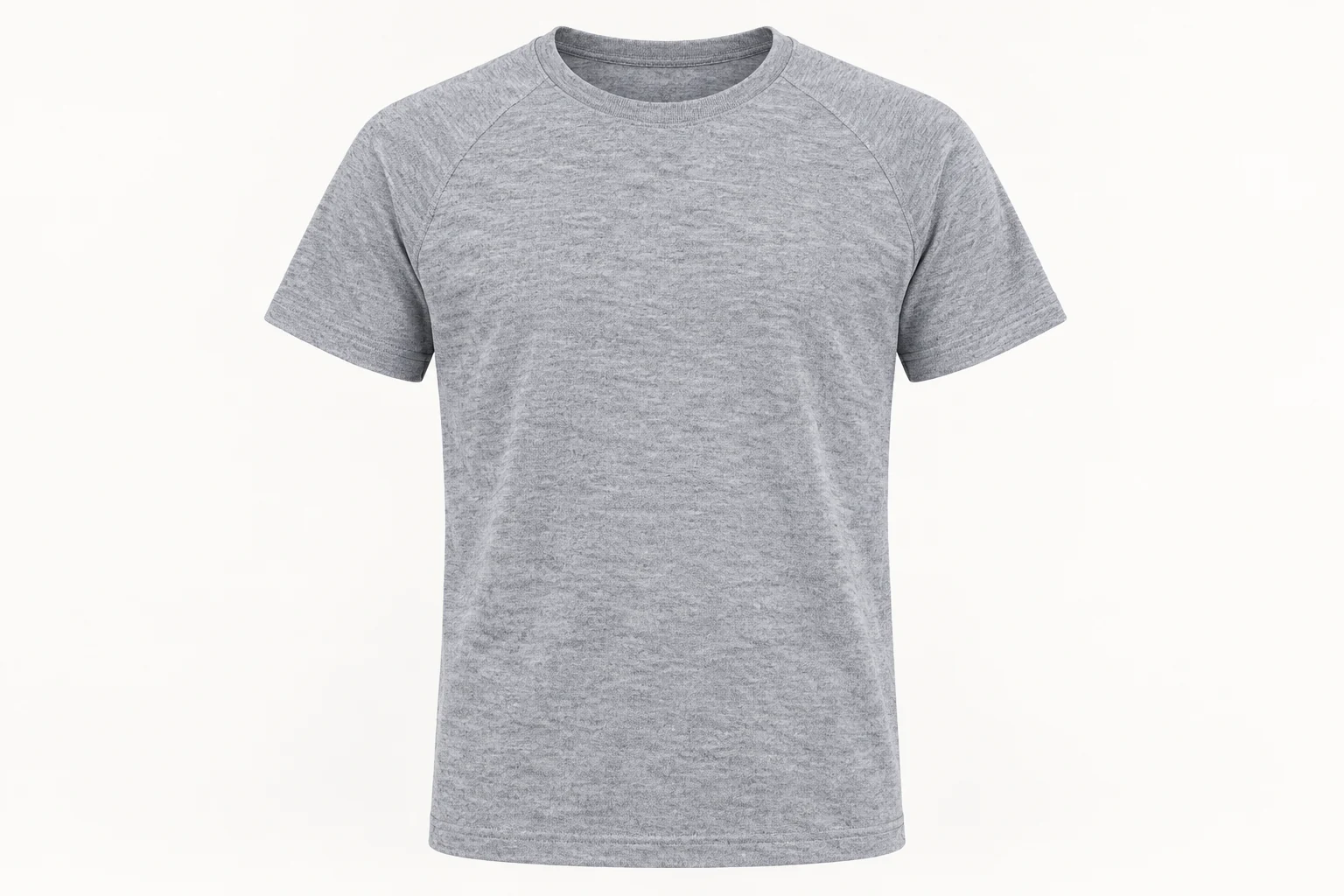
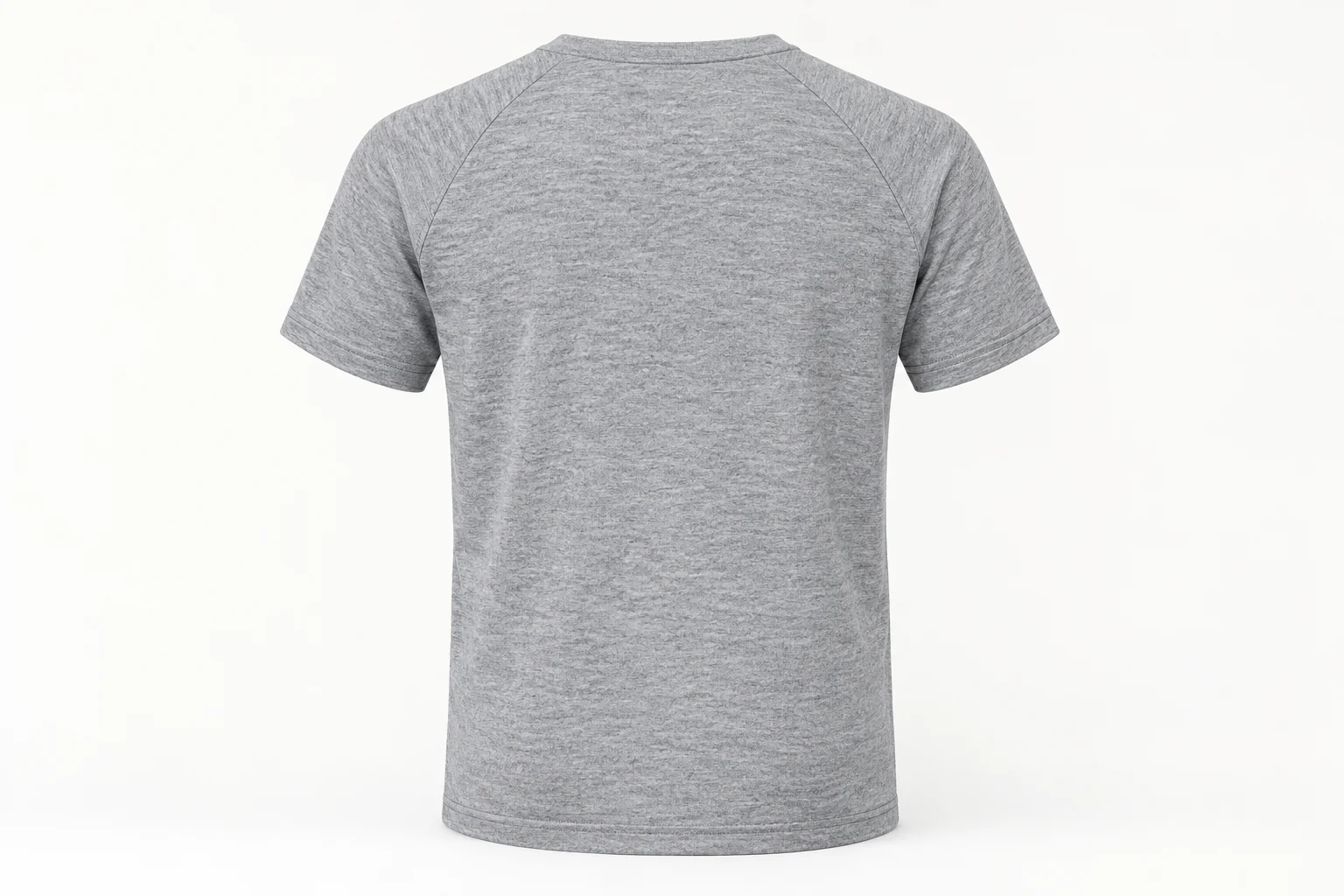
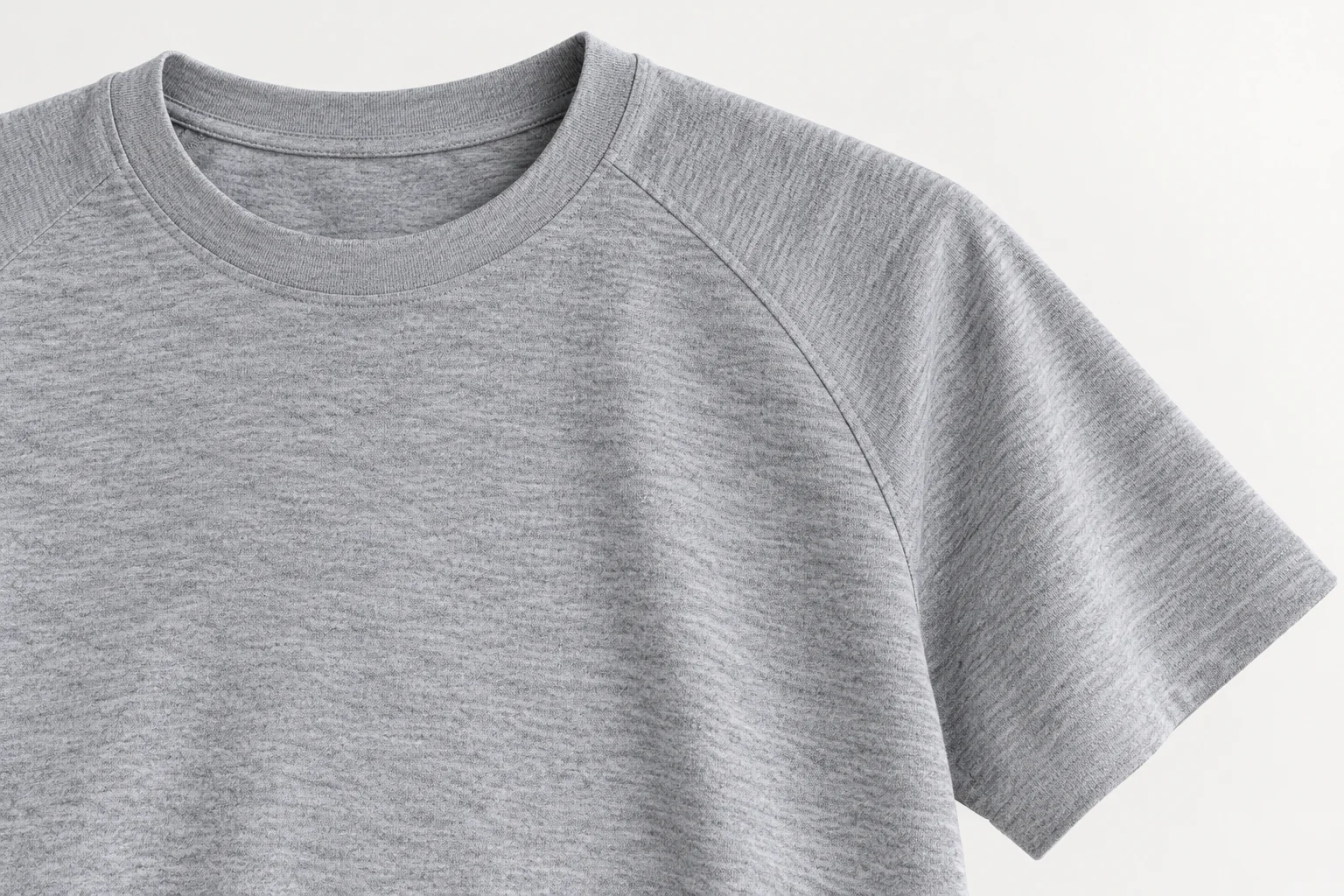
Give the diagonal joins a deliberate role in the visual
A raglan T-shirt can use the diagonal lines as quiet construction, a contrast boundary or part of a graphic composition. State which treatment is intended before approving colours or artwork. Show the front and back joins with the actual neckline, sleeve and body outlines rather than applying colours to a generic athletic shirt mock-up. The diagonal meeting the neck creates a particular visual junction that the buyer should review in the lightweight jersey sample. A design language borrowed from a sweatshirt does not settle how this offered T-shirt will appear.
Review the small colour meeting at the neckline
When sleeve and body differ, compare their actual materials beside the proposed neck component and seam thread under agreed viewing conditions. Inspect the assembled junction, not only separate colour chips. Decide whether the design intends close matching, tonal contrast or a sharp boundary. A similarly named shade on different offered articles does not by itself establish the physical result. If the maker changes the neck finish while resolving bulk, route that component back through the visual review instead of assuming the first colour approval covers every assembly alternative.
Define what happens when artwork reaches a diagonal
Show the image boundary against the actual seam allowances and finished join. Decide whether the graphic stops before the line, breaks deliberately or needs a separately developed cross-panel arrangement. For an editorial example, a word crossing from chest to sleeve may become hard to read when the arm rests, even though the flat panels appear aligned. Have the designer and maker choose the intended worn result before asking the decorator to pursue perfect flat matching. Do not promise continuity from the artwork file alone or assume the same instruction works for every graded sleeve shape.
Assess visible stitching as an actual sample feature
If a contrast stitch is part of the design, identify the proposed face appearance and inspect it on the offered cloth. A drawn thin line cannot show thread coverage, local folds or the way a diagonal sits on the wearer. Coats identifies several possible contributors to puckering, supporting investigation if the visible line waves rather than an automatic conclusion that the thread colour or body fabric is wrong. Ask the maker to propose the relevant correction. Keep that technical review distinct from the designer's separate decision about colour and visual prominence.
Coats: Eliminating Seam Puckering — Puckering can have several interacting material and assembly causes. The source does not diagnose a wavy contrast seam from a photograph or a catalogue fibre statement.
Qualify any decorated jersey at its offered finish
CottonWorks describes material characteristics as relevant to textile-print choice and appearance. Send the actual SJ-101 or SJ-102 version to the proposed decorator and ask which preparation and process can be assessed. The catalogue does not confirm a custom decoration service or a tested graphic across a raglan seam. Review the sewn and worn arrangement as well as any colour cutting, especially where the image approaches the neck crossing. Keep the initial visual release separate from required care or fastness evidence rather than promising a permanent result from a successful mock-up.
CottonWorks: Cotton Textile Printing Basics — Material characteristics influence print-process choice and appearance. No AL KUMAŞ decoration service, cross-seam graphic capability or printed-garment performance is confirmed.
Catalogue starting points
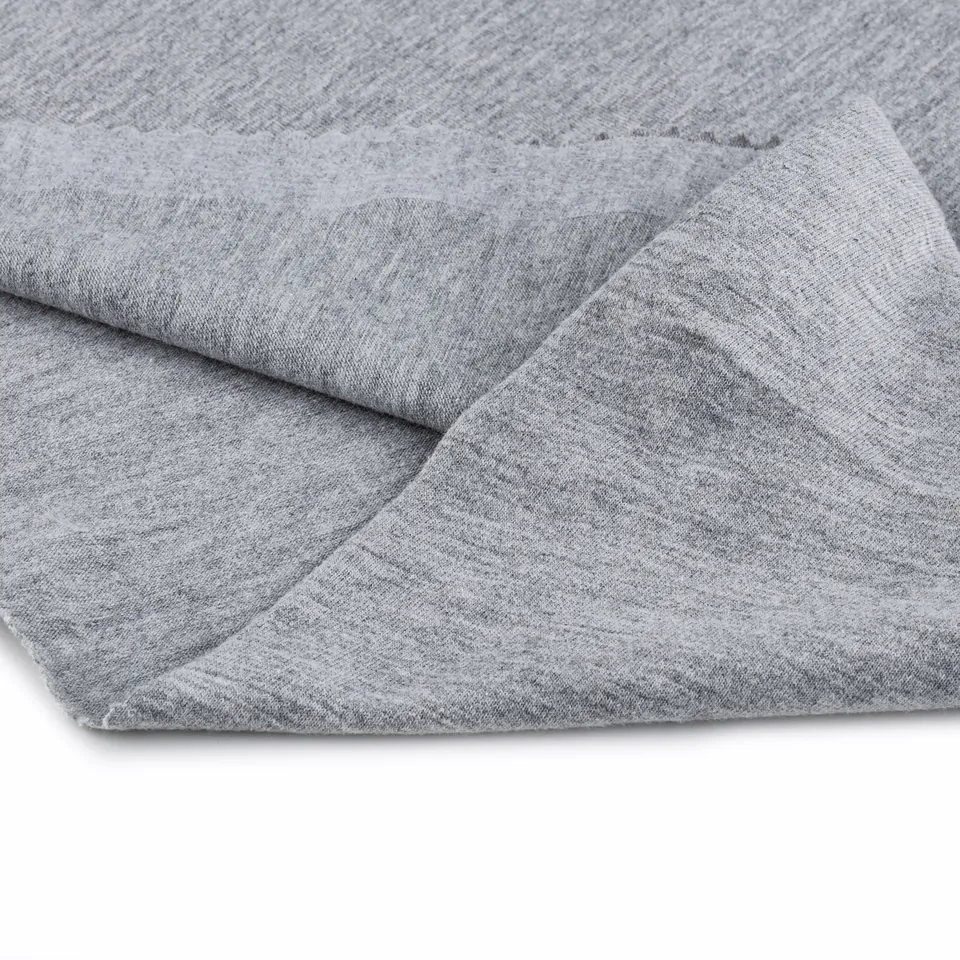
The recorded SJ-101 composition is 100% compact combed cotton, with 130, 140, 150, 160, 170 g/m² options and Enzyme + silicone. For the alternative panel material, SJ-102 records 95% cotton 5% elastane, Enzyme + compacted and 170, 180, 190, 200, 210 g/m² options. Both are single jerseys, but neither description approves a panel shade relationship, stitch appearance or decoration process. Identify the actual offered materials in the visual record. Changing a body or sleeve substrate requires a stated decision on which colour and graphic approvals remain relevant.
Release the visual at the actual seam-crossing configuration
Keep accepted panel colours, neck material, visible thread reference, artwork revision and component placement together. Include worn views with the arm neutral and in the relevant design position, identifying the sizes assessed. If the sleeve pitch or seam path changes after fitting, revisit artwork that depends on that boundary. The production target should distinguish intentional visual breaks from defects and unresolved development. That preserves a coherent raglan T-shirt design without treating a flat colour map or a heavier garment's previous approval as evidence for this jersey version.
Technical background and scope
This is a structured editorial draft. Garment-specific development advice is paired with existing catalogue records; compatibility must be established by sampling. AL KUMAŞ supplies fabric. Cutting, sewing and finished-garment production are separate unless explicitly agreed.