




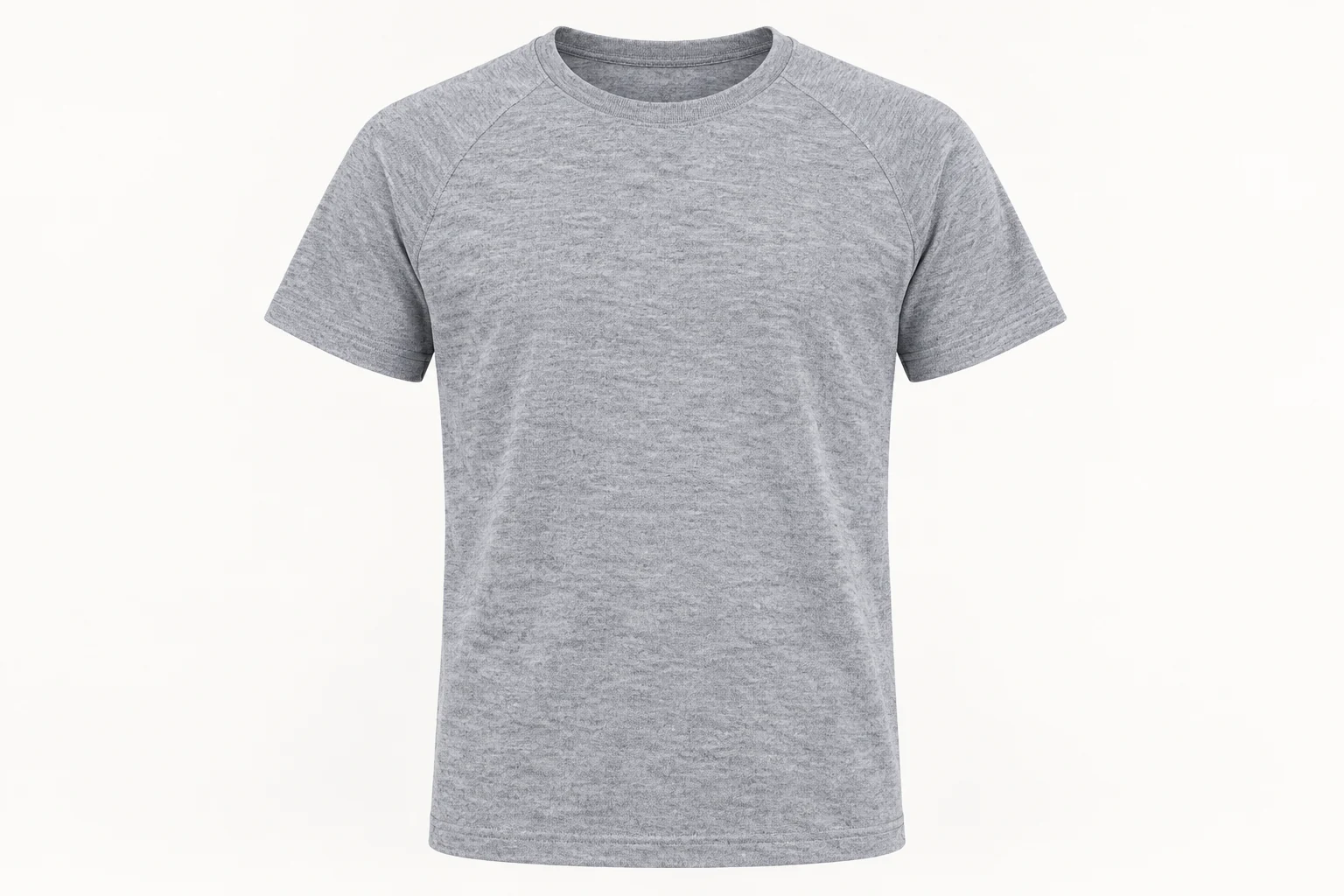
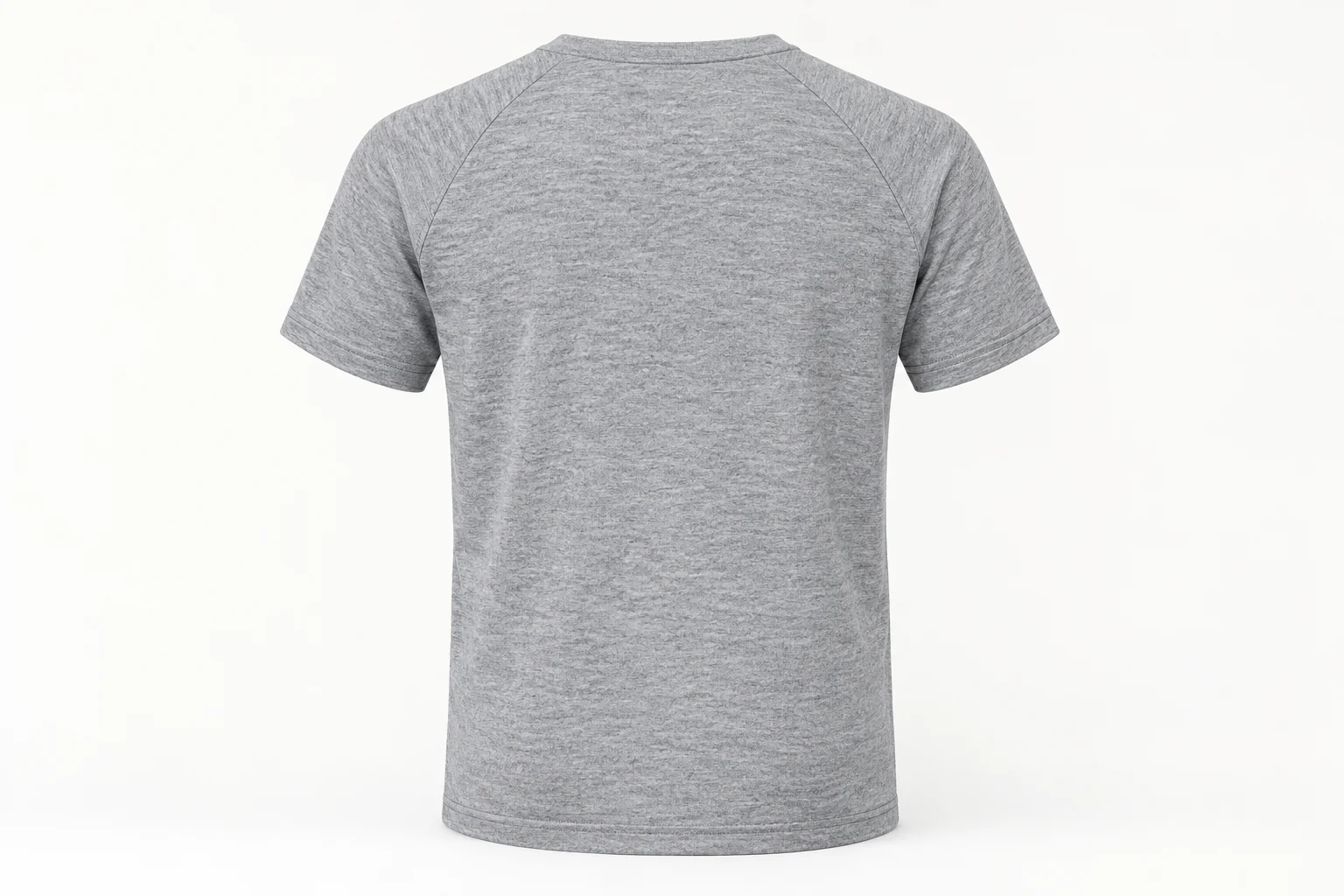
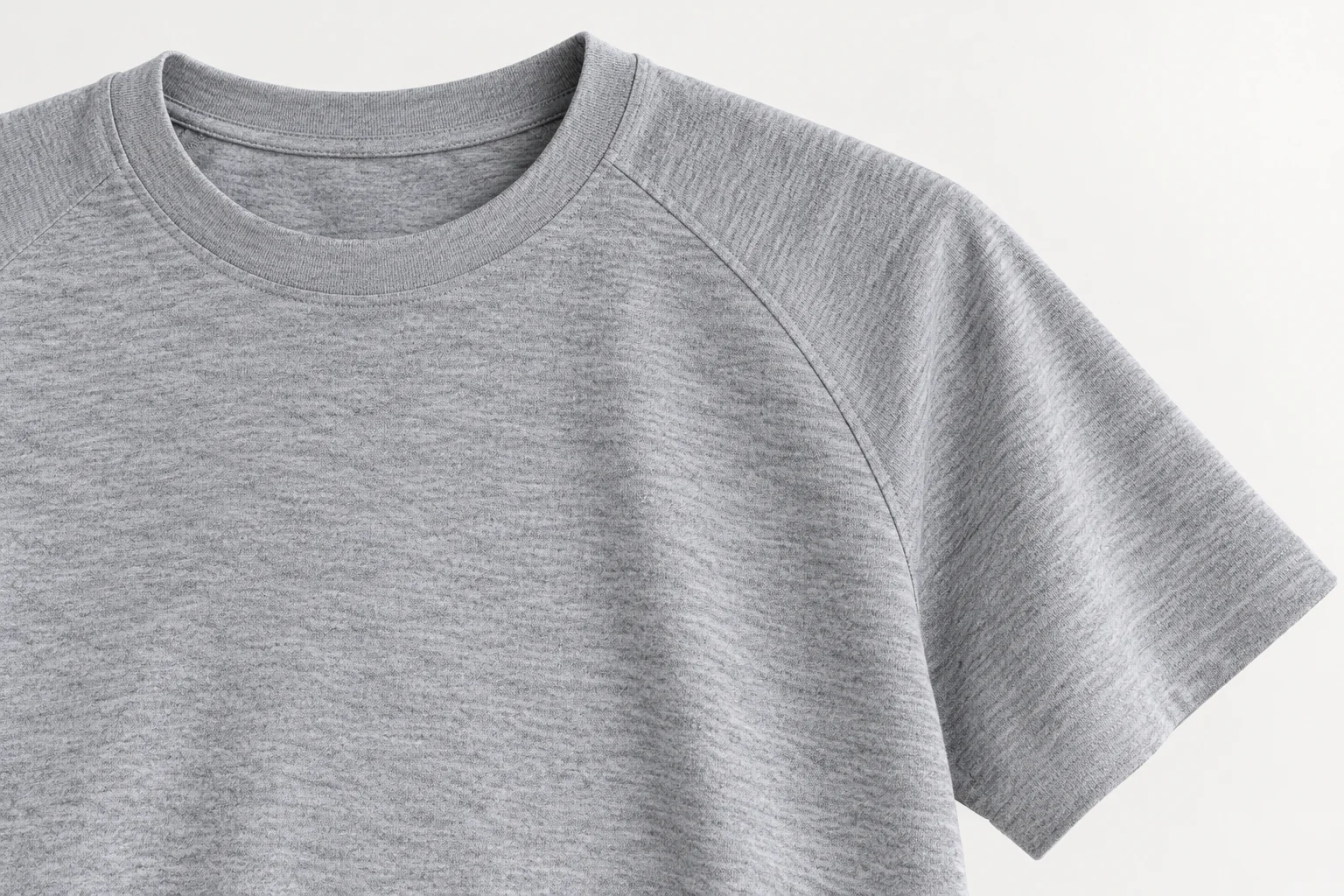
Cost the diagonal panel set that will actually be sewn
Use the developed raglan front, back and sleeve shapes rather than carrying over the material allowance for a set-in-sleeve basic. Include the accepted seam allowances and cutting directions on each component. If the body and sleeves share one material, the planner can examine their combined arrangement; a separate sleeve offer requires a separately identified material calculation. Neither case establishes a saving merely because diagonal pieces appear to nest neatly in a sketch. The cost must represent the actual approved T-shirt geometry and the size ratio the buyer intends to order.
Confirm usable width without changing the accepted panel direction
Ask the supplier to identify the offered finished weight, usable width and format. Give the cutter the maker's approved body and sleeve orientation rather than permitting rotation solely to improve a marker. A different width can change how the upper sleeve shape fits beside a body panel, and a layout that changes direction may no longer describe the sample assessed for movement. Request a real comparison where alternatives exist. A broad nominal width and a low price per kilogram cannot answer whether the proposed arrangement preserves the actual raglan construction.
Make seam-allowance arithmetic visible without choosing the seam by cost
For an invented illustration, imagine four joins each thirty centimetres long. Increasing the allowance on each of the two mating edges from 0.7 to 1.0 centimetres adds a combined strip width of 0.6 centimetres along 120 centimetres of join. The theoretical added area is 72 square centimetres, or 0.0072 square metres; at a hypothetical 180 g/m² it represents about 1.30 grams. These simplified dimensions are not a pattern or sewing recommendation. The maker must choose a suitable developed assembly; a small calculated mass difference is not permission to narrow its allowance.
Keep body and sleeve colour splits economically explicit
If sleeves use another colour or material, request separate consumption references using the real panel shapes and quantity mix. Do not assume that a small sleeve colour automatically shares the body colour's commercial terms. Where all panels are the same offer, check that the combined marker actually includes both left and right sleeve requirements. A late change to sleeve contrast can alter the material purchasing breakdown even while the garment silhouette stays fixed. Ask which assumptions change rather than treating the new colourway as a simple relabelling of the original material estimate.
Cost the neck crossing and visible seam proposal as developed
Ask the maker to identify the attachment, neck finish and any visible seam treatment represented in its assembly estimate. American & Efird explains that thread, stitch balance and seam dimensions contribute to stretch-knit seam behaviour. That is a reason to keep the actual sewing proposal attached to the quote, not to infer a universal operation price or prescribe settings. If development changes the diagonal assembly to meet the T-shirt brief, ask whether the operation scope or cutting allowances also change. Keep those revisions separate from an unrelated fluctuation in body material price.
American & Efird: Sewing Stretch Knit Fabrics — Thread, stitch balance and seam dimensions affect the developed stretch-knit seam. This supports keeping assembly identity with its cost, not a prescribed operation price. The allowance-area example is original hypothetical arithmetic and is not a sewing recommendation.
Catalogue starting points
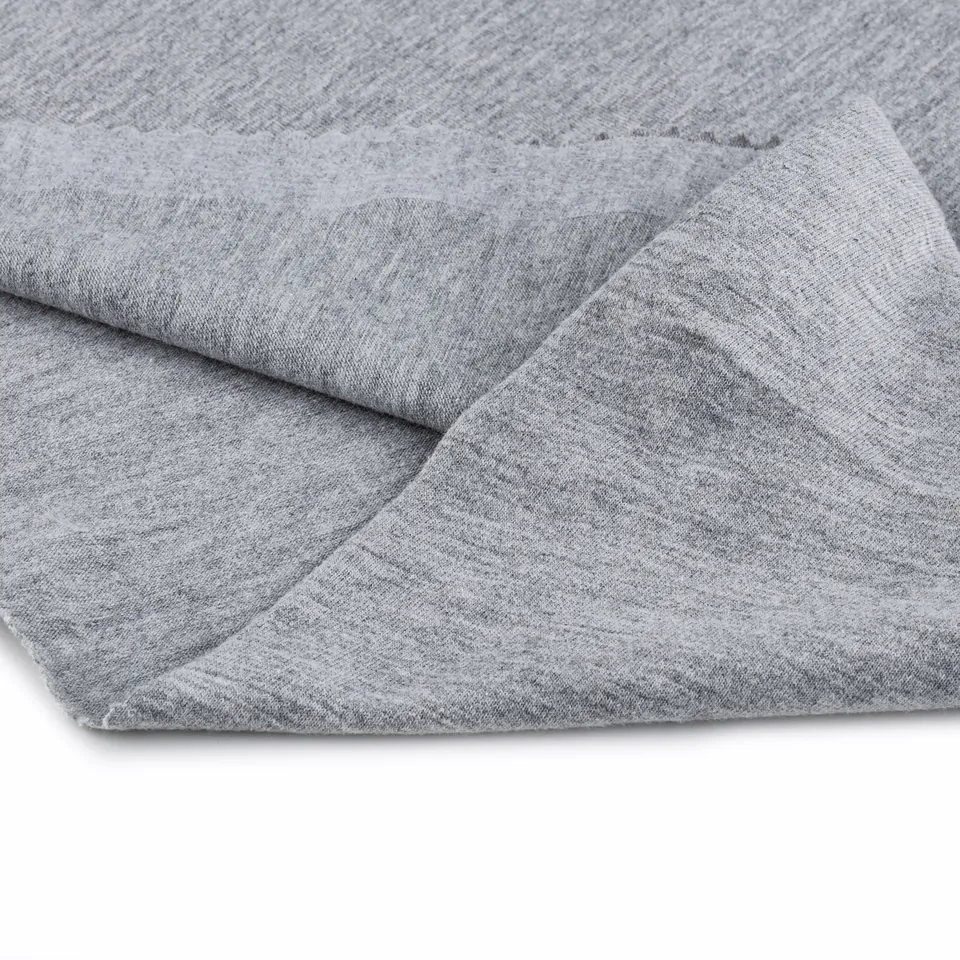
SJ-101 lists 100% compact combed cotton, Enzyme + silicone and 130, 140, 150, 160, 170 g/m² for the single-jersey route. SJ-102 lists 95% cotton 5% elastane, Enzyme + compacted and 170, 180, 190, 200, 210 g/m² for its single jersey. Neither supplies a raglan marker, confirmed width or garment-unit yield. Request the actual offered finished version before calculating demand. A shared listed 170 g/m² can identify a comparison point, but cannot establish identical seam behaviour, pattern requirements or material cost per accepted shirt.
Compare the cost of the approved panel-and-seam version
Retain the pattern revision, direction constraints, marker, offered material identities and assembly scope beside the consumption figures. Identify separately purchased neck components and any agreed allowances without inventing standard loss percentages. If a seam or sleeve-shape correction follows fitting, update the affected references before reusing the estimate. The buyer can then explain whether a change comes from material, panel arrangement or sewing development. This is more useful than approving a generic raglan price whose attractive marker and actual movement sample were based on different component decisions.
Technical background and scope
This is a structured editorial draft. Garment-specific development advice is paired with existing catalogue records; compatibility must be established by sampling. AL KUMAŞ supplies fabric. Cutting, sewing and finished-garment production are separate unless explicitly agreed.