




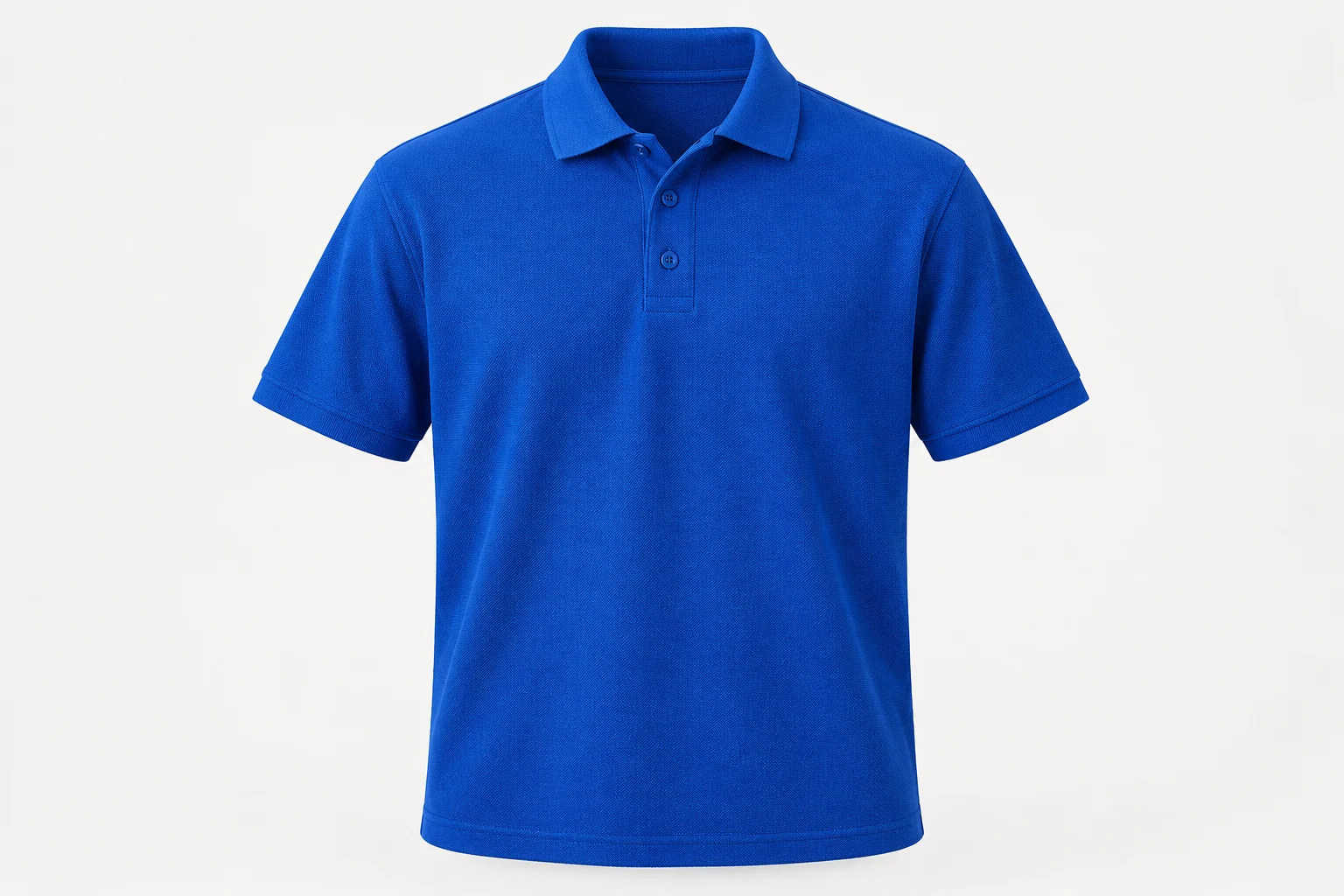
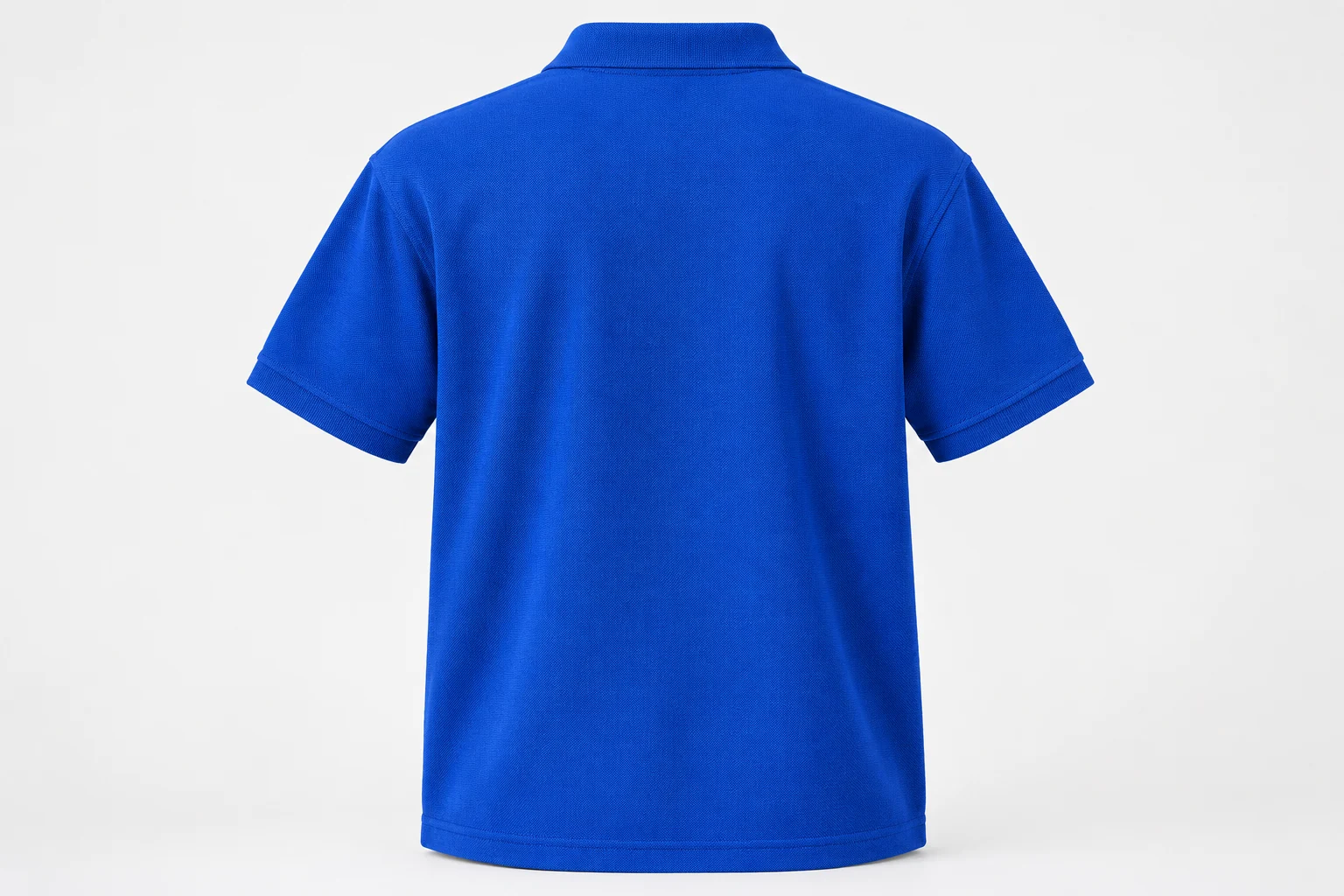
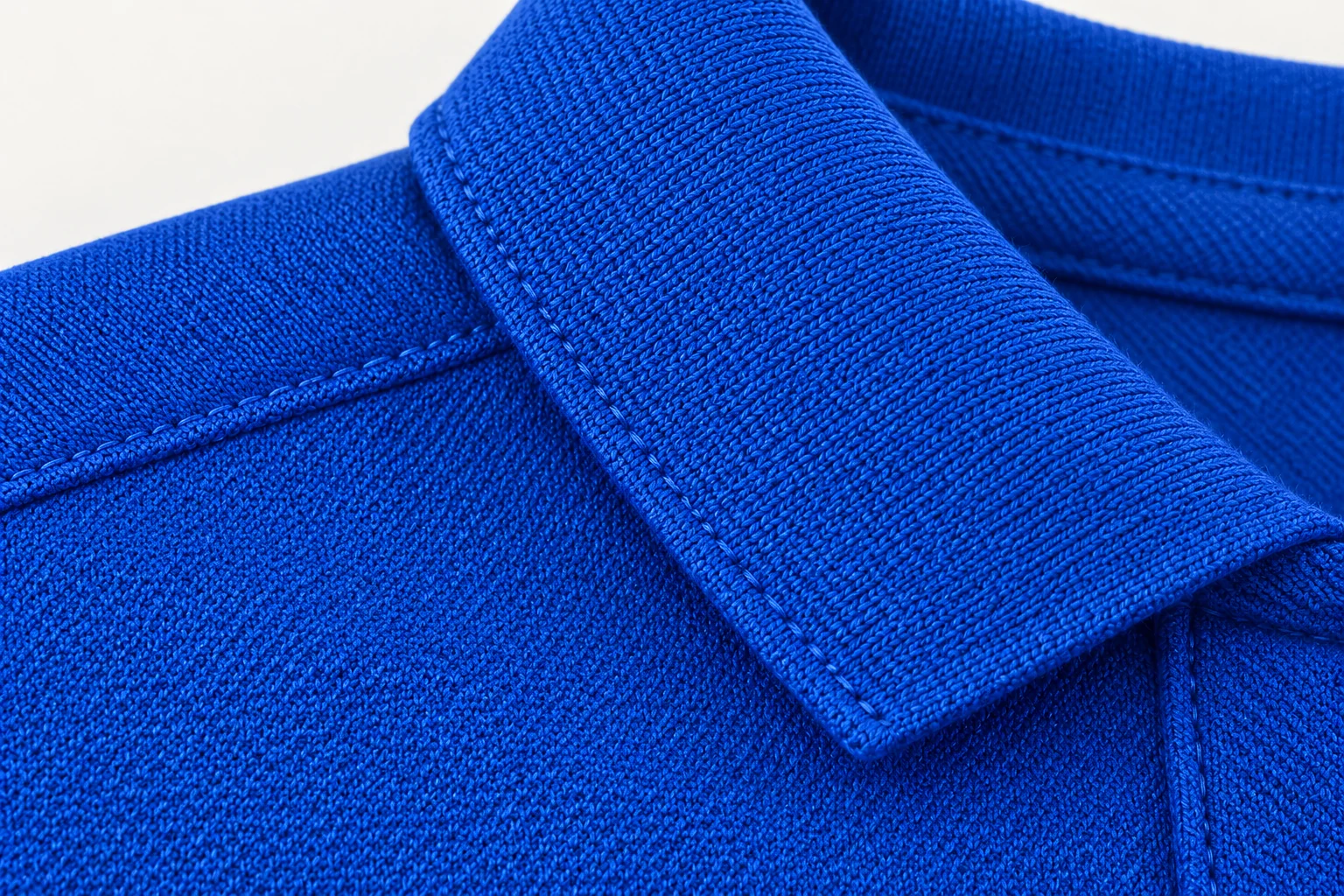
Compose the polo around easy volume and a defined neckline
Decide how the colour and any graphic should relate to the relaxed shoulder and the retained polo opening. A chest mark may appear differently when the body contains deliberate folds or when the shoulder seam moves outward, so use the actual design drawing. Ask whether the neckline should remain visually prominent or blend with the body colour. Avoid placing a familiar classic-polo logo coordinate onto the new silhouette without review. The aim is to develop the proposed composition, not to prescribe a single graphic size or placement rule for every relaxed garment.
Catalogue starting points
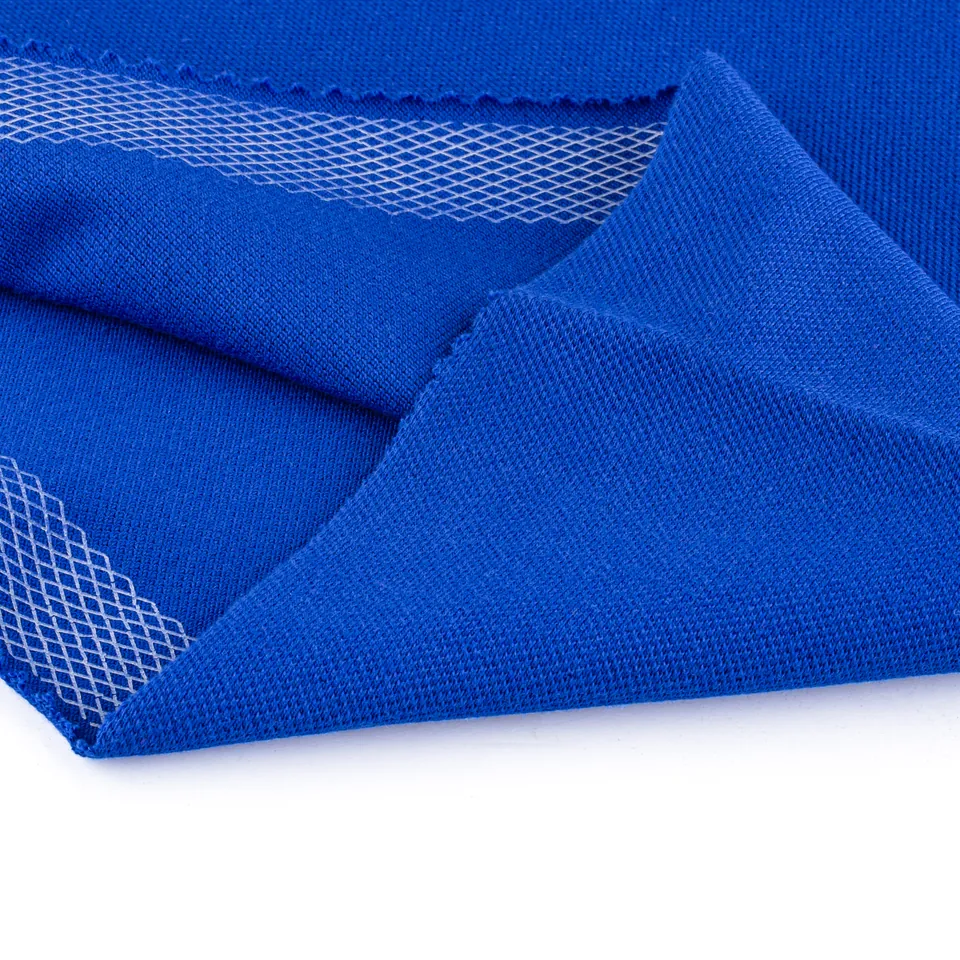
The piqué reference PQ-501 lists 100% combed cotton, 190, 205, 220, 235, 250 g/m² and Enzyme + silicone finishing. The jersey reference SJ-101 lists 100% compact combed cotton, 130, 140, 150, 160, 170 g/m² and Enzyme + silicone finishing. Neither entry identifies available colours, a decoration process or a finished collar. Their listed weight ranges have no common option. Request the precise offered colour and material samples for the visual comparison, keeping changes in construction and nominal mass visible rather than implying that shared finish wording ensures an identical result.
Judge colour in the actual folds as well as flat
Inspect the physical body samples under agreed viewing conditions, then review the developed polo in a natural stance. Folds create a different visual composition from a flat cutting without necessarily indicating a colour defect. Ask the designer to distinguish the intended shade relationship from shadows caused by the garment’s shape. If the two material routes use different offered shades, identify that difference explicitly. A screen rendering can communicate a colour concept but cannot establish the physical match of body, collar and opening pieces, particularly when those components have not yet been selected.
Give the logo a relationship to the opening and shoulder
Locate the actual artwork from defined garment landmarks on the relaxed pattern and show it in the intended worn view. Decide whether a mark should remain close to the opening or move with a wider chest composition. If the design places artwork near the shoulder or armhole, ask the relevant specialists to assess the actual placement and assembly. Do not assume the same coordinate looks equivalent across sizes or another shoulder shape. A deliberately asymmetric placement is possible as a design choice, but should be labelled rather than appearing as an unexamined result of enlarged dimensions.
Develop decoration on the real offered surface
CottonWorks notes that printing can be influenced by fabric surface and construction. Use that general point to request a physical development example on the selected offered cloth, not to claim that either candidate is automatically easier to decorate. Confirm the process with the responsible source and include actual backing or added layers in the sample identity. Neither catalogue entry establishes a printing service or embroidery capability. Review the decorated area alongside the opening so the buyer can judge whether its local appearance supports the relaxed composition rather than considering a detached logo proof sufficient.
Cotton Textile Printing Basics — CottonWorks — Fabric surface and construction influence printing; no supplied decoration capability or candidate-specific result.
View the collar and graphic without arranging away the ease
Photograph or inspect the actual sample after ordinary movement and in the intended fastening state, allowing the garment to settle without repeatedly smoothing the chest. Compare the collar colour, opening and artwork in that natural configuration. The designer may accept variation created by the relaxed volume, but should make that choice knowingly. If the graphic is partly obscured in a particular posture, record that observation without promising constant visibility elsewhere. Keep the actual wearer, size and styling reference identified so the visual decision is not presented as universal across all bodies.
Preserve the selected visual intention across later revisions
Retain the physical colour references, artwork file and location rules with the reviewed relaxed pattern and neckline components. Explain which changes in shoulder or body shape would require another visual review rather than treating the polo name as the approval boundary. Any required care or fastness evidence remains separate from the designer’s composition judgement. A different offered body shade or collar is a visible development change, even when the overall styling description remains relaxed. This preserves an understandable visual identity without inventing colour permanence, decoration services or untested uniformity across every size.
Technical background and scope
This is a structured editorial draft. Garment-specific development advice is paired with existing catalogue records; compatibility must be established by sampling. AL KUMAŞ supplies fabric. Cutting, sewing and finished-garment production are separate unless explicitly agreed.