






Build a shorts consumption sheet from the actual parts
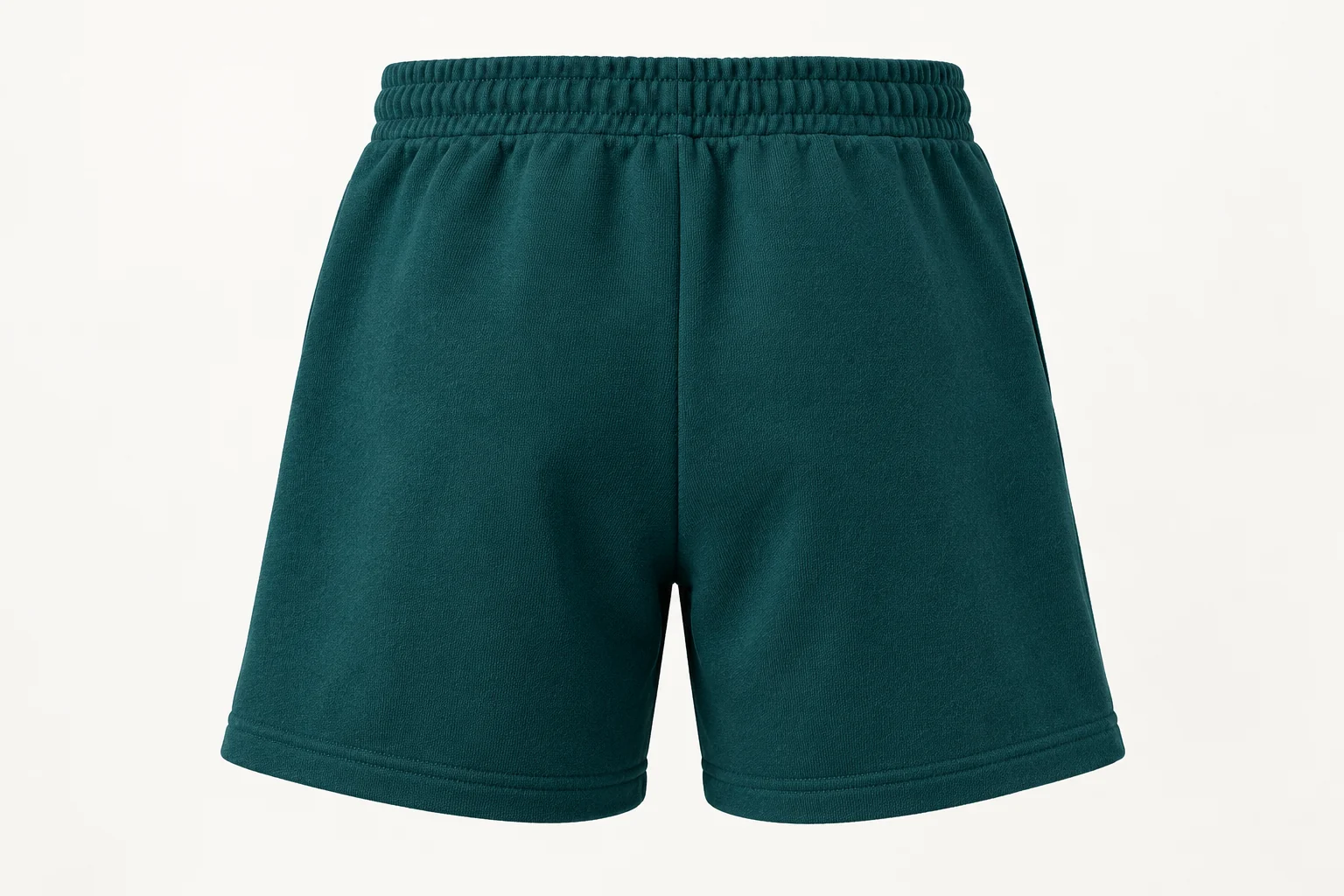
The leg may be short, but pockets, waistband and reinforcement can represent a meaningful part of the material requirement. Count the front and back pieces, pocket bags and facings, waistband, any gusset and specified contrast panels. Indicate whether each piece uses the body fabric or another material. A deep pocket bag and a wide doubled waistband cannot be costed as negligible trim. Ask the marker maker to work from the shorts pattern rather than estimating a fraction of a jogger’s consumption based only on the difference in inseam.
Select an exact weight and construction for the quote
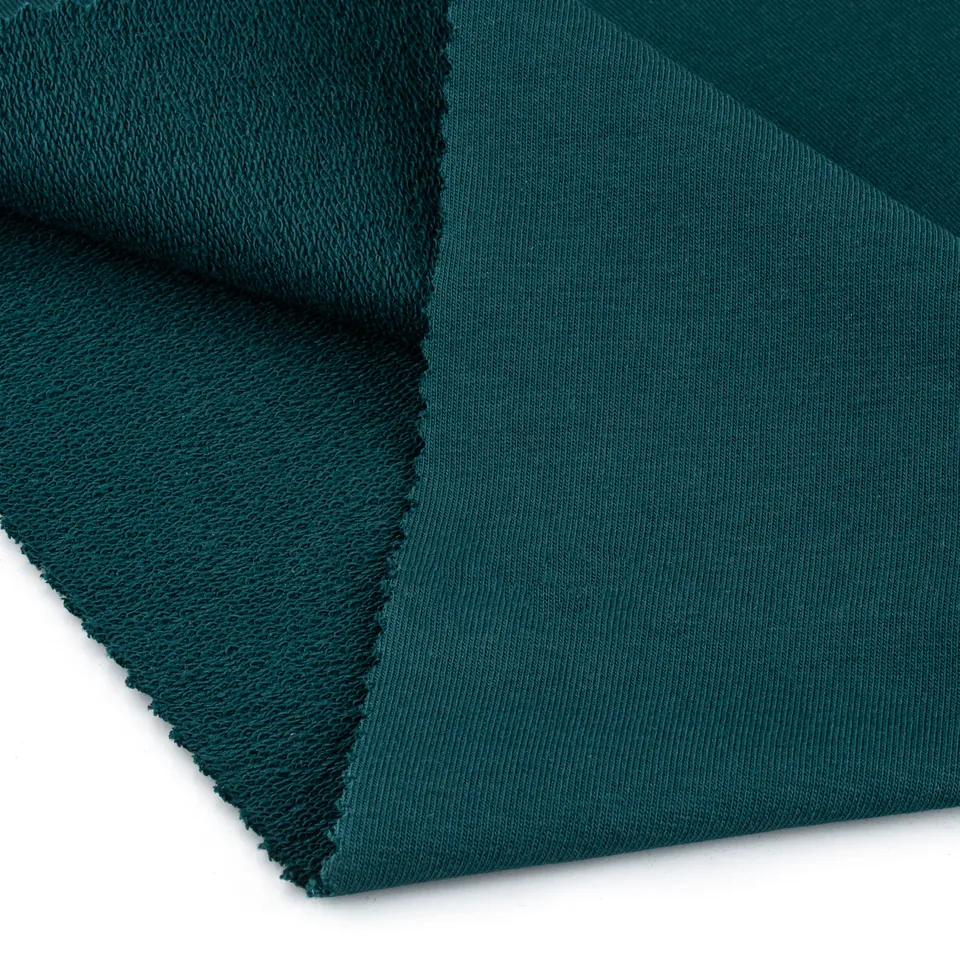
FT-601 lists two-thread, unbrushed + silicone material at 240, 260, 280, 300 and 320 g/m². FT-602 lists three-thread, unbrushed + compacted material at 300, 325, 350, 375 and 400 g/m². Both are recorded as 70% cotton and 30% polyester. State the specific entry and finish being requested, and obtain the offered weight tolerance and usable finished width. A common 300 g/m² entry does not remove the construction difference. The catalogue provides no verified width that can safely be inserted into the marker without commercial confirmation.
Work through a panel-area change rather than a percentage guess
For a simplified hypothetical example, shortening all leg panels by 0.10 metres across a combined average panel width of 1.20 metres removes 0.12 square metres of area. At 300 g/m², that area represents 36 grams before allowances. These dimensions are illustrative, not an AL KUMAŞ consumption figure. The change does not remove the waistband, pockets or their operations, and it may change marker nesting. It therefore cannot justify reducing the complete garment material cost by the same percentage as the inseam. Request the actual revised marker for the intended design.
Show why a shorter leg can still leave marker gaps
A short, wide back piece includes the seat extension and can occupy the fabric width differently from a narrow long leg. Ask whether the planned size ratio lets pieces nest efficiently, and whether pocket components can occupy the remaining spaces under their direction rules. A print border, one-way surface requirement or contrast panel can restrict those placements. Test the largest planned adult size rather than relying on the sample size alone. The marker drawing should demonstrate the supposed saving; an attractive sketch of small components is not a cutting-yield result.
Keep pocketing and waistband calculations separate
If the pocket uses a lighter or contrasting material, calculate its requirement independently and identify the relevant supply format. If the waistband uses the body fabric, include every layer and seam allowance in that marker. Elastic and drawcord need their own unit lengths, while eyelets or stitched openings may introduce other components. Do not hide these choices in a generic shorts allowance. A separate component table makes it possible to assess the cost of switching from a plain waist to a cord channel without changing unrelated material assumptions.
Track length allowances and hem depth independently
A deeper turn-up changes the cut panel even when the finished inseam remains fixed. Keep the hem construction visible alongside any pattern adjustment based on representative dimensional evidence. CottonWorks identifies manufacturing and care among contributors to dimensional change, but supplies no shrinkage figure for these two FT articles. Have the technical team explain its chosen pattern adjustments, and keep them separate from cutting loss and purchasing contingency. Otherwise a short-style estimate can omit a real allowance or add the same risk repeatedly under different spreadsheet labels.
CottonWorks: Shrinkage & Skewing — Construction, processing, sewing and care influence dimensional behaviour; no FT-specific shrinkage figure or acceptance limit is supplied.
Price the approved shorts rather than an incomplete body
Compare offers with the same style revision, size mix, finished length and pocket package. Show body mass, separate pocketing, waistband materials and agreed allowances, then apply the relevant commercial price basis. If the design changes to a longer pocket bag, split hem or deeper waistband, obtain the affected recalculation. Ask the garment maker to identify which figures come from a trial marker and which remain provisional. The result should explain the cost difference between configurations; a lower kilogram price by itself does not establish a lower cost per accepted pair.
Technical background and scope
This is a structured editorial draft. Garment-specific development advice is paired with existing catalogue records; compatibility must be established by sampling. AL KUMAŞ supplies fabric. Cutting, sewing and finished-garment production are separate unless explicitly agreed.