



Bring the actual activity kit to the sample review
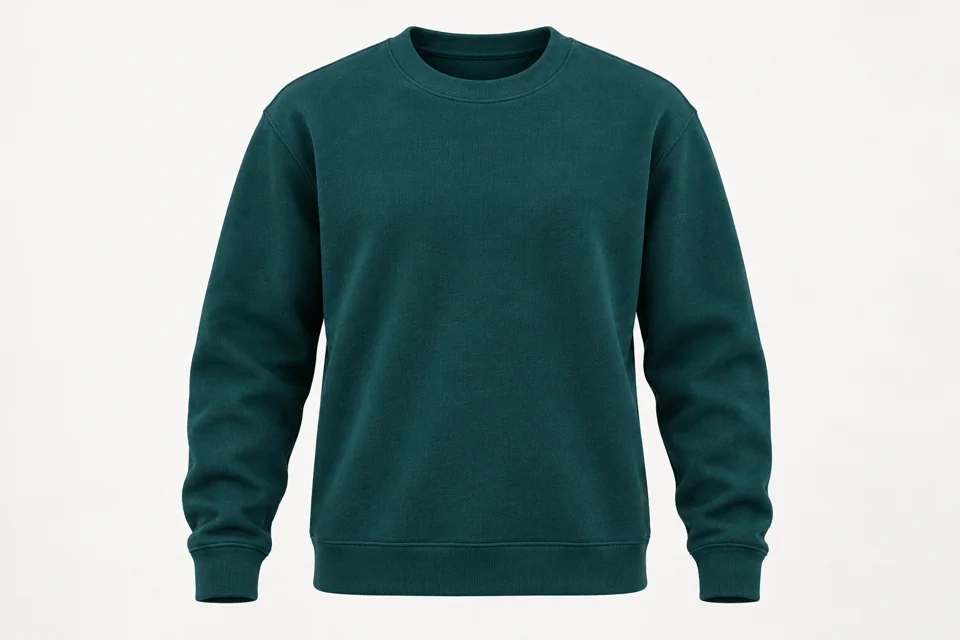
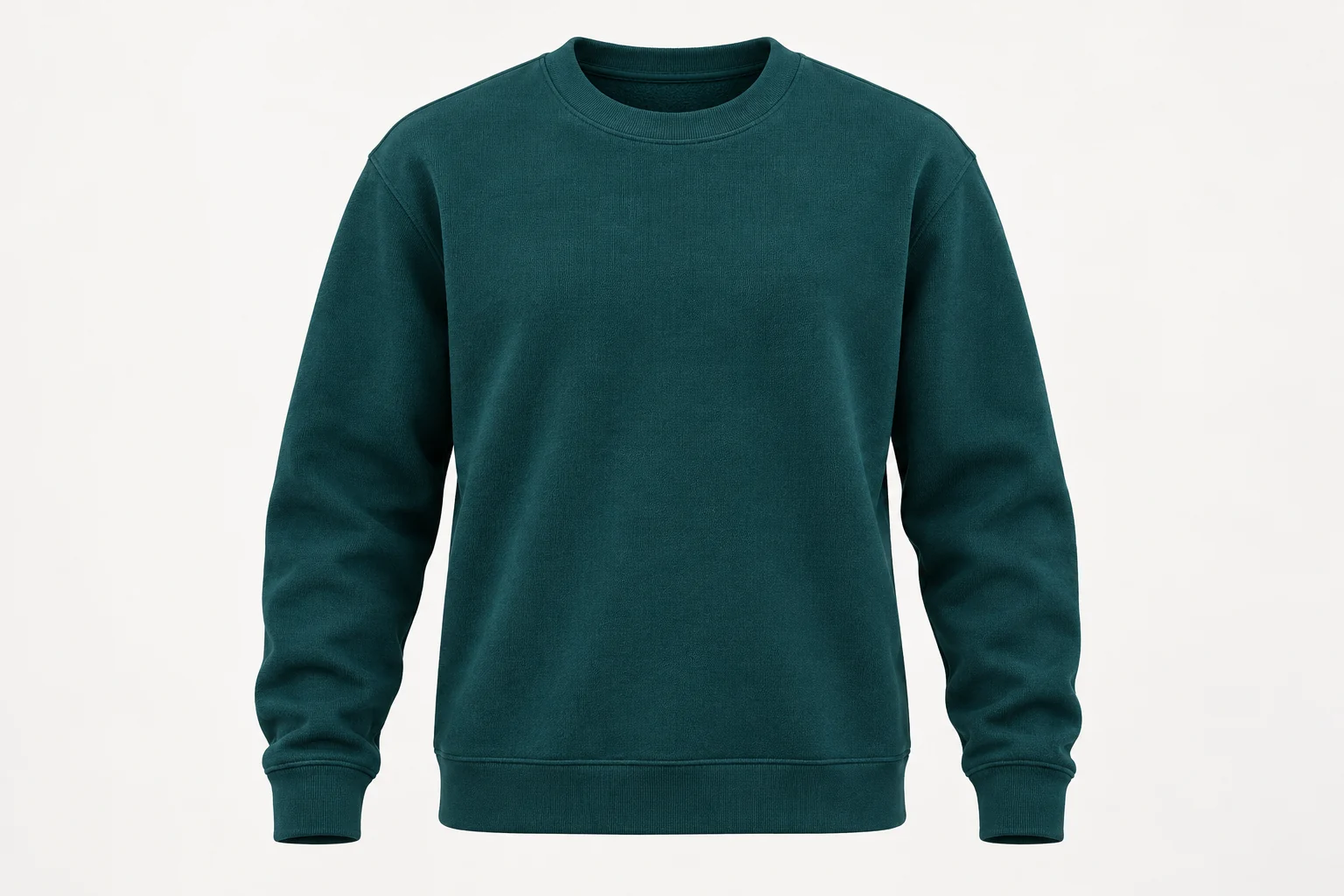
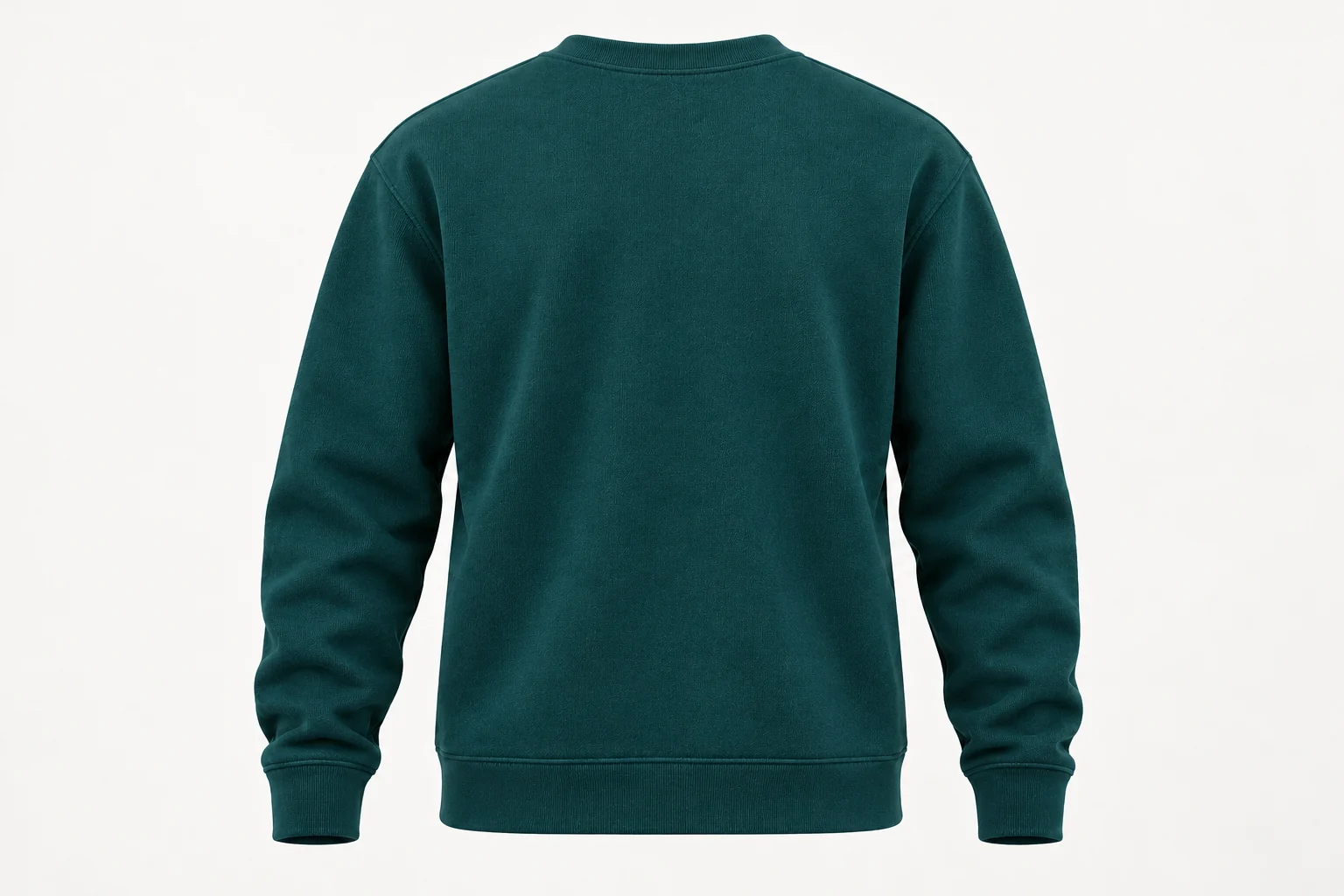
Identify the shirt and other relevant layers the warm-up top will be worn over, then use them consistently in the trial. Record the intended outer silhouette, sample size and pattern version. A fitting over unrelated clothing can answer a different question without anyone noticing. This is an outer-layer development review before and after activity, not a demonstration of physiological warming or injury prevention. State which observations will govern the decision: dressing access, room over the kit, sleeve interaction, lower-edge position and the appearance of the complete layered assembly.
Document the two possible body materials accurately
FT-601 offers 240, 260, 280, 300 and 320 g/m² in 70% cotton and 30% polyester, with an unbrushed and silicone finish. PF-121 offers 130, 142, 154, 166 and 178 g/m² in 92% recycled polyester and 8% elastane, with Moisture management + quick dry as a catalogue finish label. Record the exact sampled option and components. Neither description is a test report for warmth, moisture movement, drying rate or recovery. If such properties form part of the product requirement, ask the responsible specialist for appropriate evidence rather than treating a successful fitting as proof.
Observe putting on and removal without modifying the design mid-trial
Have the wearer use the intended opening arrangement over the selected kit. Do not assume a zip, hood or other feature absent from the design. Note where the top catches or where removal pulls the underlayer out of place. Ask the sample team to identify whether the relevant region is the neck opening, armhole, sleeve or lower edge before proposing a correction. If a new opening or changed pattern is introduced, treat it as a revised assembly and repeat the relevant sequence instead of merging the two observations into one approval.
Track sleeve and hem interference with the underlayer
During agreed reaching, arm-raising and sitting movements, observe whether the kit sleeve gathers inside the outer sleeve, a cuff traps the underlayer or the lower edge moves the kit upward. Record the starting arrangement and what remains after returning to the initial position. These are development observations, not a standardised universal test. Ask the pattern and sewing teams to review the relevant dimensions and components together. A looser body may not resolve a narrow sleeve, and tightening a band to improve one photograph can introduce a different interaction.
Examine the reverse surface in the complete assembly
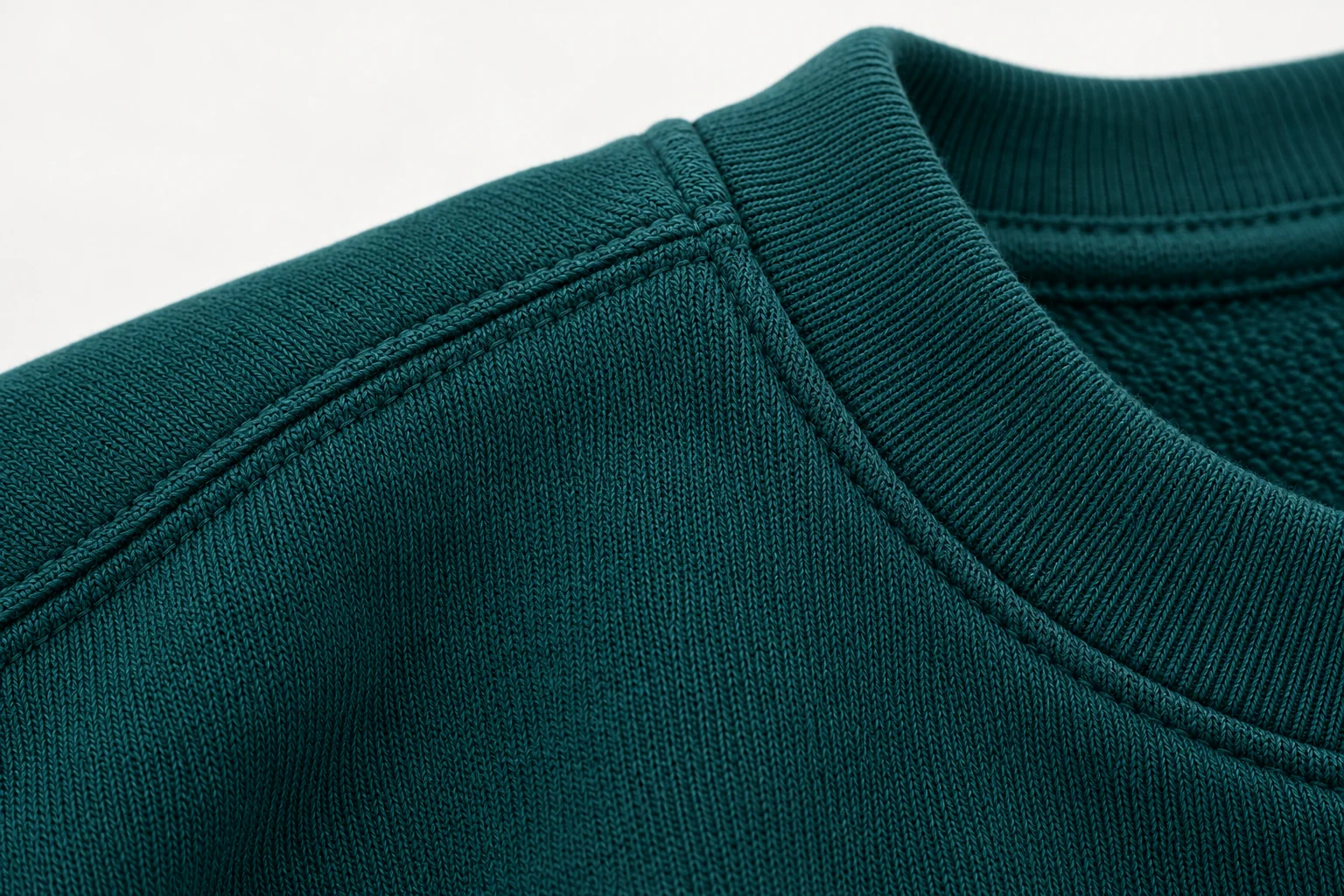
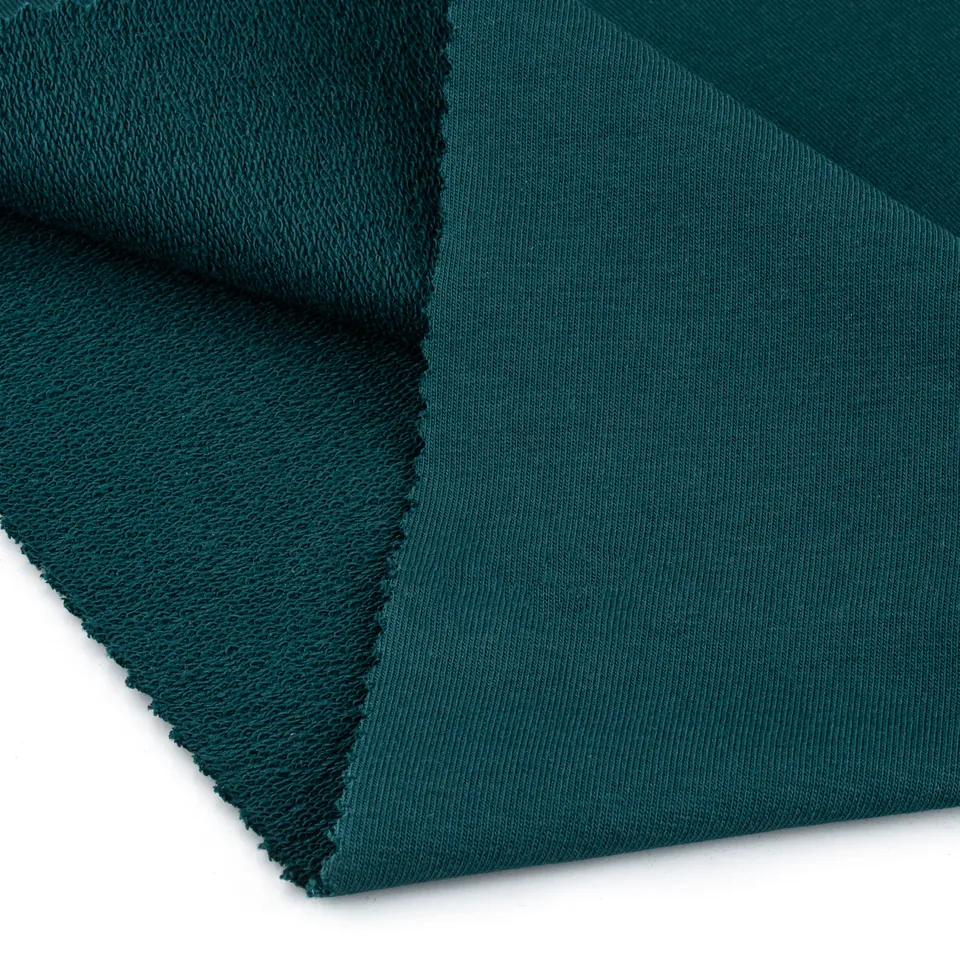
Compare the proposed materials with their intended face and reverse orientation documented. CottonWorks describes unbrushed French terry as a distinct surface route from brushed fleece; that general explanation does not establish how FT-601 behaves against this kit. Note any catching, local bunching or surface change actually observed and identify the two materials involved. Do not replace the named kit with a smoother alternative simply to make the top appear acceptable. If the programme needs a quantified durability or surface assessment, have the testing provider define the appropriate method and acceptance requirements.
CottonWorks: Single & Double Knits — French Terry and Fleece — General surface distinction between unbrushed French terry and brushed fleece. The layer-interaction observations remain to be established in the actual kit/top combination.
Measure the layered garment after the agreed care trial
Record outer body length, sleeve dimensions, opening measurements and any bands before care, using identified landmarks. Agree the procedure and measurement preparation before comparing outcomes. AATCC lists garment dimensional change and appearance after home laundering separately; the provider should confirm current applicable methods and requirements. Recheck the top over the same kit after the trial, not merely as a flat garment. A modest measured change at a cuff or sleeve can matter to the layer interaction even when overall body length remains close to the original observation.
AATCC: Standard Test Methods and Procedures — Public index identifies separate garment dimensional-change and appearance-after-home-laundering methods. Qualified current method selection and agreed requirements remain necessary; no testing result is supplied.
Accept only the combination and evidence actually reviewed
Close the record with accepted observations, requested changes and unresolved testing questions. Identify body article, weight, finish, component construction, pattern and kit versions. State whether the trial establishes only fit and dressing behaviour or also includes relevant reported assessments. Do not add thermal, compression, moisture or medical claims to the conclusion without supporting evidence. If a commercial substitution changes material or finish, decide which checks need repetition. A useful release gives the buyer a reproducible outer-layer garment, rather than a broad performance promise attached to the name warm-up top.
Technical background and scope
This is a structured editorial draft. Garment-specific development advice is paired with existing catalogue records; compatibility must be established by sampling. AL KUMAŞ supplies fabric. Cutting, sewing and finished-garment production are separate unless explicitly agreed.