





Choose the wrap mechanism before the fabric
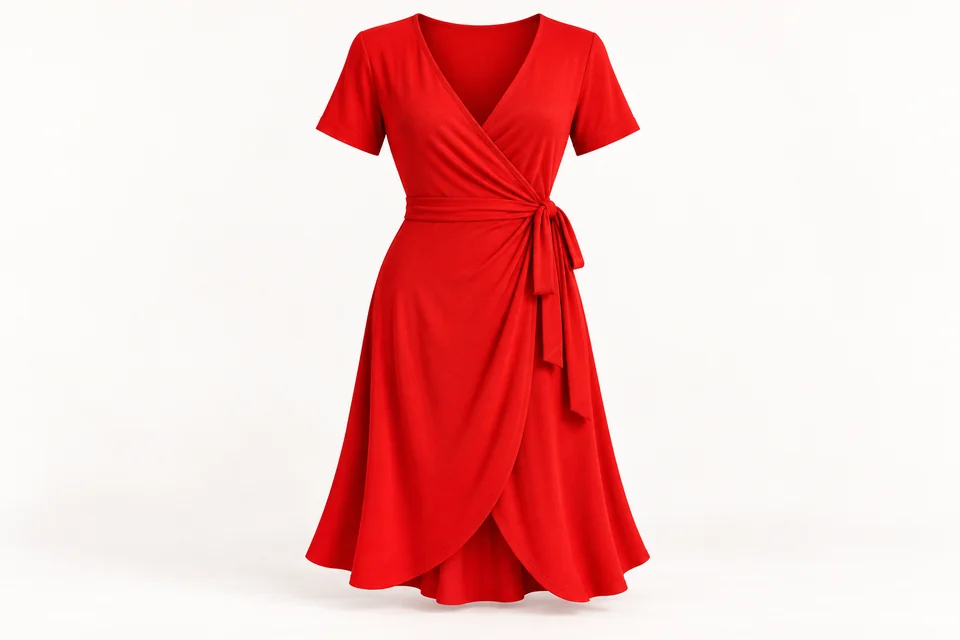
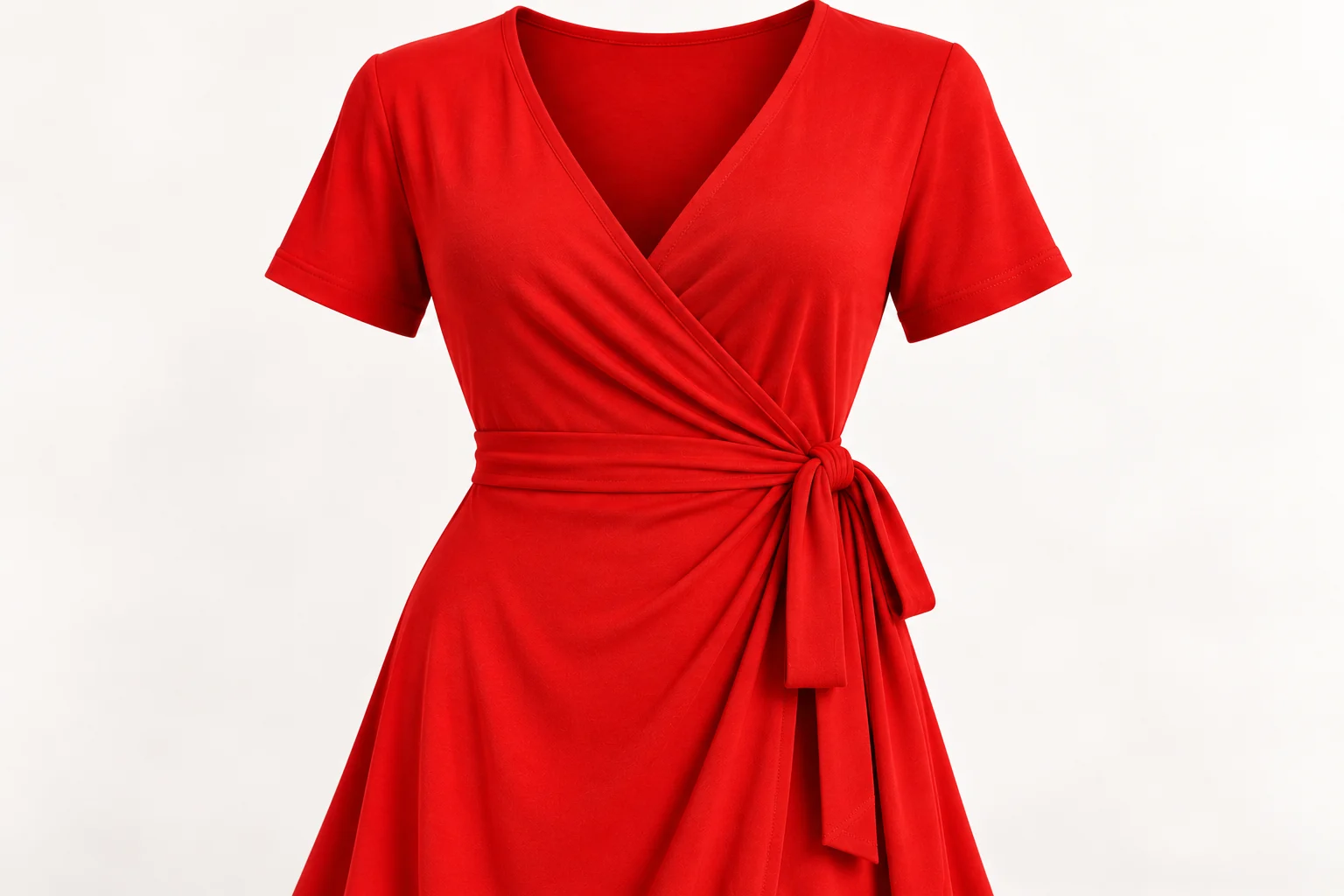
A true wrap dress closes by overlapping two fronts and fastening around the body. A fixed faux-wrap front creates a different development problem because the overlap is secured rather than adjusted by the wearer. Establish which construction the drawing represents before comparing jersey cuttings. For a true wrap, ask the pattern maker to show the underlap, outer edge, waist opening and tie attachment on a flat sketch. For a fixed version, identify the anchoring seam and how the wearer gets into the dress. These details determine what the sample must demonstrate.
Use the same pattern for the first material comparison
Sample the two proposed fabrics in one controlled starting pattern, then describe the differences without immediately changing both fabric and pattern. Observe where the front edge falls, how the skirt hangs and whether the waist becomes bulky when tied. A lighter-looking cutting may produce an unexpected result once two front layers overlap. Conversely, a pleasing drape in a hanging strip does not prove that the neckline remains secure. CottonWorks recommends beginning knit development with the intended end use; the wrap mechanism is the critical end-use question here.
CottonWorks: Designing Knit Textiles — The narrow principle that knit development begins with intended end use. Wrap-specific construction and fitting suggestions are original editorial decision guidance, not asserted test results.
Evaluate the neckline and tie as separate systems
Ask the garment team to compare edge treatments on the actual neckline curve. A turned edge, binding and facing introduce different seam arrangements, so the body fabric cannot be selected in isolation from the finish. Record whether the neck edge is being stretched during assembly and which support, if any, is used. Next, examine the tie where it enters the waist seam: the finished tie width, seam allowance and attachment method should be visible in the sample record. Do not assume that a soft body material will also make a satisfactory narrow tie.
Keep the overlap useful while the wearer moves
A wrap is adjustable, but that does not make its coverage unlimited. Have the fitter assess the intended size range while seated, walking and reaching, using the proposed fastening position. Identify whether a coverage problem comes from insufficient underlap, a neckline that opens, a waist that shifts or a tie that loosens. Each observation points to a different remedy. Adding fabric everywhere can change the silhouette without solving the cause. Reject a material-pattern combination if acceptable coverage requires fastening it in a way that contradicts the intended fit.
Catalogue starting points
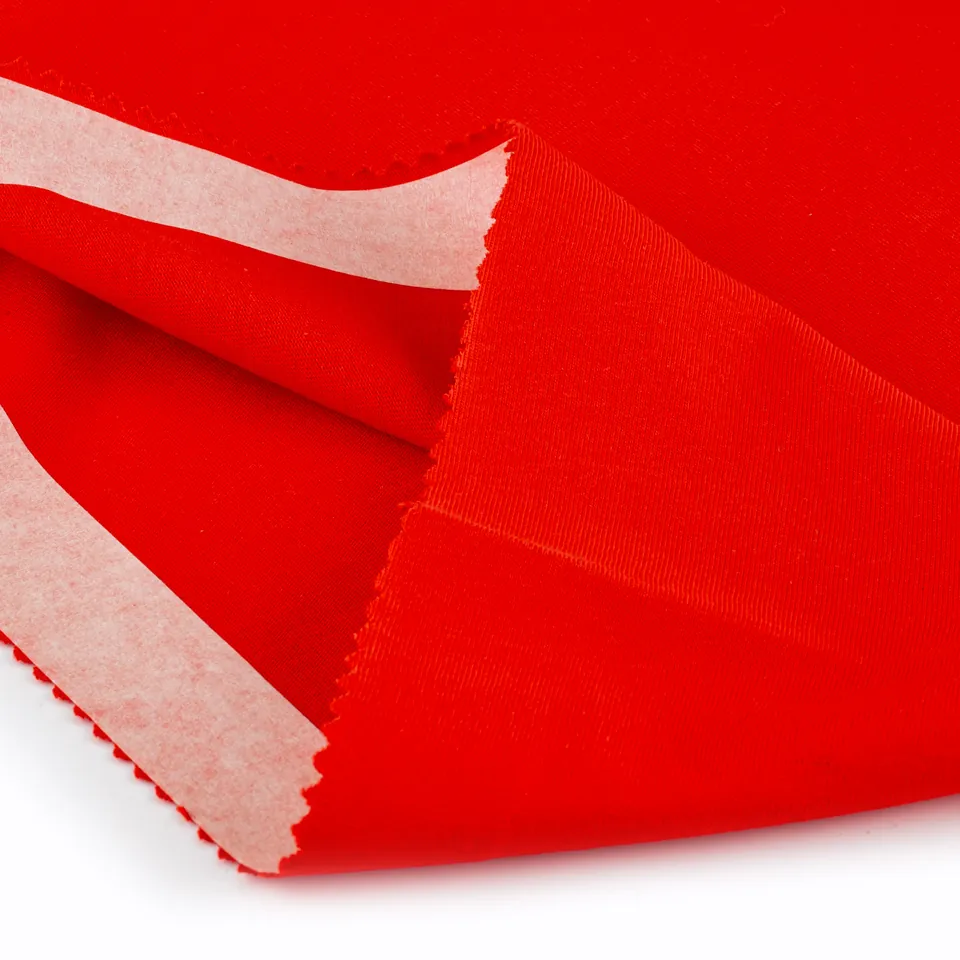
The recorded comparison is SJ-103, 95% viscose 5% elastane, at 160, 170, 180, 190, 200 g/m², against SJ-104, 95% modal 5% elastane, at 150, 160, 170, 180, 190 g/m². These are local catalogue facts, not tested wrap-dress recommendations. Neither fibre label establishes drape, opacity, neckline recovery or usable width for the offered finish. Request the particular weights under discussion and compare identifiable cuttings. Record the finish and colour of each; otherwise a later sample cannot reliably reproduce the comparison.
Check single and doubled areas deliberately
Inspect the skirt where only one layer covers the body as well as where the two fronts overlap. Compare appearance under consistent lighting and with the intended underlayer. If a lining is proposed, sample its attachment and movement rather than judging only the unlined body. Also assess the side seam where ties, openings or pockets concentrate construction. A fabric might work in a simple skirt panel yet create an unsatisfactory junction at the waist. Note which component or pattern change would be necessary, and ask whether that change remains commercially acceptable.
Record the decision as a combination
The final selection should identify a fabric article and offered weight, a pattern version, a neckline finish, a tie construction and the assessed coverage conditions. Keep a small decision table with the rejected option and its specific reason: for example, an unacceptable doubled-front appearance or an opening that displaced during fitting. Those are development observations, not universal verdicts on viscose or modal. If neither sample meets the design, request another route rather than declaring one catalogue option suitable by default. A garment-specific decision is more useful than a premium fibre description.
Technical background and scope
This is a structured editorial draft. Garment-specific development advice is paired with existing catalogue records; compatibility must be established by sampling. AL KUMAŞ supplies fabric. Cutting, sewing and finished-garment production are separate unless explicitly agreed.