





Build a wrap-dress review around coverage and control
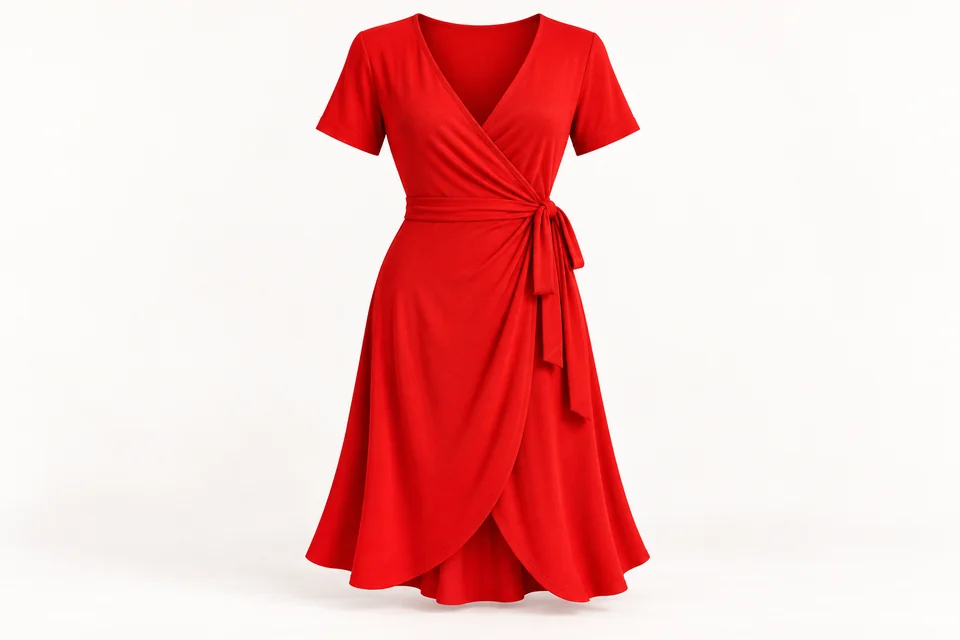
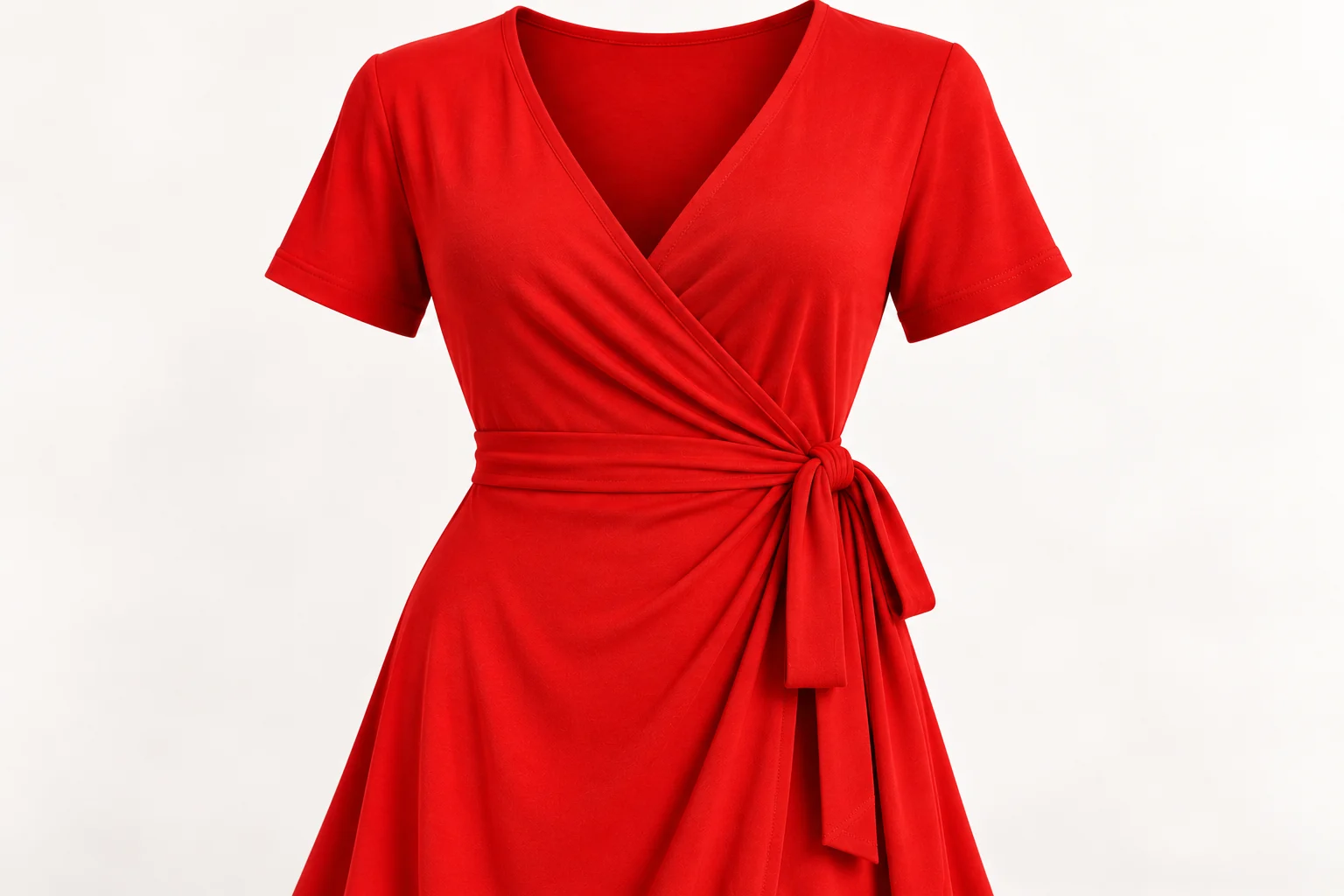
The most useful sample review asks whether the dress stays in its intended position while remaining adjustable. Establish the approved fastening route and the intended underlayer before fitting. Have the development team label the outer front, underlap, tie insertion points and any internal fastening on the sample diagram. This makes a comment such as the front opens actionable: reviewers can distinguish a neckline problem from a skirt-overlap problem. Record the pattern size and wearer measurements so a successful fit on one person is not mistaken for approval of the whole size range.
Observe the fastening sequence
Watch the wearer put on and fasten the dress without coaching beyond the intended product instructions. Note whether ties twist, an internal opening is difficult to find or the waist is tightened merely to hold the neckline in place. Those observations may reveal a construction or usability issue rather than a fabric defect. Compare the garment's intended waist position with where it settles after several movements. If a hidden fastening is proposed as a solution, sample its location and attachment; do not approve it as an annotation on an otherwise unchanged prototype.
Use a repeatable movement sequence
Agree a short sequence appropriate to the product: standing naturally, sitting, walking, reaching forward and raising the arms. Inspect the neckline and skirt separately at each stage. Take consistent front and side photographs with the wearer's consent, marking which observation requires a pattern change. Assess the intended representative sizes rather than extrapolating from the sample-room size. The aim is an understandable development record, not a claim of a certified coverage test. If the design needs quantified performance evidence, have a competent provider define the assessment and acceptance criteria.
Inspect the waist junction and narrow ties
The tie anchorage, side opening and waist seam deserve close inspection because several construction decisions meet there. Ask the sewing team to expose or document the internal arrangement. Check whether the seam is bulky when tied, whether the tie rotates and whether the opening edge appears distorted. Review the proposed seam sequence and support materials together rather than assuming that more reinforcement is automatically better. Where a pocket is included, repeat the fitting observations with the intended pocket use; an empty sample can conceal an interaction between pocket position and front balance.
Catalogue starting points
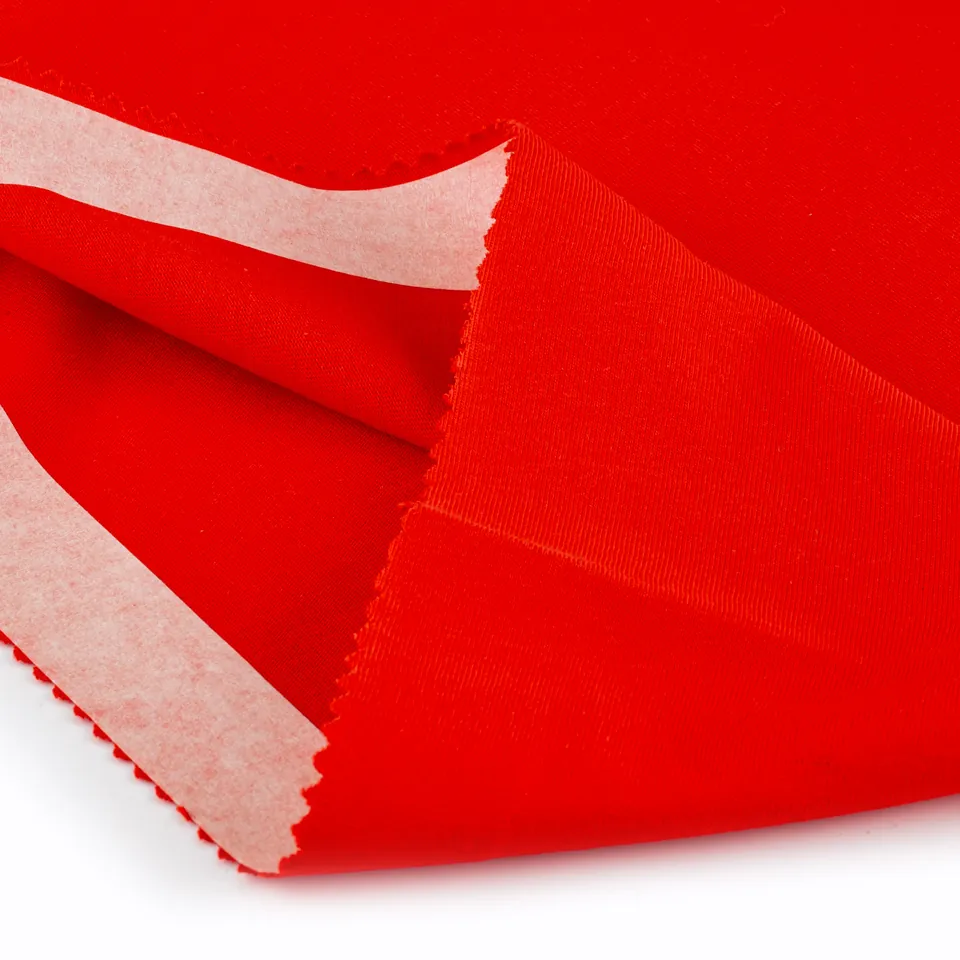
The source catalogue records SJ-103, 95% viscose 5% elastane, with weights of 160, 170, 180, 190, 200 g/m², and SJ-104, 95% modal 5% elastane, with weights of 150, 160, 170, 180, 190 g/m². No wrap-dress fit, recovery, seam or care results accompany those records. Label the sampled weight, colour and finish, and record any substitution. A satisfactory sample in one article is evidence about that material-pattern construction only; it does not approve every listed weight or all colours by association.
Measure the dress after the agreed care procedure
Create measurement points relevant to this construction: body length, skirt opening position, neckline edge, waist reference and tie length. Take the baseline in a documented state and use the same measurement approach after the agreed care and conditioning steps. ISO 5077 provides a dimensional-change method for textiles after specified washing and drying; the laboratory should confirm the applicable procedure and interpretation. Do not invent a universal pass percentage for this dress. A dimensional change that looks small on a ruler may still alter the overlap or fastening relationship enough to require investigation.
ISO 5077:2007 public scope — Dimensional-change assessment can concern fabrics and garments after specified washing and drying. Does not establish a universal pass percentage or fitness of either catalogue article.
Close each issue with a decision
A sample report should separate observation, suspected cause, proposed change and verification. For example, if a hypothetical seated fitting exposes the underlap, record the opening location before requesting more skirt width; the fastening position or pattern balance may also need attention. Identify who will make the change and which observations must be repeated. Keep the rejected sample available beside the revised version. Approve only when the team can explain the accepted fabric, construction and fit combination, rather than describing the final photograph as evidence that every earlier issue has disappeared.
Technical background and scope
This is a structured editorial draft. Garment-specific development advice is paired with existing catalogue records; compatibility must be established by sampling. AL KUMAŞ supplies fabric. Cutting, sewing and finished-garment production are separate unless explicitly agreed.