



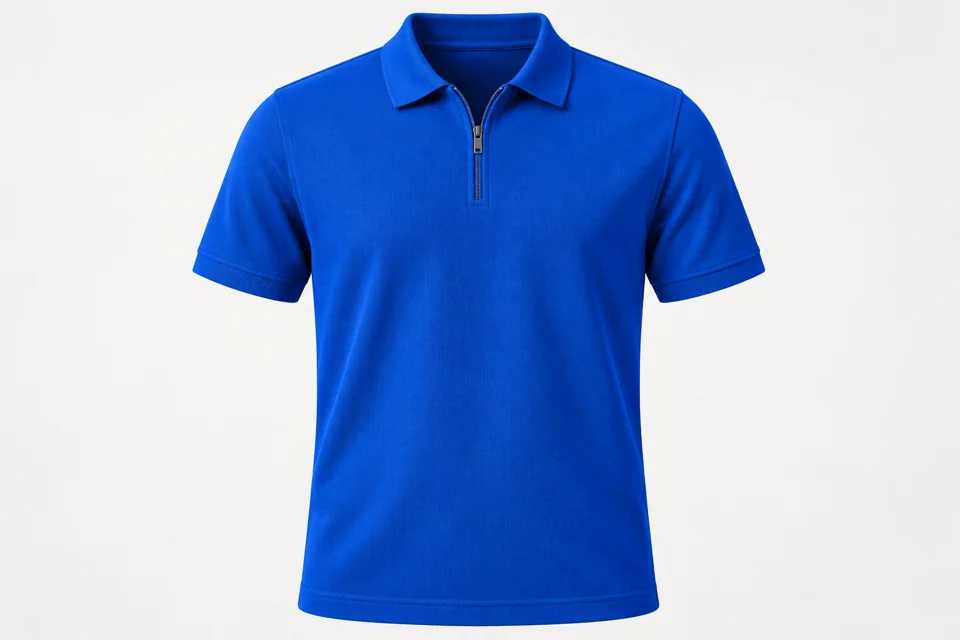

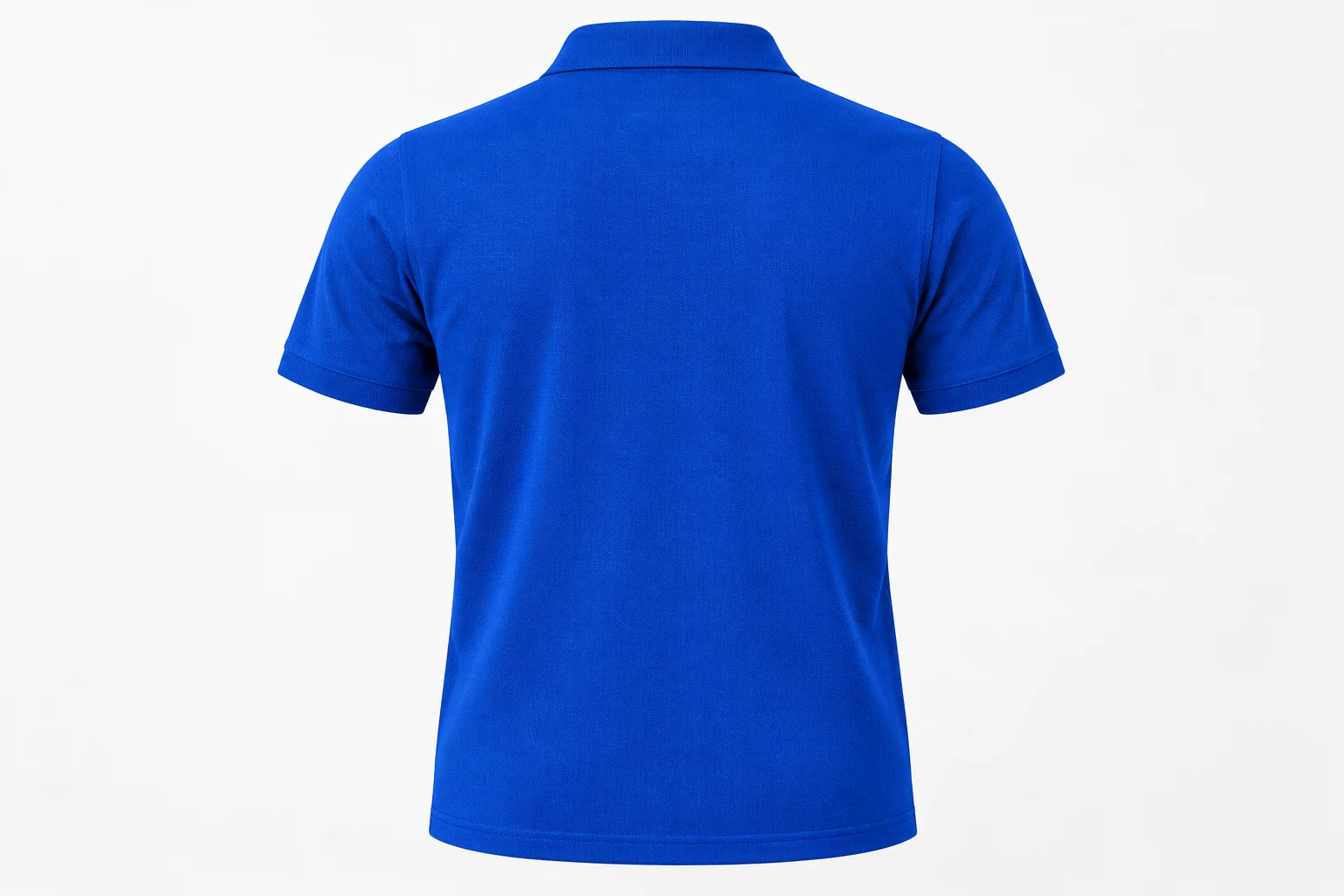
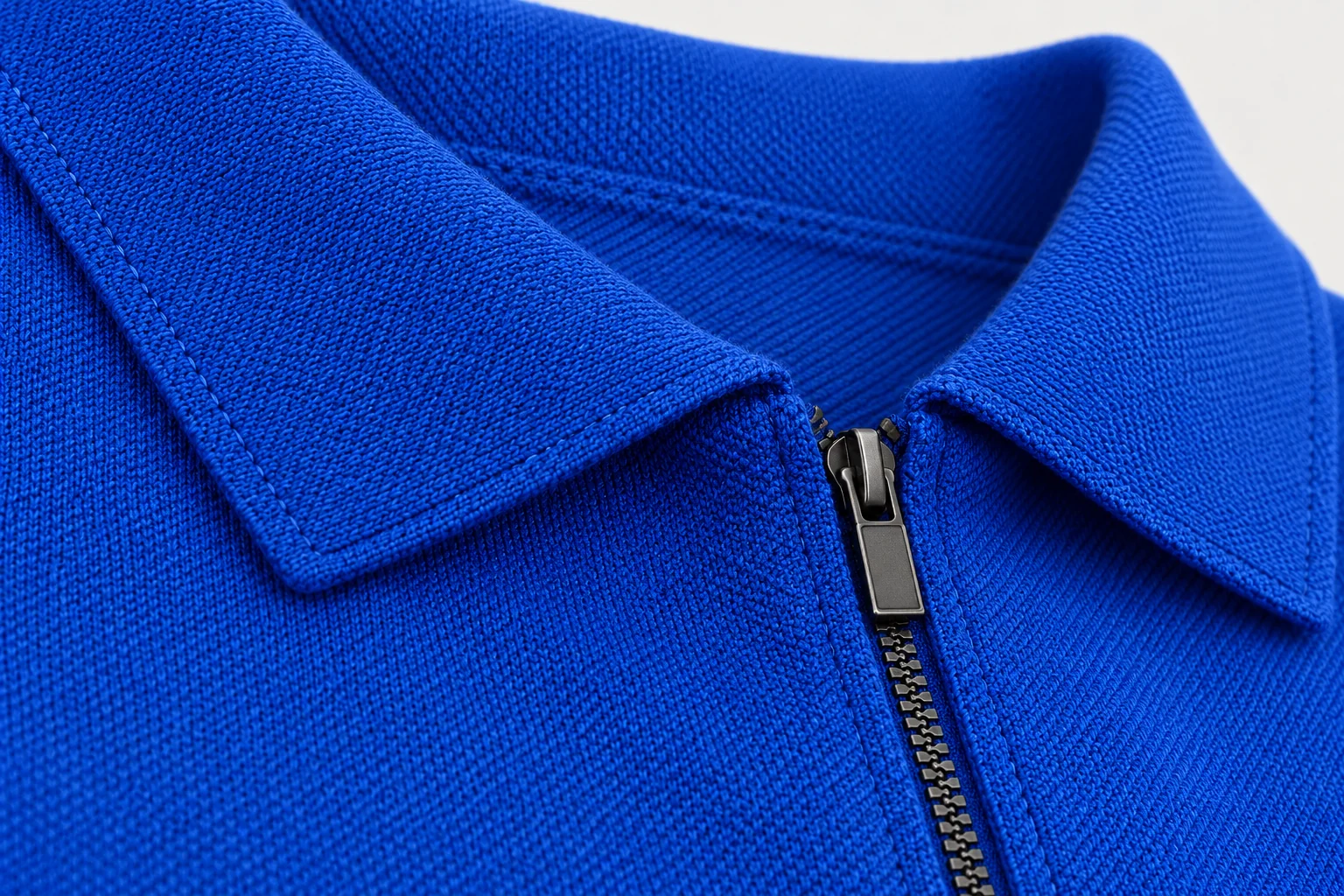
Draw the polo in both zip positions
A zip-neck polo has two front geometries: the closed line and the opening created when the slider is lowered. Define both before selecting a body material. Show where the zip begins at the collar, where its lower end finishes and how far the front should spread when open. A front that looks clean when closed may expose an unfinished underside or an awkward collar attachment when opened. Use paired drawings rather than a single fastened photograph, and ask the garment developer which parts must stay concealed in each position.
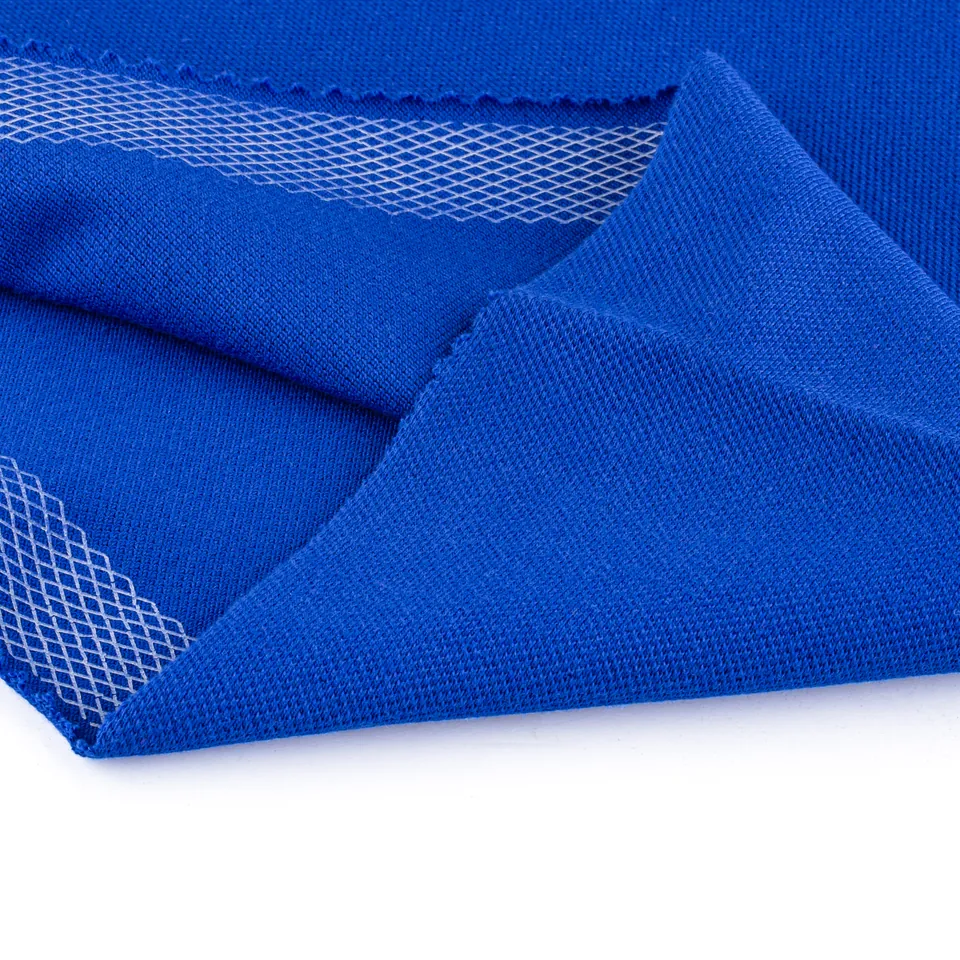
Distinguish a textured body from a stretch-interlock route
The proposed materials change several variables at once: construction, composition, finish and available weights. Compare an actual piqué cutting with the offered interlock rather than attributing every difference to elastane. Put each beside the intended zip and facing, then assess whether the body feels visually and physically balanced with those components. A heavier or more extensible body is not automatically more compatible with a particular zip. The decision is whether the complete opening can retain the intended line while the surrounding shirt permits the planned movement and fit.
Develop the lower termination as its own junction
Ask the sample room to show the internal construction where the zip ends in the front panel. Identify the opening cut, facing shape, seam allowances and any support. Check whether the lower end lies flat or creates a visible lump or pulling line when the wearer sits. Do not solve a poor insertion simply by choosing a thicker body fabric. Have the garment maker compare an opening sample in each body option, using the same identified zip, before deciding which element requires revision. Keep the trial pieces intact so the difference can be inspected.
Connect the collar without hiding the top of the zip
The zip tape, collar edge and neckline finish meet in a small area that should be drawn in section or demonstrated in a sample. Decide whether the collar folds over the top, whether a stand is intended and how the tape ends are enclosed. YKK's sewing guidance warns that inappropriate trimming can damage zip tape; a bulky junction is therefore not permission to cut the component arbitrarily. Ask the zip supplier and garment maker for an approved arrangement. No finished collar type, zip brand or assembly service is established by the fabric catalogue.
YKK Zipper Usage Instruction Manual — precautions on sewing — Section 4-3 warns that trimming zip tape can cause damage. The collar-junction and opening-sample advice is an editorial development application, not YKK approval of these fabrics or a prescribed zip.
Catalogue starting points
PQ-501 is recorded as 100% combed cotton at 190, 205, 220, 235, 250 g/m², with Enzyme + silicone finishing. IN-202 is 92% cotton 8% elastane at 220, 235, 250, 265, 280 g/m², with Compacted + silicone finishing. The shared nominal weights allow a more focused discussion, but do not make the two constructions equivalent. These records do not prove zip compatibility, usable width or garment recovery. Obtain the actual proposed weight and finish and retain the sampled zip reference beside the body identification.
Feel the underside where it contacts the wearer
Review the open and closed shirt at the neck and upper chest, including any guard or facing behind the zip. Observe whether an edge turns outward, the pull contacts the chin or an internal seam feels intrusive. If a guard is added, assess its shape and attachment in both positions; an extra layer can alter the opening's appearance. Treat these as product-development observations rather than medical or certified comfort claims. A successful isolated fabric handle assessment cannot settle what the assembled zip junction feels like against the intended underlayer or skin.
Choose a body and insertion system together
Advance the option whose actual opening sample best demonstrates the design, with unresolved matters listed individually. A useful decision could accept the piqué surface while requiring another top-end finish, or retain interlock for a fit direction while revising facing support. Neither outcome approves all weights in an article range. Document the opening shape, collar arrangement, component references and required follow-up trial. The zip-neck polo should emerge as a considered garment system; it should not be presented as a button-placket design with a different fastening pasted into an unchanged specification.
Technical background and scope
This is a structured editorial draft. Garment-specific development advice is paired with existing catalogue records; compatibility must be established by sampling. AL KUMAŞ supplies fabric. Cutting, sewing and finished-garment production are separate unless explicitly agreed.