



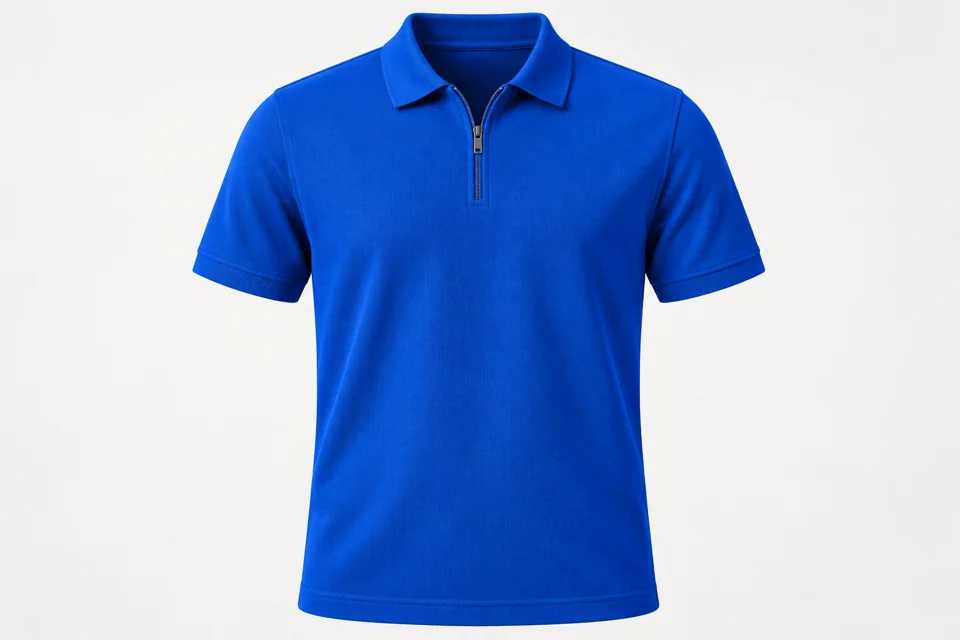

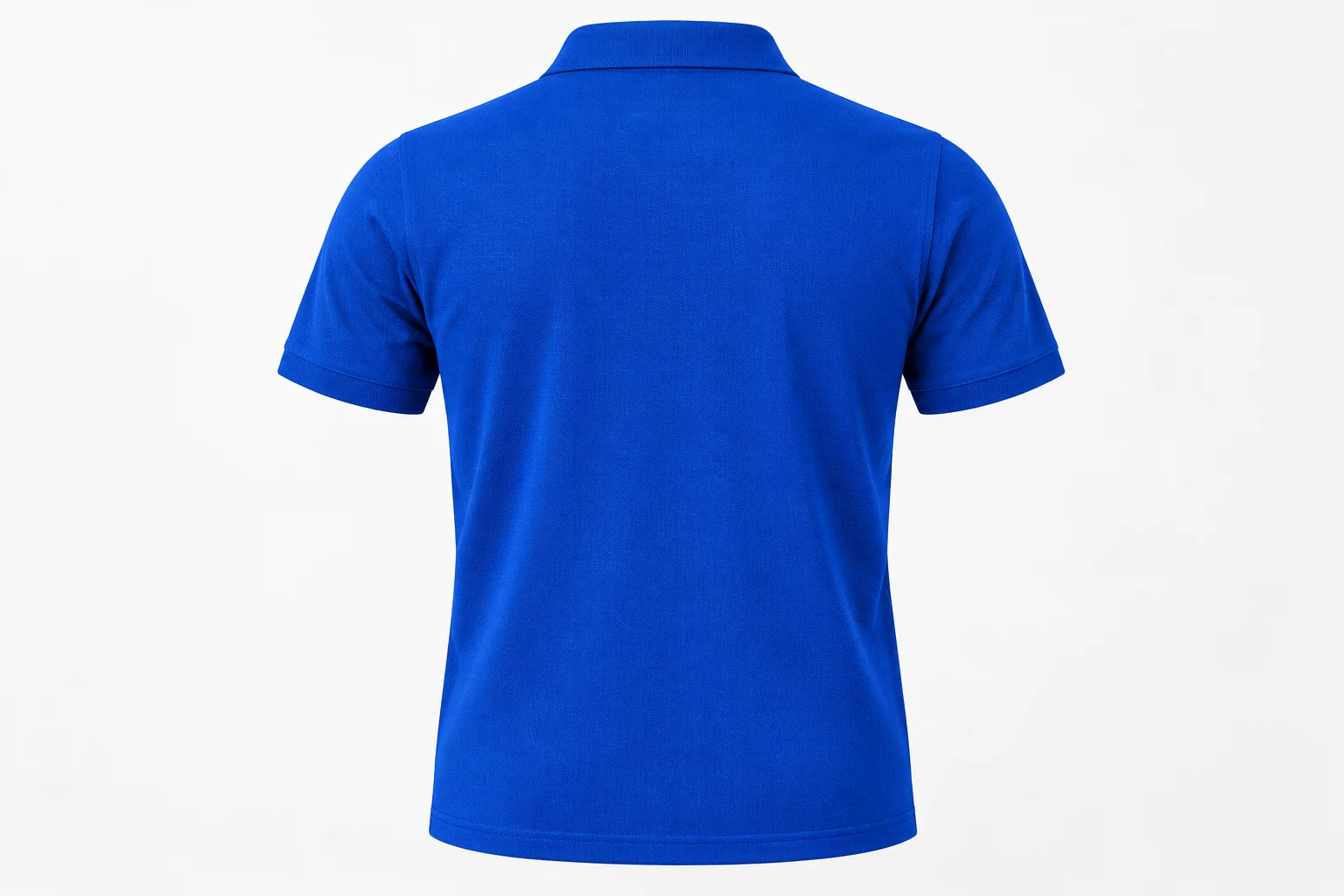
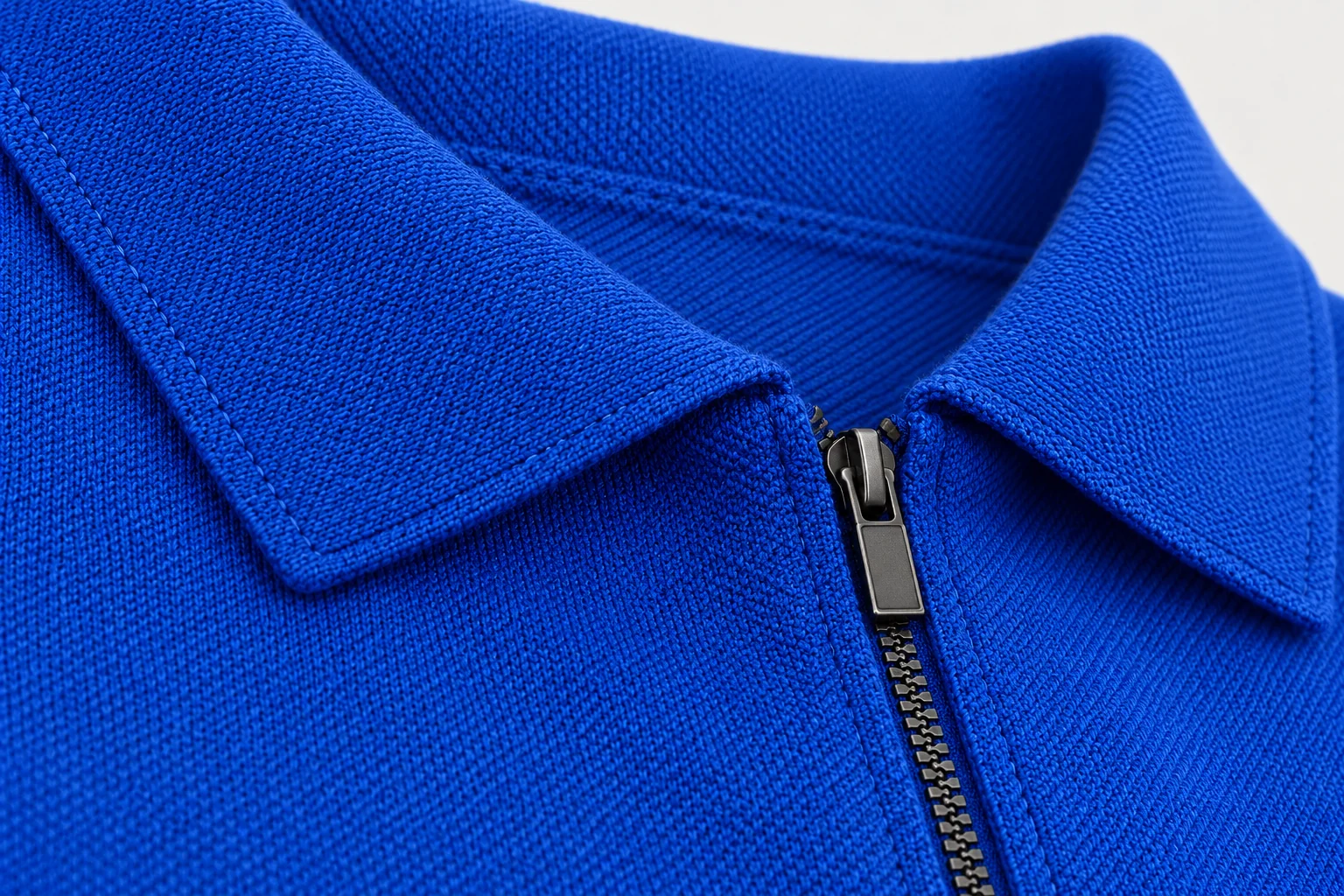
An inserted zip changes the component map
Begin costing with a pattern diagram that explains whether the front remains one main panel with an inserted opening or is constructed from separate panels. Add the zip facing, any underside guard, neckline pieces, collar arrangement and sleeve finish to the component list. Mark which pieces come from the body roll and which come from another material or purchased-component supplier. Removing buttons does not mean that a zip-neck version has the same material consumption as the classic polo. Its opening construction and assembly sequence must be costed on their own terms.
Place the front panel before finding spaces for small pieces
Ask the marker planner to lay out the approved body sizes at the actual usable width. The long front must meet its required surface direction and grain placement before the facing pieces are fitted into available spaces. A facing can rotate only if the approved construction and appearance permit it; treating every small piece as direction-free can create a misleadingly economical layout. Show the selected collar and guard construction on the same costing pack. If one of those is purchased by the piece, do not also charge its material area through the body marker.
Use an area calculation to understand mass differences
For a hypothetical planning exercise, suppose the pattern team identifies 1.70 square metres of net body-material area per garment. At 235 g/m², that area represents 399.5 grams before separately calculated cutting losses and allowances. At 250 g/m², the same hypothetical area represents 425 grams, a difference of 25.5 grams. This is not a real zip-neck-polo pattern or an AL KUMAŞ yield. It isolates the arithmetic effect of mass per area; it does not predict which weight will sew, fit or support the zip satisfactorily.
Do not equate stated zip length with every opening dimension
The zip quotation needs more than a single length. Coats notes that tape-end extensions matter for positioning and can differ between suppliers, so obtain a component drawing or data sheet. The pattern maker needs to see the relevant stops, tape ends and attachment space, not simply a nominal sales length. If a component is substituted, compare those dimensions before assuming it fits the existing facing. A seemingly equivalent zip can therefore require another sample even when the body marker is unchanged. Keep its purchase unit and price separate from fabric length or mass.
Coats Apparel FAQ — important zip dimensions — Tape-end extensions matter for positioning and can vary between suppliers. The cost and area examples are explicitly hypothetical, not sourced production yields.
Catalogue starting points
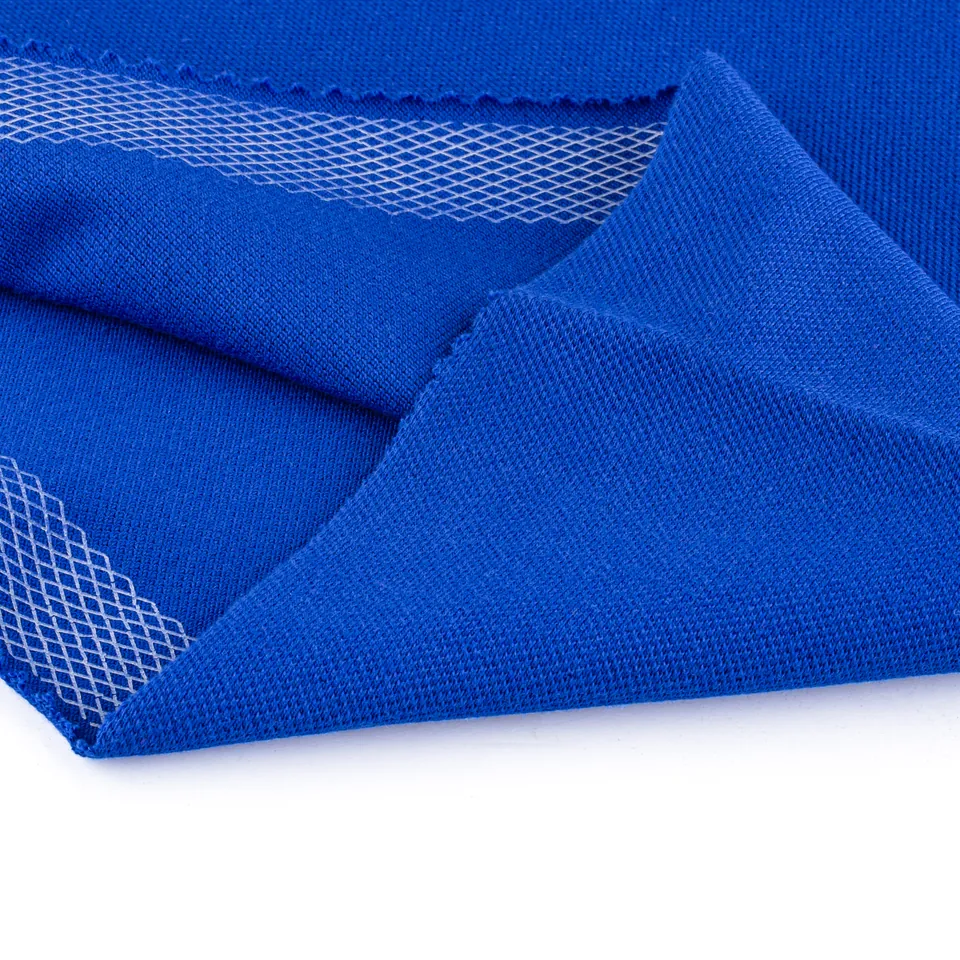
The catalogue lists PQ-501 as 100% combed cotton with options of 190, 205, 220, 235, 250 g/m² and an Enzyme + silicone finish. IN-202 is listed as 92% cotton 8% elastane at 220, 235, 250, 265, 280 g/m² with Compacted + silicone finishing. These are catalogue-range records, not verified usable widths or cutting yields. Ask which precise option is being priced. Comparing the articles at the same nominal GSM may clarify one variable, but the marker, finish and accepted opening sample still belong in the cost decision.
Separate allowances from additional opening operations
Have the cutting team identify pattern compensation, cutting losses and any other material allowances explicitly, including what is already included. Then ask the garment maker to cost insertion, facing preparation, collar attachment and any guard or finishing operations. These are assembly requirements, not extra GSM. For an illustrative design change, extending the opening might alter facing dimensions, the purchased zip and insertion work together; it should trigger a revised component sheet rather than a flat percentage increase. The actual effect requires the manufacturer's process and pattern review, not a universal conversion.
Compare the completed opening at the intended order scale
Put body fabric, secondary material, zip, collar where separately purchased, decoration and sewing on distinct lines with their confirmed units. Ask which development charges or component minimums apply to the actual colour and size programme. If the zip supplier needs a different quantity basis from the fabric supplier, keep that gap visible instead of assuming both follow the garment forecast exactly. The comparison should describe an acceptable shirt in a defined quantity mix. A low kilogram price or a low zip-piece price alone cannot establish the economical complete route.
Technical background and scope
This is a structured editorial draft. Garment-specific development advice is paired with existing catalogue records; compatibility must be established by sampling. AL KUMAŞ supplies fabric. Cutting, sewing and finished-garment production are separate unless explicitly agreed.