



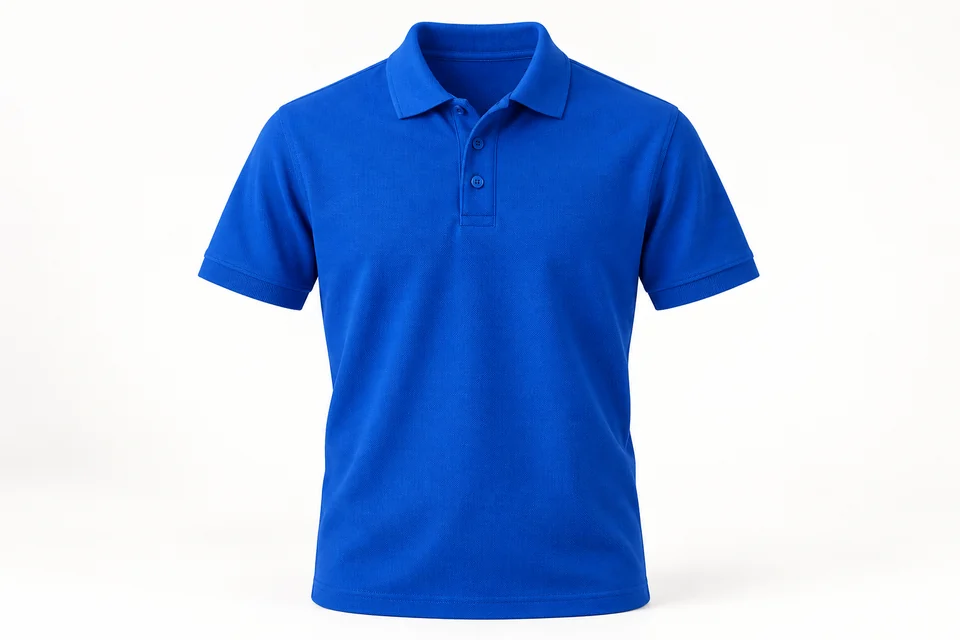
Start at the collar, then look at the whole garment
A polo often looks simple in a line drawing: body, short sleeves, collar and a short opening. In development, the connections between those parts deserve as much attention as the body fabric. Decide whether the product is a relaxed casual polo, a closer-fitting fashion style or a uniform programme with defined appearance requirements. Give the garment producer a reference that shows the intended collar shape, opening depth, sleeve finish and hem. Mark which details are essential and which can be developed.
This brief concerns fabric sourcing and garment-development coordination. AL KUMAŞ manufactures knitted dyed fabrics; a polo image is an end-use illustration. It does not establish a supply offer for collars, buttons, sewing or completed garments. Identify the responsible party for each component before assuming the body-fabric quotation covers the whole product.
Read the piqué proposal precisely
The catalogue contains PQ-501, recorded as 100% combed cotton piqué with weight options of 190, 205, 220, 235 and 250 g/m². The uploaded premium cotton piqué polo plan specifies 180–210 GSM combed ring-spun cotton. Some recorded weights lie within that target range, but that observation does not establish yarn-description equivalence, a particular finished handle or current availability. Request a representative proposal against the full brief.
Other workbook plans describe stretch piqué or polyester-based performance constructions. Those alternatives should remain separate development routes. There is no separate stretch-piqué article in the current twenty-article catalogue, so do not invent one or relabel a stretch single jersey as piqué. Ask the mill whether a suitable development is possible and what evidence or sample would be needed. CottonWorks' construction reference is useful for the vocabulary; the article name alone cannot approve a finished polo.
Make the trim review specific
Create a component sheet that lists the body, collar, cuff if used, placket construction, thread, buttons and any reinforcement. Add colour references for visible parts. If a collar is sourced separately, record its own reference rather than borrowing the body article code. Ask the garment team which combination it intends to sample and how that combination will be identified later.
Review the opening both flat and on a representative wearer or form. Look at the relationship between collar size, opening depth and body proportions. Check the sleeve opening and hem in the intended pattern. Record observations without turning a fitting preference into a quantified performance result. If there is a concern about seam behaviour or component movement after care, ask the responsible technical team to define the relevant assessment.
Plan colour and decoration across components
For a single-colour polo, put the proposed body and visible trims together during review. For a contrast design, explain which difference is intentional. The same colour name on two materials is not enough to document a coordinated appearance. Keep the approved references and the reviewer’s decision with the component sheet so purchasing and assembly refer to the same version.
If the polo carries embroidery or print, make the logo size and placement part of the trial. Ask the decoration provider to assess the proposed material combination and retain the sample used for approval. A satisfactory undecorated body does not establish the appearance of a stitched logo or a printed panel. Keep artwork approval distinct from approval of the decorated garment.
Turn a uniform request into a repeatable specification
A repeat programme benefits from clear records more than from broad claims such as hardwearing or corporate quality. Describe the actual care routine and appearance requirements, then agree the relevant evaluation with your technical team. If the destination or customer requires documents, list them before requesting a final offer. Do not treat the word uniform as evidence of protective performance or certification.
Close with the selected fabric proposal, component references, size range, quantity by colour and sampling status. Ask for current commercial confirmation rather than copying terms from another style. The useful outcome is a polo brief in which the body fabric and the garment components are connected, while each supplier’s responsibility remains visible and the final product is approved through its own sample process.
Source and specification notes
Catalogue figures come from the recorded fabric specifications. Product-planning comparisons retain the source specifications; numeric garment SKUs are not fabric article IDs. General technical references are linked beside the relevant discussion. Development workflow recommendations are editorial guidance.
Compare source product plans ↗