




Decide what makes this shirt a polo
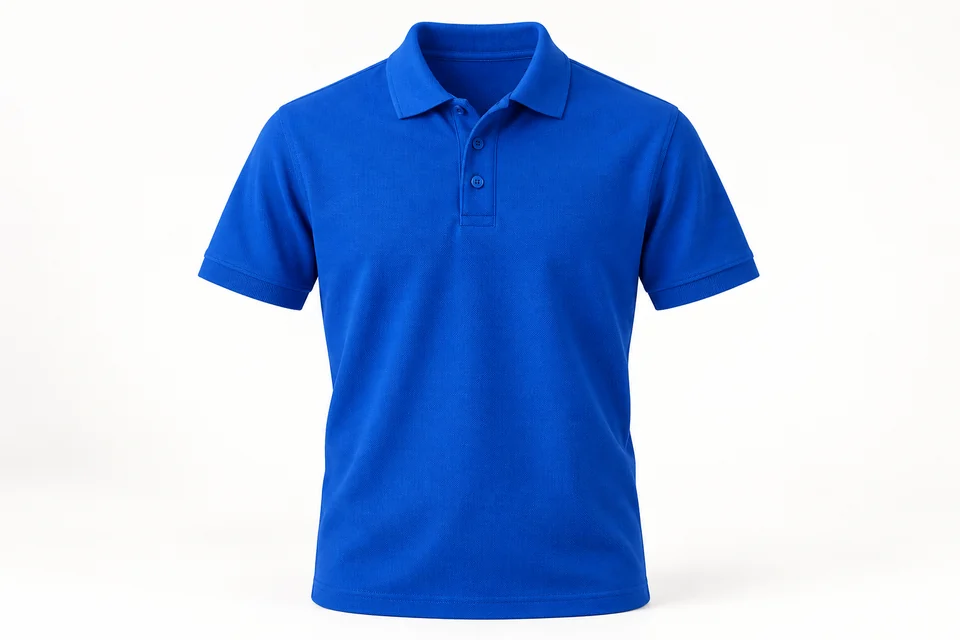
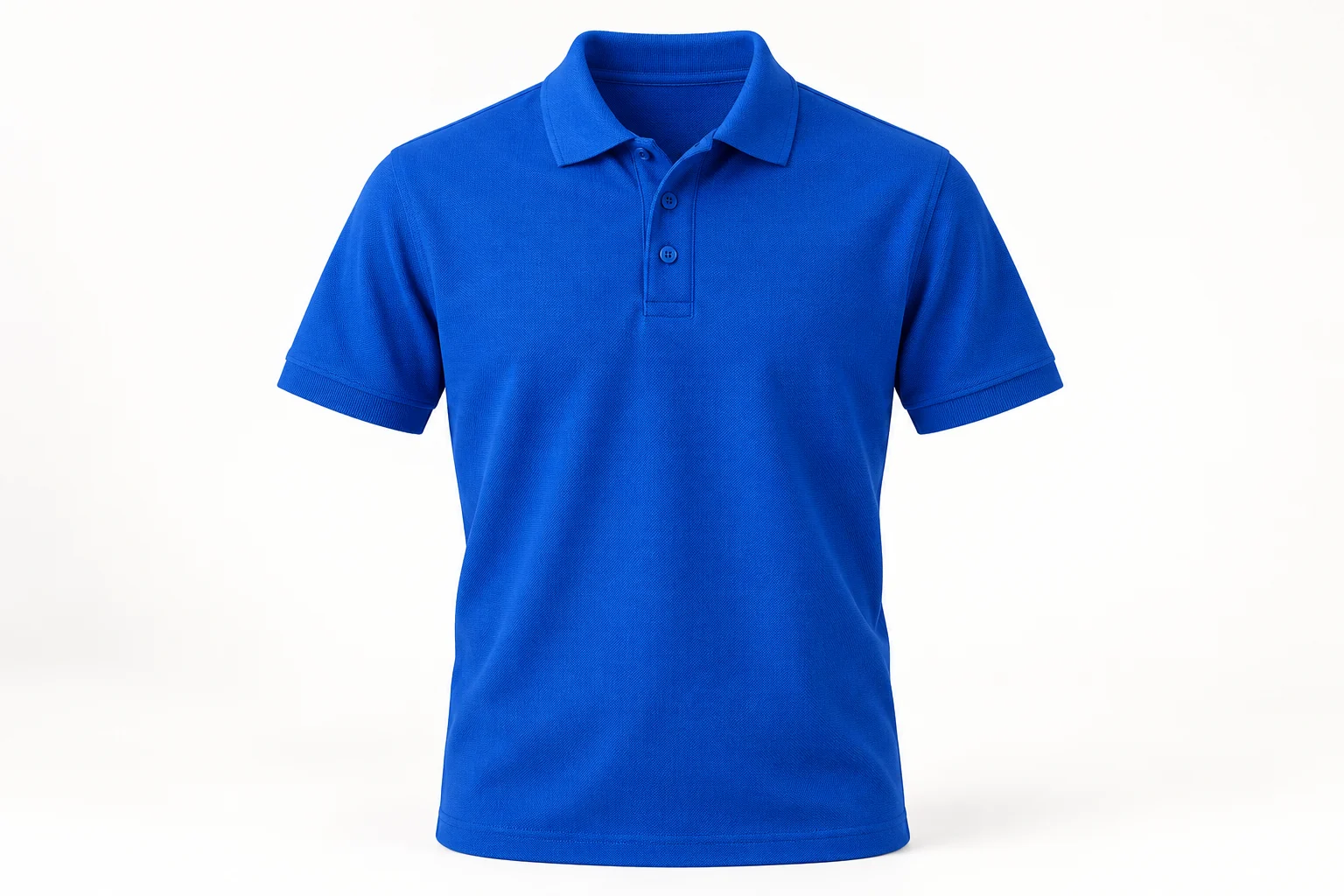
A classic polo shirt brings a collar and a short opening into a knitted body. That opening is a small part of the garment's area but a large part of its visual identity. Begin the fabric decision with a drawing of the collar, placket depth, button arrangement and intended worn position. Is the top button normally open, and should the collar sit close to the neck or spread? Show the desired answer on the reference. A body cutting cannot reveal whether that arrangement will remain balanced when assembled.
Compare texture without assuming a performance benefit
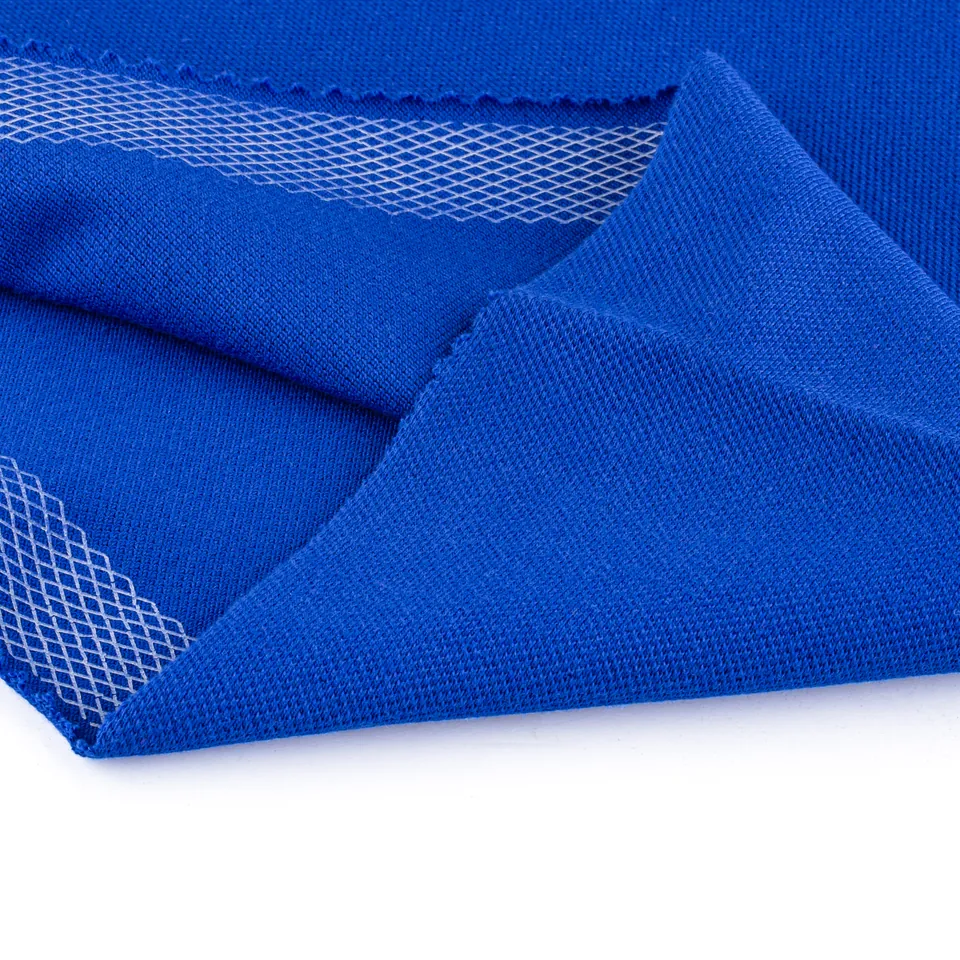
CottonWorks identifies piqué among common polo-shirt constructions, while also showing that different stitch arrangements create different structures. This supports looking at construction rather than treating all cotton knits as identical. It does not prove that PQ-501 is any particular piqué subtype or meets an air-permeability target. Compare the actual offered material with SJ-101 under the same lighting and beside the intended trousers or jacket. Decide whether the textured or smoother surface fits the collection, then investigate how it behaves in the assembled shirt instead of describing either as inherently superior.
CottonWorks: Single & Double Knits — Piqué is discussed as a common polo construction, with different piqué stitch arrangements. No particular subtype or article-specific performance is assigned to PQ-501.
Specify the collar before approving the body
Ask whether the design calls for a separately knitted collar, a cut-and-sewn collar, a stand or another arrangement. The body article record does not supply that answer or establish that finished collars are included. Request an identifiable collar sample with its own composition, construction and finishing details. Check the attachment line, visible roll and front-point position on the body prototype. If a collar stands well only when pressed into place for photography, the sample has not yet demonstrated the intended everyday appearance. Record the actual construction used rather than borrowing the collar description from a reference brand.
Evaluate a supported opening without making it rigid
The placket combines body fabric, folding or facing, buttonholes, buttons and possibly support material. Have the sewing team compare a controlled opening sample before completing an entire size set. Look for a flat closed line and a deliberate open shape. Ask which component changes when the front becomes bulky, pulls at the bottom or shows an unwanted outline. Adding a heavier support may change the hand of the opening without solving its assembly problem. Choose the least complicated acceptable construction that the garment maker can reproduce, and preserve that accepted component combination.
Catalogue starting points
PQ-501 is listed as 100% combed cotton with recorded options of 190, 205, 220, 235, 250 g/m². SJ-101 is 100% compact combed cotton with options of 130, 140, 150, 160, 170 g/m². The recorded weight ranges do not overlap, so this first comparison changes nominal weight as well as construction and yarn description. An observed difference cannot be assigned solely to texture. Neither record provides verified usable width, collar compatibility, shrinkage, recovery or finished-shirt performance; those questions require the particular offered supply and garment sample. Both carry the finish label Enzyme + silicone; this designation is not a measurement of the assembled shirt.
Choose hem and sleeve details together with the body
A polo intended to be worn untucked needs an intentional hem length and, where present, side-slit treatment. Inspect the front-to-back length relationship with the wearer standing and seated. If a sleeve band is specified, assess its pressure, appearance and attachment separately from the sleeve body. The same body material can look different with a folded sleeve edge and a contrasting band. Make the styling choice before judging the prototype against a reference with another finish; otherwise the buyer may reject a suitable body fabric for a component decision that has not been developed.
Advance a material only with its assembly record
At selection, retain the body cutting, collar reference, placket sample and photographs of the chosen hem and sleeve finish. Label what is accepted and what remains provisional. A useful outcome might be acceptance of the textured appearance while collar behaviour awaits another sample; that is more precise than approving the complete polo. If SJ-101 creates a deliberately lighter jersey polo direction, describe that as a different design route rather than a duplicate of PQ-501. The material decision should explain the shirt the buyer is developing and the evidence still needed to release it.
Technical background and scope
This is a structured editorial draft. Garment-specific development advice is paired with existing catalogue records; compatibility must be established by sampling. AL KUMAŞ supplies fabric. Cutting, sewing and finished-garment production are separate unless explicitly agreed.