

PRODUCTION INFORMATION
Fifty production topics from yarn to garment.
This section covers the main values checked during fibre, yarn, knitting, dyeing, finishing, testing and sewing.
Fiber Selection and Product Target
Cotton, polyester, viscose, modal, lyocell or polyamide must be chosen against end use, care cycle, hand feel, cost and claim requirements.
- End use
- Care expectation
- Hand and drape
- Target market
Cotton Fiber Quality and Bale Management
Staple length, fineness, strength, maturity and contamination influence yarn evenness and dyed appearance.
- Staple length
- Micronaire
- Strength
- Contamination
Certified Fiber and Traceability
Organic or recycled-content claims require valid scope documentation and chain-of-custody evidence, not merely a material name.
- Transaction evidence
- Scope check
- Lot identity
- Claim wording
Yarn Count: Ne, Nm and Tex
Yarn count does not set GSM alone; it must be read with construction, stitch length, gauge and finishing.
- Count system
- Tolerance
- Ply
- Fabric target
Ring and Compact Yarn Comparison
Compact spinning can improve hairiness, strength and surface clarity; the decision should match the product value proposition.
- Hairiness
- Evenness
- Strength
- Cost impact
Combed and Carded Yarn Selection
Combing reduces short fibers and neps while adding cost and waste; premium surfaces and economy programs require different choices.
- Short-fiber share
- Nep level
- Surface target
- Program cost
Open-End and Ring-Spun Yarn
Open-end and ring yarns differ in bulk, evenness, strength and surface character and should be approved in finished fabric.
- Bulk
- Strength
- Hand feel
- End use
Yarn Twist and Torque Management
Twist level directly affects yarn strength, hand feel, hairiness and spirality tendency in single jersey.
- Twist factor
- Torque
- Strength
- Spirality risk
Fiber Blend Ratio and Uniformity
A blend ratio is more than a label percentage; blend uniformity, differential dyeing and lot repeatability must be managed together.
- Composition tolerance
- Blend uniformity
- Cross dyeing
- Lot repeatability
Yarn Quality Tests and Acceptance Criteria
Count, unevenness, imperfections, neps, hairiness and strength must be linked to knitting performance and surface risk.
- Evenness data
- Break performance
- Hairiness
- Lot comparison
Machine Gauge Selection
Gauge must be compatible with yarn diameter, stitch density, surface appearance and target GSM.
- Needle count
- Yarn diameter
- Stitch density
- Surface target
Stitch Length and Fabric Balance
Stitch length is a critical process variable for GSM, width, air permeability, stretch and dimensional stability.
- Stitch length
- Machine setting
- GSM
- Shrinkage behaviour
Single Jersey Engineering
Single jersey is light and efficient; edge curl, spirality and dimensional change require yarn and process control.
- Spirality
- Edge curl
- GSM-width
- Compacting allowance
Interlock Fabric Engineering
Interlock offers a balanced surface and fuller hand; machine setting, usable width and dye load should be verified before quotation.
- Surface balance
- Fullness
- Usable width
- Dye penetration
Rib and Ribbed Structures
Rib structures provide high crosswise stretch; recovery, elastane feed, cutting width and trim compatibility are managed together.
- Stretch
- Recovery
- Elastane feed
- Cutting width
French Terry Construction
Ground and inlay yarn combinations set face, loop back, bulk and GSM; any raising plan must be known from the outset.
- Ground yarn
- Inlay yarn
- Loop appearance
- Target GSM
Three-End Fleece and Brushed Fabric
Three-end fleece offers bulk and warmth; raising loss, pilling and seam thickness are tested during development.
- Binding plan
- Raising allowance
- Pilling
- Seam thickness
Piqué, Mesh and Technical Knits
Textured and open structures are optimized for breathability, snag risk, stability and print surface according to end use.
- Repeat structure
- Breathability
- Snag risk
- Surface continuity
Greige Fabric Control and Lot Preparation
Greige rolls must be checked for structure, GSM, width, oil, stains and lot identity before a dye recipe can be managed reliably.
- Greige identity
- Oil and stains
- GSM-width
- Lot grouping
Scouring and Absorbency
Controlled removal of oils, waxes and process auxiliaries creates uniform wetting and a repeatable dyeing substrate.
- Absorbency
- pH
- Oil removal
- Weight loss
Bleaching and Optical White
Whiteness must be balanced against fiber damage, strength, yellowing risk and the subsequent colour route.
- Whiteness index
- Strength
- pH neutralization
- Yellowing risk
Pre-Setting Synthetic Blends
Heat history in elastane or synthetic structures affects width, GSM, creasing and dye behaviour; pre-setting conditions must be recorded.
- Temperature-time
- Width control
- Elastane protection
- Crease risk
Lab Dip and Colour Development
A lab-dip approval cannot transfer reliably to bulk without a physical standard, agreed illuminants, substrate and decision rule.
- Physical standard
- Illuminants
- Delta E approach
- Approval record
Reactive Dyeing of Cotton
Reactive dye selection, alkali-salt profile, temperature, time and wash-off jointly determine colour yield and fastness.
- Dye class
- Dosing profile
- Fixation
- Wash-off efficiency
Disperse Dyeing of Polyester
Temperature profile, oligomer control, reduction clearing and heat setting affect fastness and surface clarity in disperse dyeing.
- Temperature profile
- Oligomers
- Reduction clearing
- Thermomigration
Pigment Dyeing and Washed Effects
The pigment binder system creates a fashion look but must be sampled for crocking, hand feel and post-sewing effect.
- Binder system
- Crocking
- Hand feel
- Wash effect
Jet and Soft-Flow Dyeing
Machine load, liquor ratio, nozzle pressure and fabric circulation affect creasing, abrasion, levelness and repeatability.
- Machine load
- Liquor ratio
- Cycle time
- Crease control
Dye Recipe and Lot Repeatability
A recipe alone is insufficient; material, machine, water, process curve and finishing history belong in the same traceable record.
- Recipe version
- Machine identity
- Water quality
- Process history
Shade Continuity and Metamerism
Within-lot and between-lot colour is managed through instrument data, controlled visual assessment and approved shade bands.
- Spectral data
- Light booth
- Shade band
- Continuity card
Stentering and Width Control
Stentering is a critical finishing stage where width, GSM, drying, chemical application and surface appearance are balanced.
- Chain setting
- Overfeed
- Temperature
- Usable width
Compacting and Shrinkage Control
Mechanical compacting moves toward target shrinkage while balancing GSM, width, hand feel and surface distortion.
- Compaction ratio
- Length shrinkage
- GSM change
- Hand feel
Raising and Thermal Bulk
Pass count, wire type and fabric tension add warmth and bulk while managing fiber loss and pilling risk.
- Pass count
- Pile density
- Weight loss
- Pilling
Sueding and Peach Finish
Mechanical surface treatment creates a premium hand; shade shift, strength, lint and seam appearance require sampling.
- Abrasive choice
- Shade shift
- Strength
- Surface continuity
Softener and Silicone Finishing
Softener choice should deliver target hand without compromising absorbency, yellowing, seam behaviour or later printing.
- Chemistry type
- Dosage
- Absorbency
- Yellowing
Moisture-Management Finishing
Performance is verified through the right test method, laundering durability and intended garment layer—not by claim alone.
- Wicking-spreading
- Drying time
- Wash durability
- Garment layer
Water-Repellent Finish and Durability
Water repellency is defined with application, curing, wash cycles and target-market chemical requirements.
- Initial performance
- Curing
- Wash cycles
- Chemical compliance
Anti-Pilling Finishing
Pilling control is not only chemical; yarn, structure, raising, surface treatment and end-use abrasion must be considered together.
- Yarn hairiness
- Surface treatment
- Test method
- Appearance grade
GSM, Width and Conditioning
GSM and width must be reported with conditioning, relaxation time and a clear usable-width definition.
- Conditioning
- Sample area
- Usable width
- Tolerance
Shrinkage, Spirality and Skew
Dimensional stability results are not comparable without defined washing, drying, marking and measurement methods.
- Test standard
- Wash cycle
- Length-width shrinkage
- Spirality angle
Colour Fastness: Wash, Crocking, Perspiration and Light
Fastness plans follow end use and shade depth; method and minimum grade belong in the technical file.
- Wash
- Dry-wet crocking
- Perspiration
- Light
Strength and Pilling Tests
Bursting strength and pilling appearance are interpreted against structure, GSM and garment-use intensity.
- Burst strength
- Pilling method
- Cycle count
- Visual scale
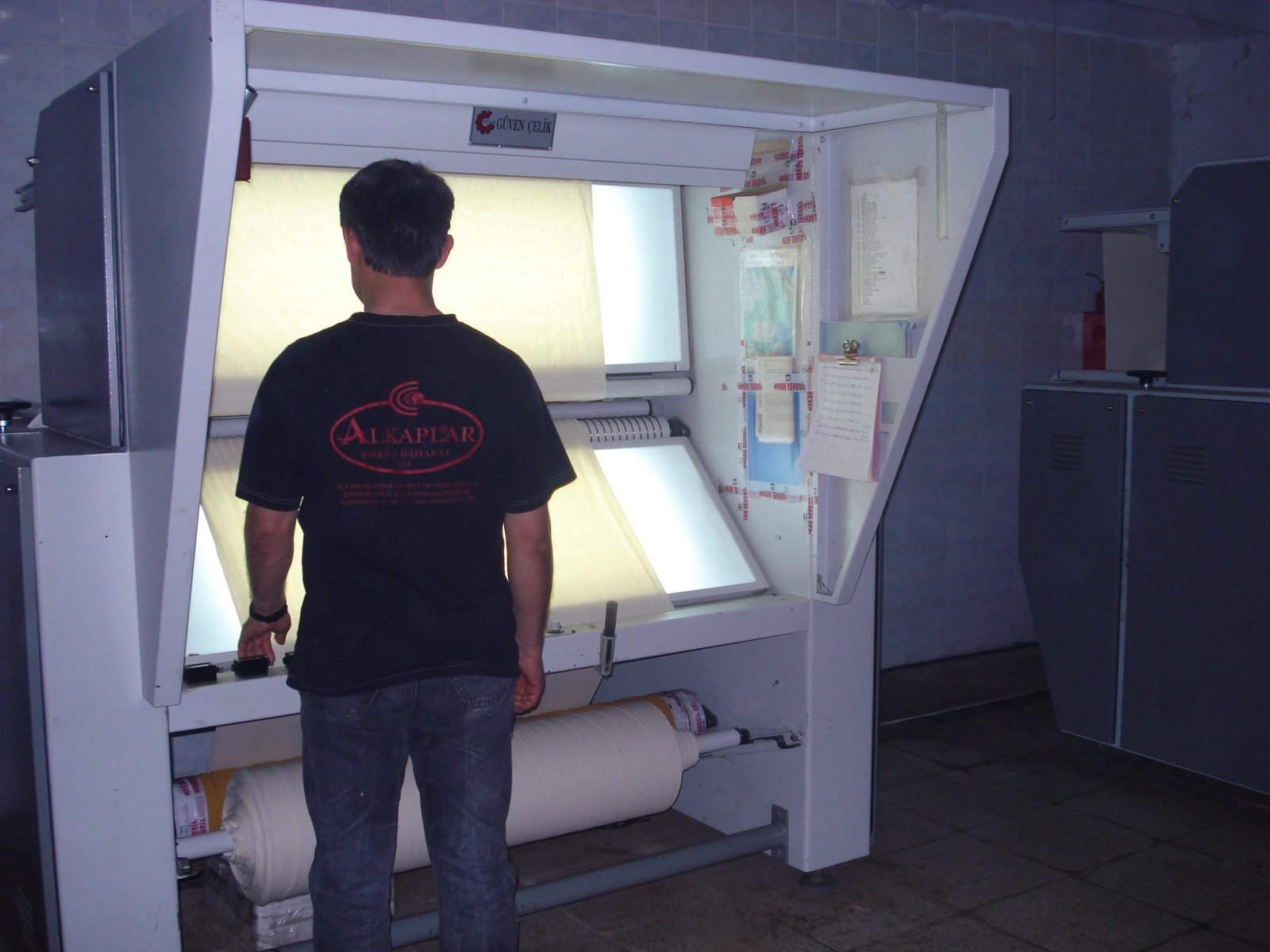
Four-Point Fabric Inspection
Defect class, roll length, inspection speed, acceptance level and report format are agreed before production.
- Defect class
- Point limit
- Roll identity
- Mapping
Final Roll Control and Packing
Pre-shipment verification covers roll measurements, shade grouping, labels, packing, moisture protection and packing list.
- Roll measurement
- Shade group
- Label
- Packing
Building a Technical Fabric Brief
End use, construction, composition, GSM, width, colour, finish, tests, quantity and timing belong in one controlled brief.
- End use
- Technical targets
- Approval route
- Commercial terms
Sampling and Approval Plan
Lab dips, yardage samples, pilot cuts and pre-production approvals need a purpose, owner and decision date.
- Sample type
- Decision owner
- Comment format
- Approval date
MOQ, Lead Time and Capacity Planning
MOQ is modelled with colour count, machine load, yarn supply, tests and the approval calendar.
- Quantity per colour
- Machine load
- Critical path
- Capacity reservation
Export Packing and Logistics
Roll presentation, palletizing, moisture protection, Incoterm, document set and delivery point are clarified at quotation.
- Roll presentation
- Packing
- Incoterm
- Shipping documents
Fabric Relaxation and Spreading
Knitted rolls must release stored tension; relaxation, spreading tension, direction and shade grouping protect the cutting plan.
- Relaxation time
- Spreading tension
- Direction
- Shade group
Cutting, Marker and Fabric Yield
Usable width, shrinkage allowance, direction, defect map and size ratio determine real garment consumption.
- Marker efficiency
- Usable width
- Defect placement
- Shrinkage allowance
Knit Sewing and Final Garment Testing
Needle, thread, differential feed, seam extensibility, pressing and care testing verify final garment performance.
- Needle-thread
- Differential feed
- Seam extensibility
- Care test
No results match these filters.
Fiber and yarn
Fiber and yarn
Material identity, yarn geometry and traceability determine fabric behaviour before knitting begins.

Knitting engineering
Knitting engineering
Gauge, stitch length and construction jointly shape weight, width, stretch, surface and garment yield.

Preparation, dyeing and colour
Preparation, dyeing and colour
Uniform preparation, the right dye class, controlled recipes and a physical colour standard underpin repeatable lots.

Finishing and performance
Finishing and performance
Compacting, stentering and functional finishes align target hand feel with measurable performance.

Quality and testing
Quality and testing
A nominal number is not commercially useful unless method, conditioning, target and tolerance are defined together.
Development and logistics
Development and logistics
Technical brief, sampling, capacity, lead time and delivery terms are managed in one decision plan.

Fabric to garment
Fabric to garment
Relaxation, spreading, cutting, sewing and care tests connect fabric performance to the finished garment.

Where does this affect production?
This parameter can affect material selection, machine settings, later processes and the finished garment. It should be reviewed with the fabric structure and intended use.