






Draw a wide opening that still belongs on the shoulders
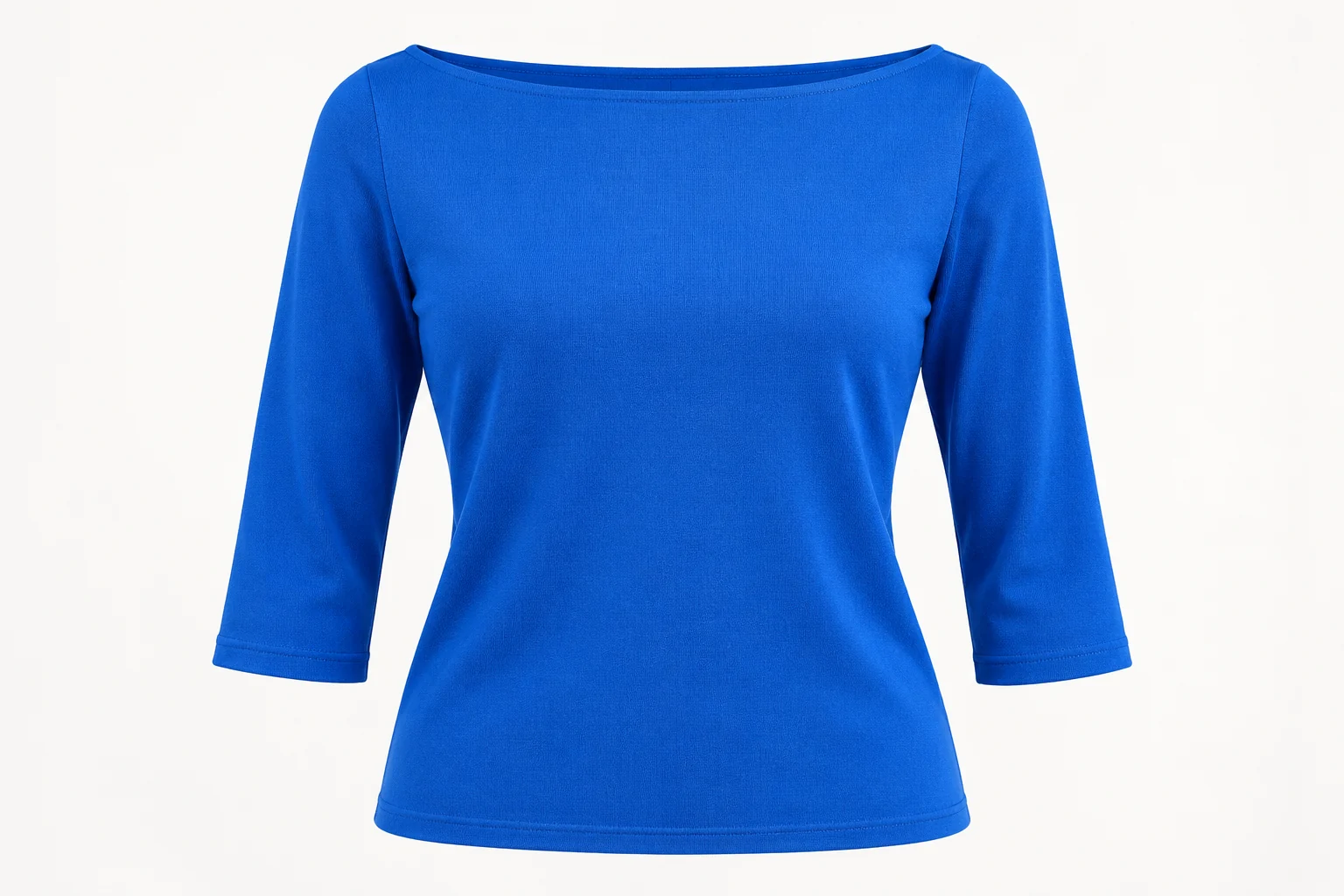
A boat-neck top is defined by a broad upper line, but that description leaves several design choices unresolved. Mark how far the opening reaches towards each shoulder, the intended front and back depths and the amount of shoulder that remains covered. Show a neutral worn position rather than pulling the sample sideways to exaggerate the shape. Decide whether the design is meant to sit symmetrically or has another deliberate styling instruction. This establishes a wide-neck brief without silently turning it into an off-shoulder garment with different fit and assembly questions.
Choose the edge construction before judging the body
Ask the garment developer whether the neckline uses a turned edge, binding, facing or another specified finish. A long, shallow opening can display an uneven edge clearly, so a soft body cutting alone is not a selection decision. Make a representative sewn opening in each candidate and identify the actual materials used. If support is proposed, compare its effect on the edge's shape and hand rather than assuming that reinforcement is automatically desirable. The accepted finish must permit the intended dressing access while retaining the planned appearance; the catalogue supplies no standard attachment ratio for this neckline.
Keep shoulder anchoring visible in the comparison
Inspect where each neckline end meets the shoulder construction. Ask which seam or overlap anchors the edge and how its allowances are enclosed. A top can appear balanced across the front while one junction turns outward or makes the opening settle differently on the body. Compare corresponding sides, then assess the back position without rearranging the sample. If the design has sleeves, use the intended sleeve construction in the next trial because its relationship with the shoulder should not be guessed from a sleeveless fragment. Do not invent an integral shoulder support that the drawing does not specify.
Separate material differences from pattern corrections
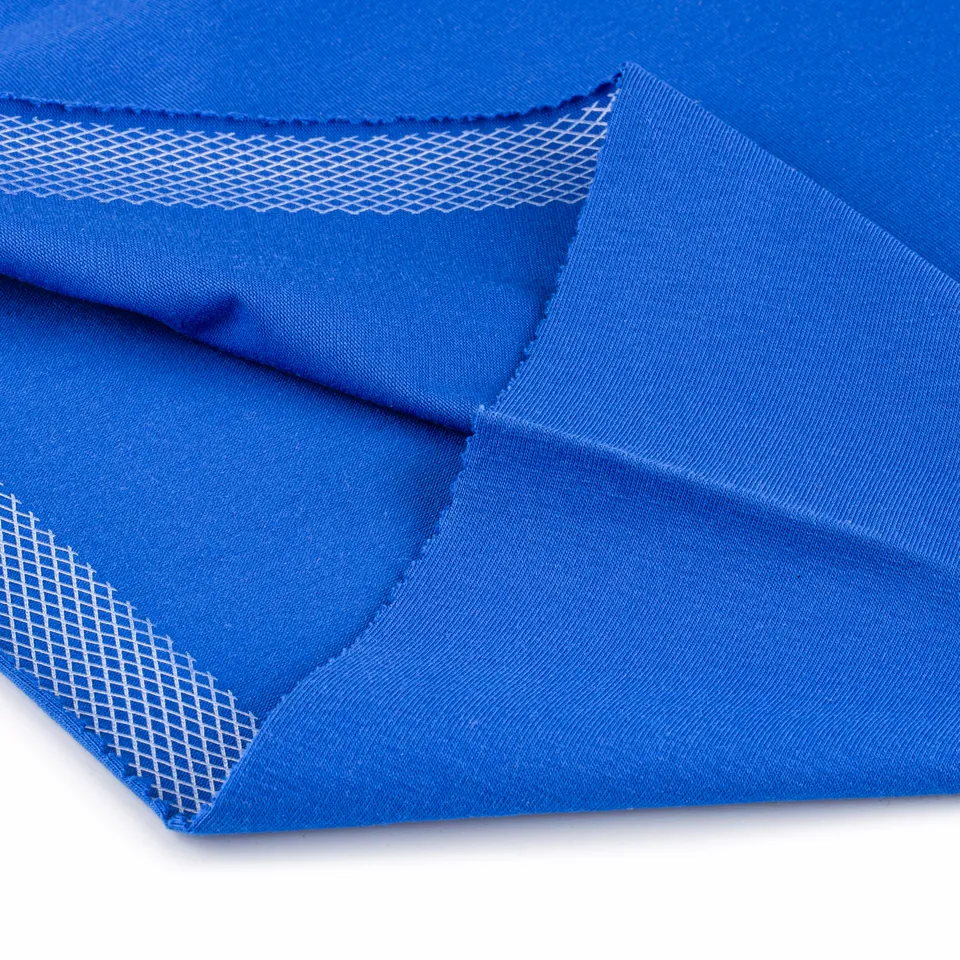
The two catalogue candidates differ in construction, composition and weight range. Their comparison cannot isolate elastane content by itself. CottonWorks frames knit development around the intended garment function and aesthetic; here that means asking what the broad neckline should look like in use. Make the initial observations against a documented pattern, then state whether the next trial changes material, opening geometry or finishing. Avoid asking for more recovery as a vague cure when the observed problem may be a shoulder balance or edge-assembly decision. An actual sample is needed to understand that relationship.
CottonWorks: Designing Knit Textiles — Intended end use, function and aesthetic are questions in knit development. Boat-neck shoulder geometry and sample comparisons are original editorial applications, not source-tested results for these articles.
Catalogue starting points
SJ-102 is recorded as 95% cotton 5% elastane at 170, 180, 190, 200, 210 g/m² with Enzyme + compacted finishing. IN-202 is 92% cotton 8% elastane at 220, 235, 250, 265, 280 g/m² with Compacted + silicone finishing. Those records identify potential body materials, not verified neckline growth, shoulder coverage or finished-top recovery. Ask which precise weight, finish and usable width are proposed. The additional elastane in the interlock record does not prove a better boat-neck result, and neither article entry confirms current supply or a ready-made edge solution.
Include the intended underlayer in the style decision
Where the design is intended to sit over a camisole or another layer, show that item in the fitting reference and decide what should remain visible. If no underlayer is intended, assess the stated design instead of introducing one to conceal an unresolved opening. Compare the top during ordinary reaching and seated positions selected for its use. Record any change in neckline or shoulder position and ask the pattern team to interpret it. A universal coverage promise cannot be inferred from the wide opening, a fibre description or one carefully arranged fit photograph.
Retain a neckline assembly reference
Select the body with the accepted opening width, front-and-back depth, shoulder junction and edge materials attached to the same sample record. Note any stage that remains provisional, such as an acceptable surface with another facing trial still required. If a later version changes the sleeve, shoulder seam or underlayer proposition, identify which observations need repeating. The useful purchasing decision explains how the chosen material supports this particular broad-neck silhouette, while leaving untested properties unclaimed. A pleasing swatch should begin that discussion, not stand in for a completed boat-neck development.
Technical background and scope
This is a structured editorial draft. Garment-specific development advice is paired with existing catalogue records; compatibility must be established by sampling. AL KUMAŞ supplies fabric. Cutting, sewing and finished-garment production are separate unless explicitly agreed.